Ramsingh Davinder, Ma Michael, Le Danny Quy, Davis Warren, Ringer Mark, Austin Briahnna, Ricks Cameron
Department of Anesthesiology, Loma Linda University Health, 11234 Anderson St. MC-2532, Loma Linda, CA 92354, USA.
Department of Anesthesiology, UCI Medical Center, Orange, CA 92868, USA.
Diagnostics (Basel). 2019 Nov 14;9(4):188. doi: 10.3390/diagnostics9040188.
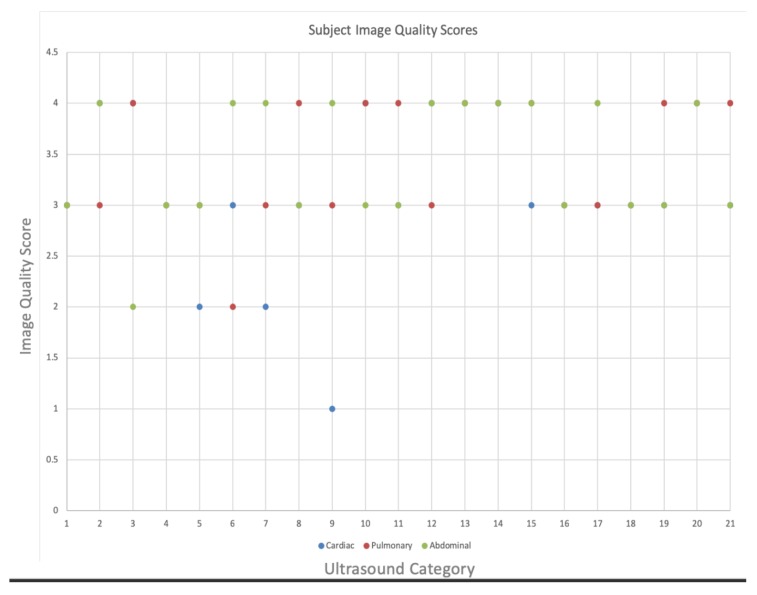
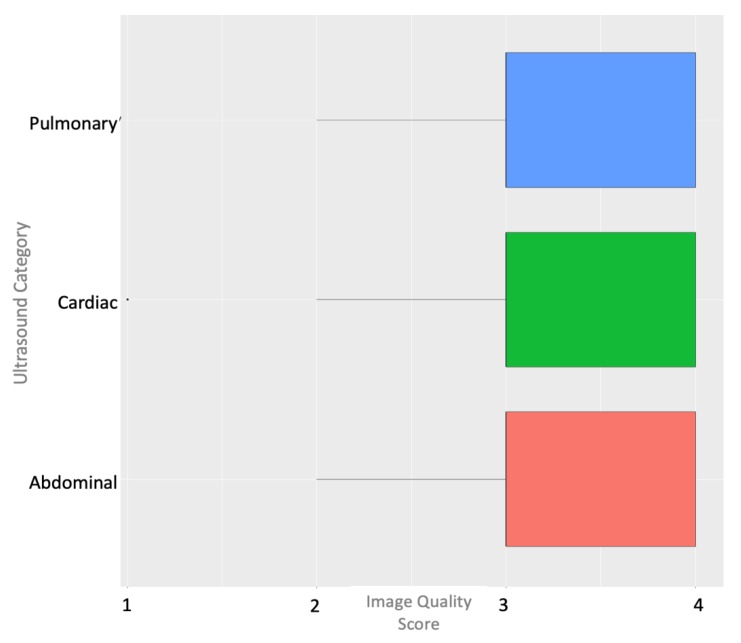
Point-of-care ultrasound (POCUS) is a rapidly expanding discipline that has proven to be a valuable modality in the hospital setting. Recent evidence has demonstrated the utility of commercially available video conferencing technologies, namely, FaceTime (Apple Inc, Cupertino, CA, USA) and Google Glass (Google Inc, Mountain View, CA, USA), to allow an expert POCUS examiner to remotely guide a novice medical professional. However, few studies have evaluated the ability to use these teleultrasound technologies to guide a nonmedical novice to perform an acute care POCUS examination for cardiac, pulmonary, and abdominal assessments. Additionally, few studies have shown the ability of a POCUS-trained cardiac anesthesiologist to perform the role of an expert instructor. This study sought to evaluate the ability of a POCUS-trained anesthesiologist to remotely guide a nonmedically trained participant to perform an acute care POCUS examination. A total of 21 nonmedically trained undergraduate students who had no prior ultrasound experience were recruited to perform a three-part ultrasound examination on a standardized patient with the guidance of a remote expert who was a POCUS-trained cardiac anesthesiologist. The examination included the following acute care POCUS topics: (1) cardiac function via parasternal long/short axis views, (2) pneumothorax assessment via pleural sliding exam via anterior lung views, and (3) abdominal free fluid exam via right upper quadrant abdominal view. Each examiner was given a handout with static images of probe placement and actual ultrasound images for the three views. After a brief 8 min tutorial on the teleultrasound technologies, a connection was established with the expert, and they were guided through the acute care POCUS exam. Each view was deemed to be complete when the expert sonographer was satisfied with the obtained image or if the expert sonographer determined that the image could not be obtained after 5 min. Image quality was scored on a previously validated 0 to 4 grading scale. The entire session was recorded, and the image quality was scored during the exam by the remote expert instructor as well as by a separate POCUS-trained, blinded expert anesthesiologist. A total of 21 subjects completed the study. The average total time for the exam was 8.5 min (standard deviation = 4.6). A comparison between the live expert examiner and the blinded postexam reviewer showed a 100% agreement between image interpretations. A review of the exams rated as three or higher demonstrated that 87% of abdominal, 90% of cardiac, and 95% of pulmonary exams achieved this level of image quality. A satisfaction survey of the novice users demonstrated higher ease of following commands for the cardiac and pulmonary exams compared to the abdominal exam. The results from this pilot study demonstrate that nonmedically trained individuals can be guided to complete a relevant ultrasound examination within a short period. Further evaluation of using telemedicine technologies to promote POCUS should be evaluated.
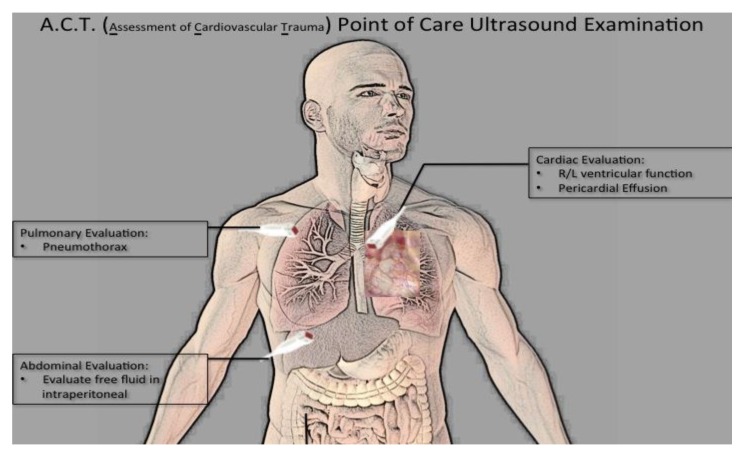
床旁超声(POCUS)是一门迅速发展的学科,已被证明在医院环境中是一种有价值的检查方式。最近的证据表明,市售的视频会议技术,即FaceTime(苹果公司,美国加利福尼亚州库比蒂诺)和谷歌眼镜(谷歌公司,美国加利福尼亚州山景城),可让专业的POCUS检查人员远程指导新手医疗专业人员。然而,很少有研究评估使用这些远程超声技术指导非医学新手进行心脏、肺部和腹部评估的急性护理POCUS检查的能力。此外,很少有研究表明接受过POCUS培训的心脏麻醉医生能够胜任专家指导教师的角色。本研究旨在评估接受过POCUS培训的麻醉医生远程指导未接受医学培训的参与者进行急性护理POCUS检查的能力。总共招募了21名没有超声经验的未接受医学培训的本科生,在一名接受过POCUS培训的心脏麻醉医生远程专家的指导下,对一名标准化患者进行三部分超声检查。检查包括以下急性护理POCUS主题:(1)通过胸骨旁长/短轴视图评估心脏功能,(2)通过前肺视图的胸膜滑动检查评估气胸,(3)通过右上腹腹部视图检查腹腔游离液体。为每位检查人员提供了一份包含三个视图的探头放置静态图像和实际超声图像的手册。在对远程超声技术进行简短的8分钟教程后,与专家建立了联系,并指导他们完成急性护理POCUS检查。当专家超声医生对获得的图像满意或专家超声医生确定在5分钟后无法获得图像时,每个视图被视为完成。图像质量根据先前验证的0至4分级量表进行评分。整个过程进行了记录,远程专家指导教师以及另一位接受过POCUS培训的、不知情的专家麻醉医生在检查期间对图像质量进行了评分。共有21名受试者完成了研究。检查的平均总时间为8.5分钟(标准差 = 4.6)。现场专家检查人员与不知情的检查后评审人员之间的比较显示,图像解读之间的一致性为100%。对评为三级或更高等级的检查进行回顾表明,87%的腹部检查、90%的心脏检查和95%的肺部检查达到了这一图像质量水平。对新手用户的满意度调查表明,与腹部检查相比,心脏和肺部检查更容易遵循指令。这项初步研究的结果表明,未接受医学培训的个体可以在短时间内得到指导完成相关的超声检查。应进一步评估使用远程医疗技术促进POCUS的情况。