Interdepartmental Graduate Program in Microbiology and Institute for Integrative Genome Biology, Riverside, USA.
Department of Botany and Microbiology, Faculty of Science, Alexandria University, Alexandria, Egypt.
Sci Rep. 2021 Aug 12;11(1):16402. doi: 10.1038/s41598-021-95553-y.
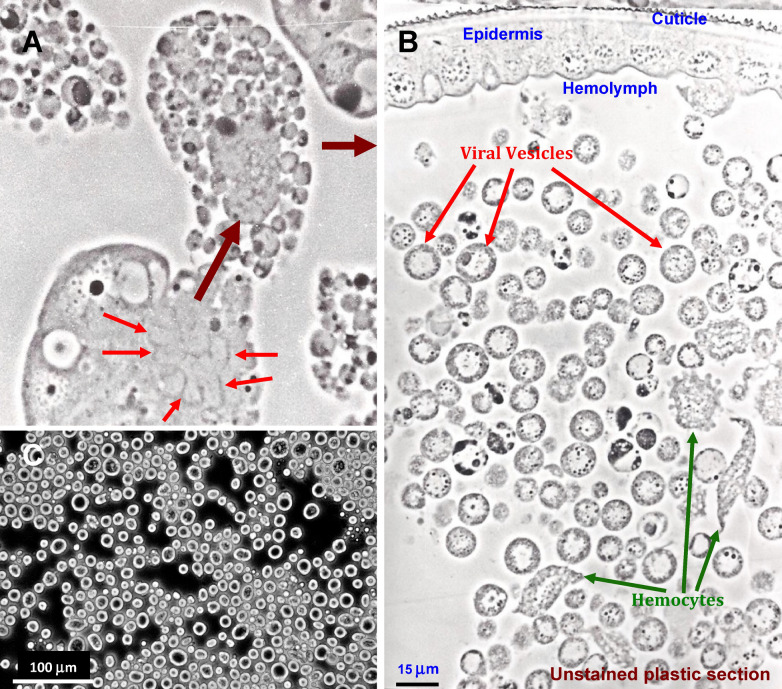
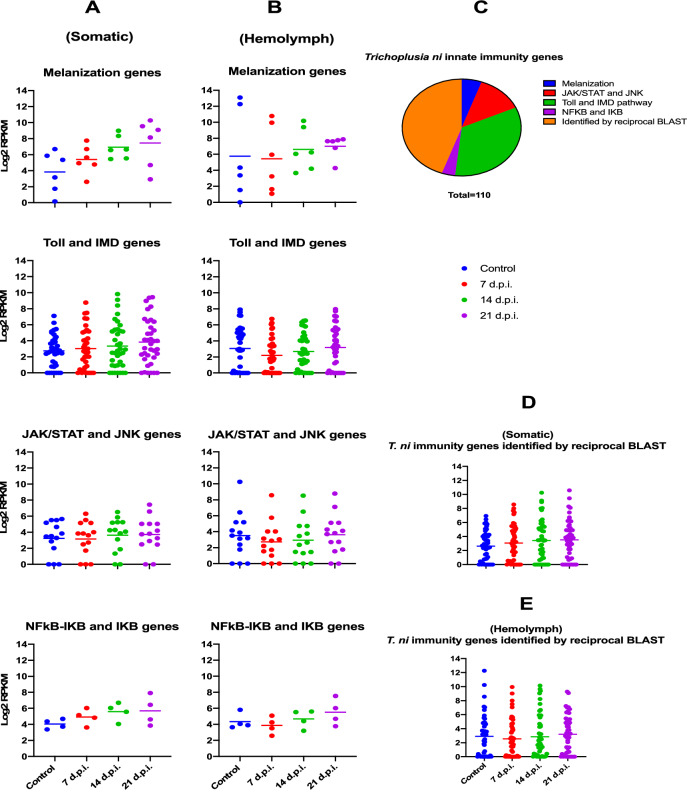
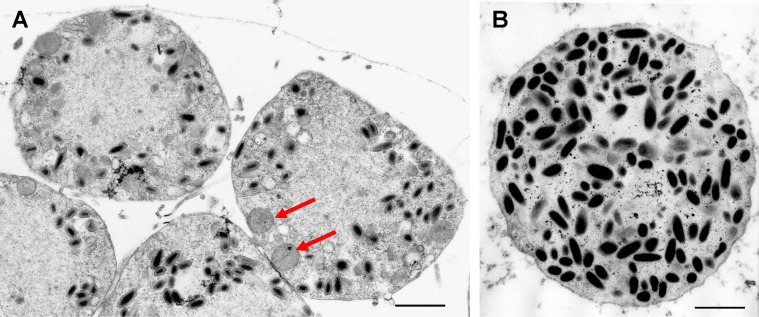
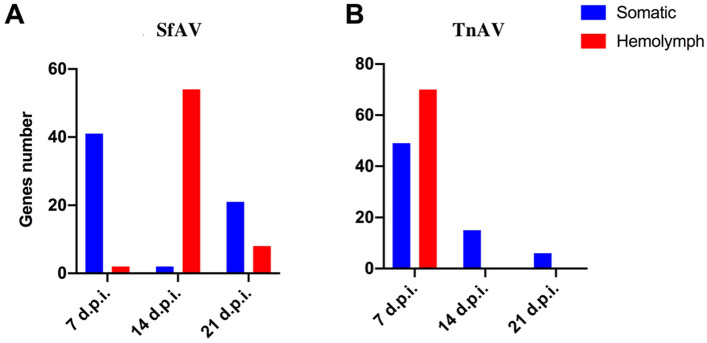
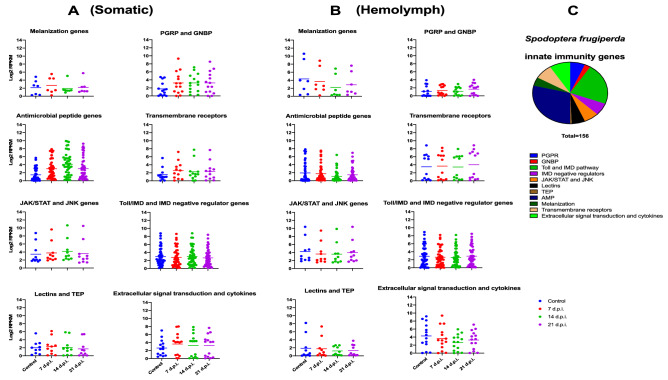
Ascoviruses are large dsDNA viruses characterized by the extraordinary changes they induce in cellular pathogenesis and architecture whereby after nuclear lysis and extensive hypertrophy, each cell is cleaved into numerous vesicles for virion reproduction. However, the level of viral replication and transcription in vesicles compared to other host tissues remains uncertain. Therefore, we applied RNA-Sequencing to compare the temporal transcriptome of Spodoptera frugiperda ascovirus (SfAV) and Trichoplusia ni ascovirus (TnAV) at 7, 14, and 21 days post-infection (dpi). We found most transcription occurred in viral vesicles, not in initial tissues infected, a remarkably novel reproduction mechanism compared to all other viruses and most other intracellular pathogens. Specifically, the highest level of viral gene expression occurred in hemolymph, for TnAV at 7 dpi, and SfAV at 14 dpi. Moreover, we found that host immune genes were partially down-regulated in hemolymph, where most viral replication occurred in highly dense accumulations of vesicles.
杆状病毒是大的 dsDNA 病毒,其特征在于它们在细胞发病机制和结构中引起的巨大变化,即在核裂解和广泛肥大之后,每个细胞被切割成多个囊泡以进行病毒繁殖。然而,与其他宿主组织相比,囊泡中的病毒复制和转录水平仍不确定。因此,我们应用 RNA 测序来比较感染后 7、14 和 21 天的草地贪夜蛾杆状病毒(SfAV)和斜纹夜蛾杆状病毒(TnAV)的时间转录组。我们发现大多数转录发生在病毒囊泡中,而不是在最初感染的组织中,与所有其他病毒和大多数其他细胞内病原体相比,这是一种非常新颖的繁殖机制。具体而言,在 7 天和 14 天感染后,TnAV 在血液中以及 SfAV 在血液中具有最高水平的病毒基因表达。此外,我们发现宿主免疫基因在血液中部分下调,其中大多数病毒复制发生在高度密集的囊泡堆积中。