Liu Zaoqu, Lu Taoyuan, Li Jing, Wang Libo, Xu Kaihao, Dang Qin, Liu Long, Guo Chunguang, Jiao Dechao, Sun Zhenqiang, Han Xinwei
Department of Interventional Radiology, The First Affiliated Hospital of Zhengzhou University, Zhengzhou, China.
Interventional Institute of Zhengzhou University, Zhengzhou, China.
Front Immunol. 2021 Jul 29;12:702594. doi: 10.3389/fimmu.2021.702594. eCollection 2021.
A considerable number of patients with stage II/III colorectal cancer (CRC) will relapse within 5 years after surgery, which is a leading cause of death in early-stage CRC. The current TNM stage system is limited due to the heterogeneous clinical outcomes displayed in patients of same stage. Therefore, searching for a novel tool to identify patients at high recurrence-risk for improving post-operative individual management is an urgent need.
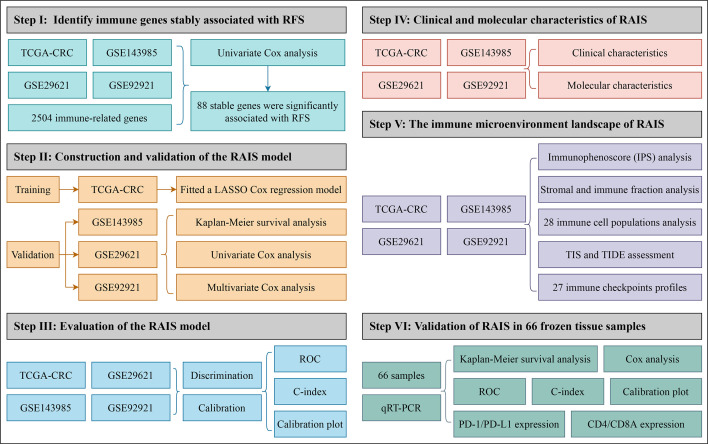
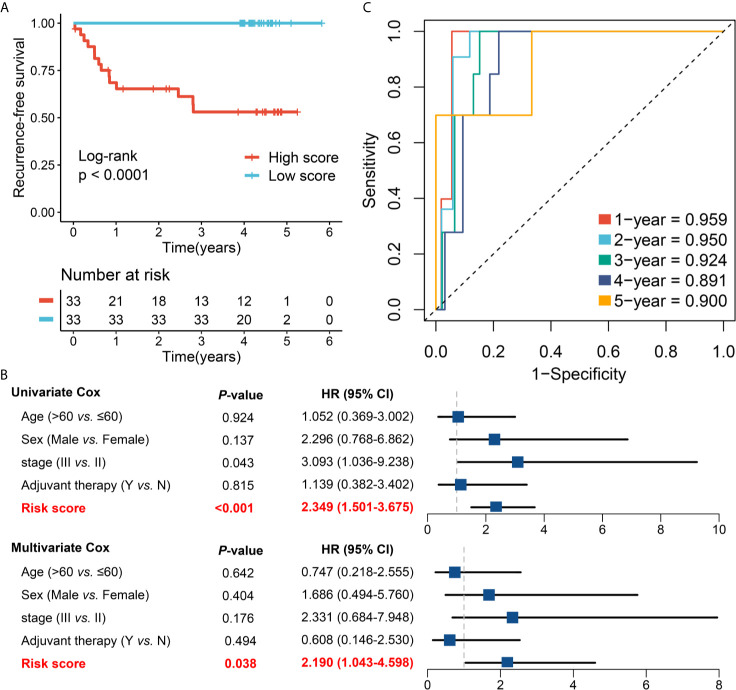
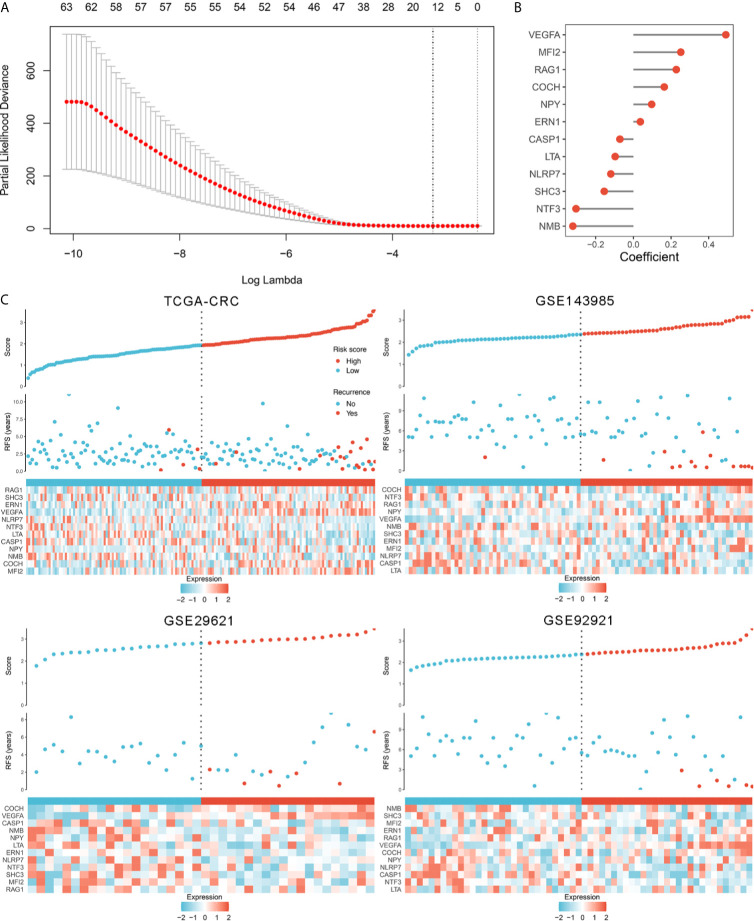
Using four independent public cohorts and qRT-PCR data from 66 tissues, we developed and validated a recurrence-associated immune signature (RAIS) based on global immune genes. The clinical and molecular features, tumor immune microenvironment landscape, and immune checkpoints profiles of RAIS were also investigated.
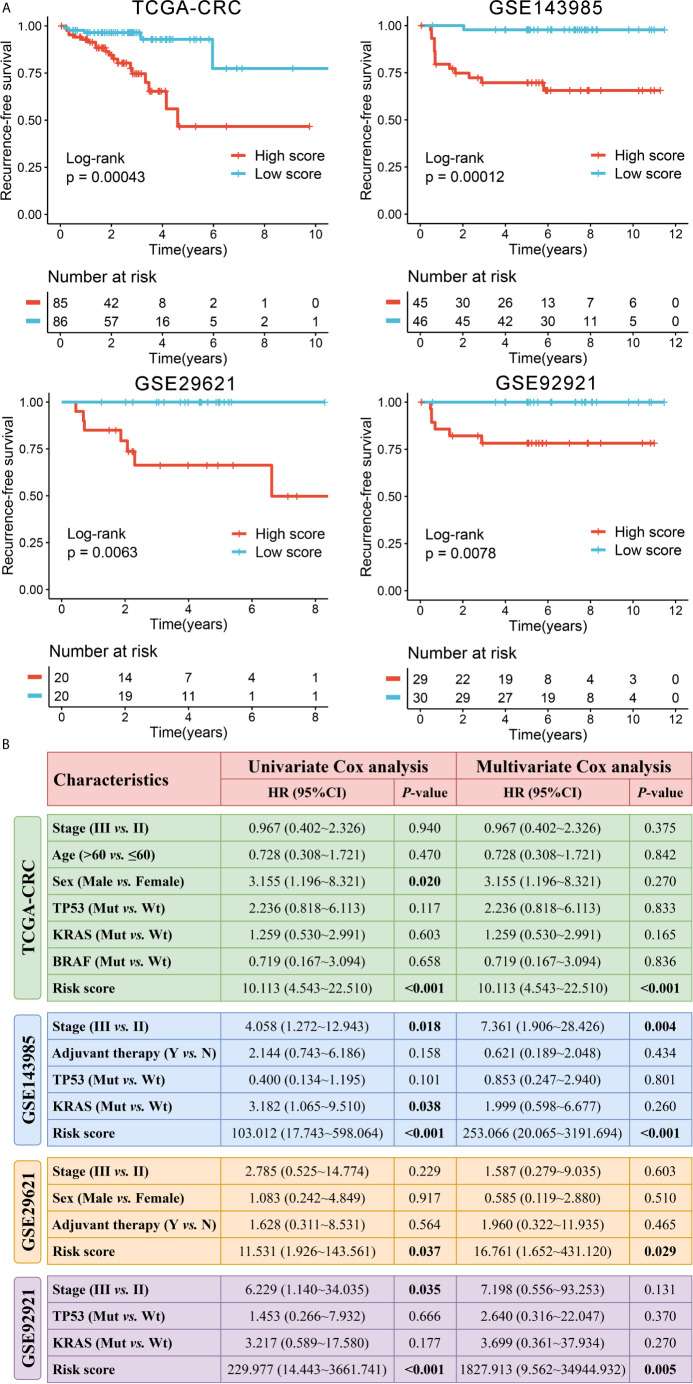
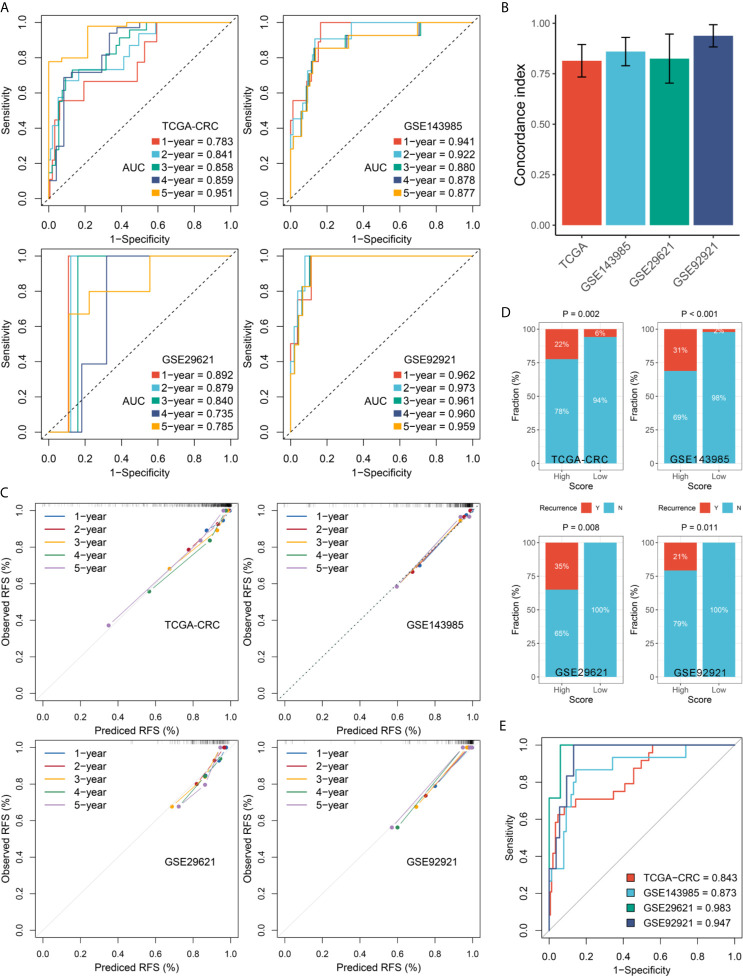
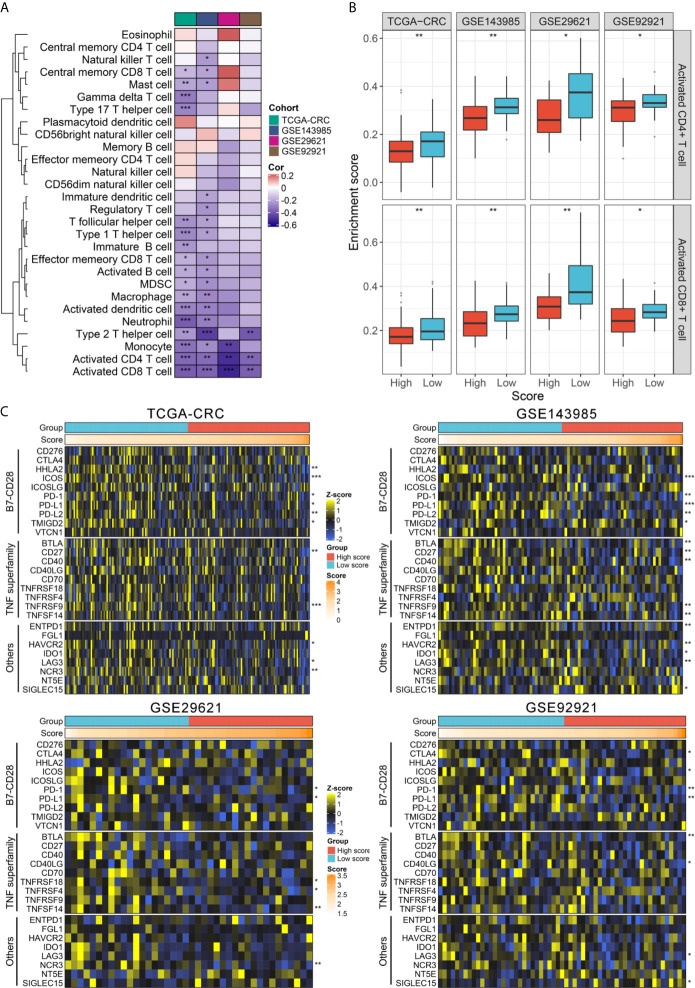
In five independent cohorts, this novel scoring system was proven to be an independent recurrent factor and displayed excellent discrimination and calibration in predicting the recurrence-risk at 1~5 years. Further analysis revealed that the high-risk group displayed high mutation rate of TP53, while the low-risk group had more abundance of activated CD4+/CD8+ T cells and high expression of PD-1/PD-L1.
The RAIS model is highly predictive of recurrence in patients with stage II/III CRC, which might serve as a powerful tool to further optimize decision-making in adjuvant chemotherapy and immunotherapy, as well as tailor surveillance protocol for individual patients.
相当数量的II/III期结直肠癌(CRC)患者在手术后5年内会复发,这是早期CRC患者死亡的主要原因。由于同一分期患者表现出的临床结局异质性,当前的TNM分期系统存在局限性。因此,迫切需要寻找一种新工具来识别高复发风险患者,以改善术后个体化管理。
利用四个独立的公共队列和来自66个组织的qRT-PCR数据,我们基于全局免疫基因开发并验证了一种复发相关免疫特征(RAIS)。还研究了RAIS的临床和分子特征、肿瘤免疫微环境格局以及免疫检查点谱。
在五个独立队列中,这个新的评分系统被证明是一个独立的复发因素,在预测1至5年的复发风险方面表现出出色的辨别力和校准能力。进一步分析表明,高危组TP53突变率高,而低危组活化的CD4+/CD8+T细胞丰度更高,且PD-1/PD-L1表达高。
RAIS模型对II/III期CRC患者的复发具有高度预测性,这可能成为进一步优化辅助化疗和免疫治疗决策以及为个体患者定制监测方案的有力工具。