Laboratório de Imunopatologia Keizo Asami, Federal University of Pernambuco, Recife, Pernambuco, 50670-901, Brazil.
J Mol Neurosci. 2022 Jan;72(1):25-26. doi: 10.1007/s12031-021-01899-3. Epub 2021 Aug 15.
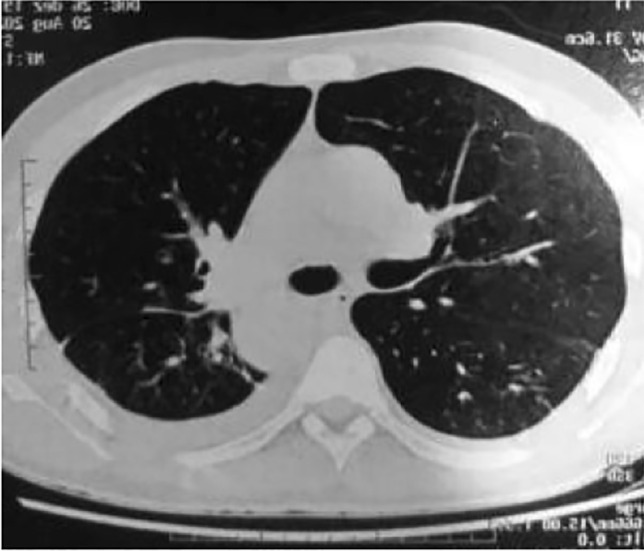
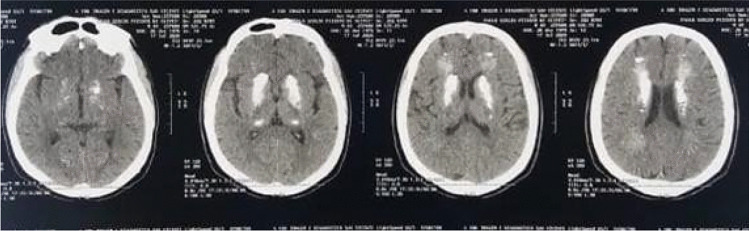
Neurological symptoms in COVID-19 patients have attracted the interest of the scientific community, yet their mechanisms remain unknown. In some circumstances, the presence of neurological manifestations may result in an incidental diagnosis after a detailed investigation. In the present letter, we discuss a case published by Demir et al., in which the diagnosis of COVID-19 enabled the diagnosis of a rare neurological disorder, characterized by bilateral brain calcifications, commonly known by the eponym Fahr's syndrome. In addition, we report a case of primary brain calcifications unveiled by a suspected coronavirus infection.
COVID-19 患者的神经系统症状引起了科学界的关注,但这些症状的发生机制仍不清楚。在某些情况下,详细检查后可能会发现神经系统表现,从而偶然诊断出某种疾病。在本函中,我们讨论了 Demir 等人发表的一个病例,该病例中 COVID-19 的诊断促成了一种罕见的神经疾病的诊断,这种疾病的特征是双侧大脑钙化,通常以 Fahr 综合征的别名命名。此外,我们报告了一例疑似冠状病毒感染引发的原发性脑钙化病例。