Department of Cellular and Physiological Sciences, Life Sciences Institute, University of British Columbia, Vancouver, Canada.
Neuroscience and Mental Health Institute, University of Alberta, Edmonton, Canada.
Elife. 2021 Aug 16;10:e68967. doi: 10.7554/eLife.68967.
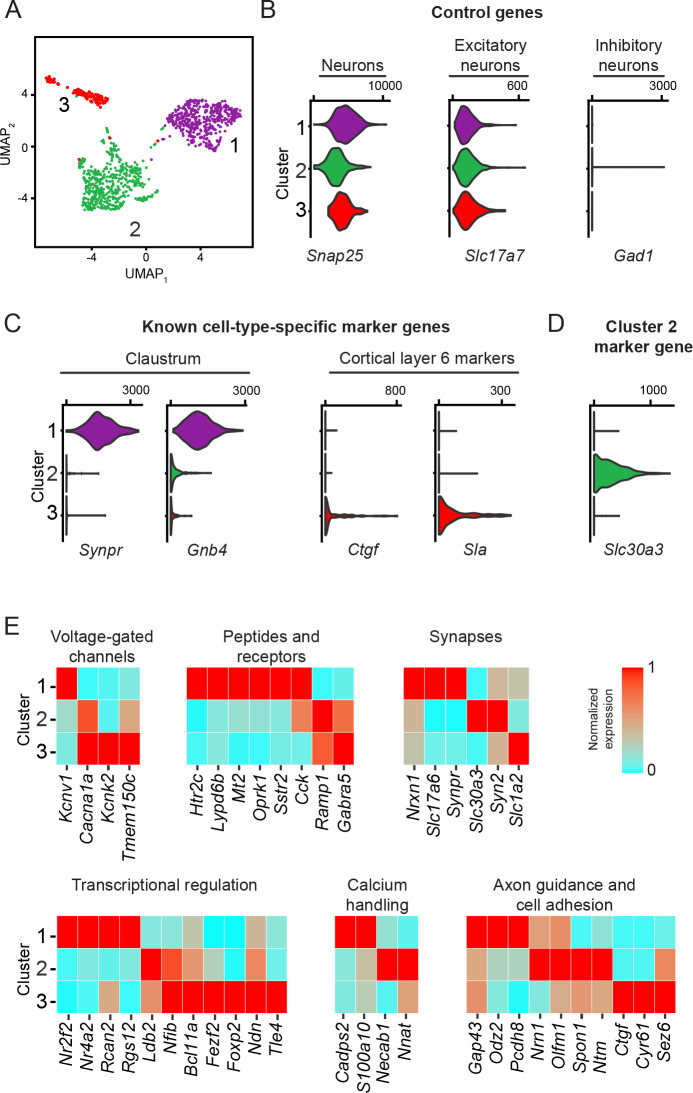
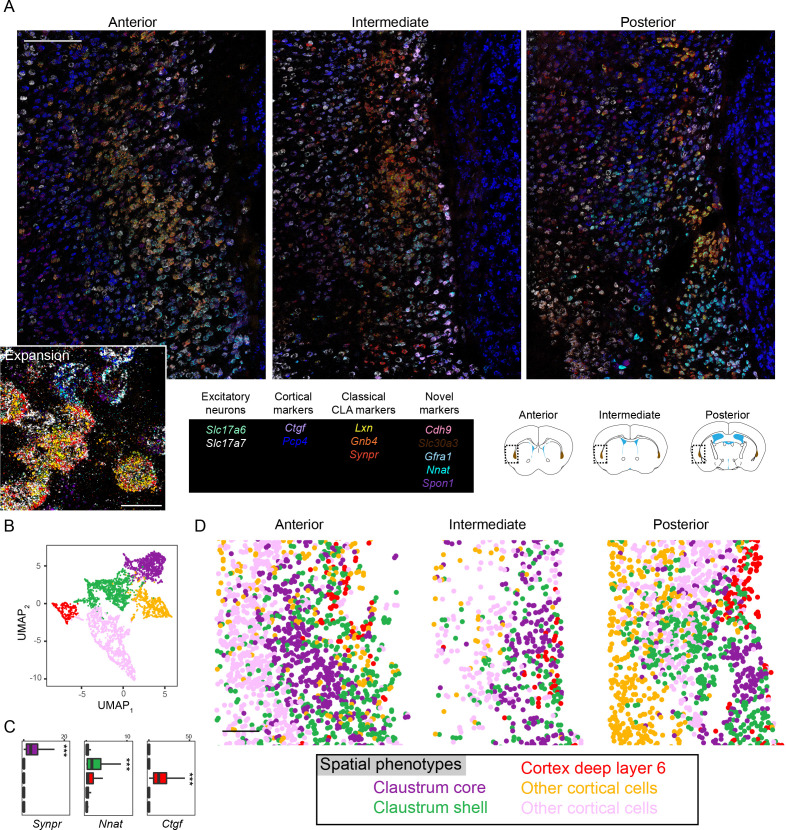
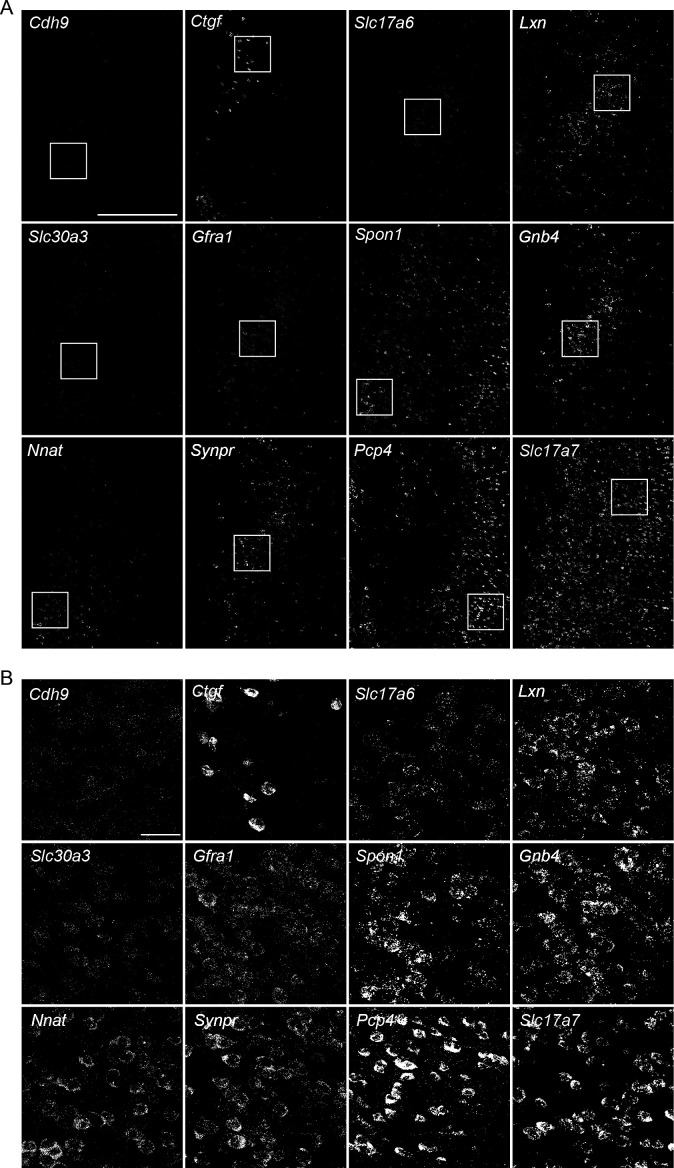
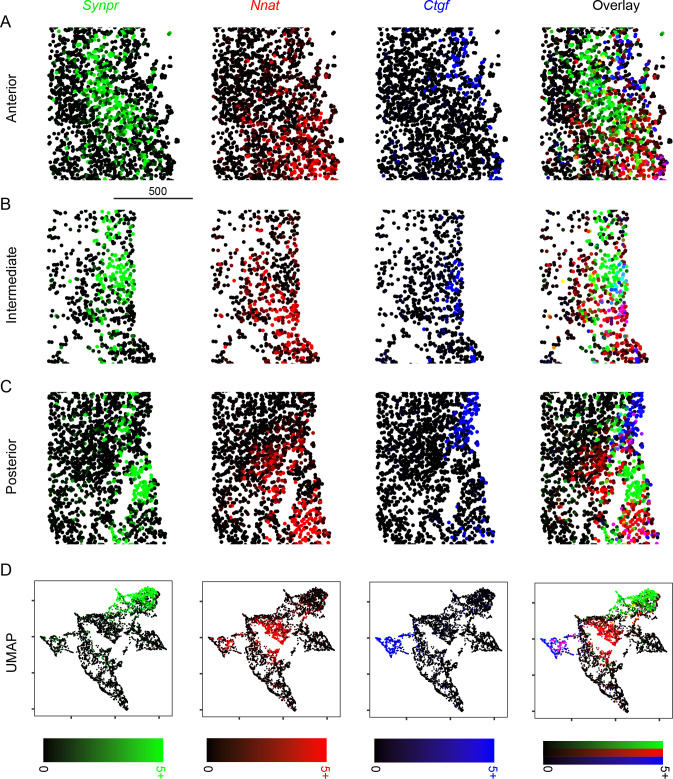
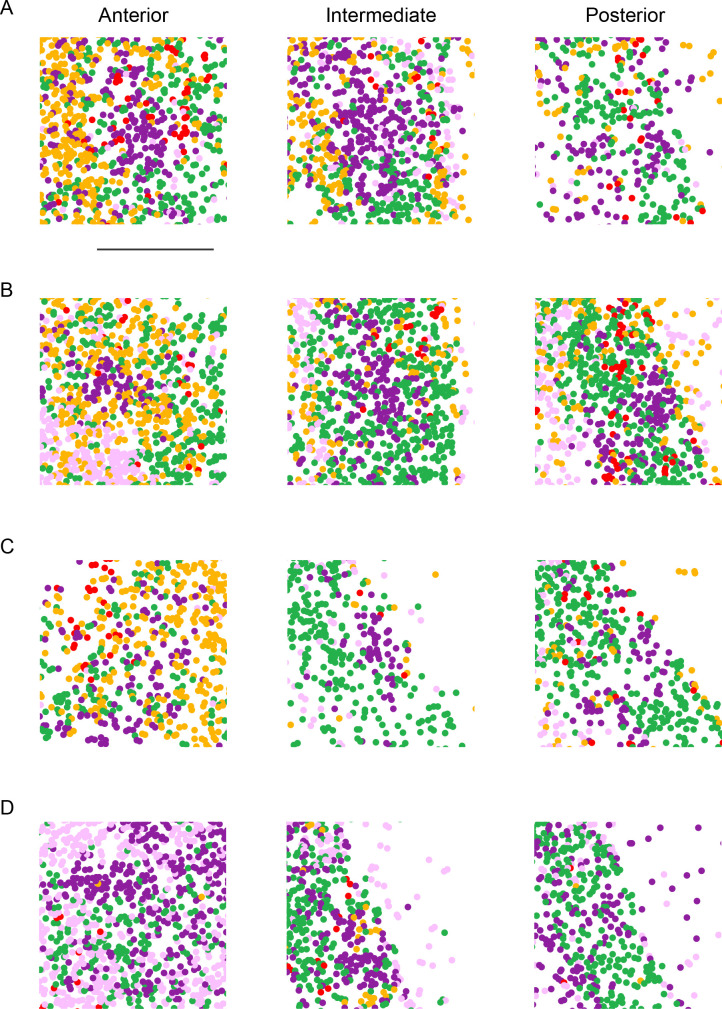
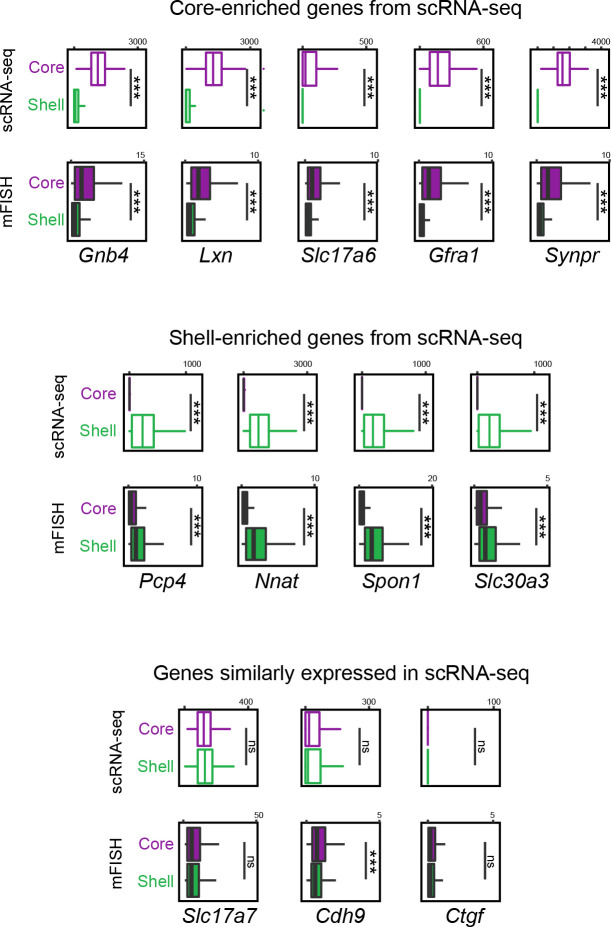
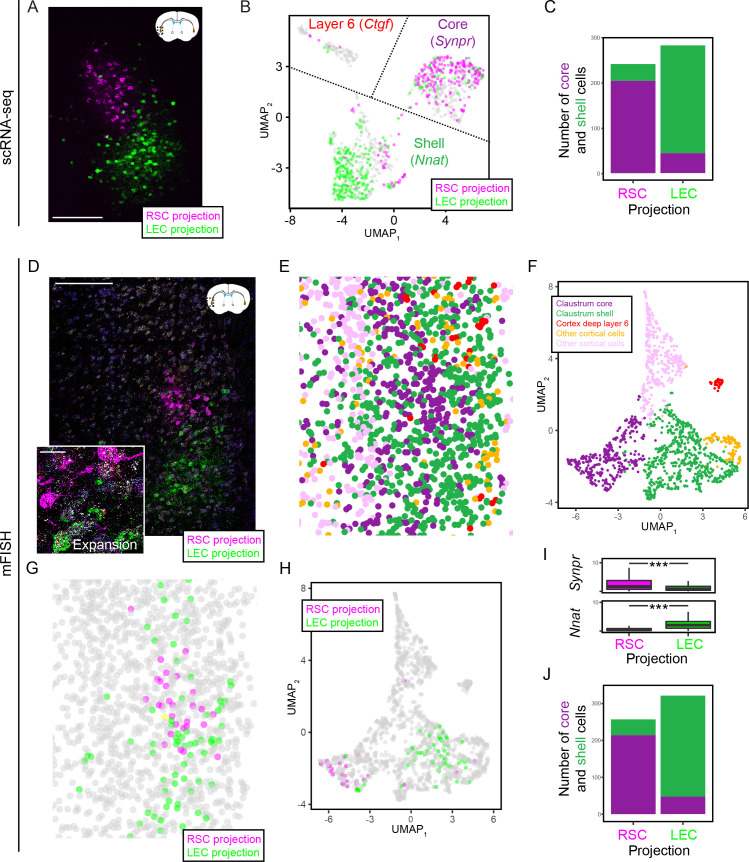
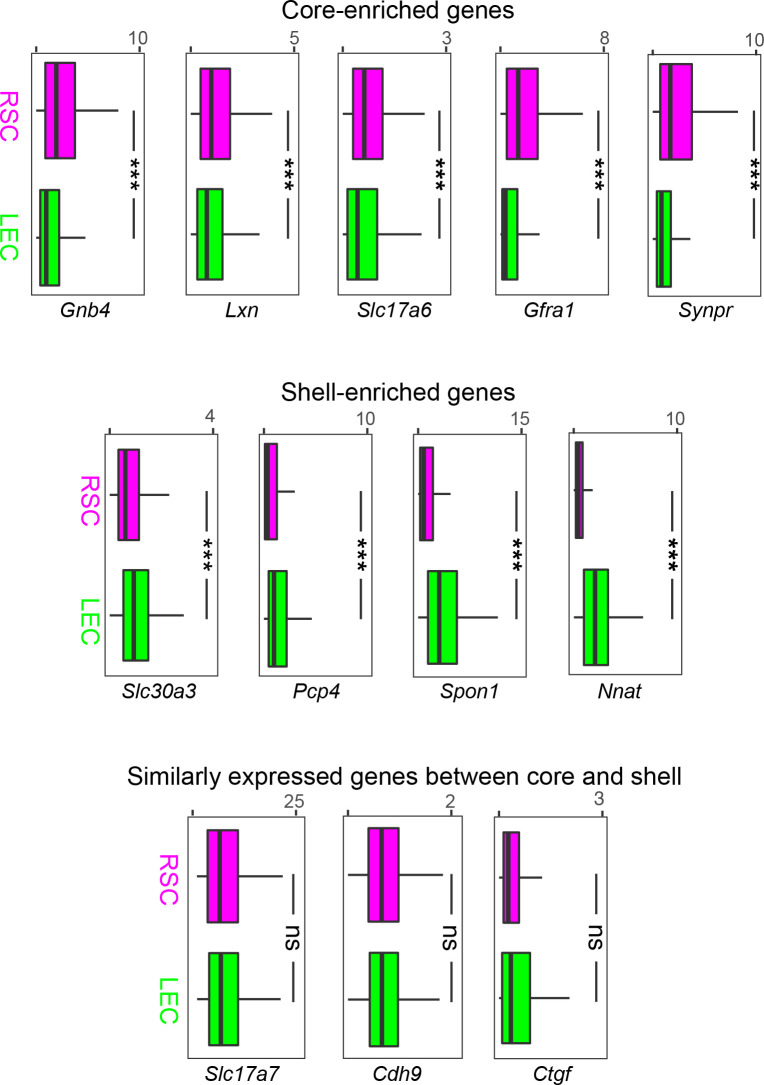
The claustrum is a functionally and structurally complex brain region, whose very spatial extent remains debated. Histochemical-based approaches typically treat the claustrum as a relatively narrow anatomical region that primarily projects to the neocortex, whereas circuit-based approaches can suggest a broader claustrum region containing projections to the neocortex and other regions. Here, in the mouse, we took a bottom-up and cell-type-specific approach to complement and possibly unite these seemingly disparate conclusions. Using single-cell RNA-sequencing, we found that the claustrum comprises two excitatory neuron subtypes that are differentiable from the surrounding cortex. Multicolor retrograde tracing in conjunction with 12-channel multiplexed in situ hybridization revealed a core-shell spatial arrangement of these subtypes, as well as differential downstream targets. Thus, the claustrum comprises excitatory neuron subtypes with distinct molecular and projection properties, whose spatial patterns reflect the narrower and broader claustral extents debated in previous research. This subtype-specific heterogeneity likely shapes the functional complexity of the claustrum.
屏状核是一个功能和结构都非常复杂的脑区,其确切的空间范围仍存在争议。基于组织化学的方法通常将屏状核视为一个相对狭窄的解剖区域,主要投射到新皮层,而基于回路的方法则可以提示一个更广泛的屏状核区域,包含投射到新皮层和其他区域的投射。在这里,在小鼠中,我们采用自下而上和细胞类型特异性的方法来补充和可能统一这些看似不同的结论。使用单细胞 RNA 测序,我们发现屏状核包含两种兴奋性神经元亚型,它们与周围的皮层可区分。多色逆行示踪与 12 通道多重原位杂交相结合,揭示了这些亚型的核心-壳空间排列,以及不同的下游靶标。因此,屏状核包含具有不同分子和投射特性的兴奋性神经元亚型,其空间模式反映了之前研究中争议的较窄和较宽的屏状核范围。这种亚型特异性的异质性可能塑造了屏状核的功能复杂性。