Department of Pathology, Memorial Sloan Kettering Cancer Center, New York, New York, USA.
Human Oncology and Pathogenesis Program, Memorial Sloan Kettering Cancer Center, New York, New York, USA.
Genes Chromosomes Cancer. 2021 Dec;60(12):789-795. doi: 10.1002/gcc.22991. Epub 2021 Aug 25.
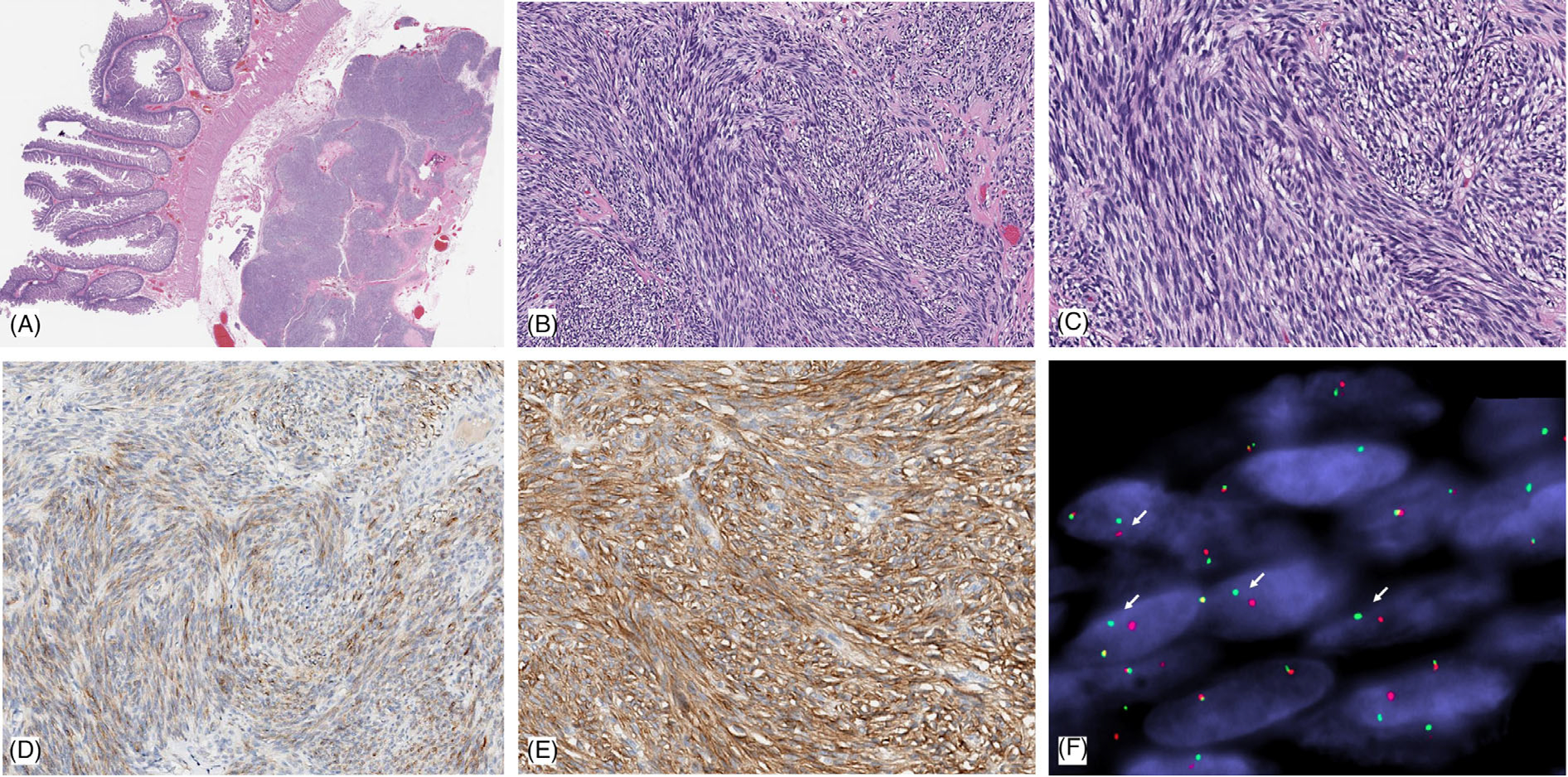
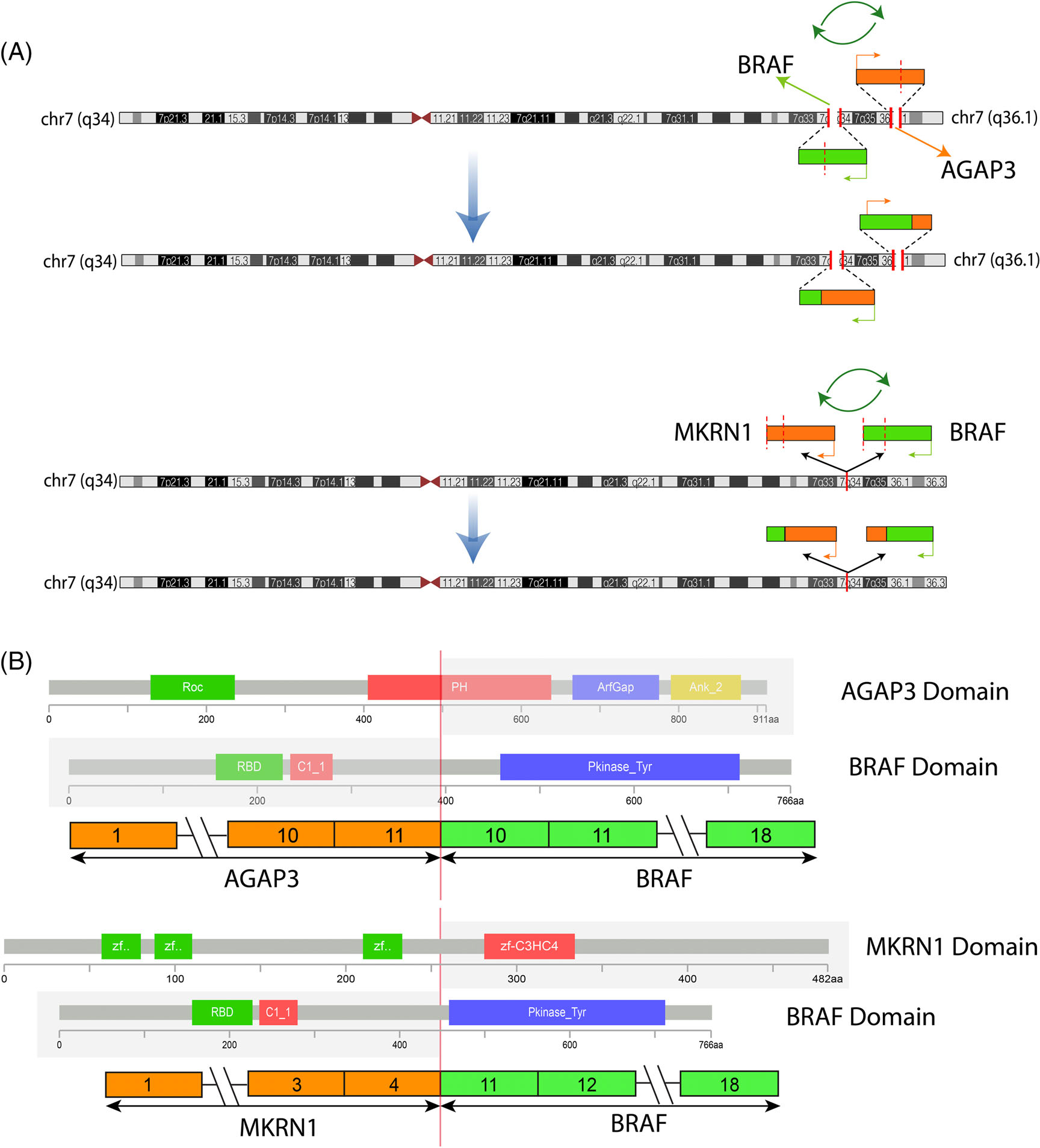
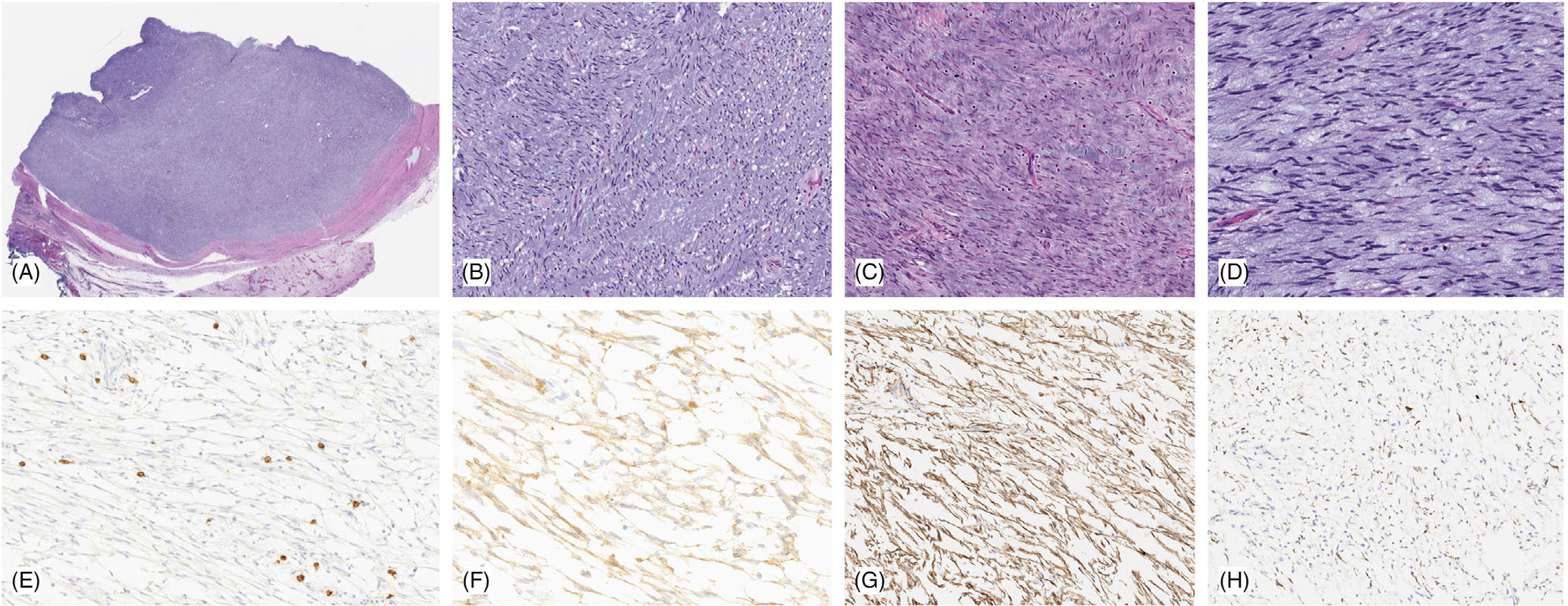
Although most gastrointestinal stromal tumors (GISTs) exhibit activating mutations in either KIT or PDGFRA, rare cases have shown to be driven by gene fusions involving kinases, mainly involving NTRK3, and rarely BRAF or FGFR1. BRAF gene rearrangements have been described in only two patients to date, as separate case reports. In addition, BRAF V600E mutation is an uncommon but established oncogenic pathway in GIST. In this report, we describe two new GIST cases harboring novel BRAF fusion genes, arising in two young-adult women (37 and 40 years of age) in the small bowel and distal esophagus, both with a spindle cell phenotype. The small bowel GIST measured 2.8 cm and showed a high cellularity and a mitotic rate of 20/50 HPFs, while the esophageal lesion measured 7 cm and 1/50 HPFs. Immunohistochemically, both tumors showed diffuse reactivity for DOG1, while KIT/CD117 was weakly positive in the small bowel GIST and completely negative in the esophageal tumor. Based on these findings, the latter case was misinterpreted as a low-grade myxoid leiomyosarcoma, as it showed a myxoid stroma, reactivity for SMA and focal positivity for desmin. Archer FusionPlex revealed a fusion between BRAF with either AGAP3 or MKRN1 gene partners. Moreover, MSK-IMPACT DNA targeted sequencing confirmed both fusions but did not identify additional mutations. In one case with available material, the BRAF gene rearrangement was also validated by FISH. The recognition of BRAF fusion-positive GISTs is critical as it may be associated with a low level of KIT expression and may result in diagnostic challenges with significant impact on therapeutic management. The clinical benefit with KIT inhibitors, such as imatinib, remains to be determined.
虽然大多数胃肠道间质瘤(GIST)表现为 KIT 或 PDGFRA 中的激活突变,但少数病例显示由涉及激酶的基因融合驱动,主要涉及 NTRK3,很少涉及 BRAF 或 FGFR1。到目前为止,BRAF 基因重排仅在两名患者中作为单独的病例报告描述。此外,BRAF V600E 突变是 GIST 中一种罕见但已确立的致癌途径。在本报告中,我们描述了两个新的 GIST 病例,它们含有新的 BRAF 融合基因,发生在两个年轻成年女性(37 岁和 40 岁)的小肠和远端食管,均具有梭形细胞表型。小肠 GIST 大小为 2.8cm,具有高细胞性和 20/50HPFs 的有丝分裂率,而食管病变大小为 7cm 和 1/50HPFs。免疫组化染色,两个肿瘤均弥漫表达 DOG1,而小肠 GIST 中 KIT/CD117 弱阳性,食管肿瘤完全阴性。基于这些发现,后者病例被误诊为低度黏液性平滑肌肉瘤,因为它显示出黏液样基质,对 SMA 有反应,并且 desmin 局灶性阳性。Archer FusionPlex 显示 BRAF 与 AGAP3 或 MKRN1 基因伴侣融合。此外,MSK-IMPACT DNA 靶向测序证实了这两种融合,但未发现其他突变。在有可用材料的情况下,通过 FISH 也验证了 BRAF 基因重排。识别 BRAF 融合阳性 GIST 至关重要,因为它可能与 KIT 表达水平低有关,并可能导致诊断挑战,对治疗管理产生重大影响。KIT 抑制剂(如伊马替尼)的临床获益仍有待确定。