Departament de Farmacologia, Terapèutica i, Toxicologia, Facultat de Veterinaria, Universitat Autònoma de Barcelona, Bellaterra, Spain.
Secció de Parasitología, Departament de Biologia, Sanitat i Mediambient, Facultat de Farmàcia i Ciències de l'Alimentació, Universitat de Barcelona, Barcelona, Spain.
PLoS Negl Trop Dis. 2021 Aug 16;15(8):e0009681. doi: 10.1371/journal.pntd.0009681. eCollection 2021 Aug.
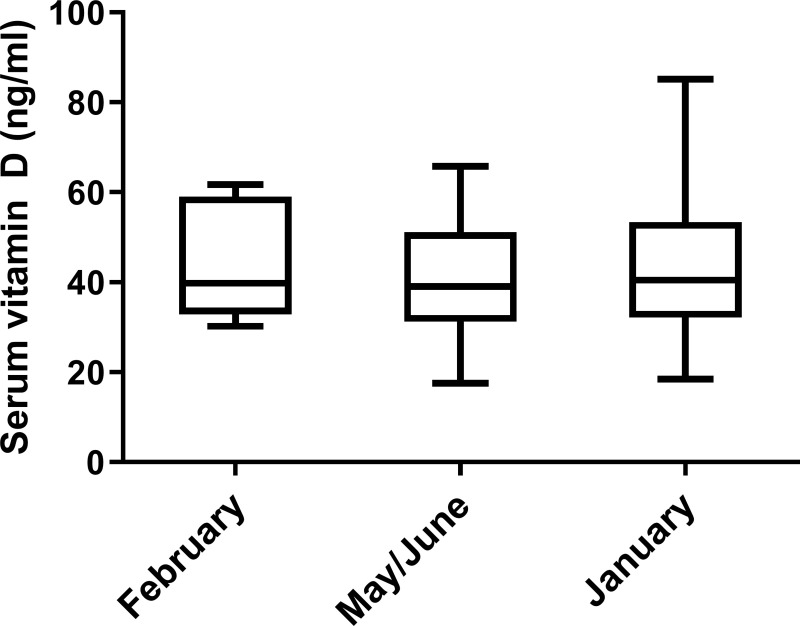
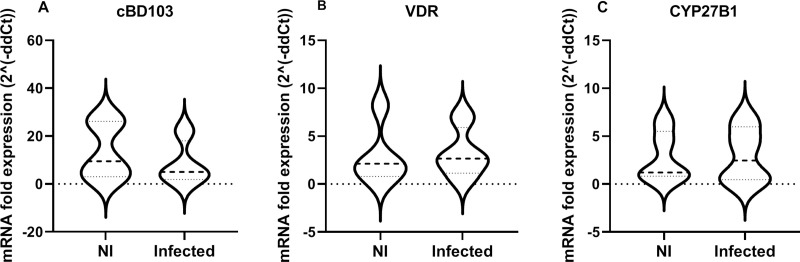
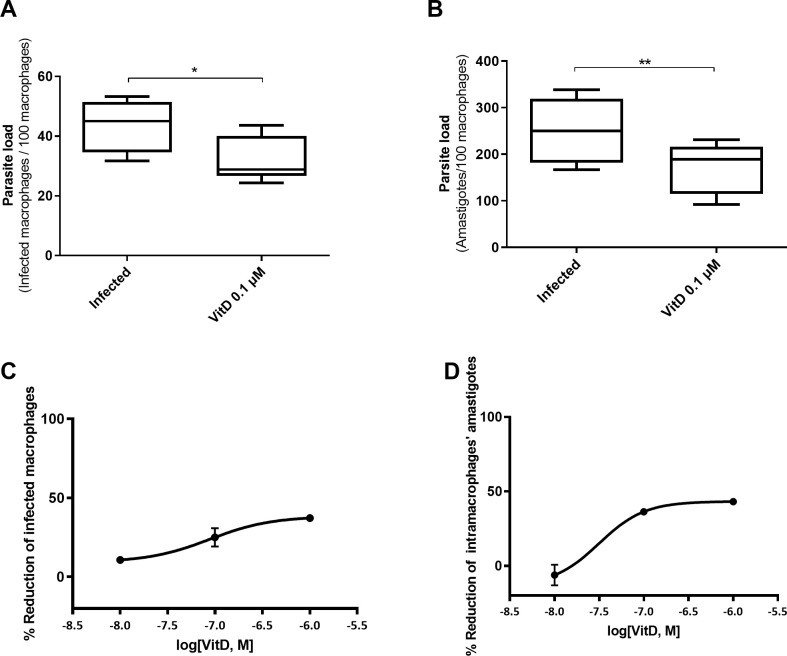
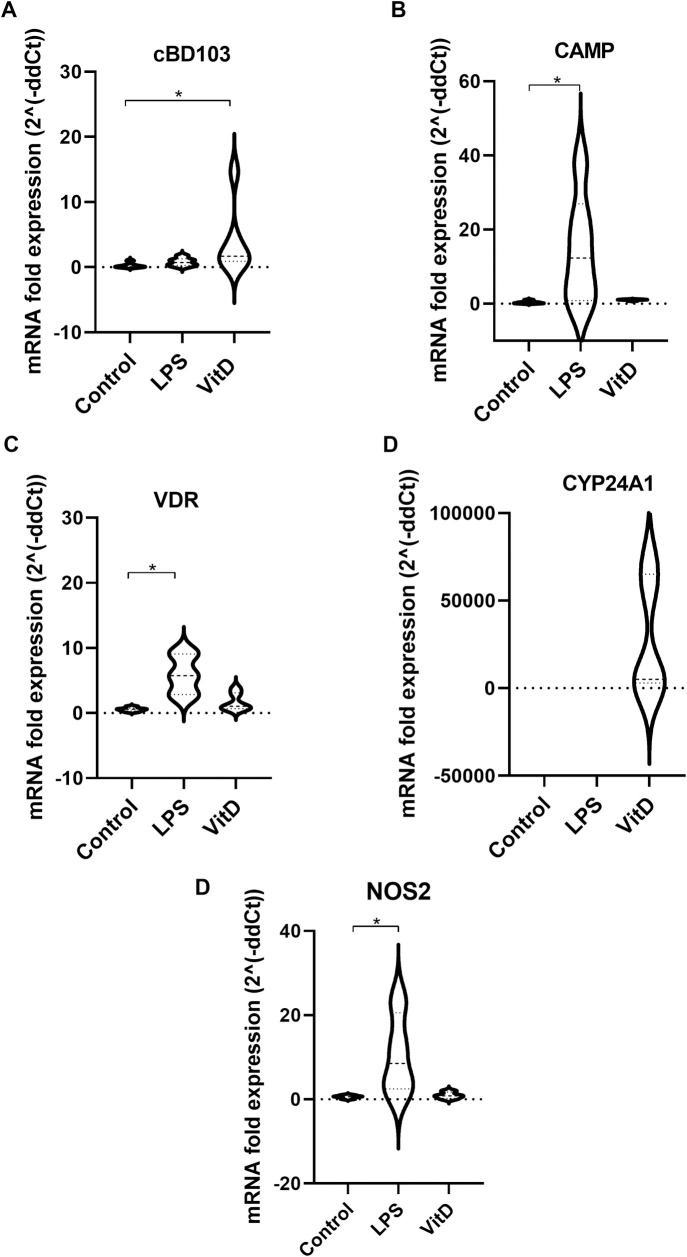
Vitamin D (VitD) deficiency has been shown to be a risk factor for a plethora of disorders. We have shown that dogs with clinical leishmaniasis presented lower VitD serum levels than non-infected dogs, and even lower than those with asymptomatic infection. However, if VitD deficiency is a risk factor to develop clinical leishmaniasis remains to be answered. It is also unknown if VitD participates in Leishmania control. First, we retrospectively analysed VitD concentration in serum samples from 36 healthy dogs collected in different periods of the year concluding that there isn't a seasonal variation of this vitamin in dogs. We also included 9 dogs with clinical leishmaniasis and 10 non-infected healthy dogs, in which we measured VitD levels at the beginning of the study, when all dogs were negative for serology and qPCR, and 1 year later. Whereas non-infected dogs showed no change in VitD levels along the study, those developing clinical leishmaniasis showed a significant VitD reduction at the end of the study (35%). When we compared VitD concentration between the two groups at the beginning of the study, no differences were detected (43.6 (38-59) ng/mL, P = 0.962). Furthermore, an in vitro model using a canine macrophage cell line proved that adding active VitD leads to a significant reduction in L. infantum load (31.4%). Analyzing expression of genes related to VitD pathway on primary canine monocytes, we showed that CBD103 expression was significantly enhanced after 1,25(OH)2D addition. Our results show that VitD concentration is neither seasonal nor a risk factor for developing canine leishmaniasis, but it diminishes with the onset of clinical disease suggesting a role in parasitic control. Our in vitro results corroborate this hypothesis and point out that VitD regulates infection through CBD103 expression. These results open the possibility for studies testing VitD as an adjuvant in leishmaniasis therapy.
维生素 D(VitD)缺乏已被证明是多种疾病的危险因素。我们已经表明,患有临床利什曼病的狗的血清 VitD 水平低于未感染的狗,甚至低于无症状感染的狗。然而,VitD 缺乏是否是发展为临床利什曼病的危险因素仍有待回答。VitD 是否参与利什曼原虫的控制也尚不清楚。首先,我们回顾性分析了来自 36 只不同时期采集的健康犬的血清样本中的 VitD 浓度,得出结论,狗体内的这种维生素没有季节性变化。我们还包括了 9 只患有临床利什曼病和 10 只未感染的健康犬,在研究开始时,所有狗的血清学和 qPCR 均为阴性时,我们测量了 VitD 水平,一年后再次测量。尽管未感染的狗在整个研究过程中 VitD 水平没有变化,但那些发展为临床利什曼病的狗在研究结束时 VitD 水平显著下降(35%)。当我们在研究开始时比较两组之间的 VitD 浓度时,未发现差异(43.6(38-59)ng/mL,P = 0.962)。此外,使用犬巨噬细胞系的体外模型证明,添加活性 VitD 可导致 L. infantum 负荷显著减少(31.4%)。分析犬原代单核细胞中与 VitD 途径相关的基因表达,我们发现 1,25(OH)2D 添加后 CBD103 表达显著增强。我们的结果表明,VitD 浓度既不受季节影响,也不是患犬利什曼病的危险因素,但随着临床疾病的发生而降低,提示其在寄生虫控制中起作用。我们的体外结果证实了这一假设,并指出 VitD 通过 CBD103 表达来调节感染。这些结果为测试 VitD 作为利什曼病治疗佐剂的研究开辟了可能性。