Dos Santos Jéssica Cristina, Heinhuis Bas, Gomes Rodrigo Saar, Damen Michelle S M A, Real Fernando, Mortara Renato A, Keating Samuel T, Dinarello Charles A, Joosten Leo A B, Ribeiro-Dias Fátima
Department of Internal Medicine and Radboud Center of Infectious Diseases (RCI), Radboud University Medical Center, Nijmegen, The Netherlands.
Instituto de Patologia Tropical e Saúde Pública, Universidade Federal de Goiás, Goiânia, Brazil.
PLoS Negl Trop Dis. 2017 Feb 27;11(2):e0005413. doi: 10.1371/journal.pntd.0005413. eCollection 2017 Feb.
Interleukin-32 (IL-32) is expressed in lesions of patients with American Tegumentary Leishmaniasis (ATL), but its precise role in the disease remains unknown.
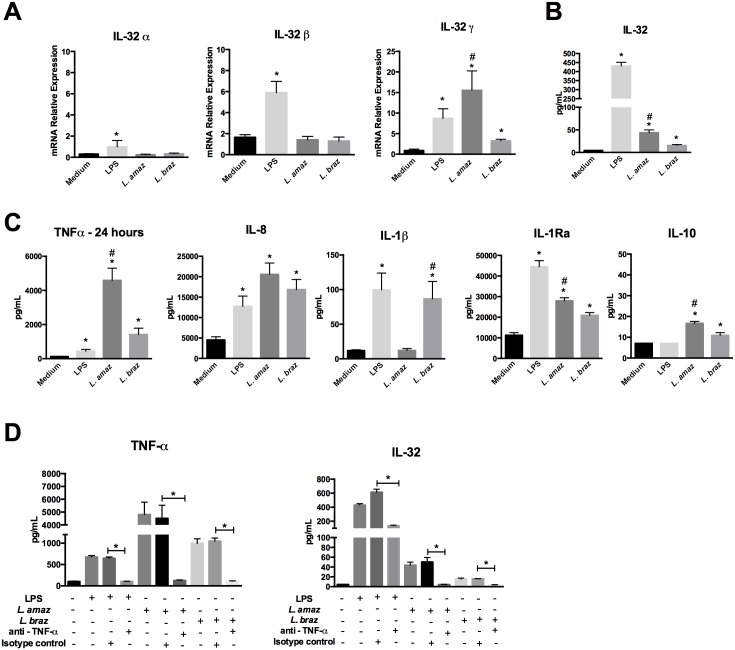
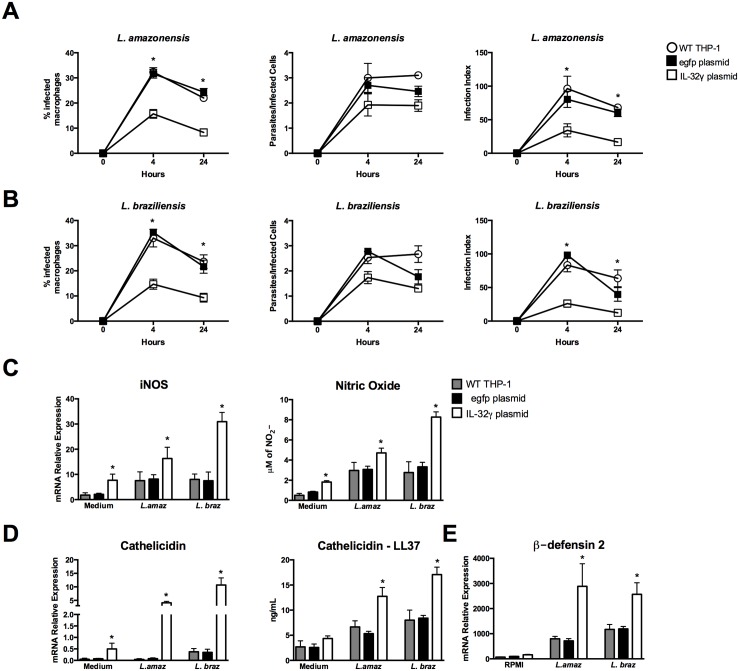
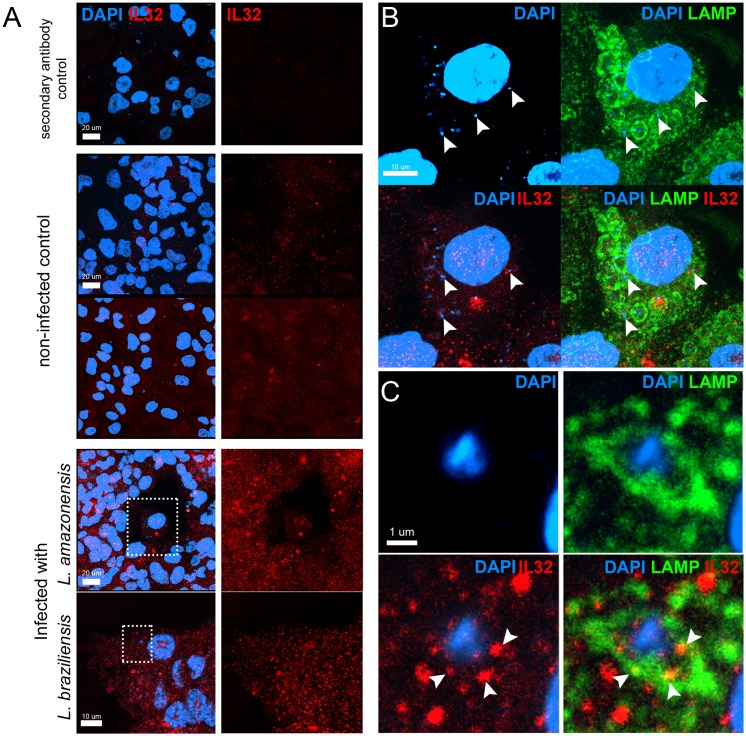
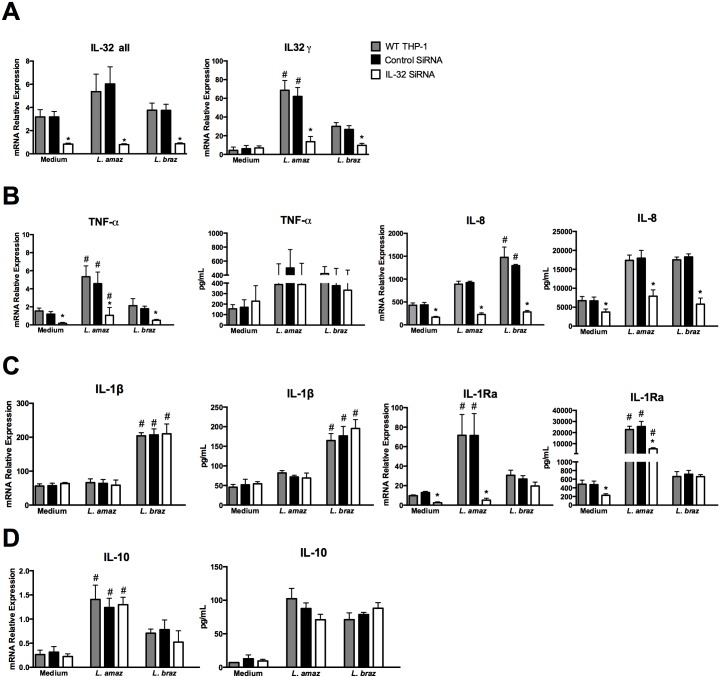
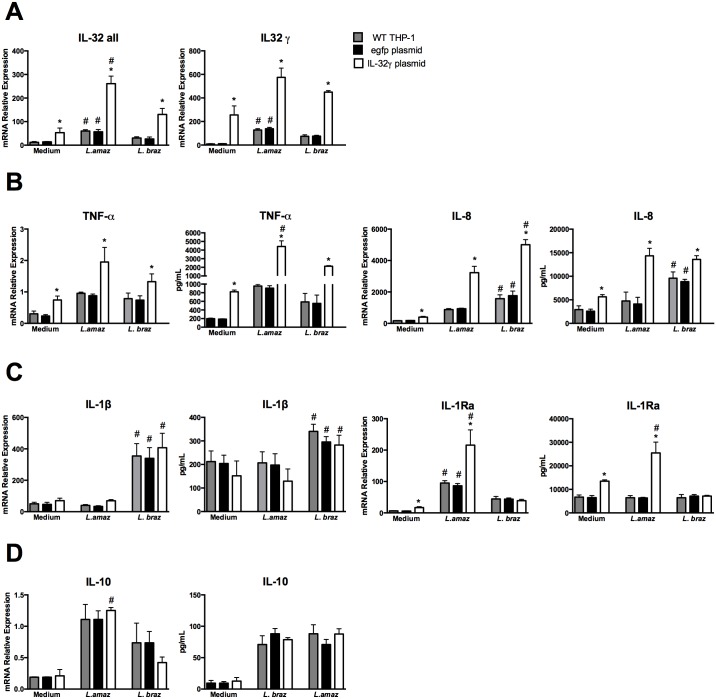
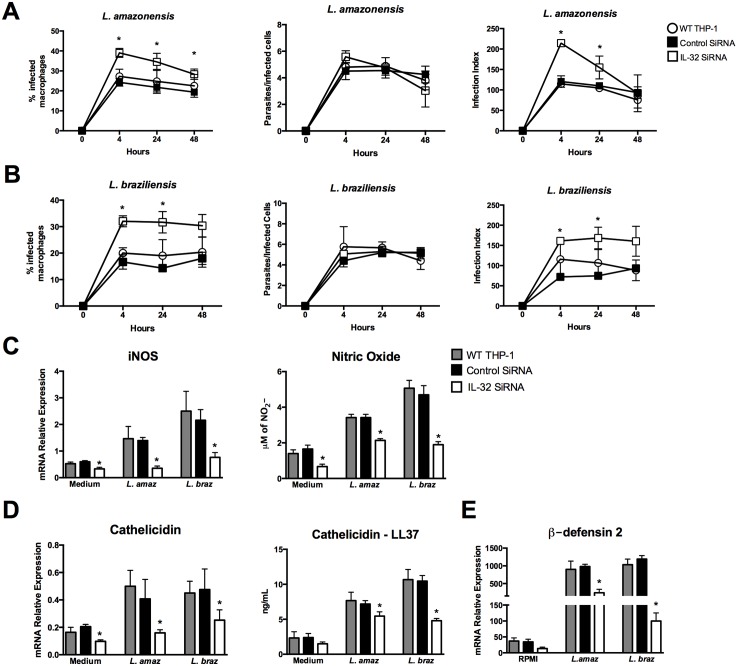
METHODOLOGY/PRINCIPAL FINDINGS: In the present study, silencing and overexpression of IL-32 was performed in THP-1-derived macrophages infected with Leishmania (Viannia) braziliensis or L. (Leishmania) amazonensis to investigate the role of IL-32 in infection. We report that Leishmania species induces IL-32γ, and show that intracellular IL-32γ protein production is dependent on endogenous TNFα. Silencing or overexpression of IL-32 demonstrated that this cytokine is closely related to TNFα and IL-8. Remarkably, the infection index was augmented in the absence of IL-32 and decreased in cells overexpressing this cytokine. Mechanistically, these effects can be explained by nitric oxide cathelicidin and β-defensin 2 production regulated by IL-32.
Thus, endogenous IL-32 is a crucial cytokine involved in the host defense against Leishmania parasites.
白细胞介素-32(IL-32)在美国皮肤利什曼病(ATL)患者的病变中表达,但其在该疾病中的具体作用尚不清楚。
方法/主要发现:在本研究中,对感染巴西利什曼原虫(Viannia)或亚马逊利什曼原虫(Leishmania)的THP-1衍生巨噬细胞进行IL-32的沉默和过表达,以研究IL-32在感染中的作用。我们报告利什曼原虫物种诱导IL-32γ,并表明细胞内IL-32γ蛋白的产生依赖于内源性TNFα。IL-32的沉默或过表达表明该细胞因子与TNFα和IL-8密切相关。值得注意的是,在没有IL-32的情况下感染指数增加,而在过表达该细胞因子的细胞中感染指数降低。从机制上讲,这些作用可以通过IL-32调节的一氧化氮、cathelicidin和β-防御素2的产生来解释。
因此,内源性IL-32是参与宿主抗利什曼原虫寄生虫防御的关键细胞因子。