Soltanian Sara, Sheikhbahaei Mahboubeh
Department of Biology, Faculty of Science, Shahid Bahonar University of Kerman, Kerman, Iran.
Iran J Pharm Res. 2021 Winter;20(1):105-117. doi: 10.22037/ijpr.2020.112373.13715.
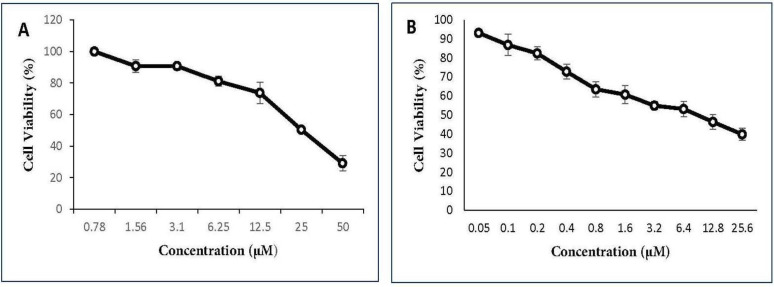
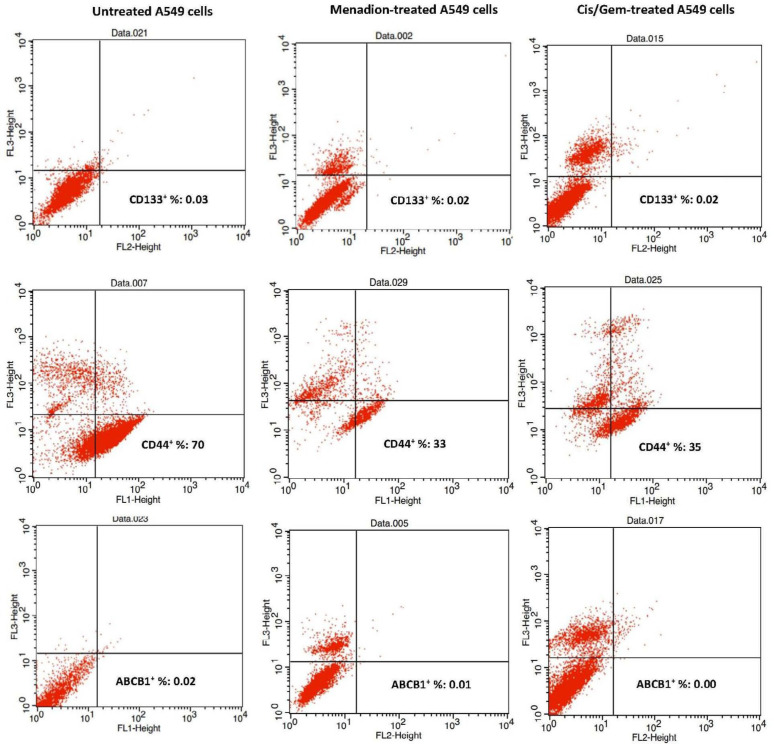
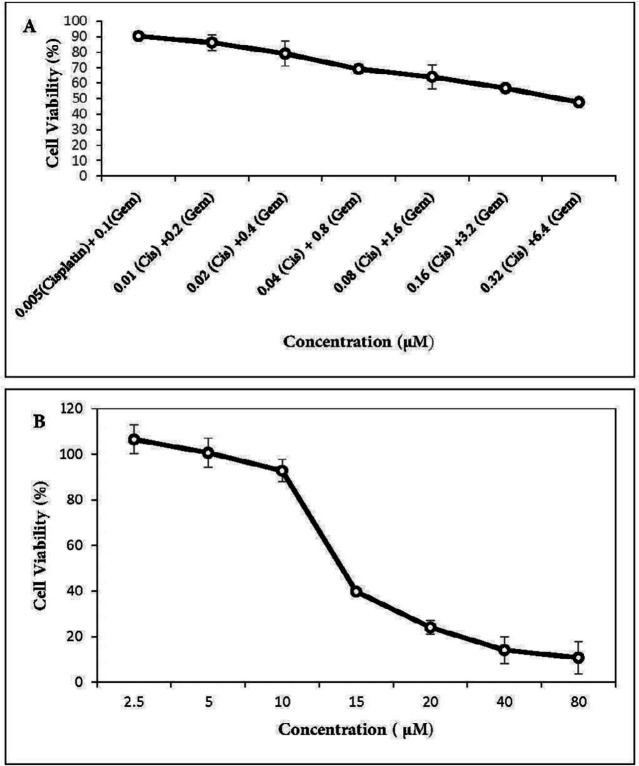
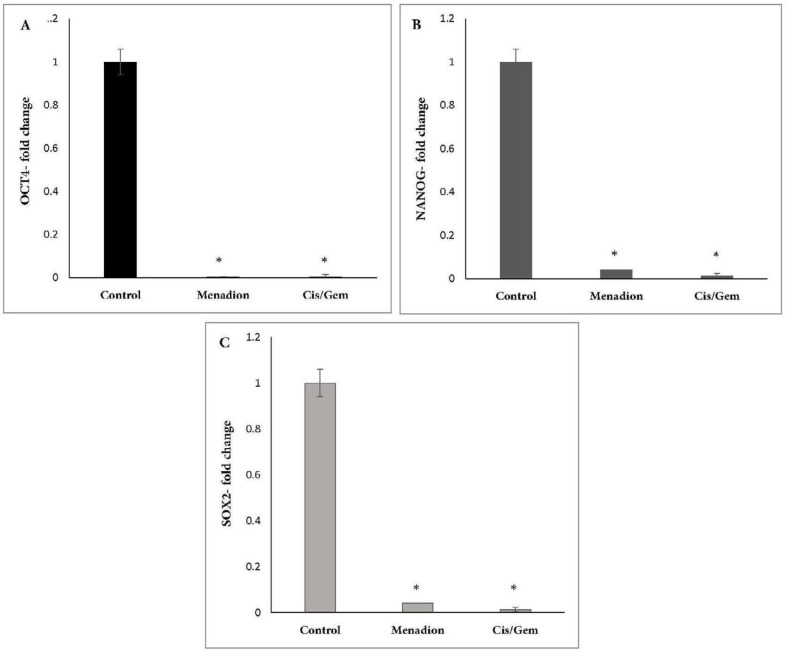
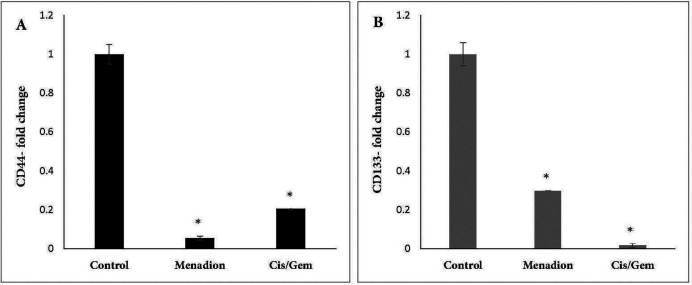
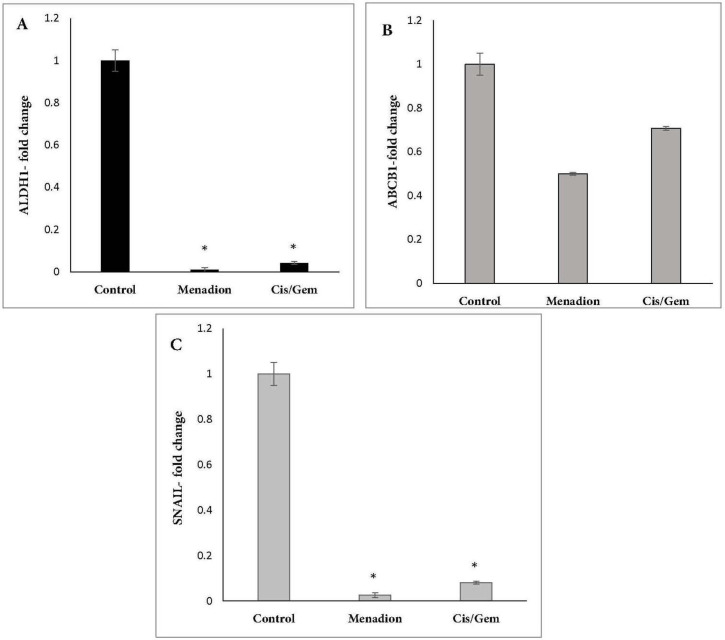
Non-small cell lung cancer (NSCLC) is the most common type of lung cancer. Chemotherapy-induced adverse effects and resistance of NSCLC to conventional drugs reduce the efficacy of current therapies. Tumors contain a small population of cancer stem cells (CSCs) that play a critical role in tumor initiation, maintenance, and drug resistance that finally lead to cancer recurrence. Therefore, CSC-targeting therapies can offer the best hope for developing curative cancer therapies. Vitamins have a high potential for cancer prevention and treatment. Vitamins also ameliorate the side effects which occur in chemo-radio therapy. Menadione (2-methyl-1,4-naphthoquinone/vitamin-K3) is a synthetic form of vitamin K that indicated antitumor activities. The purpose of this study was to evaluate the anti-CSCs effect of menadione and combination of cisplatin and gemcitabine as a first-line treatment in patients with NSCLC on the NSCLC cell line A549. MTT results displayed decreased cell survival after treatment with cisplatin/gemcitabine for 48 h treatment (IC values 0.25 µM for cisplatin and 5 µM for gemcitabine). Menadione also inhibited the cell growth in A549 cells (IC: 16 µM). Quantitative RT-PCR showed significant downregulation of CSC markers () and Snail, epithelial-mesenchymal transition marker, after treatment with menadione and cisplatin/gemcitabine. Flow cytometry showed CD44-positive cells that constitute a high percentage (70%) of A549 cells reduced significantly after treatment with cisplatin/gemcitabine or menadione. However, A549 cells did not show a significant population positive for CD133 and ABCB1 (less than 0.05%), and these fractions did not change after treatment with two agents.
非小细胞肺癌(NSCLC)是最常见的肺癌类型。化疗引起的不良反应以及NSCLC对传统药物的耐药性降低了当前治疗的疗效。肿瘤中含有一小部分癌症干细胞(CSCs),它们在肿瘤的起始、维持和耐药性中起关键作用,最终导致癌症复发。因此,针对癌症干细胞的疗法有望为开发治愈性癌症疗法带来最大希望。维生素在癌症预防和治疗方面具有很大潜力。维生素还能减轻放化疗过程中出现的副作用。甲萘醌(2-甲基-1,4-萘醌/维生素K3)是维生素K的一种合成形式,具有抗肿瘤活性。本研究的目的是评估甲萘醌以及顺铂和吉西他滨联合作为NSCLC患者一线治疗方案对NSCLC细胞系A549的抗癌症干细胞作用。MTT结果显示,用顺铂/吉西他滨处理48小时后细胞存活率降低(顺铂的IC值为0.25µM,吉西他滨的IC值为5µM)。甲萘醌也抑制了A549细胞的生长(IC:16µM)。定量逆转录聚合酶链反应显示,在用甲萘醌和顺铂/吉西他滨处理后,癌症干细胞标志物()和上皮-间质转化标志物Snail显著下调。流式细胞术显示,在用顺铂/吉西他滨或甲萘醌处理后,占A549细胞高比例(70%)的CD44阳性细胞显著减少。然而,A549细胞中CD133和ABCB1阳性细胞的比例不显著(小于0.05%),并且在用两种药物处理后这些比例没有变化。