György Éva, Laslo Éva, Antal Márta, András Csaba Dezső
Department of Food Science Faculty of Economics, Socio-Human Sciences and Engineering Sapientia Hungarian University of Transylvania Miercurea Ciuc Romania.
Department of Bioengineering Faculty of Economics, Socio-Human Sciences and Engineering Sapientia Hungarian University of Transylvania Miercurea Ciuc Romania.
Food Sci Nutr. 2021 Jun 29;9(8):4550-4560. doi: 10.1002/fsn3.2433. eCollection 2021 Aug.
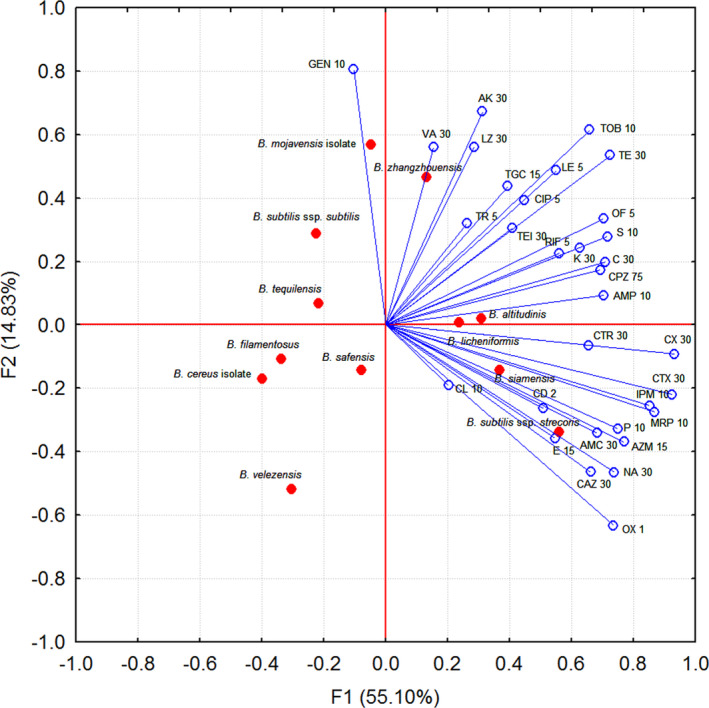
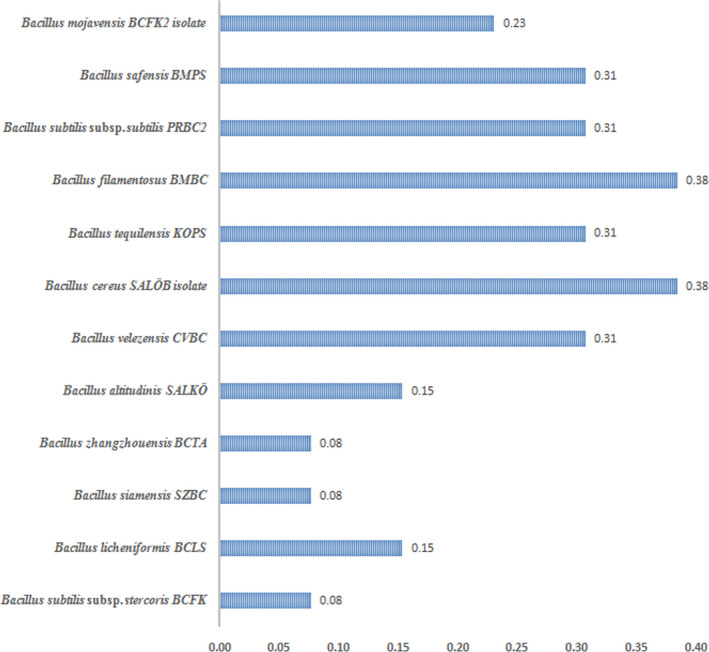
Spices are often used in dried form, sometimes with significant microbial contamination including pathogenic and food spoilage bacteria. The antibiotic resistance represents an additional risk for food industry, and it is worthy of special attention as spices are important food additives. During our work, we examined the microbiological quality of 50 different spices with cultivation methods on diverse selective media. The identification of the most representative bacteria was carried out using 16S rDNA gene sequence analysis. Antibiotic resistance profiling of twelve identified species ( BCFK, BCLS, SZBC, BCTA, SALKÖ, CVBC, SALÖB isolate, KOPS, BMBC, PRBC2, BMPS, and BCFK2 isolate) was performed using the standard disk-diffusion method against 32 antibiotics. The study showed that the majority resistance was obtained against penicillin G (100%), oxacillin (91.67%), amoxyclav (91.67%), rifampicin (75%), and azithromycin (75%). Our findings suggest that spices harbor multidrug-resistant bacteria.
香料通常以干燥形式使用,有时会受到严重的微生物污染,包括致病细菌和导致食物变质的细菌。抗生素耐药性对食品行业来说是一个额外的风险,鉴于香料是重要的食品添加剂,值得特别关注。在我们的研究中,我们使用多种选择性培养基上的培养方法检测了50种不同香料的微生物质量。通过16S rDNA基因序列分析对最具代表性的细菌进行了鉴定。使用标准纸片扩散法,针对32种抗生素对12种已鉴定的菌种(BCFK、BCLS、SZBC、BCTA、SALKÖ、CVBC、SALÖB分离株、KOPS、BMBC、PRBC2、BMPS和BCFK2分离株)进行了抗生素耐药性分析。研究表明,大多数菌株对青霉素G(100%)、苯唑西林(91.67%)、阿莫西林克拉维酸(91.67%)、利福平(75%)和阿奇霉素(75%)耐药。我们的研究结果表明,香料中存在多重耐药细菌。