Department of Bioorganic & Pharmaceutical Chemistry, Faculty of Pharmacy, Al-Quds University, Jerusalem P.O. Box 20002, Palestine.
Molecules. 2020 Mar 16;25(6):1340. doi: 10.3390/molecules25061340.
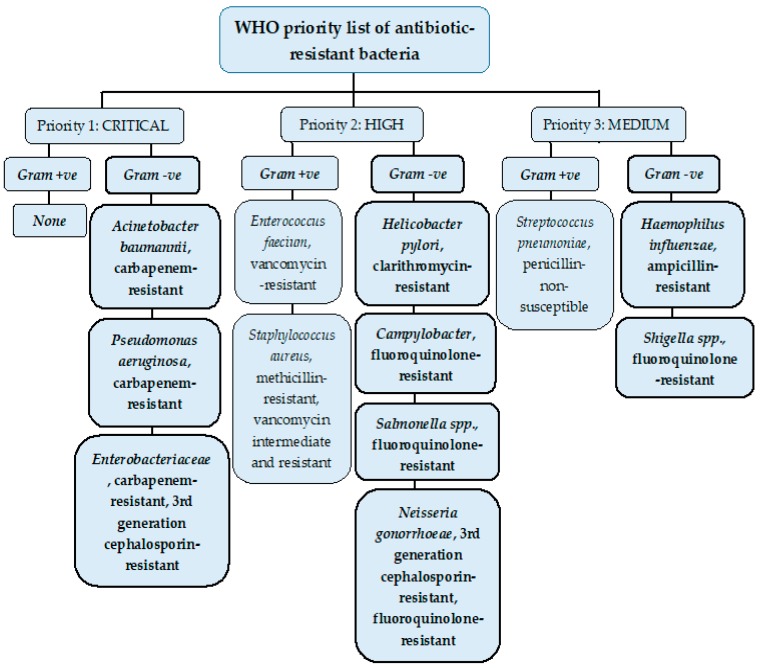
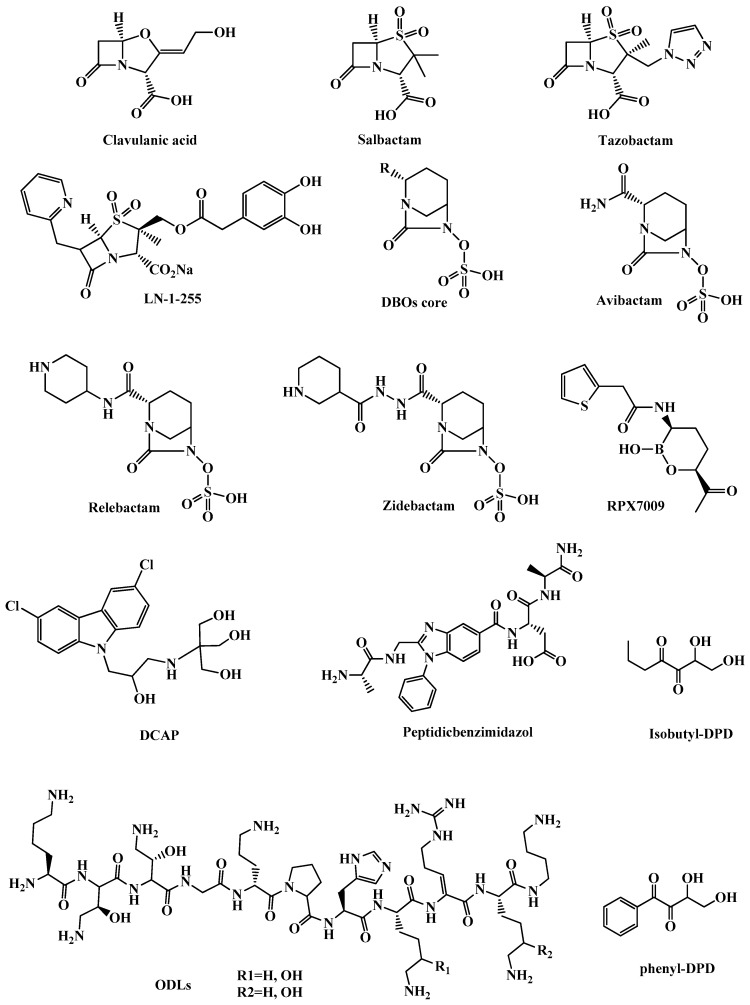
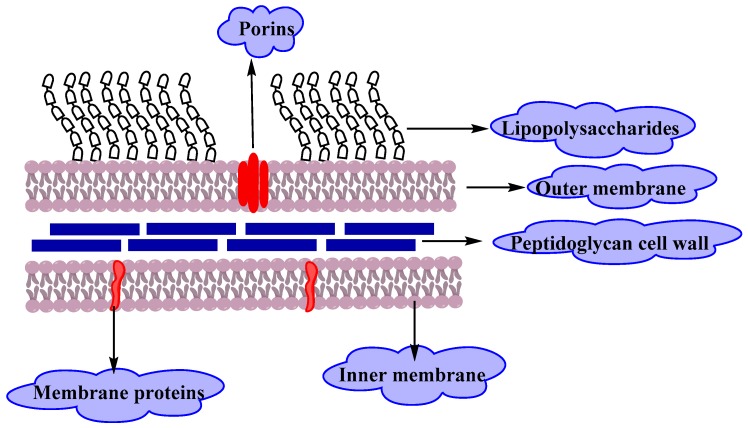
Antimicrobial resistance represents an enormous global health crisis and one of the most serious threats humans face today. Some bacterial strains have acquired resistance to nearly all antibiotics. Therefore, new antibacterial agents are crucially needed to overcome resistant bacteria. In 2017, the World Health Organization (WHO) has published a list of antibiotic-resistant priority pathogens, pathogens which present a great threat to humans and to which new antibiotics are urgently needed the list is categorized according to the urgency of need for new antibiotics as critical, high, and medium priority, in order to guide and promote research and development of new antibiotics. The majority of the WHO list is Gram-negative bacterial pathogens. Due to their distinctive structure, Gram-negative bacteria are more resistant than Gram-positive bacteria, and cause significant morbidity and mortality worldwide. Several strategies have been reported to fight and control resistant Gram-negative bacteria, like the development of antimicrobial auxiliary agents, structural modification of existing antibiotics, and research into and the study of chemical structures with new mechanisms of action and novel targets that resistant bacteria are sensitive to. Research efforts have been made to meet the urgent need for new treatments; some have succeeded to yield activity against resistant Gram-negative bacteria by deactivating the mechanism of resistance, like the action of the β-lactamase Inhibitor antibiotic adjuvants. Another promising trend was by referring to nature to develop naturally derived agents with antibacterial activity on novel targets, agents such as bacteriophages, DCAP(2-((3-(3,6-dichloro-9-carbazol-9-yl)-2-hydroxypropyl)amino)-2(hydroxymethyl)propane1,3-diol, Odilorhabdins (ODLs), peptidic benzimidazoles, quorum sensing (QS) inhibitors, and metal-based antibacterial agents.
抗菌药物耐药性是全球面临的巨大健康危机之一,也是当今人类所面临的最严重威胁之一。一些细菌菌株已经对几乎所有抗生素产生了耐药性。因此,急需新的抗菌药物来克服耐药菌。2017 年,世界卫生组织(WHO)发布了一份抗药性优先病原体清单,这些病原体对人类构成了巨大威胁,急需新的抗生素。该清单根据新抗生素的迫切需求程度分为关键、高和中等优先级,以指导和促进新抗生素的研究和开发。清单中的大多数病原体是革兰氏阴性细菌病原体。由于其独特的结构,革兰氏阴性细菌比革兰氏阳性细菌更具耐药性,在全球范围内导致了重大的发病率和死亡率。已经报道了几种策略来对抗和控制耐药革兰氏阴性细菌,例如开发抗菌辅助剂、对现有抗生素进行结构修饰,以及研究和研究具有新作用机制和新靶标的化学结构,这些靶标对耐药细菌敏感。已经做出了研究努力来满足对新治疗方法的迫切需求;一些方法通过使耐药机制失活来成功地对耐药革兰氏阴性细菌产生活性,例如β-内酰胺酶抑制剂抗生素佐剂的作用。另一个有前途的趋势是参考自然界,开发针对新型靶标的具有抗菌活性的天然衍生剂,例如噬菌体、DCAP(2-((3-(3,6-二氯-9-咔唑-9-基)-2-羟丙基)氨基)-2(羟甲基)丙烷-1,3-二醇、奥多利哈丁(ODLs)、肽苯并咪唑、群体感应(QS)抑制剂和基于金属的抗菌剂。