Zhuang Weiwei, Sun Hongwei, Zhang Shanshan, Zhou Yilin, Weng Wanqing, Wu Boda, Ye Tingbo, Huang Weiguo, Lin Zhuo, Shi Liang, Shi Keqing
Translational Medicine Laboratory, The First Affiliated Hospital of Wenzhou Medical University, Wenzhou 325015, Zhejiang Province, P.R. China.
Department of Hepatobiliary Surgery, The First Affiliated Hospital of Wenzhou Medical University, Wenzhou 325015, Zhejiang Province, P.R. China.
Mol Ther Nucleic Acids. 2021 Jul 2;25:105-115. doi: 10.1016/j.omtn.2021.06.024. eCollection 2021 Sep 3.
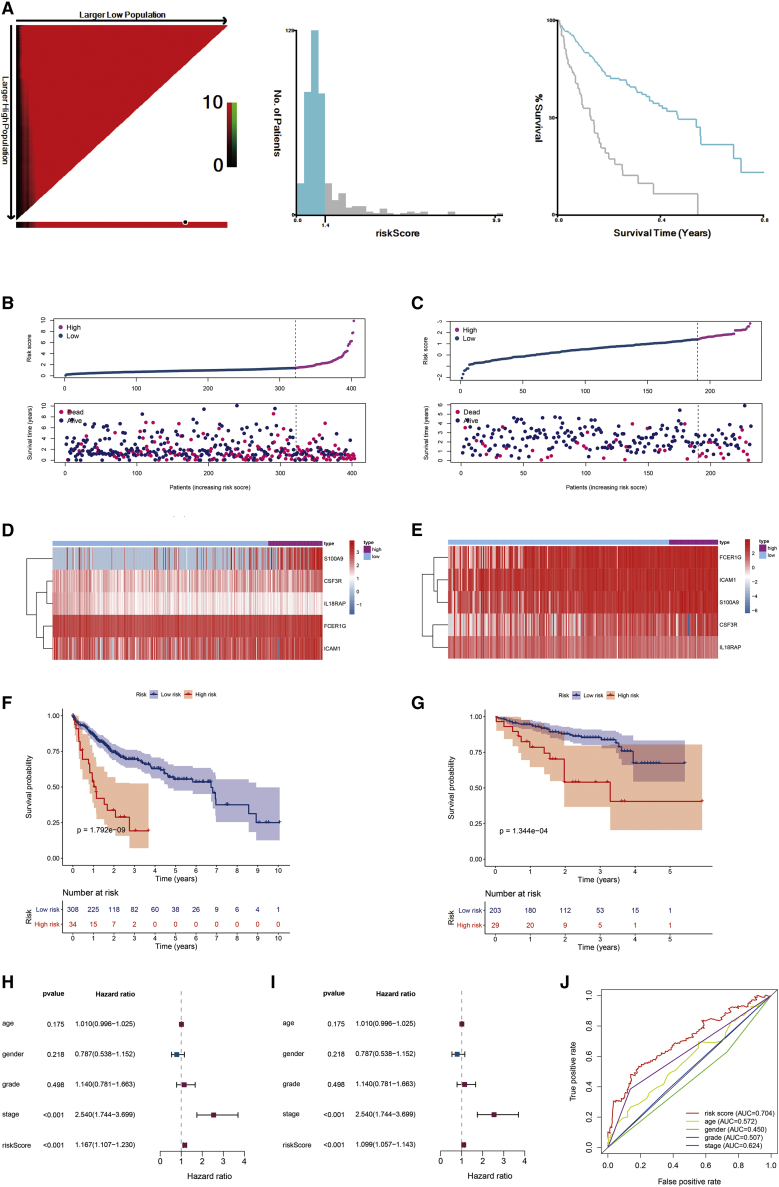
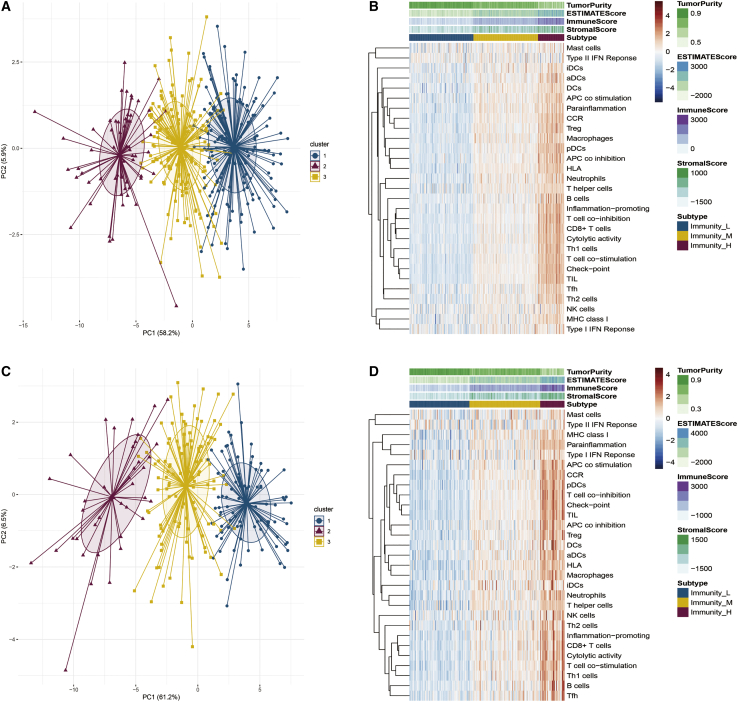
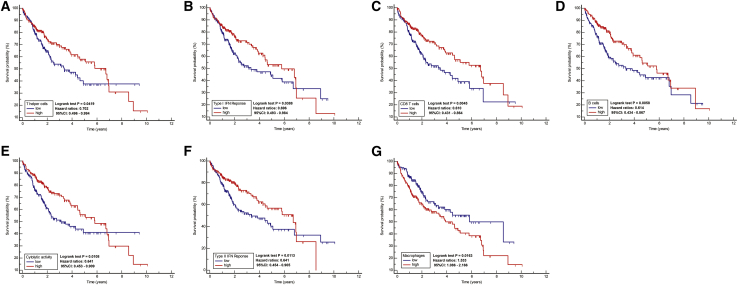
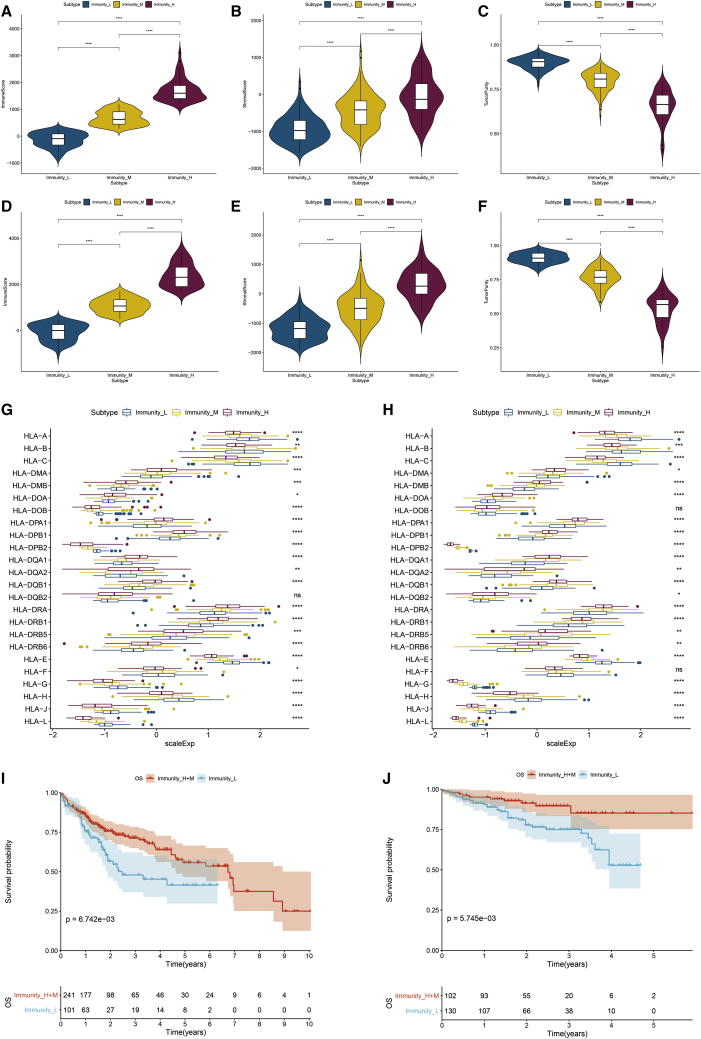
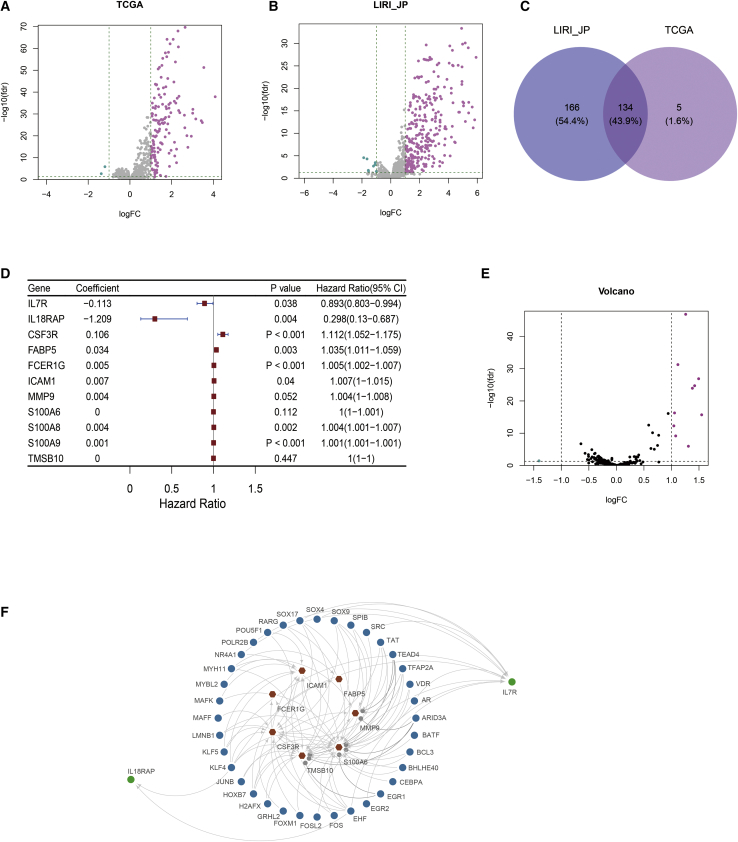
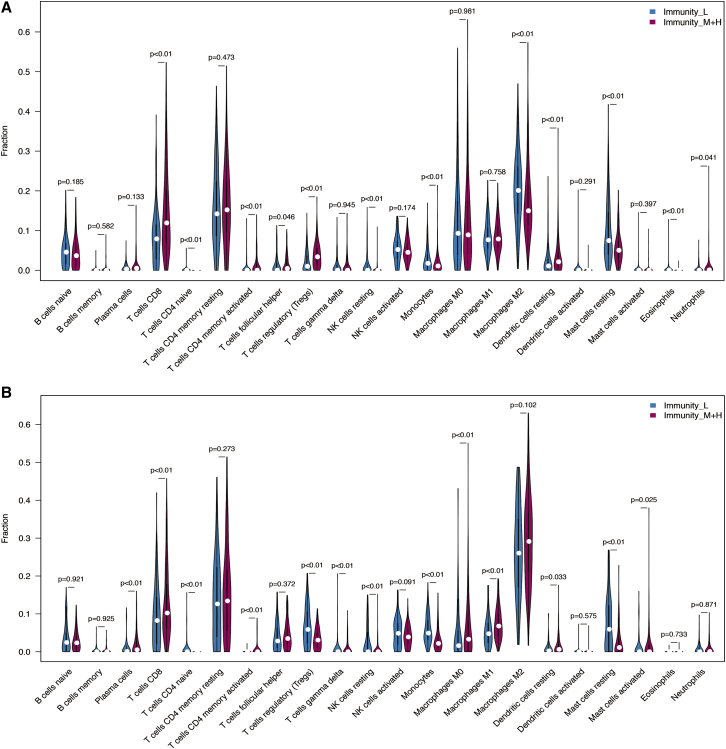
Immunity plays an important role in tumor development. In this study, we aimed to investigate molecular classification and its prognostic value in hepatocellular carcinoma (HCC) based on immune signature. Gene set enrichment analysis (GSEA) was used to calculate scores of immune pathways for HCC and hierarchical clustering in two databases (The Cancer Genome Atlas [TCGA], Liver Cancer-RIKEN, JP [LIRI_JP]). The scores of the immune microenvironment and the proportions of 22 immune cells were also calculated. Single-sample GSEA (ssGSEA) was used to screen survival prognosis-related immune pathways and calculate the hazard radio of differentially expressed immune-related genes (IRGs), which were validated in clinical samples and multiple datasets. Based on the immune characteristics, we identified three HCC subtypes, namely immunity high (Immunity_H), immunity medium (Immunity_M), and immunity low (Immunity_L), and confirmed that the classification was reliable and predictable. Immunity_H with a higher immune and stromal score indicated better survival rate. Cox regression analysis showed that and were the protective genes. Immune risk score was the independent risk factor of overall survival in HCC patients. These results indicated that immunogenomic classification could distinguish HCC patients with different immune status, which could impact the prognosis of the patients with HCC.
免疫在肿瘤发展中起着重要作用。在本研究中,我们旨在基于免疫特征探讨肝细胞癌(HCC)的分子分类及其预后价值。基因集富集分析(GSEA)用于计算HCC免疫通路的得分,并在两个数据库(癌症基因组图谱[TCGA]、日本理化学研究所肝癌数据库[LIRI_JP])中进行层次聚类。还计算了免疫微环境得分和22种免疫细胞的比例。单样本GSEA(ssGSEA)用于筛选与生存预后相关的免疫通路,并计算差异表达免疫相关基因(IRG)的风险比,这些结果在临床样本和多个数据集中得到验证。基于免疫特征,我们鉴定出三种HCC亚型,即免疫高(Immunity_H)、免疫中(Immunity_M)和免疫低(Immunity_L),并证实该分类具有可靠性和可预测性。免疫高的Immunity_H具有更高的免疫和基质得分,表明生存率更高。Cox回归分析表明,[此处原文缺失具体基因名称]和[此处原文缺失具体基因名称]是保护基因。免疫风险评分是HCC患者总生存的独立危险因素。这些结果表明,免疫基因组分类可以区分具有不同免疫状态的HCC患者,这可能影响HCC患者的预后。