Fu Xiao-Wei, Song Chun-Qing
Fudan University, Shanghai, China.
Key Laboratory of Growth Regulation and Translational Research of Zhejiang Province, School of Life Sciences, Westlake University, Hangzhou, China.
Front Cell Dev Biol. 2021 Nov 8;9:748039. doi: 10.3389/fcell.2021.748039. eCollection 2021.
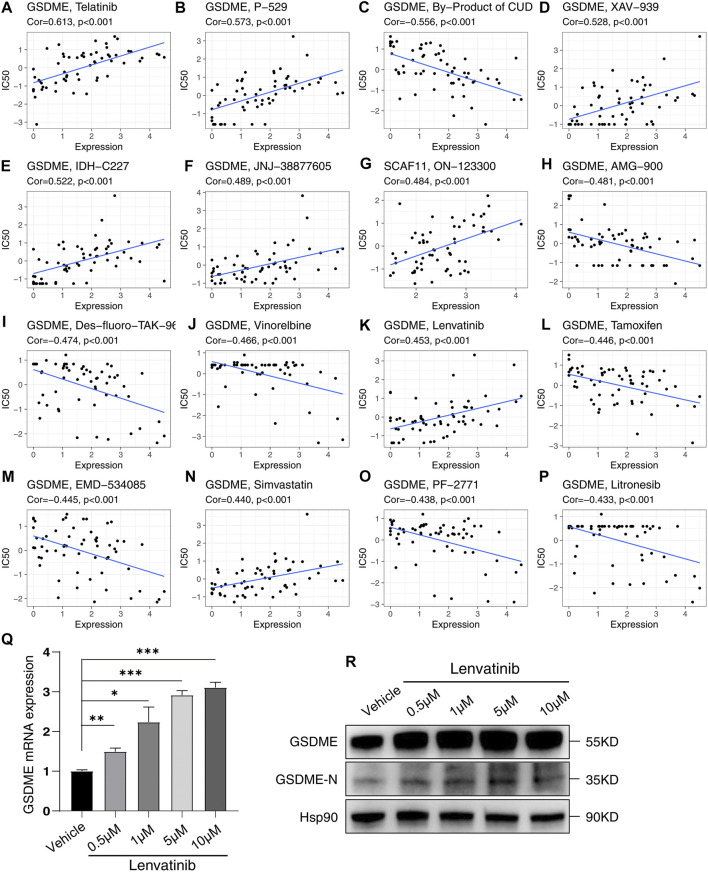
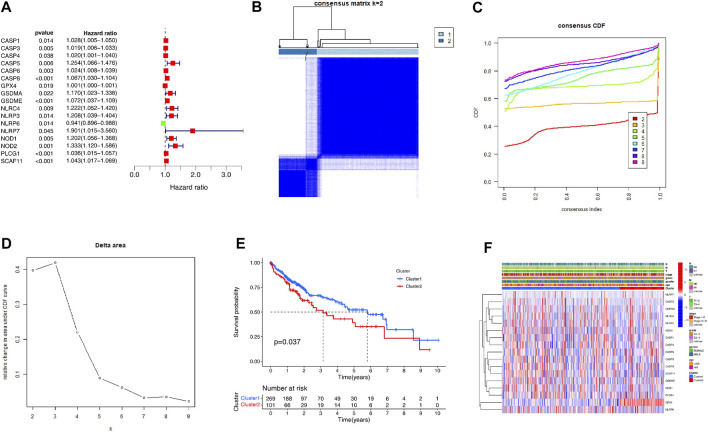
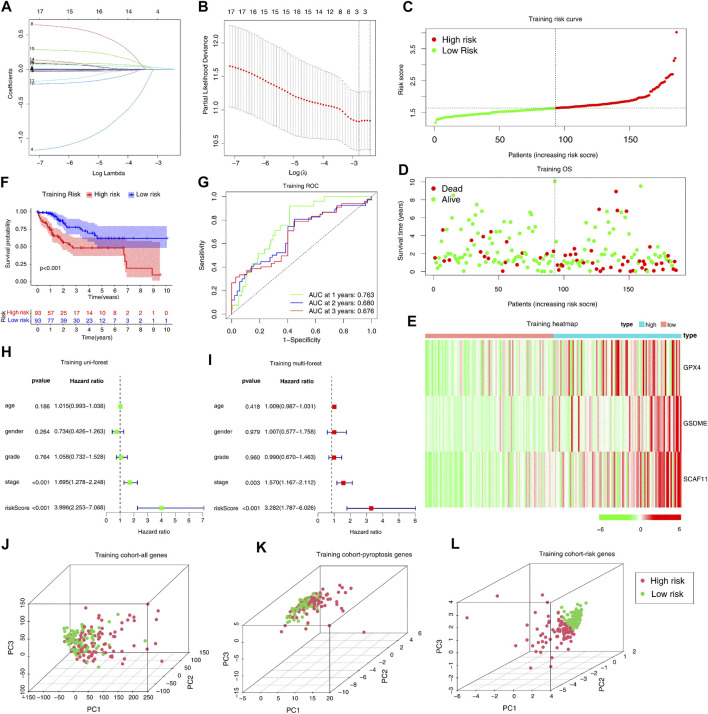
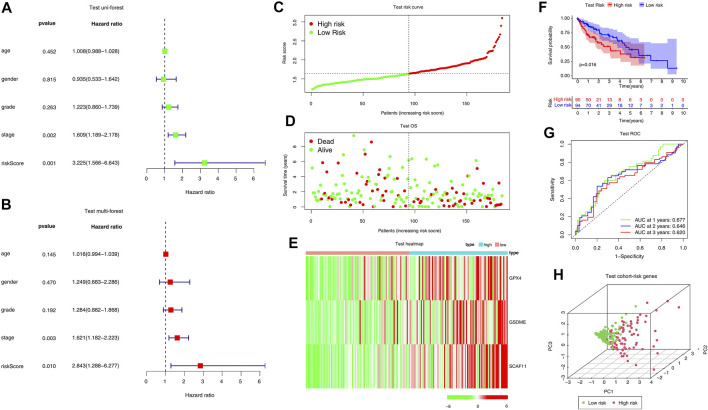
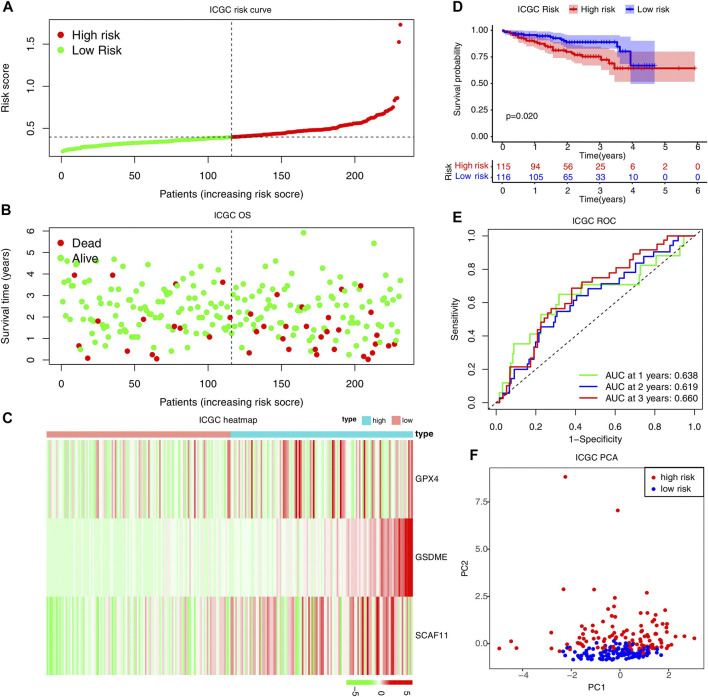
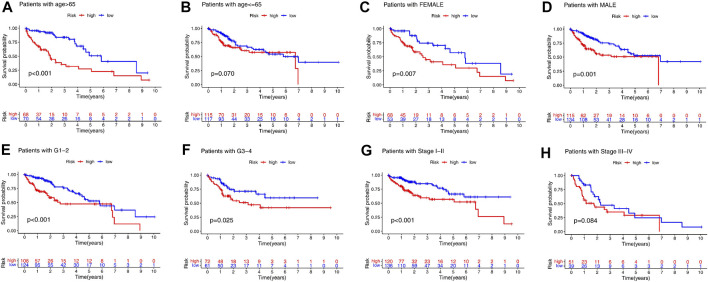
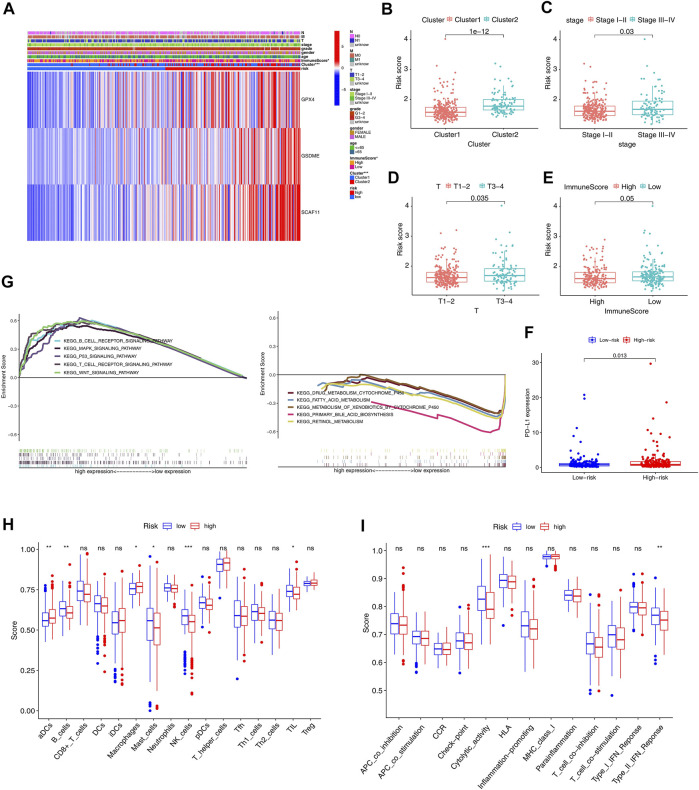
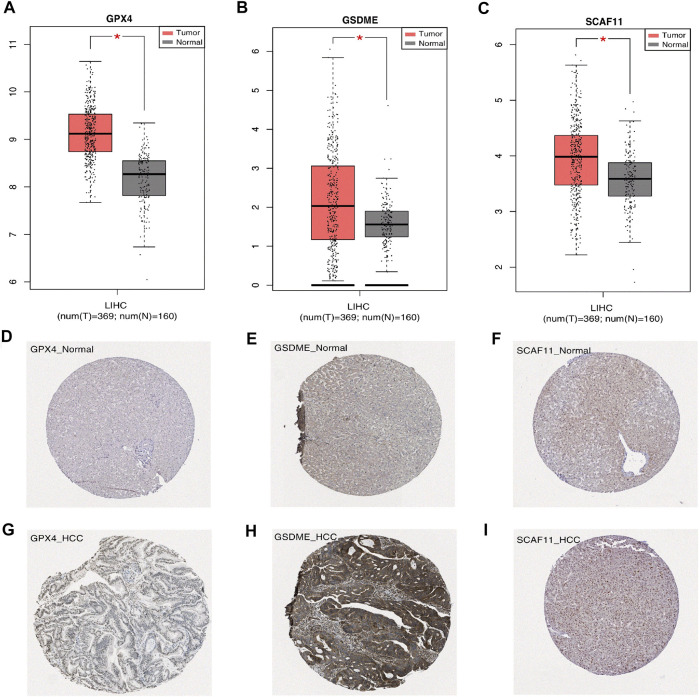
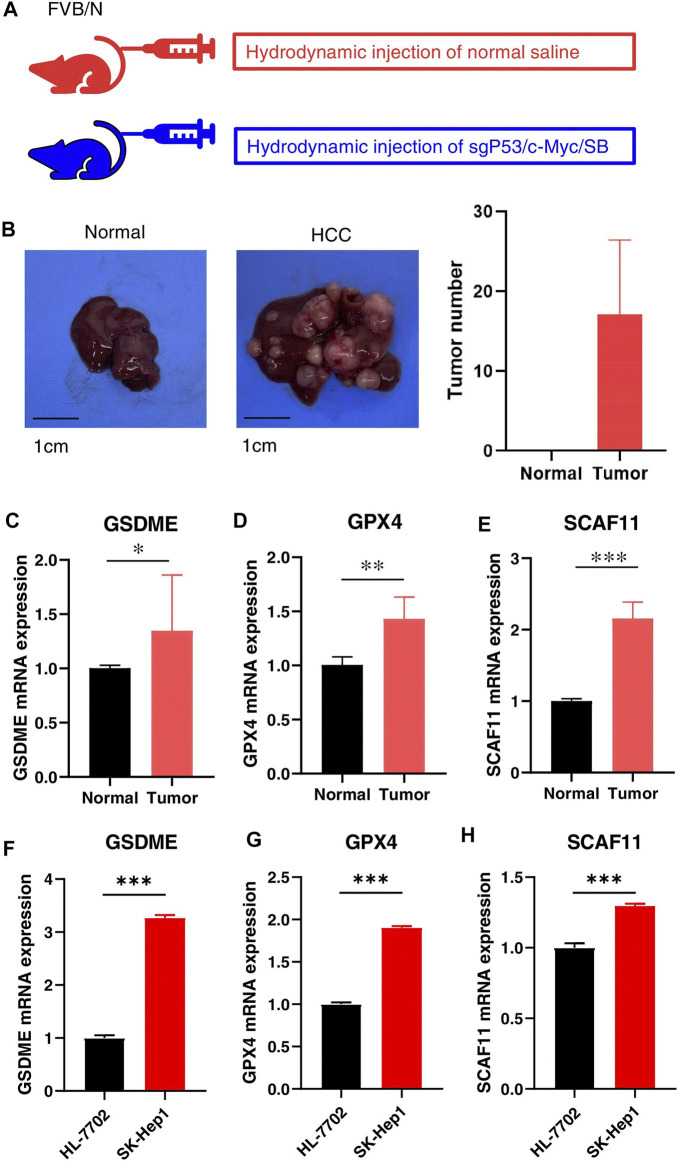
Hepatocellular carcinoma (HCC) is characterized by a poor prognosis and accounts for the fourth common cause of cancer-related deaths. Recently, pyroptosis has been revealed to be involved in the progression of multiple cancers. However, the role of pyroptosis in the HCC prognosis remains elusive. The clinical information and RNA-seq data of the HCC patients were collected from the TCGA-LIHC datasets, and the differential pyroptosis-related genes (PRG) were firstly explored. The univariate Cox regression and consensus clustering were applied to recognize the HCC subtypes. The prognostic PRGs were then submitted to the LASSO regression analysis to build a prognostic model in the TCGA training cohort. We further evaluated the predictive model in the TCGA test cohort and ICGC validation cohort (LIRI-JP). The accuracy of prediction was validated using the Kaplan-Meier (K-M) and receiver operating characteristic (ROC) analyses. The single-sample gene set enrichment analysis (ssGSEA) was used to determine the differential immune cell infiltrations and related pathways. Finally, the expression of the prognostic genes was validated by qRT-PCR and . We identified a total of 26 differential PRGs, among which three PRGs comprising GSDME, GPX4, and SCAF11 were subsequently chosen for constructing a prognostic model. This model significantly distinguished the HCC patients with different survival years in the TCGA training, test, and ICGC validation cohorts. The risk score of this model was confirmed as an independent prognostic factor. A nomogram was generated indicating the survival years for each HCC patient. The ssGSEA demonstrated several tumor-infiltrating immune cells to be remarkably associated with the risk scores. The qRT-PCR results also showed the apparent dysregulation of PRGs in HCC. Finally, the drug sensitivity was analyzed, indicating that Lenvatinib might impact the progression of HCC via targeting GSDME, which was also validated in human Huh7 cells. The PRG signature comprised of GSDME, GPX4, and SCAF11 can serve as an independent prognostic factor for HCC patients, which would provide further evidence for more clinical and functional studies.
肝细胞癌(HCC)的预后较差,是癌症相关死亡的第四大常见原因。最近,有研究表明细胞焦亡参与了多种癌症的进展。然而,细胞焦亡在HCC预后中的作用仍不清楚。从TCGA-LIHC数据集中收集HCC患者的临床信息和RNA测序数据,首先探索差异细胞焦亡相关基因(PRG)。应用单因素Cox回归和一致性聚类来识别HCC亚型。然后将预后PRG进行LASSO回归分析,以在TCGA训练队列中建立预后模型。我们在TCGA测试队列和ICGC验证队列(LIRI-JP)中进一步评估了该预测模型。使用Kaplan-Meier(K-M)分析和受试者工作特征(ROC)分析验证了预测的准确性。采用单样本基因集富集分析(ssGSEA)来确定差异免疫细胞浸润和相关途径。最后,通过qRT-PCR验证了预后基因的表达。我们共鉴定出26个差异PRG,随后选择其中包括GSDME、GPX4和SCAF11的3个PRG构建预后模型。该模型在TCGA训练、测试和ICGC验证队列中显著区分了具有不同生存年限的HCC患者。该模型的风险评分被确认为独立的预后因素。生成了列线图,表明了每位HCC患者的生存年限。ssGSEA显示几种肿瘤浸润免疫细胞与风险评分显著相关。qRT-PCR结果也显示HCC中PRG明显失调。最后,分析了药物敏感性,表明乐伐替尼可能通过靶向GSDME影响HCC的进展,这也在人Huh7细胞中得到了验证。由GSDME、GPX4和SCAF11组成的PRG特征可作为HCC患者的独立预后因素,这将为更多的临床和功能研究提供进一步的证据。