Huo Junyu, Wu Liqun, Zang Yunjin
Liver Disease Center, The Affiliated Hospital of Qingdao University, Qingdao, China.
Front Mol Biosci. 2020 Nov 13;7:581354. doi: 10.3389/fmolb.2020.581354. eCollection 2020.
Tumor mutation burden (TMB) is an emerging biomarker for immunotherapy of hepatocellular carcinoma (HCC), but its value for clinical application has not been fully revealed.
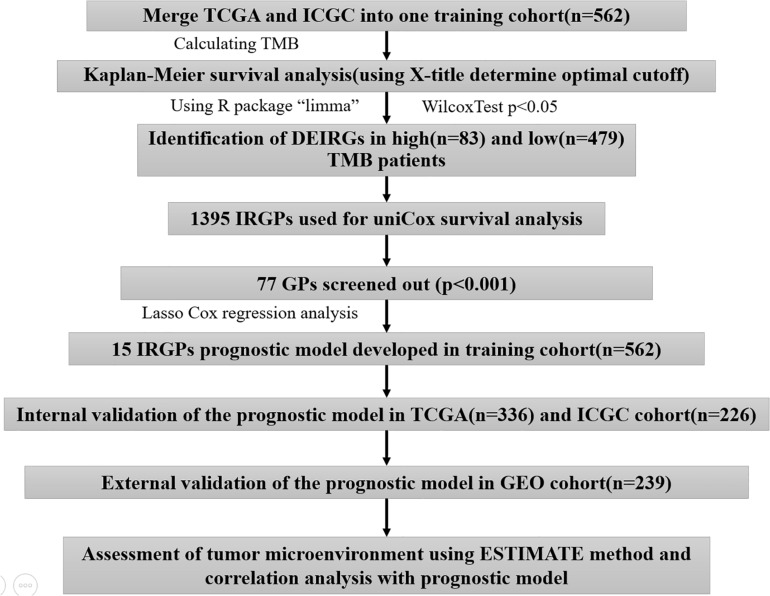
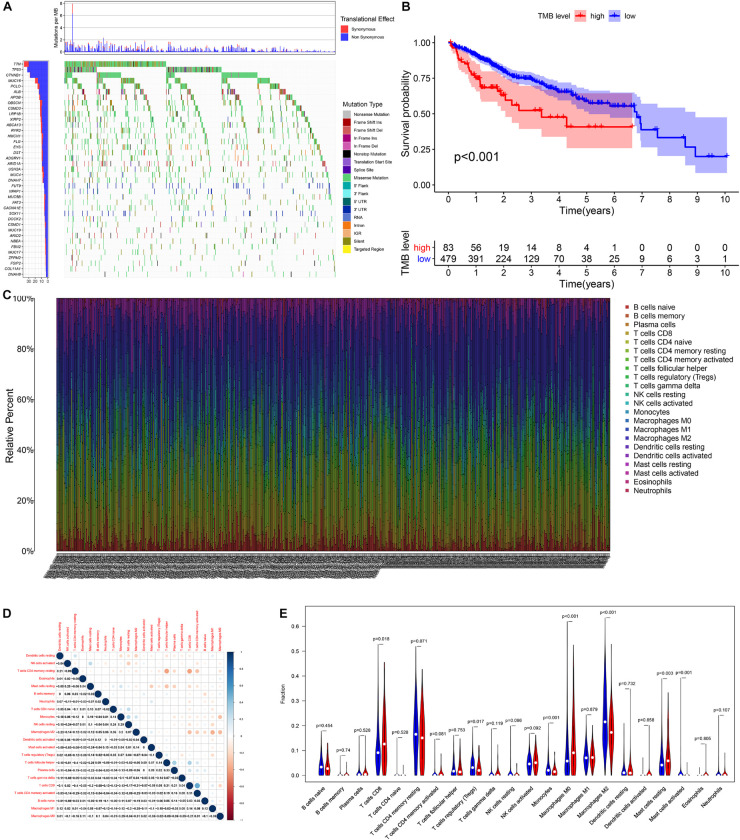
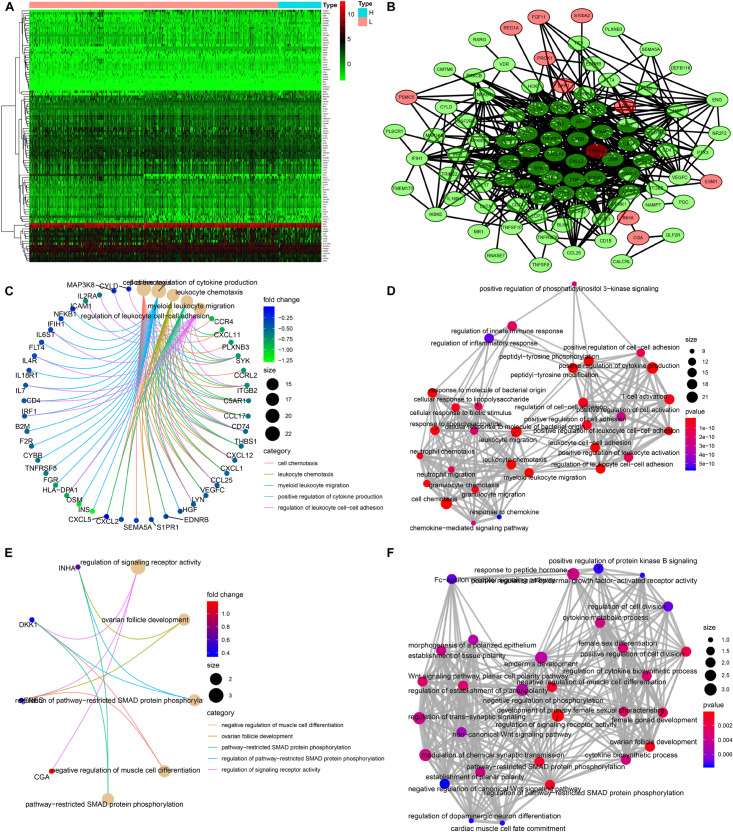
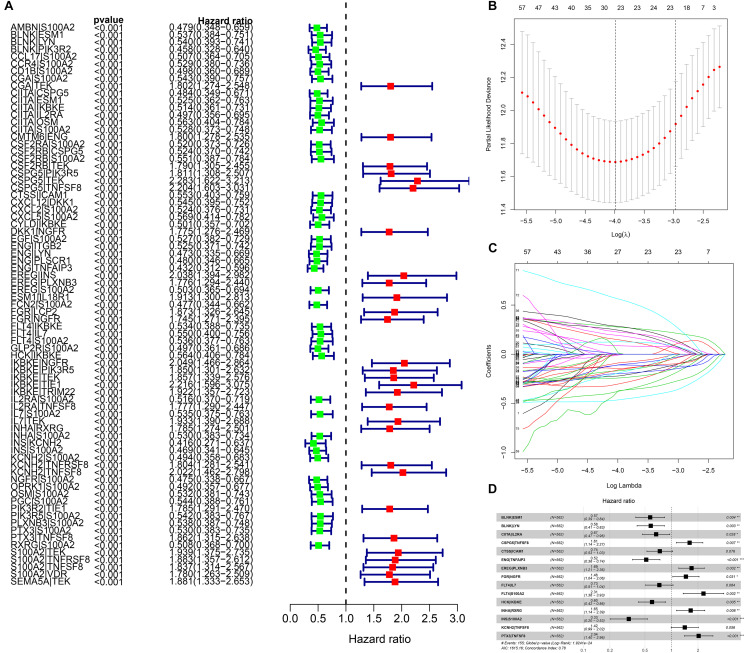
We used the Wilcox test to identify the differentially expressed immune-related genes (DEIRGs) in groups with high and low TMB as well as screened the immune gene pairs related to prognosis using univariate Cox regression analysis. A LASSO Cox regression prognostic model was developed by combining The Cancer Genome Atlas Liver Hepatocellular Carcinoma (TCGA-LIHC) with the International Cancer Genome Consortium (ICGC) LIRI-JP cohort, and internal (TCGA, ICGC) and external (GSE14520) validation analyses were conducted on the predictive value of the model. We also explored the relationship between the prognostic model and tumor microenvironment via the ESTIMATE algorithm and performed clinical correlation analysis by the chi-square test, revealing its underlying molecular mechanism with the help of Gene Set Enrichment Analysis (GSEA).
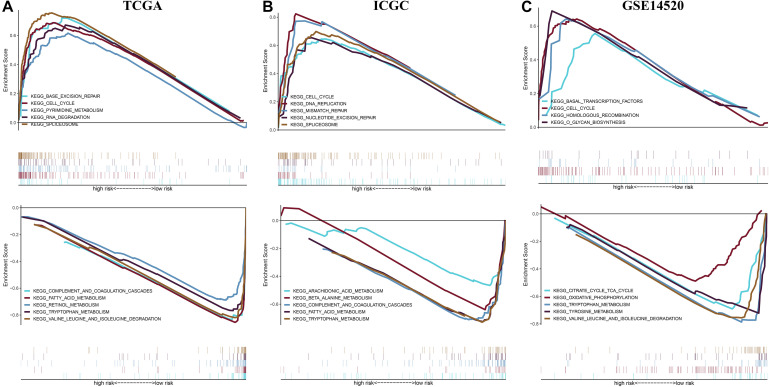
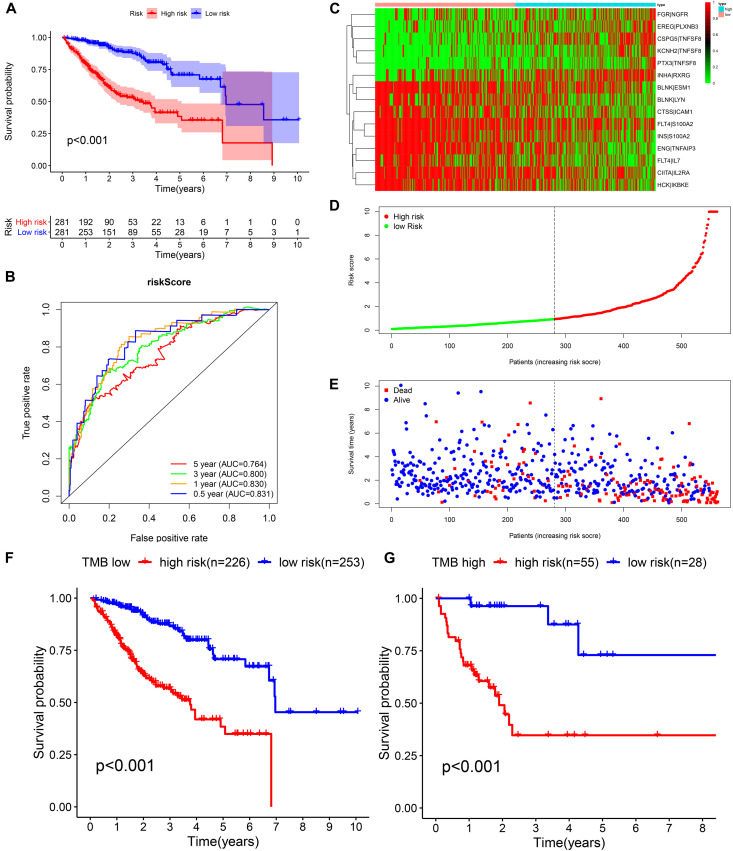
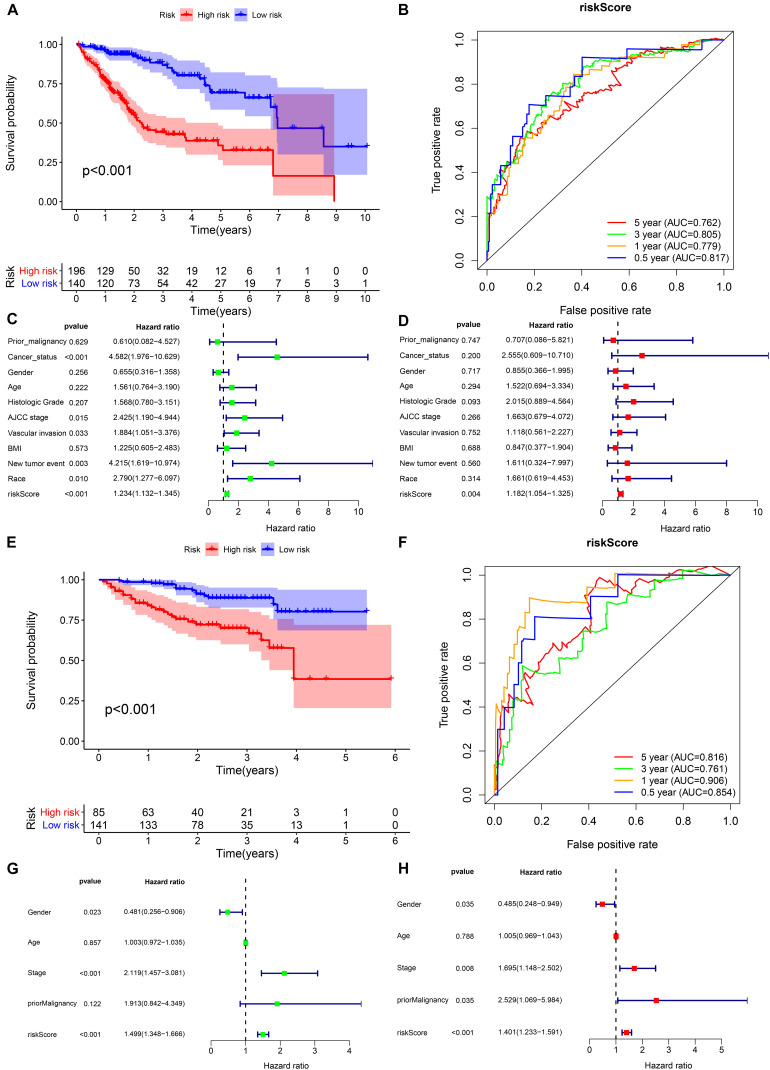
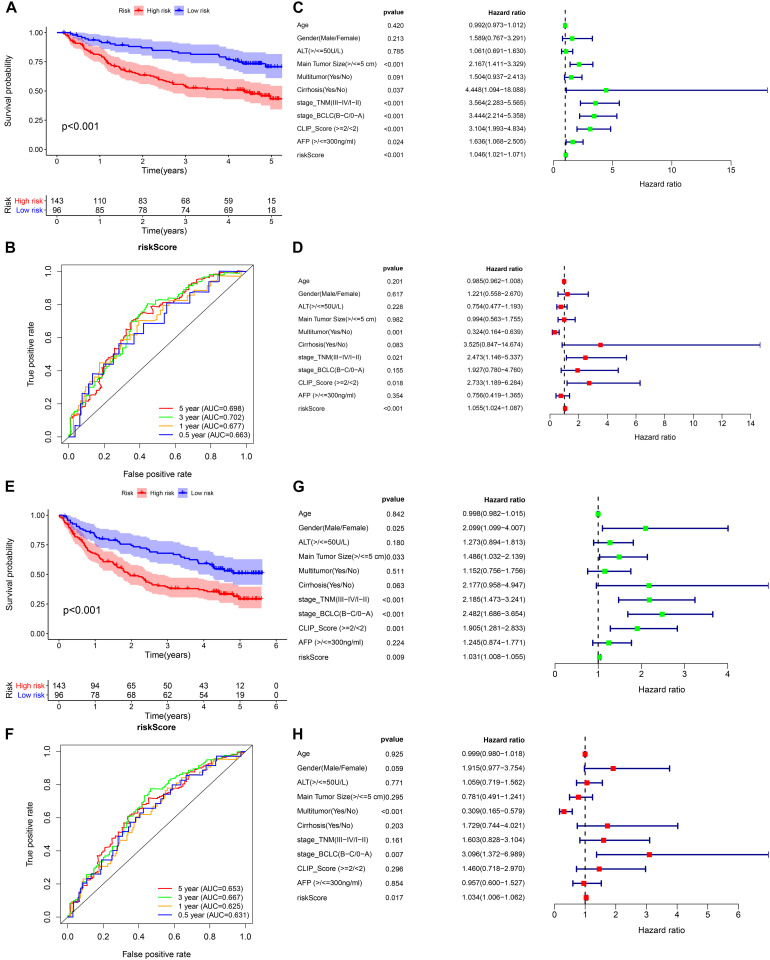
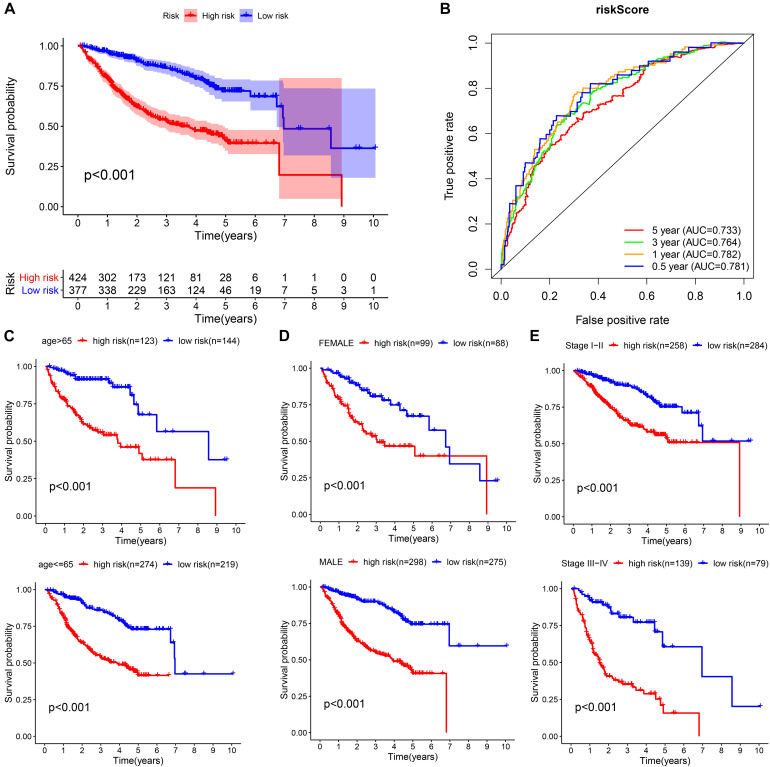
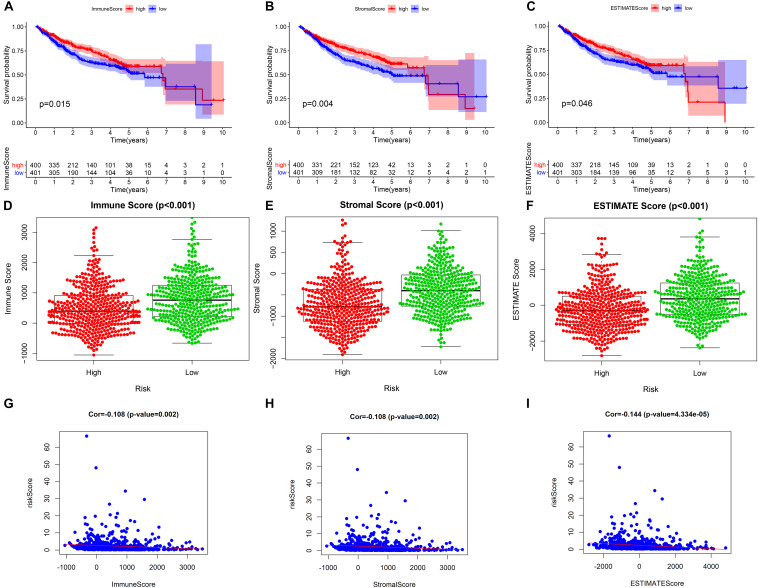
The prognostic model consisting of 15 immune gene pairs showed high predictive value for short- and long-term survival of HCC in three independent cohorts. Based on univariate multivariate Cox regression analysis, the prognostic model could be used to independently predict the prognosis in each independent cohort. The immune score, stromal score, and estimated score values were lower in the high-risk group than in the low-risk group. As shown by the chi-square test, the prognostic model exhibited an obvious correlation with the tumor stage [American Joint Committee on Cancer tumor-node-metastasis (AJCC-TNM) ( < 0.001), Barcelona Clinic Liver Cancer (BCLC) ( = 0.003)], histopathological grade ( = 0.033), vascular invasion ( = 0.009), maximum tumor diameter ( = 0.013), and background of liver cirrhosis ( < 0.001). GSEA revealed that the high-risk group had an enrichment of many oncology features, including the cell cycle, mismatch repair, DNA replication, RNA degradation, etc.
Our research developed and validated a reliable prognostic model associated with TMB for HCC, which may help to further enrich the therapeutic targets of HCC.
肿瘤突变负荷(TMB)是肝细胞癌(HCC)免疫治疗中一种新兴的生物标志物,但其临床应用价值尚未完全揭示。
我们使用Wilcox检验来识别高TMB组和低TMB组中差异表达的免疫相关基因(DEIRGs),并使用单变量Cox回归分析筛选与预后相关的免疫基因对。通过将癌症基因组图谱肝细胞癌(TCGA-LIHC)与国际癌症基因组联盟(ICGC)LIRI-JP队列相结合,构建了LASSO Cox回归预后模型,并对该模型的预测价值进行了内部(TCGA、ICGC)和外部(GSE14520)验证分析。我们还通过ESTIMATE算法探索了预后模型与肿瘤微环境之间的关系,并通过卡方检验进行临床相关性分析,借助基因集富集分析(GSEA)揭示其潜在分子机制。
由15个免疫基因对组成的预后模型在三个独立队列中对HCC的短期和长期生存均显示出较高的预测价值。基于单变量和多变量Cox回归分析,该预后模型可用于独立预测每个独立队列中的预后。高风险组的免疫评分、基质评分和估计评分值均低于低风险组。如卡方检验所示,预后模型与肿瘤分期[美国癌症联合委员会肿瘤-淋巴结-转移(AJCC-TNM)(<0.001)、巴塞罗那临床肝癌(BCLC)(=0.003)]、组织病理学分级(=0.033)、血管侵犯(=0.009)、最大肿瘤直径(=0.013)和肝硬化背景(<0.001)具有明显相关性。GSEA显示,高风险组富集了许多肿瘤学特征,包括细胞周期、错配修复、DNA复制、RNA降解等。
我们的研究开发并验证了一种与HCC的TMB相关的可靠预后模型,这可能有助于进一步丰富HCC的治疗靶点。