Thapa Punam, Thapa Alina, Khadka Sujan, Sapkota Sanjeep, Panta Om Prakash, Sharma Suprina, Karki Tika Bahadur, Poudel Pramod
Department of Microbiology, National College (NIST), Tribhuvan University, P.O. Box: 8659, Khusibu, Naya Bazar, Kathmandu, Nepal.
State Key Laboratory of Alpine Ecology and Biodiversity, Institute of Tibetan Plateau Research, Chinese Academy of Sciences, Beijing, 100101, China.
Heliyon. 2021 Aug 4;7(8):e07715. doi: 10.1016/j.heliyon.2021.e07715. eCollection 2021 Aug.
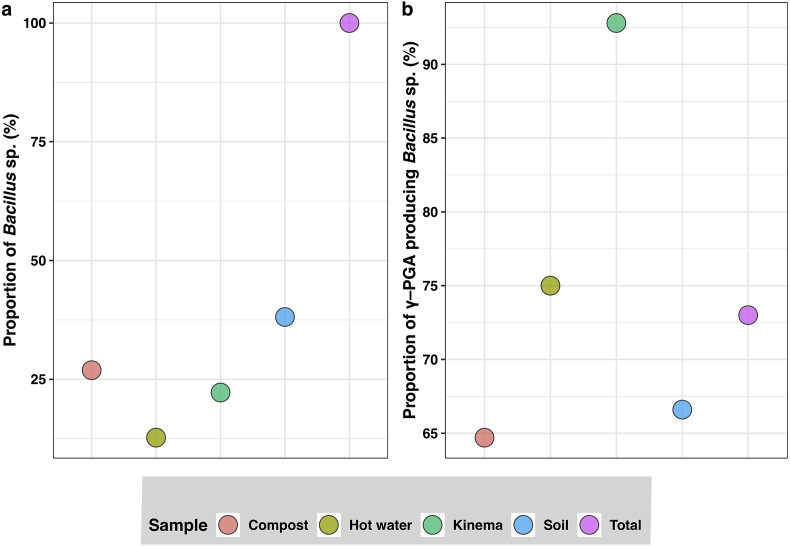
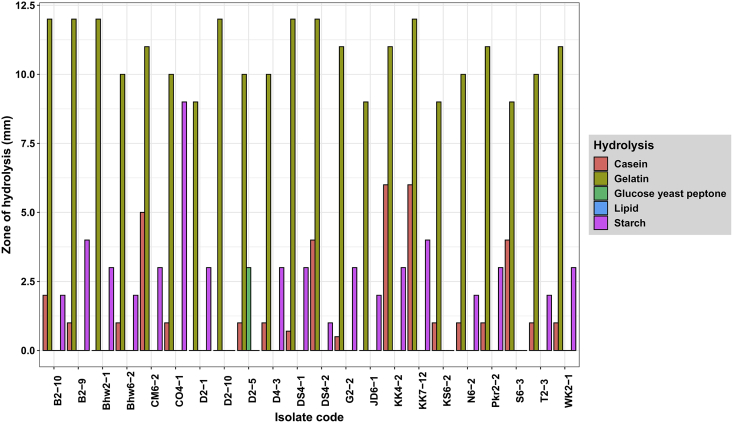
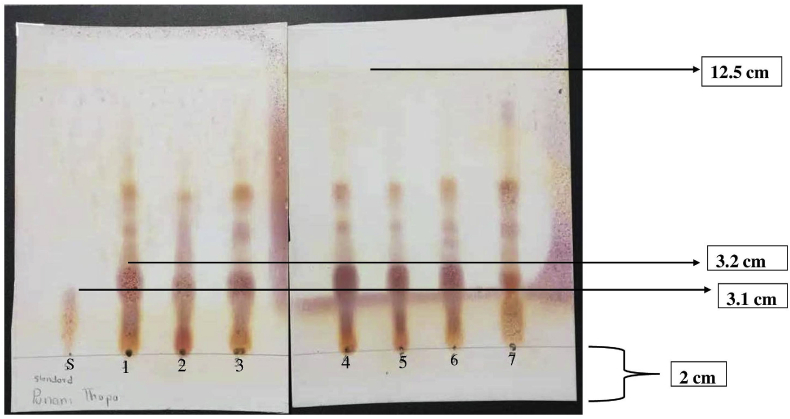
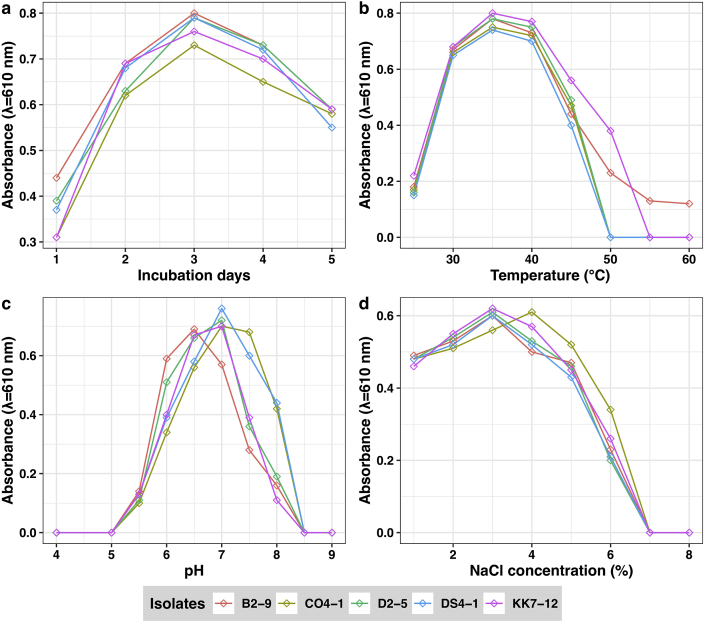
Microbially produced gamma poly glutamic acid (γ-PGA) is a commercially important biopolymer with many applications in foods and various other substances and are abundantly used in different parts of the world. With an aim to study the potent γ-PGA producing species, a total of 47 different samples (, soil, and water) were randomly collected from different locations across the country, and sp. were selectively isolated, screened, and characterized by performing physiological, biochemical, morphological, and rRNA gene sequencing. The microbial production of γ-PGA was assayed with the selected isolates on the PGA medium and the metabolite obtained was recovered by ethanol precipitation method and further characterized by thin-layer chromatography (TLC). Thermotolerance (25-60 °C), pH tolerance (4-9), and NaCl tolerance (1-9%) tests were performed to optimize the bacterial growth and γ-PGA production and its viscosity were measured by Ostwald's viscometer. Out of 145 randomly selected colonies, 63 isolates were Gram-positive, rods, and endospore producers and were presumptively confirmed as genus Higher growth of γ-PGA producers were reported in 22 isolates and was found at optimum conditions such as temperature (30-37 °C), pH (6.5-7), incubation time (3 days), and NaCl concentration (3%) and γ-PGA thus produced was further verified by TLC with the retention factor (RF) value 0.27. The potent isolates were closely similar to subsp, , and etc Based on the findings of the study, . is the most potent γ-PGA producing sp. which can further be used for the commercial production of γ-PGA. To the best of our knowledge, there is yet no published research from Nepal showing the production of the γ-PGA although microbially produced γ-PGA are the major constituents in some popular foods in particular communities of the country.
微生物产生的γ-聚谷氨酸(γ-PGA)是一种具有重要商业价值的生物聚合物,在食品和其他各种物质中有许多应用,在世界不同地区被广泛使用。为了研究高效产生γ-PGA的菌种,从全国不同地点随机采集了总共47个不同的样品(土壤和水),并通过进行生理、生化、形态学和rRNA基因测序,选择性地分离、筛选和鉴定芽孢杆菌属的菌株。在PGA培养基上用选定的分离株测定γ-PGA的微生物产量,通过乙醇沉淀法回收得到的代谢产物,并通过薄层色谱(TLC)进一步表征。进行耐热性(25-60℃)、pH耐受性(4-9)和NaCl耐受性(1-9%)测试以优化细菌生长和γ-PGA产量,并通过奥氏粘度计测量其粘度。在145个随机选择的菌落中,63个分离株为革兰氏阳性、杆状且产芽孢,初步确认为芽孢杆菌属。据报道,22个分离株中γ-PGA产生菌的生长较好,发现在温度(30-37℃)、pH(6.5-7)、培养时间(3天)和NaCl浓度(3%)等最佳条件下,如此产生的γ-PGA通过TLC进一步验证,保留因子(RF)值为0.27。这些高效分离株与枯草芽孢杆菌亚种、解淀粉芽孢杆菌和地衣芽孢杆菌等非常相似。基于该研究的结果,枯草芽孢杆菌是最有效的γ-PGA产生芽孢杆菌属菌株,可进一步用于γ-PGA的商业生产。据我们所知,尼泊尔尚未有已发表的研究表明γ-PGA的生产,尽管微生物产生的γ-PGA是该国特定社区一些流行食品的主要成分。