Chen Ruoyao, Ram Abhineet, Albeck John G, Overholtzer Michael
Cell Biology Program, Memorial Sloan Kettering Cancer Center, New York, NY 10065, USA.
BCMB Allied Program, Weill Cornell Medical College, New York, NY 10065, USA.
iScience. 2021 Jul 24;24(8):102902. doi: 10.1016/j.isci.2021.102902. eCollection 2021 Aug 20.
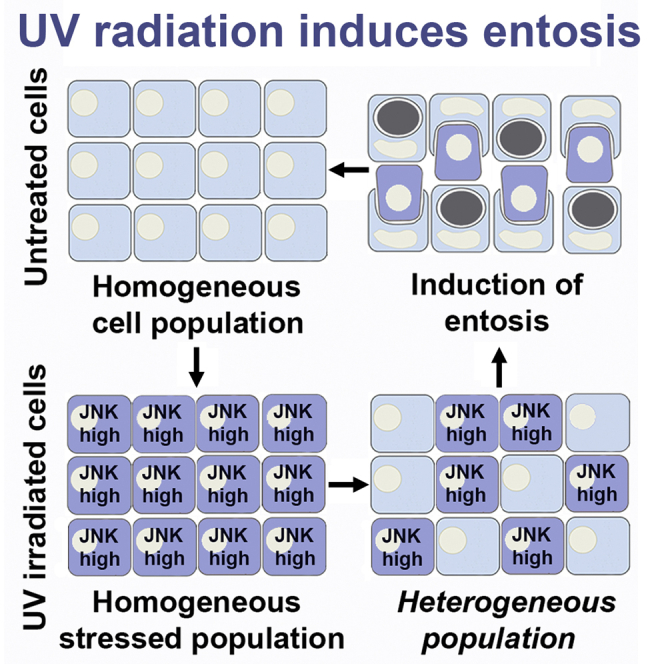
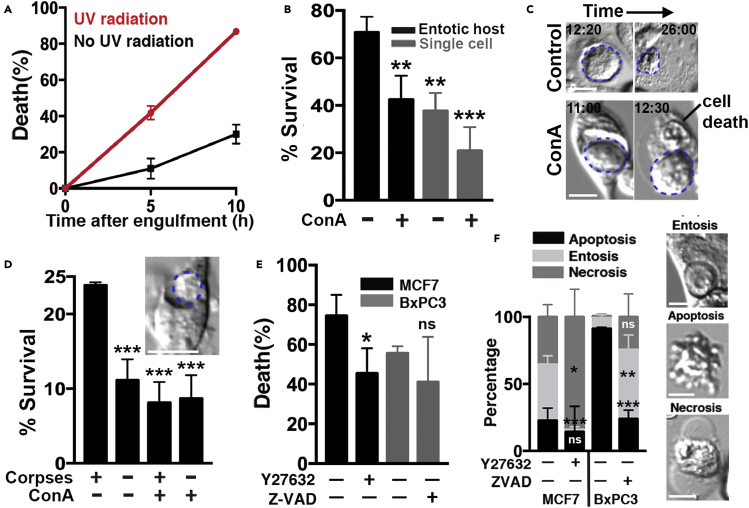
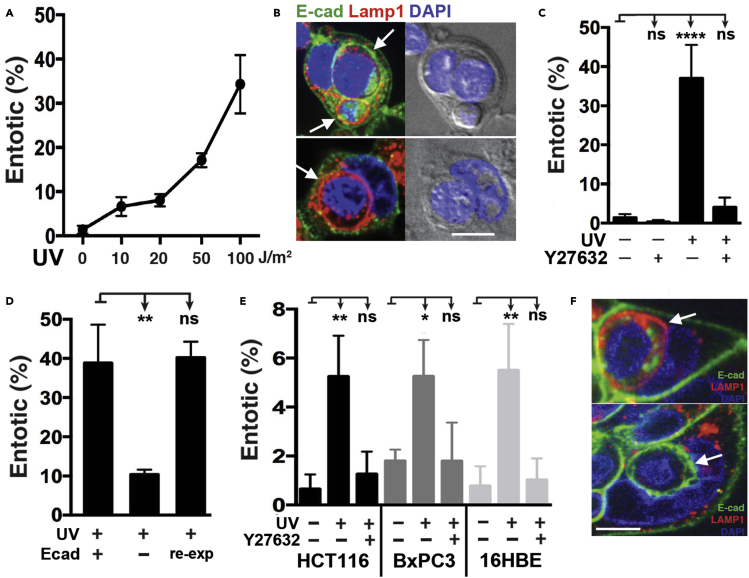
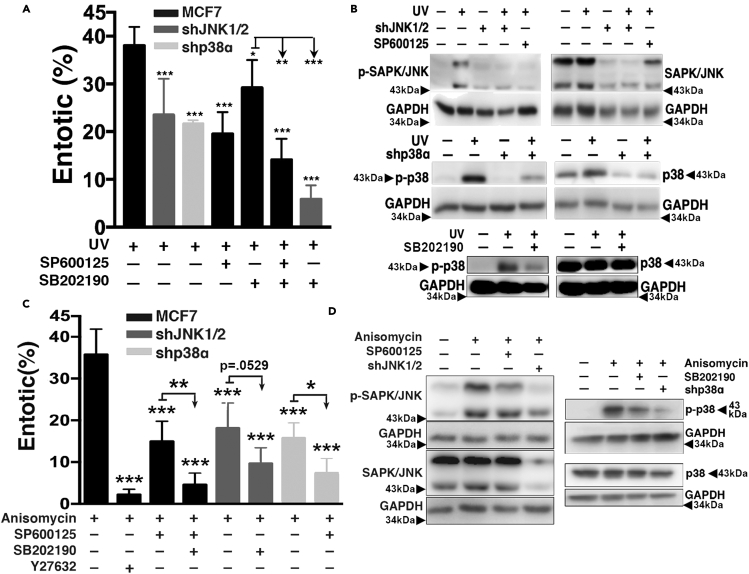
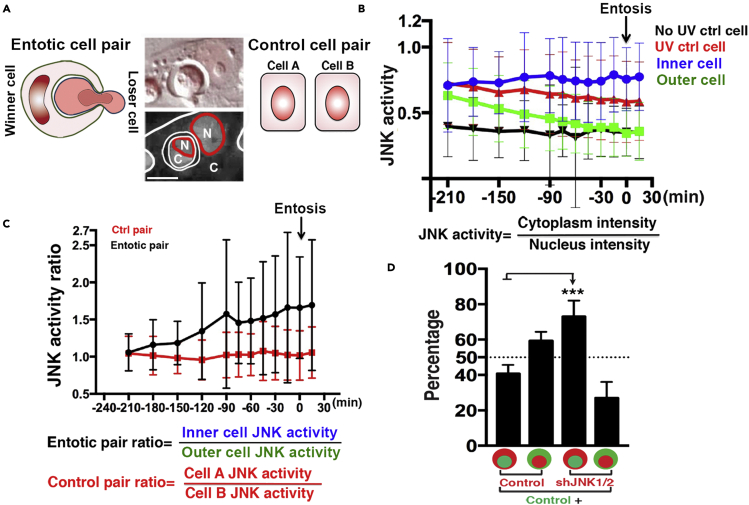
Entosis is a cell death mechanism that is executed through neighbor cell ingestion and killing that occurs in cancer tissues and during development. Here, we identify JNK and p38 stress-activated kinase signaling as an inducer of entosis in cells exposed to ultraviolet (UV) radiation. Cells with high levels of stress signaling are ingested and killed by those with low levels, a result of heterogeneity arising within cell populations over time. In stressed cells, entosis occurs as part of mixed-cell death response with parallel induction of apoptosis and necrosis, and we find that inhibition of one form of cell death leads to increased rates of another. Together, these findings identify stress-activated kinase signaling as a new inducer of entosis and demonstrate cross talk between different forms of cell death that can occur in parallel in response to UV radiation.
细胞内吞是一种细胞死亡机制,通过邻近细胞的吞噬和杀伤来实现,发生在癌症组织和发育过程中。在此,我们确定JNK和p38应激激活激酶信号传导是暴露于紫外线(UV)辐射的细胞中细胞内吞的诱导因素。应激信号水平高的细胞会被应激信号水平低的细胞吞噬和杀死,这是细胞群体随时间产生异质性的结果。在应激细胞中,细胞内吞作为混合细胞死亡反应的一部分发生,同时诱导凋亡和坏死,并且我们发现抑制一种形式的细胞死亡会导致另一种形式的细胞死亡速率增加。这些发现共同确定应激激活激酶信号传导是细胞内吞的一种新诱导因素,并证明了不同形式的细胞死亡之间的相互作用,这种相互作用可在对紫外线辐射的反应中同时发生。