Blood Cell Development and Function Program, Fox Chase Cancer Center, Philadelphia, PA.
Department of Immunology, St. Jude Children's Research Hospital, Memphis, TN.
J Exp Med. 2020 Nov 2;217(11). doi: 10.1084/jem.20191259.
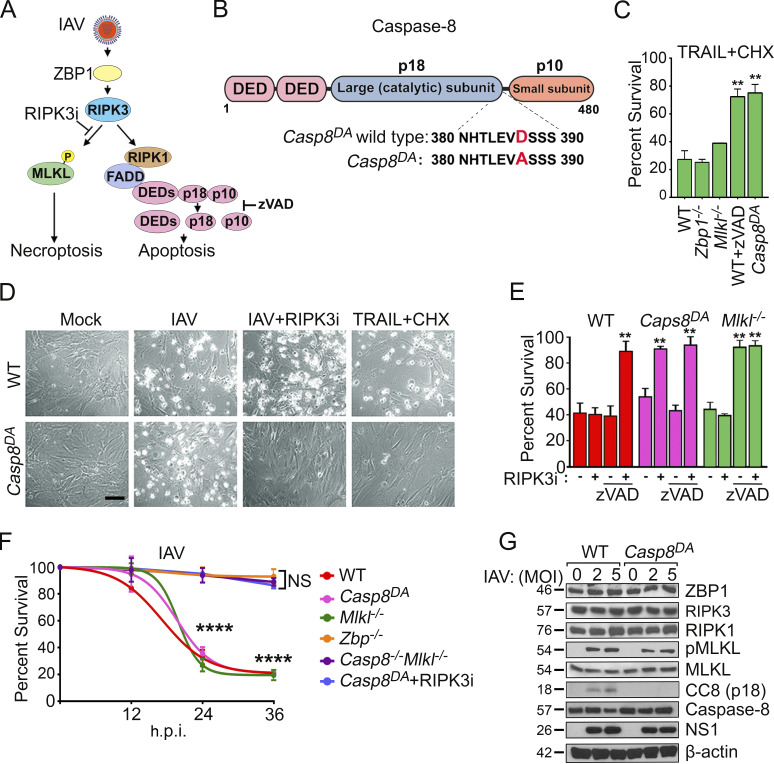
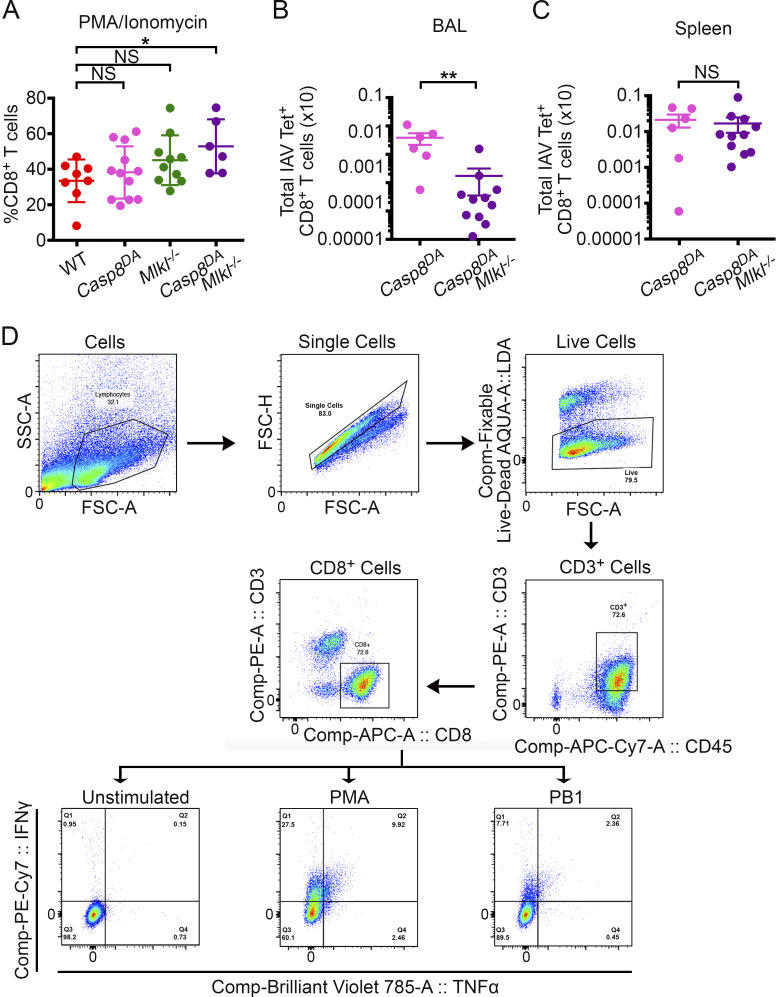
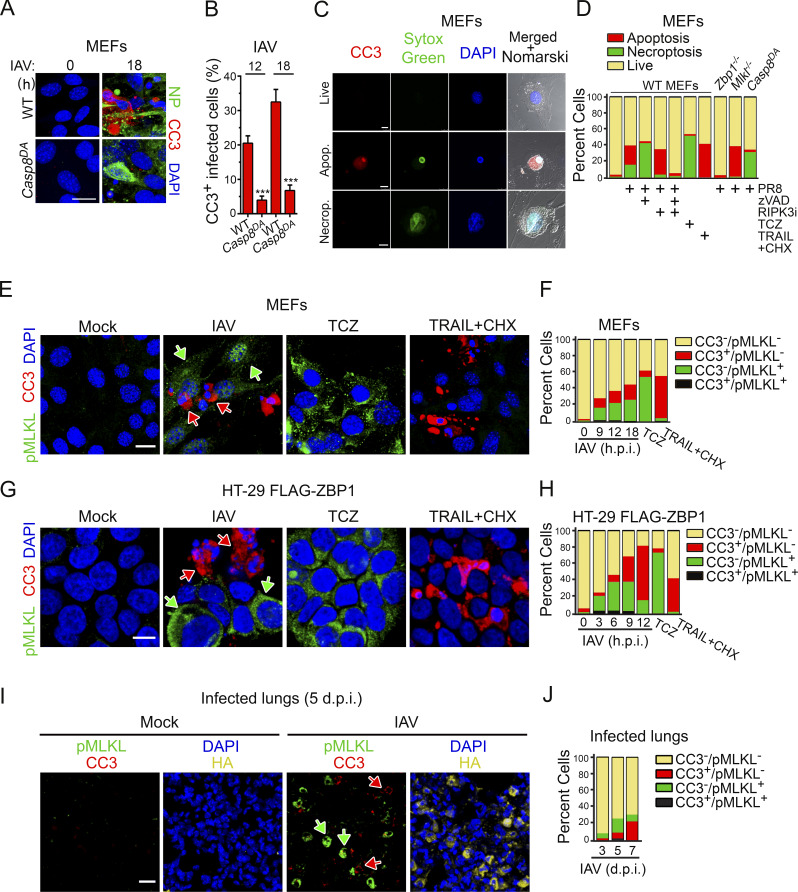
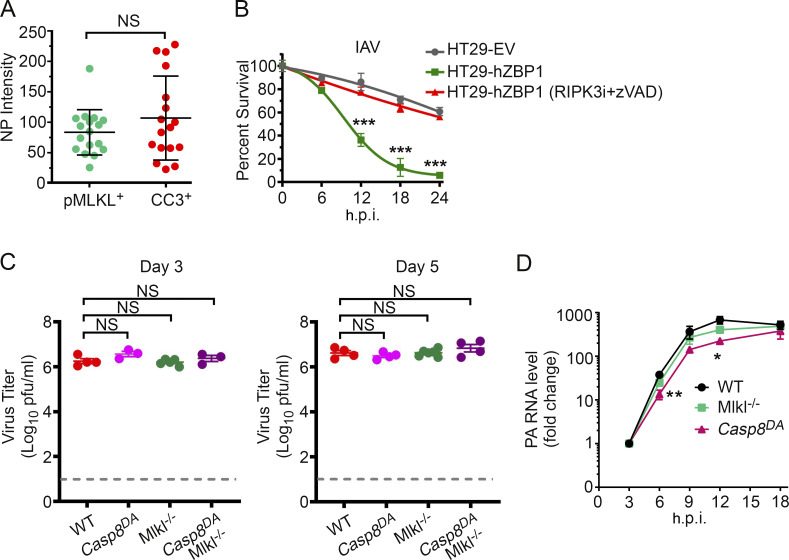
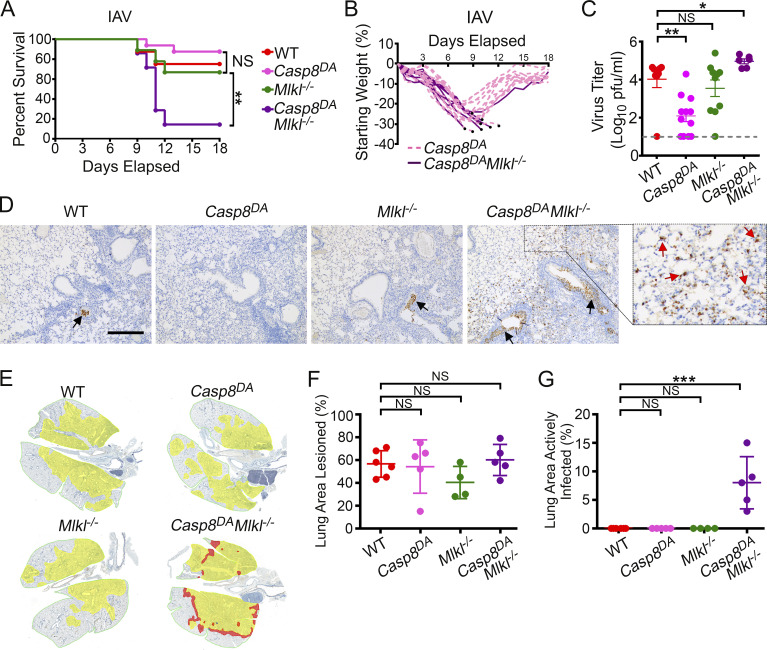
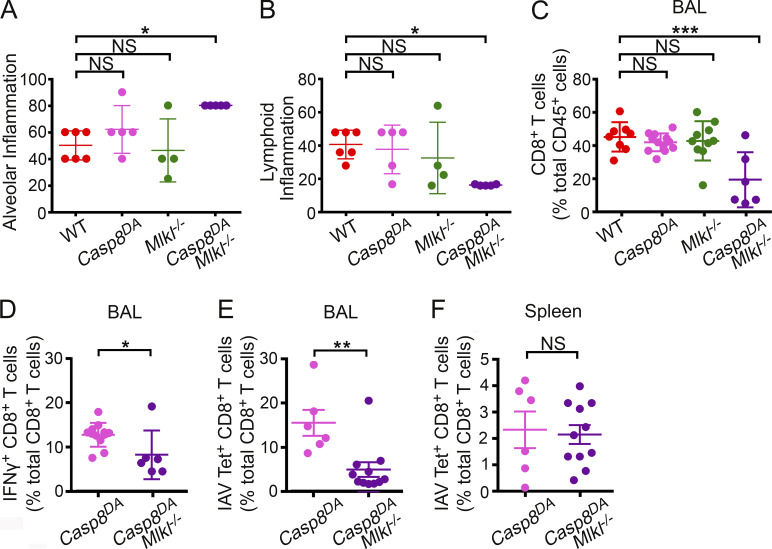
Influenza A virus (IAV) activates ZBP1-initiated RIPK3-dependent parallel pathways of necroptosis and apoptosis in infected cells. Although mice deficient in both pathways fail to control IAV and succumb to lethal respiratory infection, RIPK3-mediated apoptosis by itself can limit IAV, without need for necroptosis. However, whether necroptosis, conventionally considered a fail-safe cell death mechanism to apoptosis, can restrict IAV-or indeed any virus-in the absence of apoptosis is not known. Here, we use mice selectively deficient in IAV-activated apoptosis to show that necroptosis drives robust antiviral immune responses and promotes effective virus clearance from infected lungs when apoptosis is absent. We also demonstrate that apoptosis and necroptosis are mutually exclusive fates in IAV-infected cells. Thus, necroptosis is an independent, "stand-alone" cell death mechanism that fully compensates for the absence of apoptosis in antiviral host defense.
甲型流感病毒(IAV)激活 ZBP1 引发的 RIPK3 依赖性细胞坏死和凋亡平行途径,从而感染细胞。尽管两条途径均缺失的小鼠无法控制 IAV,最终死于严重呼吸道感染,但 RIPK3 介导的凋亡本身可以限制 IAV,而无需细胞坏死。然而,细胞坏死,通常被认为是细胞凋亡的安全保障机制,在没有细胞凋亡的情况下是否可以限制 IAV 或任何其他病毒尚不清楚。在这里,我们使用 IAV 激活的凋亡选择性缺失的小鼠来证明,当凋亡缺失时,细胞坏死会驱动强大的抗病毒免疫反应,并促进从感染的肺部中有效清除病毒。我们还证明,细胞凋亡和细胞坏死是 IAV 感染细胞中的两种互斥命运。因此,细胞坏死是一种独立的、“独立”的细胞死亡机制,可完全弥补抗病毒宿主防御中细胞凋亡的缺失。