Asian Institute of Management, Makati, Philippines.
National Center of Cognitive Research, ITMO University, St. Petersburg, Russian Federation.
Sci Rep. 2021 Aug 17;11(1):16688. doi: 10.1038/s41598-021-96191-0.
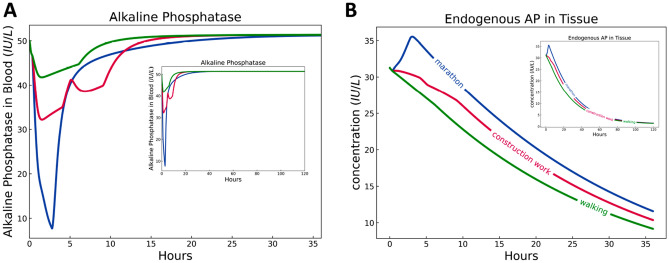
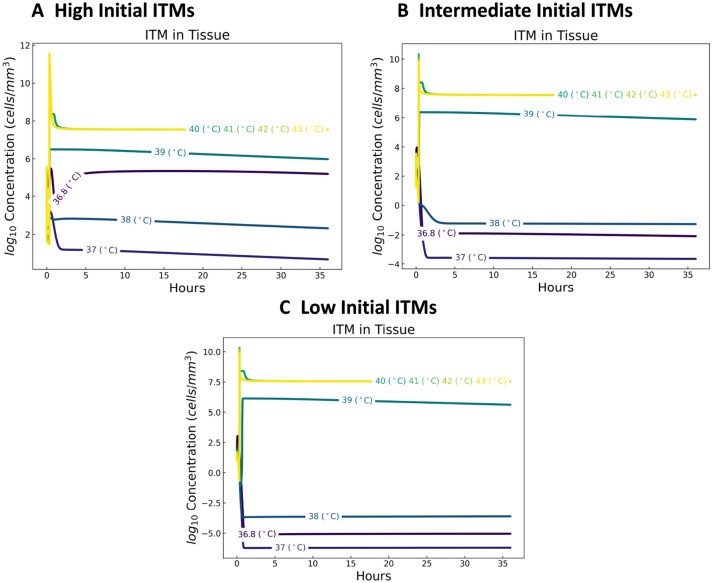
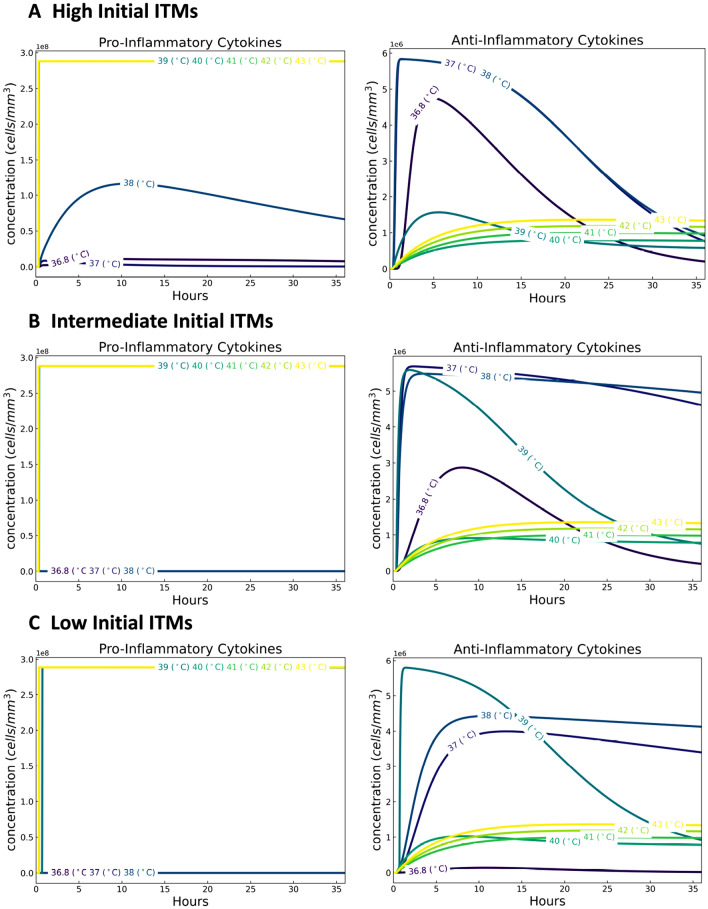
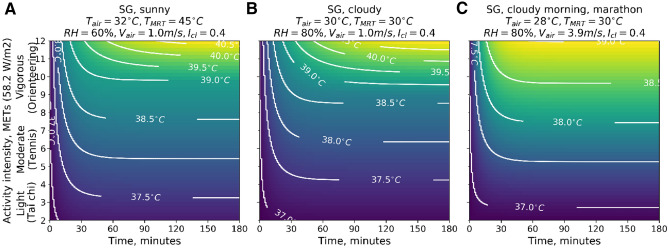
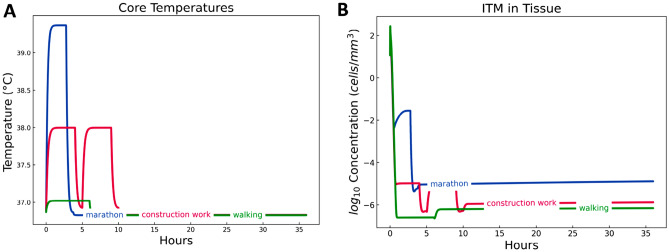
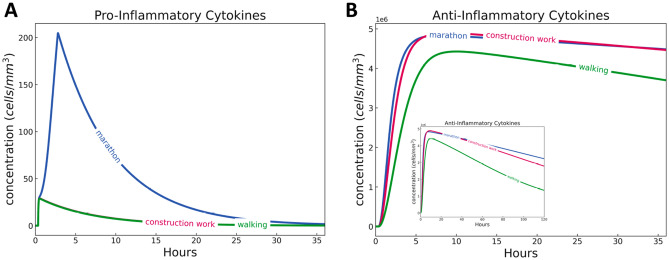
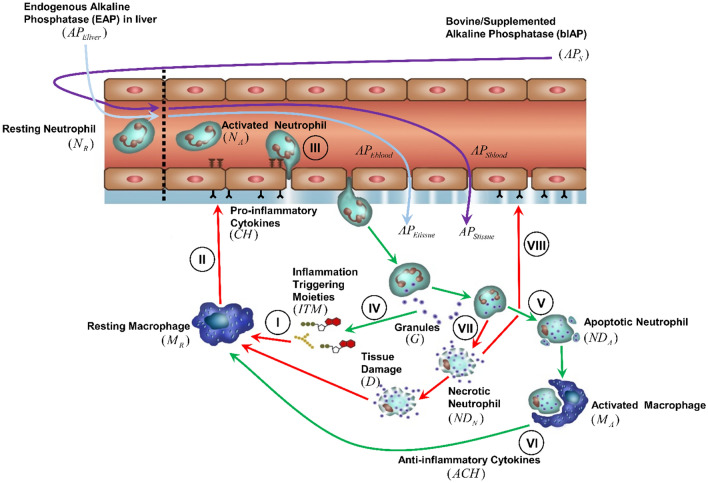
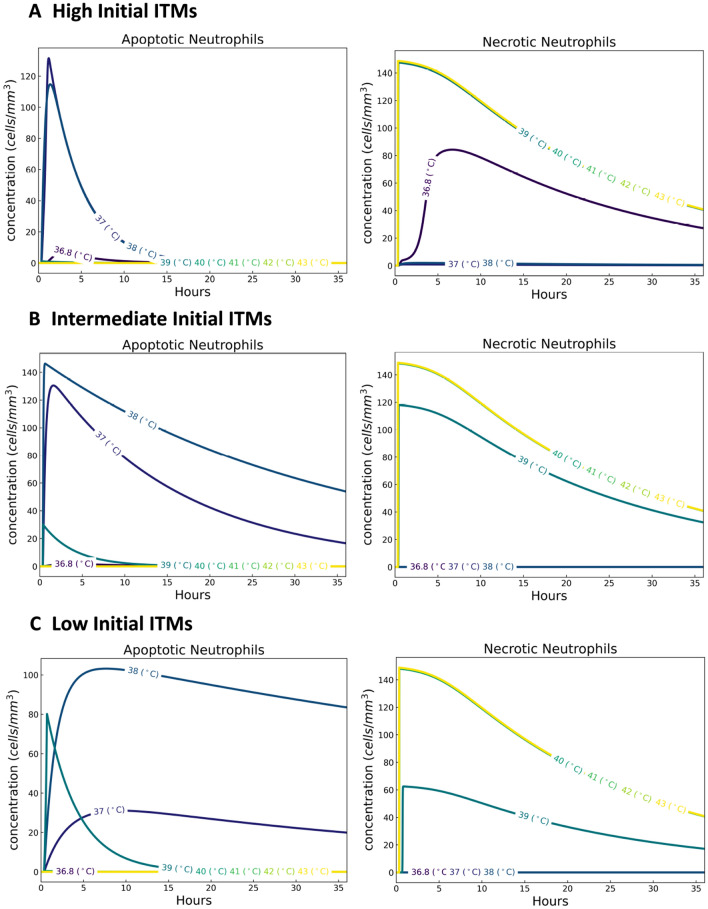
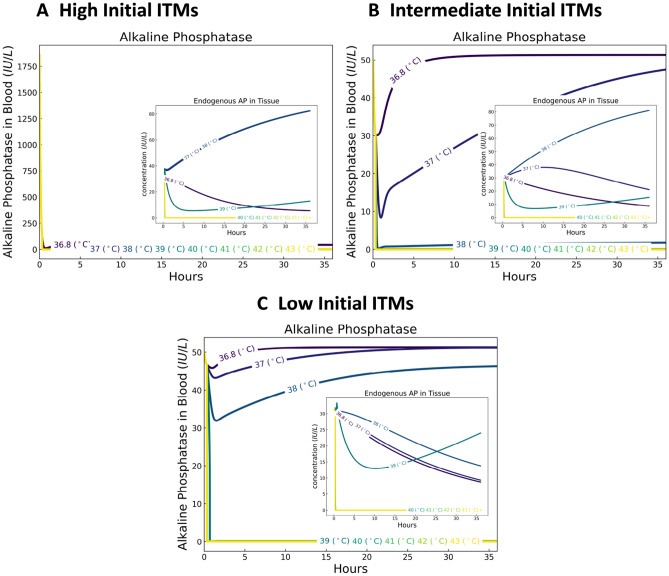
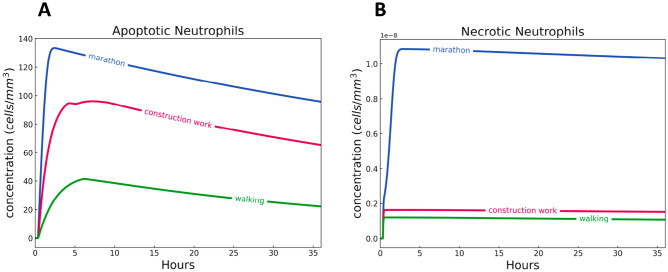
Public health is threatened by climate change and extreme temperature events worldwide. Differences in health predispositions, access to cooling infrastructure and occupation raises an issue of heat-related health inequality in those vulnerable and disadvantaged demographic groups. To address these issues, a comprehensive understanding of the effect of elevated body temperatures on human biological systems and overall health is urgently needed. In this paper we look at the inner workings of the human innate immunity under exposure to heat stress induced through exposure to environment and physical exertion. We couple two experimentally validated computational models: the innate immune system and thermal regulation of the human body. We first study the dynamics of critical indicators of innate immunity as a function of human core temperature. Next, we identify environmental and physical activity regimes that lead to core temperature levels that can potentially compromise the performance of the human innate immunity. Finally, to take into account the response of innate immunity to various intensities of physical activities, we utilise the dynamic core temperatures generated by a thermal regulation model. We compare the dynamics of all key players of the innate immunity for a variety of stresses like running a marathon, doing construction work, and leisure walking at speed of 4 km/h, all in the setting of a hot and humid tropical climate such as present in Singapore. We find that exposure to moderate heat stress leading to core temperatures within the mild febrile range (37, 38][Formula: see text], nudges the innate immune system into activation and improves the efficiency of its response. Overheating corresponding to core temperatures beyond 38[Formula: see text], however, has detrimental effects on the performance of the innate immune system, as it further induces inflammation, which causes a series of reactions that may lead to the non-resolution of the ongoing inflammation. Among the three physical activities considered in our simulated scenarios (marathon, construction work, and walking), marathon induces the highest level of inflammation that challenges the innate immune response with its resolution. Our study advances the current state of research towards understanding the implications of heat exposure for such an essential physiological system as the innate immunity. Although we find that among considered physical activities, a marathon of 2 h and 46 min induces the highest level of inflammation, it must be noted that construction work done on a daily basis under the hot and humid tropical climate, can produce a continuous level of inflammation triggering moieties stretched at a longer timeline beating the negative effects of running a marathon. Our study demonstrates that the performance of the innate immune system can be severely compromised by the exposure to heat stress and physical exertion. This poses significant risks to health especially to those with limited access to cooling infrastructures. This is due in part to having low income, or having to work on outdoor settings, which is the case for construction workers. These risks to public health should be addressed through individual and population-level measures via behavioural adaptation and provision of the cooling infrastructure in outdoor environments.
公共卫生受到气候变化和全球极端温度事件的威胁。健康易感性、获得冷却基础设施的机会和职业的差异,导致在弱势群体和不利人口群体中出现与热有关的健康不平等问题。为了解决这些问题,迫切需要全面了解体温升高对人体生物系统和整体健康的影响。本文研究了人类先天免疫系统在暴露于环境和体力劳动引起的热应激下的内部工作原理。我们结合了两个经过实验验证的计算模型:先天免疫系统和人体的热调节。我们首先研究了作为人体核心温度函数的先天免疫关键指标的动力学。接下来,我们确定了可能导致核心温度水平危及人体先天免疫功能的环境和体力活动制度。最后,为了考虑先天免疫对各种强度的体力活动的反应,我们利用热调节模型生成的动态核心温度。我们比较了各种压力下(如马拉松、建筑工作和以 4 公里/小时的速度休闲散步)的先天免疫所有关键因素的动力学,所有这些压力都设置在新加坡等热带气候炎热和潮湿的环境中。我们发现,适度的热应激导致核心温度处于轻度发热范围(37,38]),会促使先天免疫系统激活并提高其反应效率。然而,超过 38]的过热会对先天免疫系统的性能产生不利影响,因为它会进一步引起炎症,这会导致一系列反应,可能导致正在进行的炎症无法解决。在我们模拟的三种体力活动(马拉松、建筑工作和散步)中,马拉松会引起最高水平的炎症,从而对先天免疫反应提出挑战,需要其解决。我们的研究推进了当前对热暴露对先天免疫等重要生理系统影响的研究。尽管我们发现,在考虑的体力活动中,2 小时 46 分钟的马拉松会引起最高水平的炎症,但必须注意的是,在炎热和潮湿的热带气候下,每天进行建筑工作会产生持续的炎症触发因素,这些因素在更长的时间线上展开,从而击败马拉松带来的负面影响。我们的研究表明,先天免疫系统的性能可能会因暴露于热应激和体力劳动而严重受损。这对健康构成了重大风险,尤其是对那些获得冷却基础设施机会有限的人。部分原因是收入低,或者必须在户外环境中工作,这是建筑工人的情况。应该通过个人和人群层面的措施,通过行为适应和提供户外环境中的冷却基础设施来解决这些公共卫生风险。