Sultan Waleed, Sapkota Alisha, Khurshid Hajra, Qureshi Israa A, Jahan Nasrin, Went Terry R, Dominic Jerry Lorren, Win Myat, Kannan Amudhan, Tara Anjli, Ruo Sheila W, Alfonso Michael
Medicine, California Institute of Behavioral Neurosciences & Psychology (CIBNP), Fairfield, USA.
Psychiatry, California Institute of Behavioral Neurosciences & Psychology (CIBNP), Fairfield, USA.
Cureus. 2021 Aug 6;13(8):e16953. doi: 10.7759/cureus.16953. eCollection 2021 Aug.
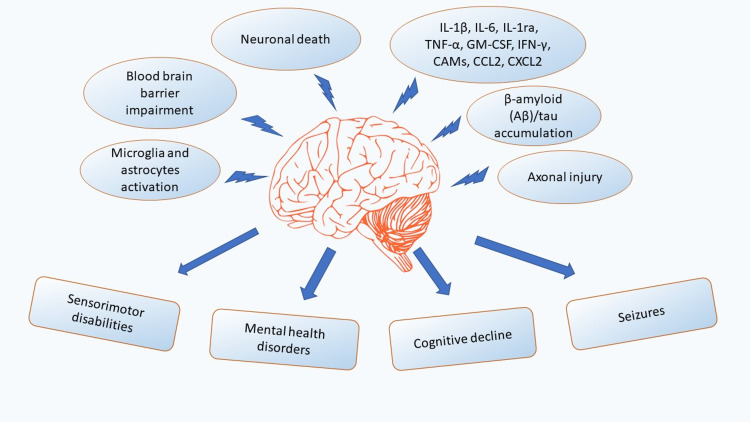
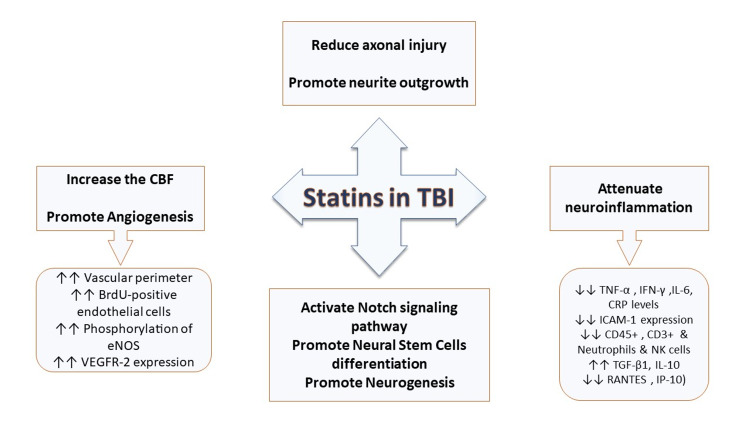
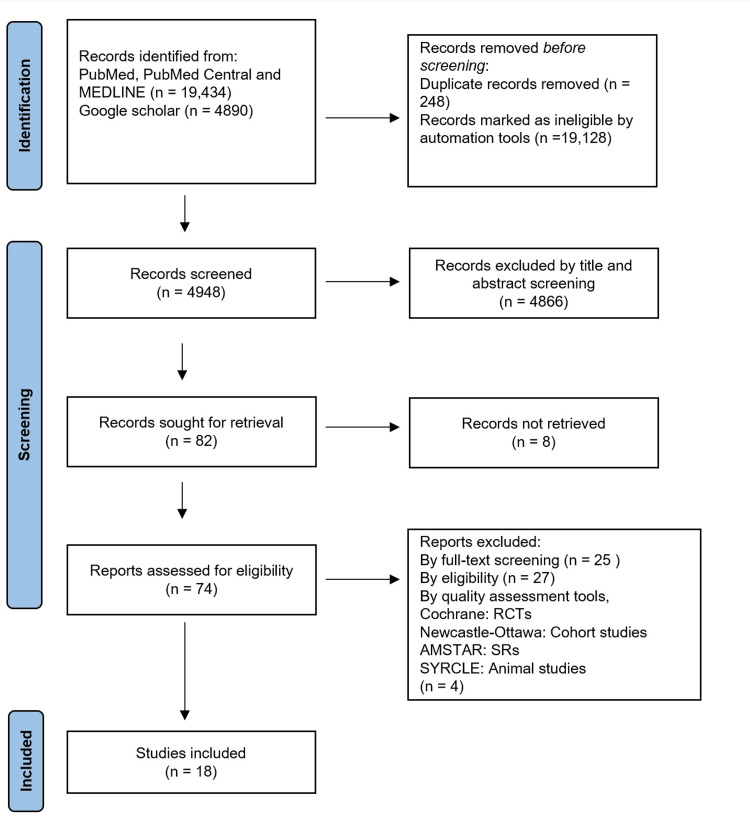
Traumatic brain injury (TBI), also known as the "Silent Epidemic," is a growing devastating global health problem estimated to affect millions of individuals yearly worldwide with little public recognition, leading to many individuals living with a TBI-related disability. TBI has been associated with up to five times increase in the risk of dementia among multiple neurologic complications compared with the general population. Several therapies, including statins, have been tried and showed promising benefits for TBI patients. In this systematic review, we evaluated the recent literature that tested the role of statins on neurological and cognitive outcomes such as Alzheimer's Disease and non-Alzheimer's dementia in survivors of TBI with various severities. We conducted a systematic search on PubMed, PubMed Central, MEDLINE, and Google Scholar. MeSH terms and keywords were used to search for full-text randomized clinical trials (RCTs), cross-sectional, case-control, cohort studies, systematic reviews, and animal studies published in English. Inclusion and exclusion criteria were applied, and the articles were subjected to quality appraisal by two reviewers. Our data search retrieved 4948 nonduplicate records. A total of 18 studies were included - nine human studies, and nine animal laboratory trials - after meeting inclusion, eligibility, and quality assessment criteria. Simvastatin was the most tested statin, and the oral route of administration was the most used. Eight human studies showed a significant neuroprotective effect and improvement in the cognitive outcomes, including dementia. Four randomized clinical trials with 296 patients showed that statins play a neuroprotective role and improve cognitive outcomes through different mechanisms, especially their anti-inflammatory effect; they were shown to lower tumor necrosis factor (TNF)-α and C-reactive protein (CRP) levels. Also, they decreased axonal injury and cortical thickness changes. In addition, four cohort studies compared a total of 867.953 patients. One study showed a decrease in mortality in statin-treated patients (p=0.05). Another study showed a reduction in the incidence of Alzheimer's disease and related dementias (RR, 0.77; 95% CI, 0.73-0.81), while one study showed a decreased risk of dementia after concussions by 6.13% (p=0.001). On the other hand, one cohort study showed no significant difference with the use of statins. In eight animal trials, statins showed a significant neuroprotective effect, improved cognitive outcomes, and neurological functions. Different molecular and cellular mechanisms were suggested, including anti-inflammatory effects, promoting angiogenesis, neurogenesis, increasing cerebral blood flow, neurite outgrowth, promoting the proliferation and differentiation of neural stem cells, and reducing axonal injury. On the contrary, one study showed no benefit and actual adverse effect on the cognitive outcome. Most of the studies showed promising neuroprotective effects of statins in TBI patients. Cognitive outcomes, especially dementia, were improved. However, the optimal therapeutic protocol is still unknown. Thus, statins are candidates for more advanced studies to test their efficacy in preventing cognitive decline in patients with TBI.
创伤性脑损伤(TBI),也被称为“无声的流行病”,是一个日益严重的全球性健康问题,据估计每年全球有数百万人受其影响,但公众对此认识甚少,导致许多创伤性脑损伤患者伴有相关残疾生活。与普通人群相比,创伤性脑损伤在多种神经并发症中与痴呆风险增加高达五倍相关。包括他汀类药物在内的几种疗法已经进行了尝试,并对创伤性脑损伤患者显示出有希望的益处。在这项系统评价中,我们评估了最近的文献,这些文献测试了他汀类药物对不同严重程度的创伤性脑损伤幸存者的神经和认知结局(如阿尔茨海默病和非阿尔茨海默病性痴呆)的作用。我们在PubMed数据库、PubMed Central数据库、MEDLINE数据库和谷歌学术上进行了系统检索。使用医学主题词和关键词搜索以英文发表的全文随机临床试验(RCT)、横断面研究、病例对照研究、队列研究、系统评价和动物研究。应用纳入和排除标准,并由两名评审员对文章进行质量评估。我们的数据检索得到4948条不重复记录。在符合纳入、合格和质量评估标准后,共纳入18项研究——9项人体研究和9项动物实验室试验。辛伐他汀是试验最多的他汀类药物,口服给药途径是最常用的。八项人体研究显示出显著的神经保护作用,并改善了包括痴呆在内的认知结局。四项有296名患者参与的随机临床试验表明,他汀类药物通过不同机制发挥神经保护作用并改善认知结局,尤其是其抗炎作用;它们被证明可降低肿瘤坏死因子(TNF)-α和C反应蛋白(CRP)水平。此外,它们还减少了轴突损伤和皮质厚度变化。此外,四项队列研究共比较了867953名患者。一项研究显示他汀类药物治疗的患者死亡率降低(p=0.05)。另一项研究显示阿尔茨海默病及相关痴呆的发病率降低(风险比,0.77;95%置信区间,0.73 - 0.81),而一项研究显示脑震荡后痴呆风险降低6.13%(p=0.001)。另一方面,一项队列研究显示使用他汀类药物没有显著差异。在八项动物试验中,他汀类药物显示出显著的神经保护作用,改善了认知结局和神经功能。提出了不同的分子和细胞机制,包括抗炎作用、促进血管生成、神经发生、增加脑血流量、神经突生长、促进神经干细胞的增殖和分化以及减少轴突损伤。相反,一项研究显示对认知结局没有益处且实际存在不良影响。大多数研究显示他汀类药物对创伤性脑损伤患者有有希望的神经保护作用。认知结局,尤其是痴呆,得到了改善。然而,最佳治疗方案仍然未知。因此,他汀类药物是进行更高级研究以测试其预防创伤性脑损伤患者认知衰退疗效的候选药物。