Department of Genetic Immunotherapy, Regensburg Center for Interventional Immunology (RCI), Regensburg, Germany.
Hum Gene Ther. 2021 Oct;32(19-20):1011-1028. doi: 10.1089/hum.2021.165. Epub 2021 Sep 27.
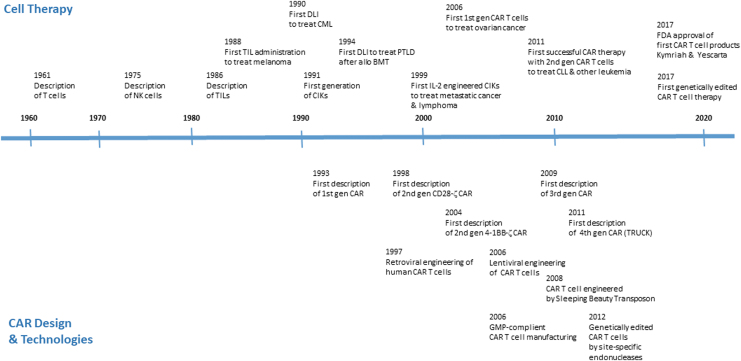
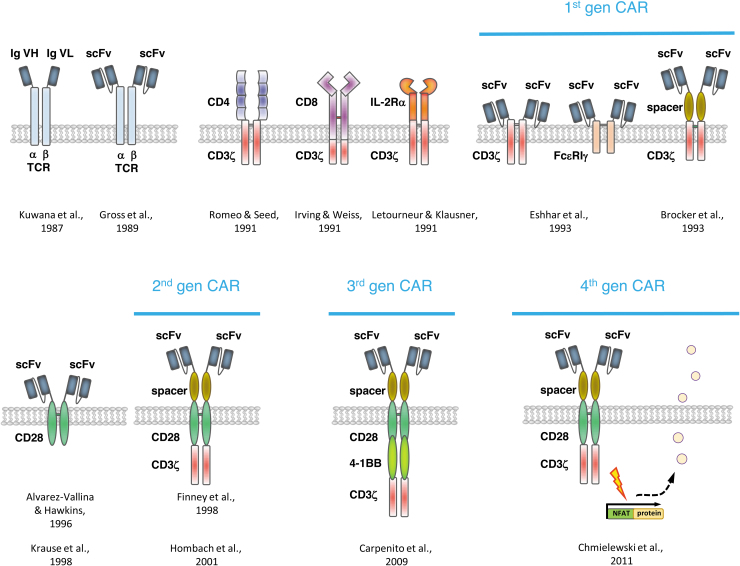
Advancement in our understanding of immune cell recognition and emerging cellular engineering technologies during the last decades made active manipulation of the T cell response possible. Synthetic immunology is providing us with an expanding set of composite receptor molecules capable to reprogram immune cell function in a predefined fashion. Since the first prototypes in the late 1980s, the design of chimeric antigen receptors (CARs; T-bodies, immunoreceptors), has followed a clear line of stepwise improvements from antigen-redirected targeting to designed "living factories" delivering transgenic products on demand. Building on basic research and creative clinical exploration, CAR T cell therapy has been achieving spectacular success in the treatment of hematologic malignancies, now beginning to improve the outcome of cancer patients. In this study, we briefly review the history of CARs and outline how the progress in the basic understanding of T cell recognition and of cell engineering technologies made novel therapies possible.
在过去几十年中,我们对免疫细胞识别的理解的进步和新兴的细胞工程技术使主动操纵 T 细胞反应成为可能。合成免疫学为我们提供了一系列不断扩大的复合受体分子,能够以前馈的方式重新编程免疫细胞的功能。自 20 世纪 80 年代末的第一个原型以来,嵌合抗原受体 (CARs; T 细胞体、免疫受体) 的设计一直遵循着从抗原定向靶向到按需递送电转基因产物的设计“活体工厂”的明确逐步改进路线。基于基础研究和创造性的临床探索,CAR T 细胞疗法在治疗血液恶性肿瘤方面取得了惊人的成功,现在开始改善癌症患者的预后。在这项研究中,我们简要回顾了 CAR 的历史,并概述了 T 细胞识别的基础理解和细胞工程技术的进展如何使新的治疗方法成为可能。