State Key Laboratory of Oncology in South China, Sun Yat-sen University Cancer Center, Guangzhou, China.
Institute of Human Virology, Zhongshan School of Medicine, Sun Yat-sen University, Guangzhou, China.
PLoS Pathog. 2021 Aug 18;17(8):e1009873. doi: 10.1371/journal.ppat.1009873. eCollection 2021 Aug.
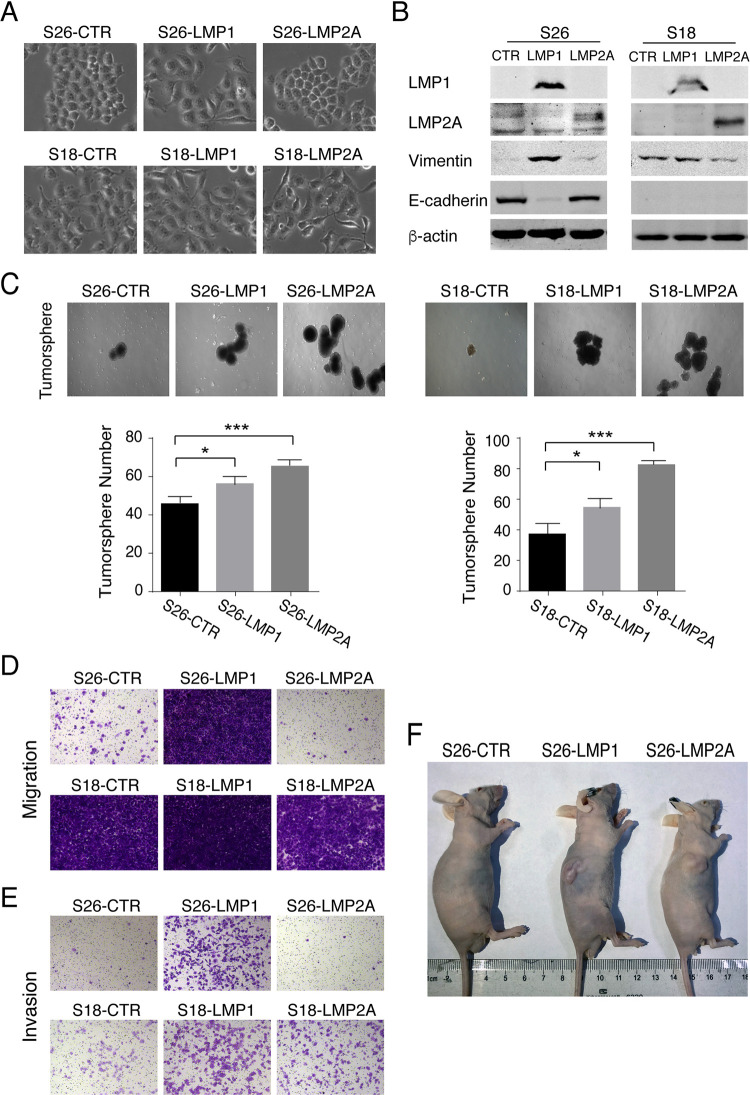
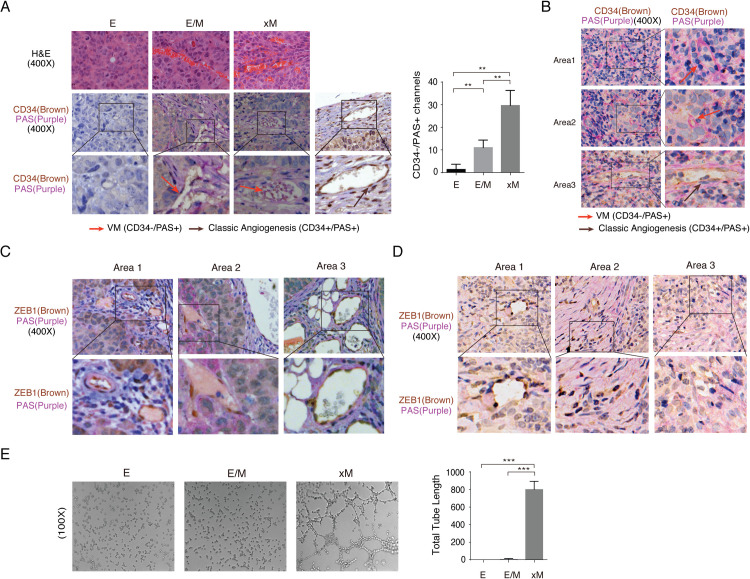
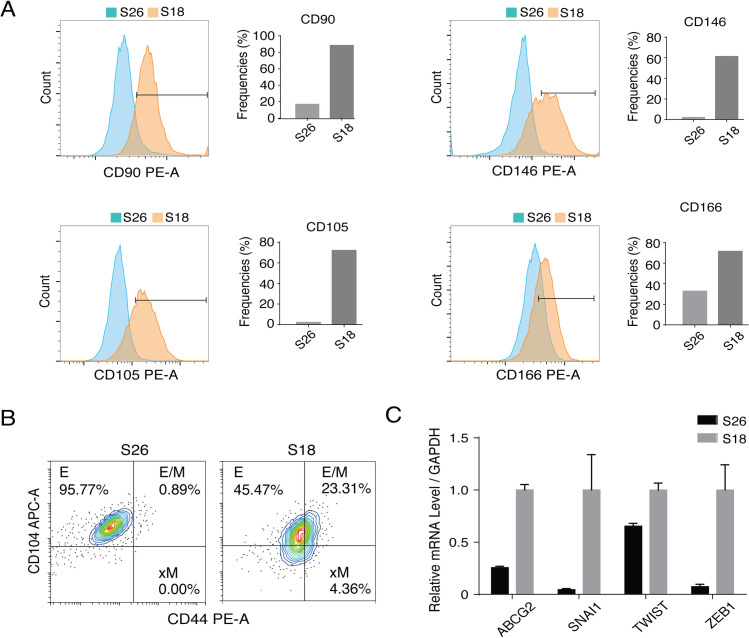
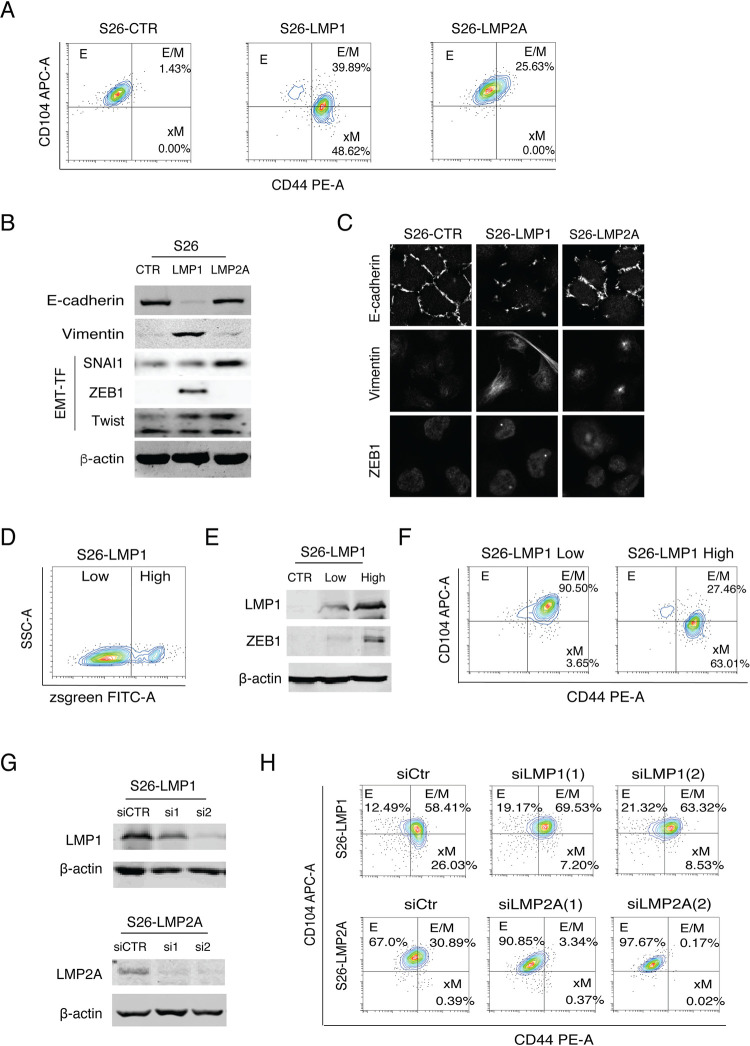
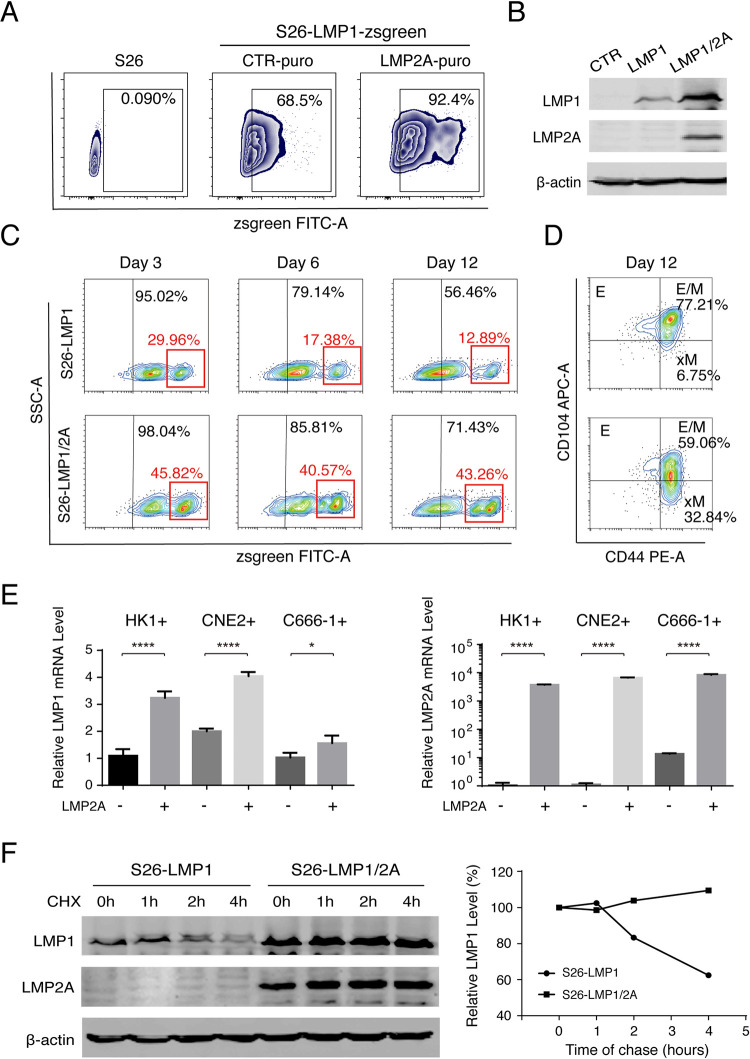
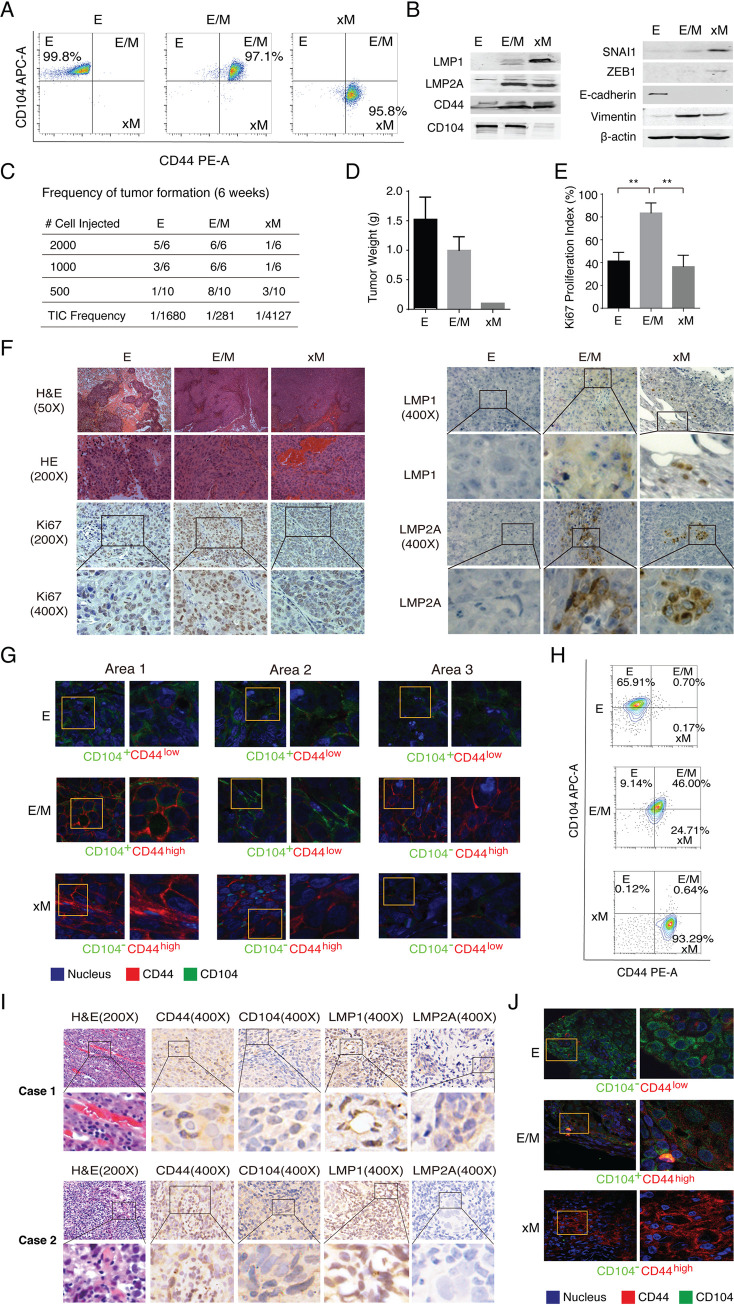
EBV-encoded LMPs are consistently detected in nasopharyngeal carcinoma (NPC). Recent evidence suggests potential roles of LMP1 and LMP2A in Epithelial-to-mesenchymal transition (EMT) process in NPC. EMT engages in the generation and maintenance of cancer stem cells (CSCs) and confers on cancer cells increased tumor-initiating and metastatic potential, and higher resistance to anticancer therapies. However, how LMP1 and LMP2A regulate the EMT process to generate cells with different EMT states and its implications for tumor progression remain unclear. Here we report that LMP1 and LMP2A promote EMT that drives NPC cells from the epithelial-like state (E) (CD104+, CD44low) to epithelial-mesenchymal hybrid (E/M) state (CD104+, CD44high). Furthermore, LMP2A possesses an additional function in stabilizing LMP1 and increasing the level of LMP1 in NPC cells. The elevated LMP1 further forces the EMT to generate extreme-mesenchymal (xM) state cells (CD104-, CD44high). To define the tumorigenic features of cancer stem cells at different states in the EMT spectrum, E, E/M and xM subpopulations were isolated and tested for tumorigenic capability in a tumor xenograft animal model. We found that the cells with E/M phenotypes possess the highest tumor initiating capacity. However, the xM subpopulation exhibits increased vasculogenic mimicry, a hallmark of metastatic cancers. Taken together, coordinated action of LMP1 and LMP2A generates an array of intermediate subpopulations in the EMT spectrum that are responsible for distinct tumorigenic features of NPC such as tumor-initiation, vasculogenesis, and metastasis.
EBV 编码的 LMPs 在鼻咽癌 (NPC) 中始终被检测到。最近的证据表明,LMP1 和 LMP2A 在 NPC 中的上皮-间充质转化 (EMT) 过程中可能具有潜在作用。EMT 参与了癌症干细胞 (CSC) 的产生和维持,并赋予癌细胞更高的肿瘤起始和转移潜能,以及更高的抗癌治疗耐药性。然而,LMP1 和 LMP2A 如何调节 EMT 过程以产生具有不同 EMT 状态的细胞,以及其对肿瘤进展的影响仍不清楚。在这里,我们报告 LMP1 和 LMP2A 促进 EMT,使 NPC 细胞从上皮样状态 (E)(CD104+,CD44low)转变为上皮-间充质混合 (E/M) 状态(CD104+,CD44high)。此外,LMP2A 具有另外的功能,可以稳定 LMP1 并增加 NPC 细胞中 LMP1 的水平。升高的 LMP1 进一步迫使 EMT 产生极端间充质 (xM) 状态细胞(CD104-,CD44high)。为了定义 EMT 谱中不同状态下的癌症干细胞的肿瘤发生特征,我们分离了 E、E/M 和 xM 亚群,并在肿瘤异种移植动物模型中测试了它们的肿瘤起始能力。我们发现,具有 E/M 表型的细胞具有最高的肿瘤起始能力。然而,xM 亚群表现出增加的血管生成模拟,这是转移性癌症的一个标志。总之,LMP1 和 LMP2A 的协调作用在 EMT 谱中产生了一系列中间亚群,这些亚群负责 NPC 不同的肿瘤发生特征,如肿瘤起始、血管生成和转移。