Department of Medicine and Surgery, Section of Internal and Cardiovascular Medicine, University of Perugia, Perugia.
Department of Experimental and Clinical Medicine, University of Florence; Atherothrombotic Center, AOU Careggi, Florence.
Haematologica. 2021 Dec 1;106(12):3034-3045. doi: 10.3324/haematol.2021.279289.
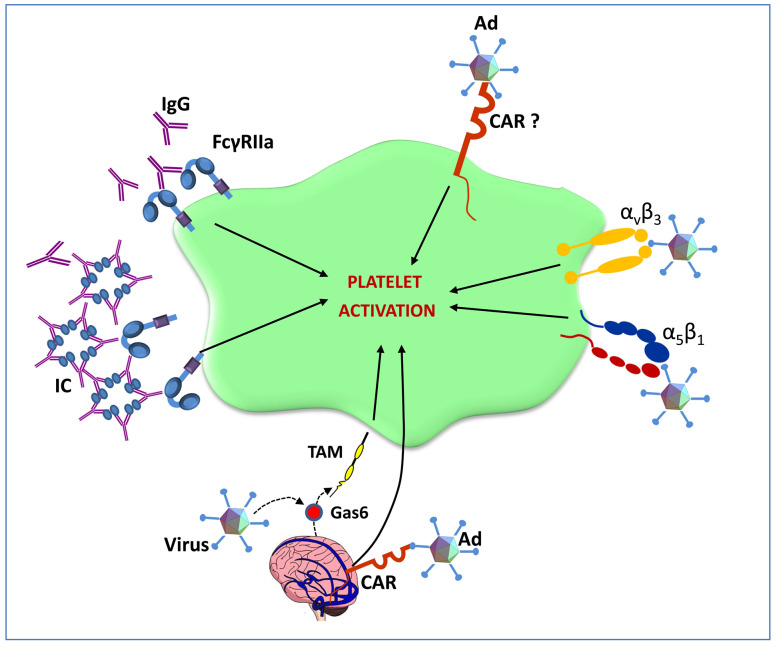
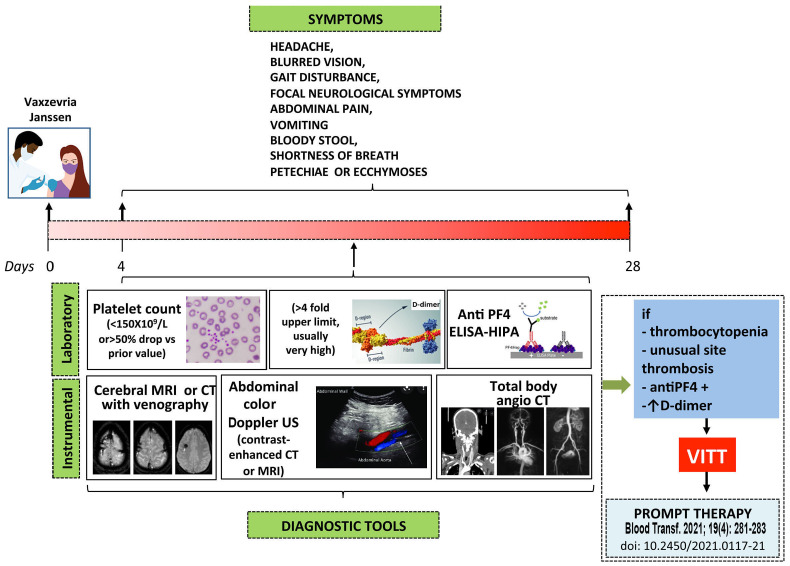
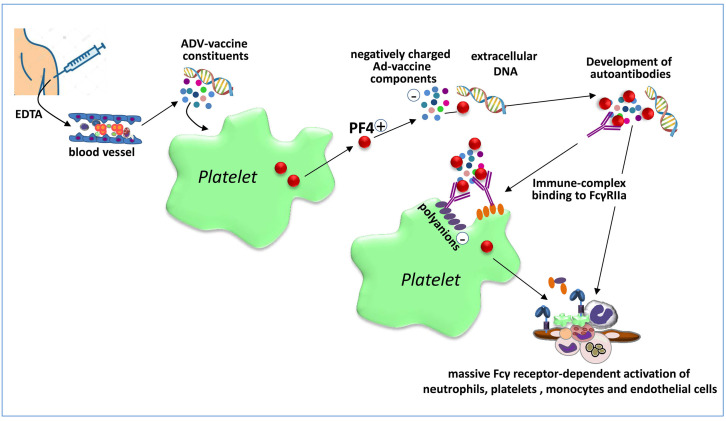
The COVID-19 pandemic has had a heavy impact on global health and economy and vaccination remains the primary way of controlling the infection. During the ongoing vaccination campaign some unexpected thrombotic events have emerged in subjects who had recently received the AstraZeneca (Vaxzevria) vaccine or the Johnson and Johnson (Janssen) vaccine, two adenovirus vector-based vaccines. Epidemiological studies confirm that the observed/expected ratio of these unusual thromboses is abnormally increased, especially in women in fertile age. The characteristics of this complication, with venous thromboses at unusual sites, most frequently in the cerebral vein sinuses but also in splanchnic vessels, often with multiple associated thromboses, thrombocytopenia, and sometimes disseminated intravascular coagulation, are unique and the time course and tumultuous evolution are suggestive of an acute immunological reaction. Indeed, plateletactivating anti-PF4 antibodies have been detected in a large proportion of the affected patients. Several data suggest that adenoviruses may interact with platelets, the endothelium and the blood coagulation system. Here we review interactions between adenoviral vectors and the hemostatic system that are of possible relevance in vaccine-associated thrombotic thrombocytopenia syndrome. We systematically analyze the clinical data on the reported thrombotic complications of adenovirus-based therapeutics and discuss all the current hypotheses on the mechanisms triggering this novel syndrome. Although, considering current evidence, the benefit of vaccination clearly outweighs the potential risks, it is of paramount importance to fully unravel the mechanisms leading to vaccineassociated thrombotic thrombocytopenia syndrome and to identify prognostic factors through further research.
COVID-19 大流行对全球健康和经济造成了沉重打击,疫苗接种仍然是控制感染的主要方法。在正在进行的疫苗接种运动中,一些最近接种了阿斯利康(Vaxzevria)疫苗或强生(Janssen)疫苗的受试者中出现了一些意想不到的血栓事件,这两种疫苗均为腺病毒载体疫苗。流行病学研究证实,观察到/预期的这些不寻常血栓的比例异常增加,尤其是在育龄妇女中。这种并发症的特征是静脉血栓形成于不寻常部位,最常见于脑静脉窦,但也发生于内脏血管,常伴有多个相关血栓形成、血小板减少症,有时还伴有弥散性血管内凝血,这些都是独特的,且其时间过程和动荡演变提示急性免疫反应。事实上,在很大一部分受影响的患者中都检测到了血小板激活的抗 PF4 抗体。有几项数据表明,腺病毒可能与血小板、内皮细胞和血液凝固系统相互作用。在这里,我们回顾了腺病毒载体与止血系统之间的相互作用,这些相互作用可能与疫苗相关的血栓性血小板减少综合征有关。我们系统地分析了腺病毒治疗药物报告的血栓并发症的临床数据,并讨论了触发这种新型综合征的所有当前假说。尽管考虑到目前的证据,疫苗接种的益处明显大于潜在风险,但充分阐明导致疫苗相关血栓性血小板减少综合征的机制并通过进一步研究确定预后因素至关重要。