Abrignani Maurizio G, Murrone Adriano, De Luca Leonardo, Roncon Loris, Di Lenarda Andrea, Valente Serafina, Caldarola Pasquale, Riccio Carmine, Oliva Fabrizio, Gulizia Michele M, Gabrielli Domenico, Colivicchi Furio
Cardiology Department, P.O. Sant'Antonio Abate, ASP Trapani, 91016 Erice, Italy.
Cardiology-UTIC, Hospitals of Città di Castello and Gubbio-Gualdo Tadino, AUSL Umbria 1, 06100 Perugia, Italy.
J Clin Med. 2022 Feb 11;11(4):948. doi: 10.3390/jcm11040948.
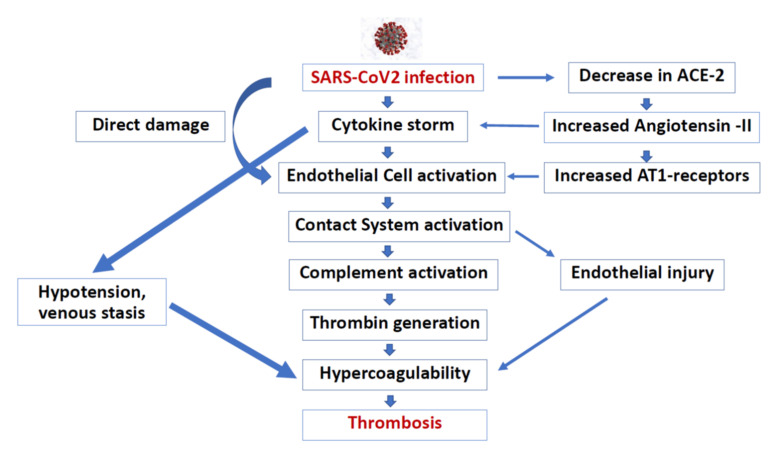
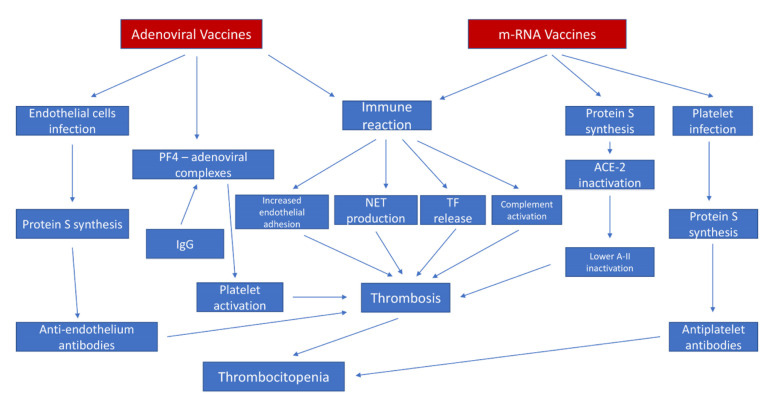
The coronavirus disease 2019 (COVID-19), a deadly pandemic that has affected millions of people worldwide, is associated with cardiovascular complications, including venous and arterial thromboembolic events. Viral spike proteins, in fact, may promote the release of prothrombotic and inflammatory mediators. Vaccines, coding for the spike protein, are the primary means for preventing COVID-19. However, some unexpected thrombotic events at unusual sites, most frequently located in the cerebral venous sinus but also splanchnic, with associated thrombocytopenia, have emerged in subjects who received adenovirus-based vaccines, especially in fertile women. This clinical entity was soon recognized as a new syndrome, named vaccine-induced immune thrombotic thrombocytopenia, probably caused by cross-reacting anti-platelet factor-4 antibodies activating platelets. For this reason, the regulatory agencies of various countries restricted the use of adenovirus-based vaccines to some age groups. The prevailing opinion of most experts, however, is that the risk of developing COVID-19, including thrombotic complications, clearly outweighs this potential risk. This point-of-view aims at providing a narrative review of epidemiological issues, clinical data, and pathogenetic hypotheses of thrombosis linked to both COVID-19 and its vaccines, helping medical practitioners to offer up-to-date and evidence-based counseling to their often-alarmed patients with acute or chronic cardiovascular thrombotic events.
2019冠状病毒病(COVID-19)是一场致命的大流行疾病,已影响全球数百万人,它与心血管并发症有关,包括静脉和动脉血栓栓塞事件。事实上,病毒刺突蛋白可能会促进促血栓形成和炎症介质的释放。编码刺突蛋白的疫苗是预防COVID-19的主要手段。然而,在接种腺病毒载体疫苗的人群中,尤其是育龄妇女,出现了一些发生在不寻常部位的意外血栓事件,最常见于脑静脉窦,也有发生在内脏,同时伴有血小板减少。这种临床病症很快被确认为一种新的综合征,称为疫苗诱导的免疫性血栓性血小板减少症,可能是由交叉反应的抗血小板因子4抗体激活血小板所致。因此,各国监管机构将腺病毒载体疫苗的使用限制在某些年龄组。然而,大多数专家的普遍观点是,感染COVID-19的风险,包括血栓形成并发症,明显超过了这种潜在风险。本文旨在对与COVID-19及其疫苗相关的血栓形成的流行病学问题、临床数据和发病机制假说进行叙述性综述,帮助医生为患有急性或慢性心血管血栓事件且常常感到恐慌的患者提供最新的循证咨询。