Department of Cancer Biology, Sidney Kimmel Cancer Center, Thomas Jefferson University, Philadelphia, Pennsylvania.
Departments of Pathology and Urology, Michigan Center for Translational Pathology, Comprehensive Cancer Center, University of Michigan, Ann Arbor, Michigan.
Clin Cancer Res. 2022 Jan 15;28(2):255-264. doi: 10.1158/1078-0432.CCR-21-1565. Epub 2021 Aug 18.
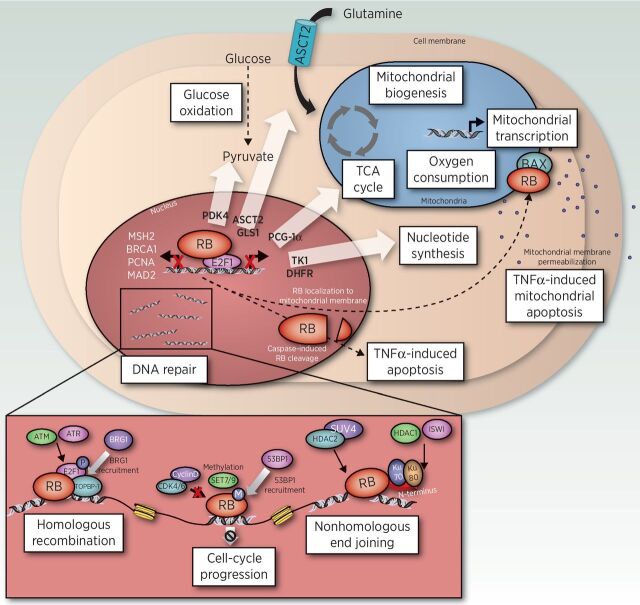
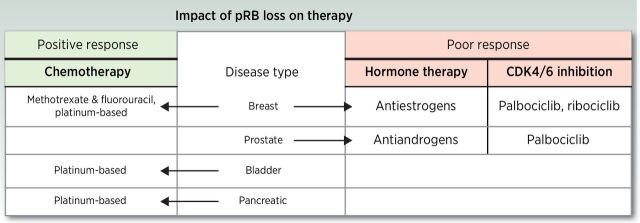
The retinoblastoma tumor suppressor protein (pRB) is a known regulator of cell-cycle control; however, recent studies identified critical functions for pRB in regulating cancer-associated gene networks that influence the DNA damage response, apoptosis, and cell metabolism. Understanding the impact of these pRB functions on cancer development and progression in the clinical setting will be essential, given the prevalence of pRB loss of function across disease types. Moreover, the current state of evidence supports the concept that pRB loss results in pleiotropic effects distinct from tumor proliferation. Here, the implications of pRB loss (and resultant pathway deregulation) on disease progression and therapeutic response will be reviewed, based on clinical observation. Developing a better understanding of the pRB-regulated pathways that underpin the aggressive features of pRB-deficient tumors will be essential for further developing pRB as a biomarker of disease progression and for stratifying pRB-deficient tumors into more effective treatment regimens.
视网膜母细胞瘤肿瘤抑制蛋白 (pRB) 是细胞周期控制的已知调节剂;然而,最近的研究确定了 pRB 在调节癌症相关基因网络方面的关键功能,这些基因网络影响 DNA 损伤反应、细胞凋亡和细胞代谢。鉴于 pRB 功能丧失在多种疾病类型中的普遍存在,了解这些 pRB 功能对癌症在临床环境中的发展和进展的影响至关重要。此外,目前的证据状况支持这样一种概念,即 pRB 丧失会导致与肿瘤增殖不同的多效性效应。在这里,将根据临床观察,回顾 pRB 丧失(和由此导致的途径失调)对疾病进展和治疗反应的影响。进一步将 pRB 作为疾病进展的生物标志物,并将 pRB 缺陷型肿瘤分层为更有效的治疗方案,深入了解 pRB 调节的通路对于了解 pRB 缺陷型肿瘤的侵袭性特征至关重要。