Ishida Tsunehito, Tateiwa Toshiyuki, Takahashi Yasuhito, Takahashi Reisuke H, Sano Keiji, Shishido Takaaki, Masaoka Toshinori, Yamamoto Kengo
Department of Orthopedic Surgery, Tokyo Medical University, Shinjuku-ku, Tokyo, Japan.
Department of Bone and Joint Biomaterial Research, Tokyo Medical University, Shinjuku-ku, Tokyo, Japan.
Arthroplast Today. 2021 Aug 9;11:15-19. doi: 10.1016/j.artd.2021.06.018. eCollection 2021 Oct.
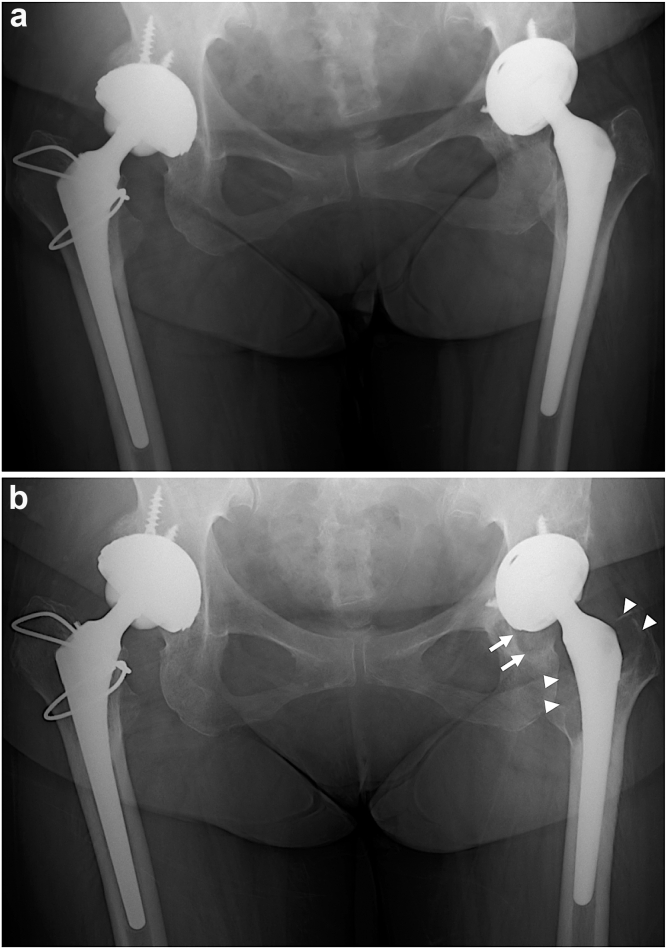
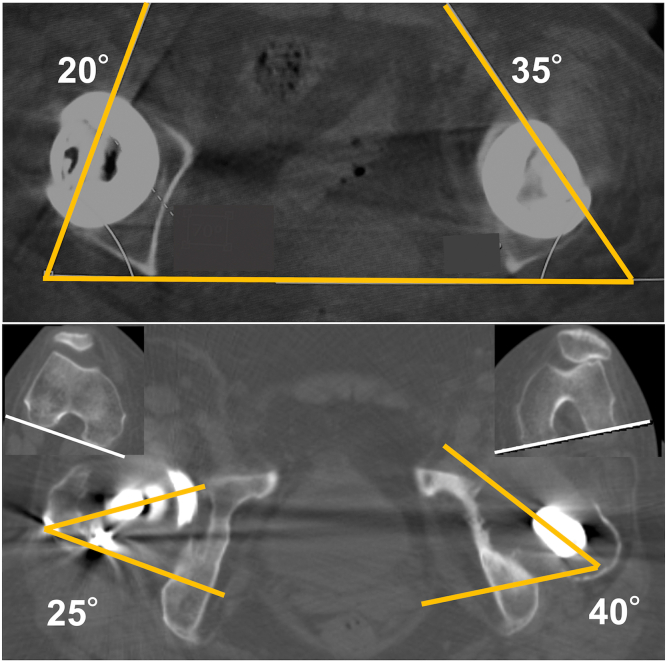
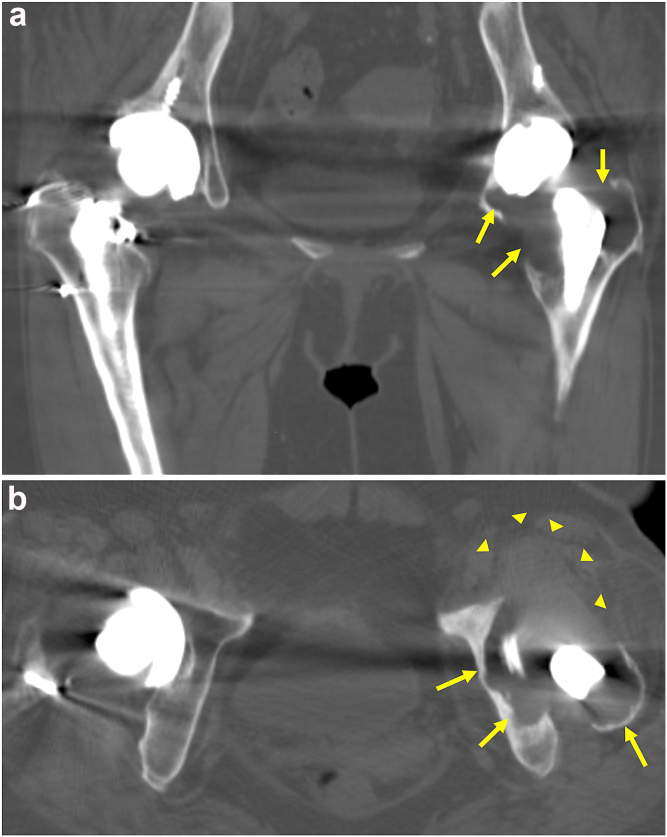
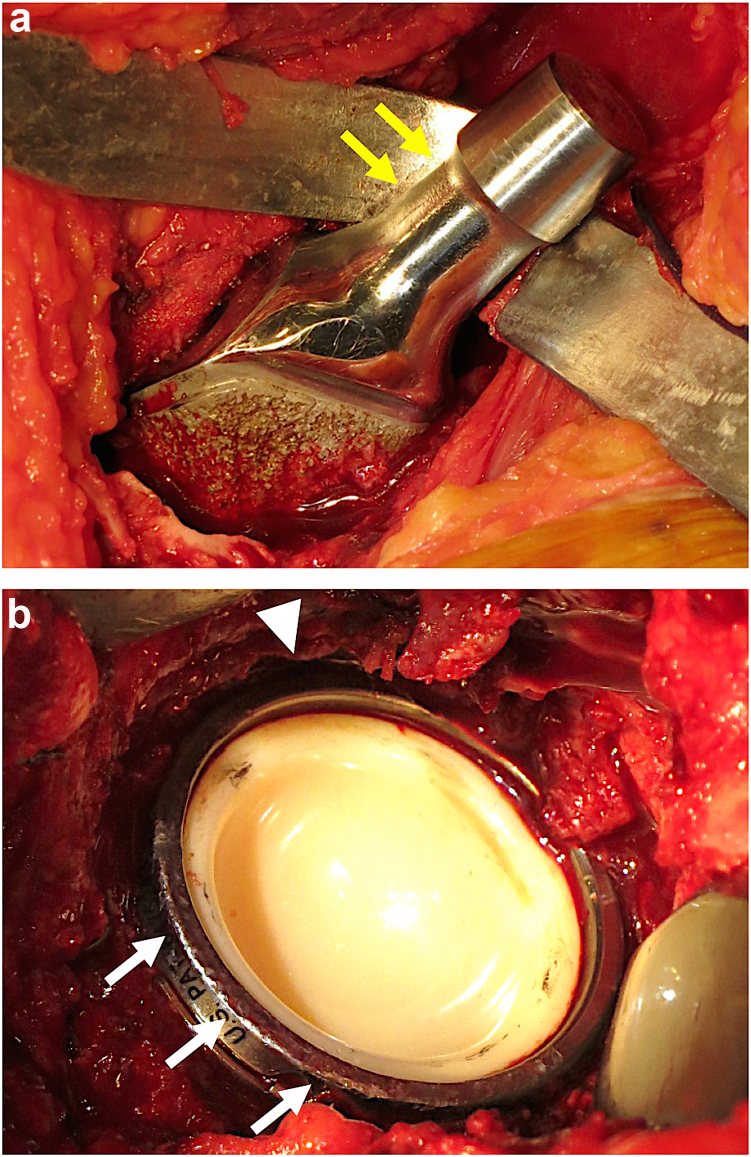
We present a rare case of symptomatic adverse local tissue reaction in a 54-year-old female patient who had undergone total hip arthroplasty with ceramic-on-ceramic bearing. Inflammatory periarticular mass and osteolysis developed in the absence of cobalt chrome alloy interfaces and a modular neck component. On the pathologic images, there was no clear evidence of gross metal staining of tissues, metal corrosion, and ceramic or metal wear particles. However, there were impingement scars on the titanium alloy femoral neck and acetabular cup associated with a high combined anteversion angle of 75° (stem: 40° and cup: 35°), suggesting titanium debris release in vivo. Immunohistochemical staining proved a predominant infiltration of CD4+ T cells and the corresponding IL-17A response to metal. We conclude that neck-rim impingement may lead to the development of adverse local tissue reaction (periarticular mass and osteolysis) due to a metal hypersensitivity with the production of proinflammatory cytokines (IL-17A) by CD4+ T cells even in ceramic-on-ceramic total hip arthroplasty.
我们报告了一例罕见的有症状的局部组织不良反应病例,患者为一名54岁女性,接受了陶瓷对陶瓷关节轴承的全髋关节置换术。在没有钴铬合金界面和模块化颈部件的情况下,出现了炎性关节周围肿块和骨质溶解。在病理图像上,没有明显的组织大体金属染色、金属腐蚀以及陶瓷或金属磨损颗粒的证据。然而,在钛合金股骨颈和髋臼杯上有撞击瘢痕,合并前倾角高达75°(柄:40°,杯:35°),提示体内有钛碎屑释放。免疫组织化学染色显示CD4 + T细胞显著浸润,且对金属有相应的IL-17A反应。我们得出结论,即使在陶瓷对陶瓷全髋关节置换术中,颈部-髋臼边缘撞击也可能由于金属超敏反应,导致CD4 + T细胞产生促炎细胞因子(IL-17A),从而引发局部组织不良反应(关节周围肿块和骨质溶解)。