Uhlitz Florian, Bischoff Philip, Peidli Stefan, Sieber Anja, Trinks Alexandra, Lüthen Mareen, Obermayer Benedikt, Blanc Eric, Ruchiy Yana, Sell Thomas, Mamlouk Soulafa, Arsie Roberto, Wei Tzu-Ting, Klotz-Noack Kathleen, Schwarz Roland F, Sawitzki Birgit, Kamphues Carsten, Beule Dieter, Landthaler Markus, Sers Christine, Horst David, Blüthgen Nils, Morkel Markus
Institute of Pathology, Charité - Universitätsmedizin Berlin, Corporate Member of Freie Universität Berlin and Humboldt-Universität zu Berlin, Berlin, Germany.
IRI Life Sciences, Humboldt University of Berlin, Berlin, Germany.
EMBO Mol Med. 2021 Oct 7;13(10):e14123. doi: 10.15252/emmm.202114123. Epub 2021 Aug 19.
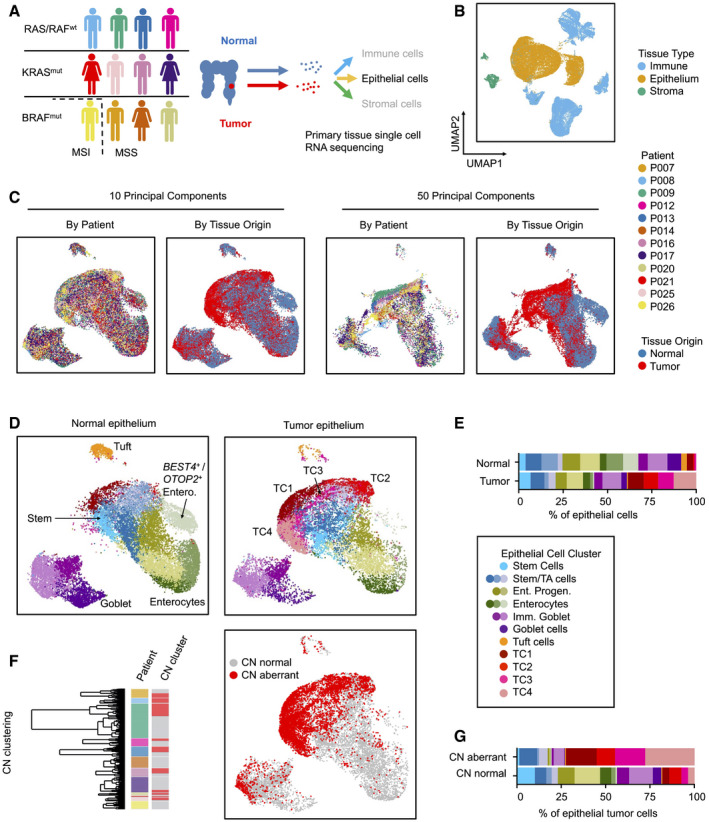
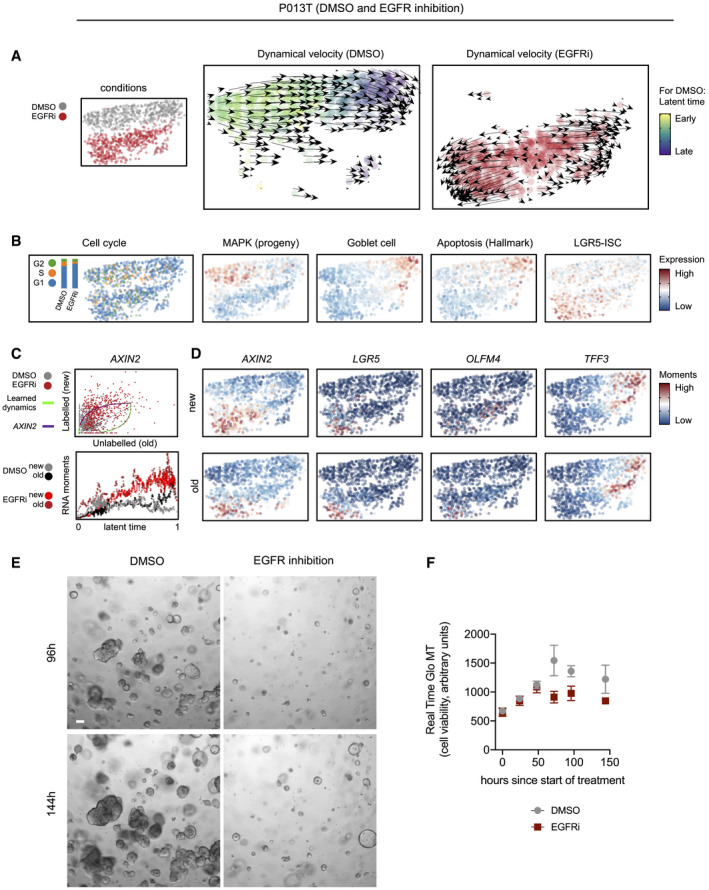
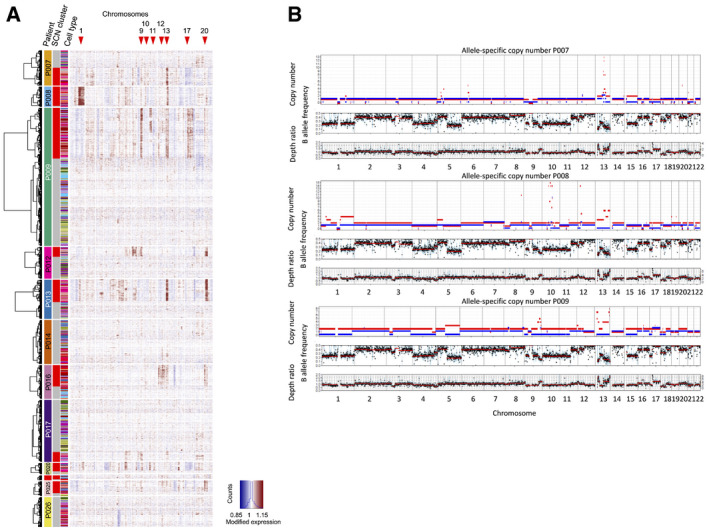
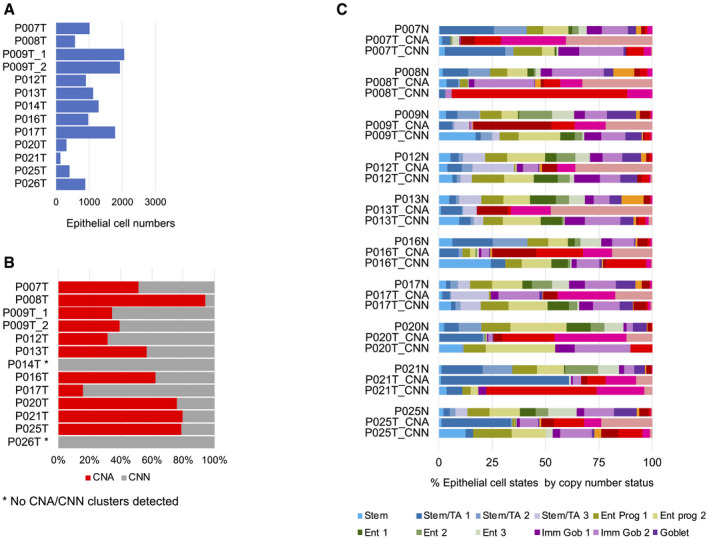
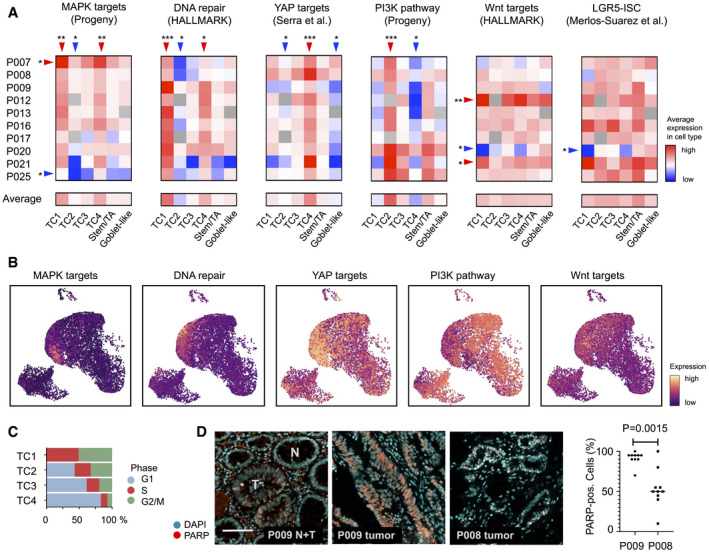
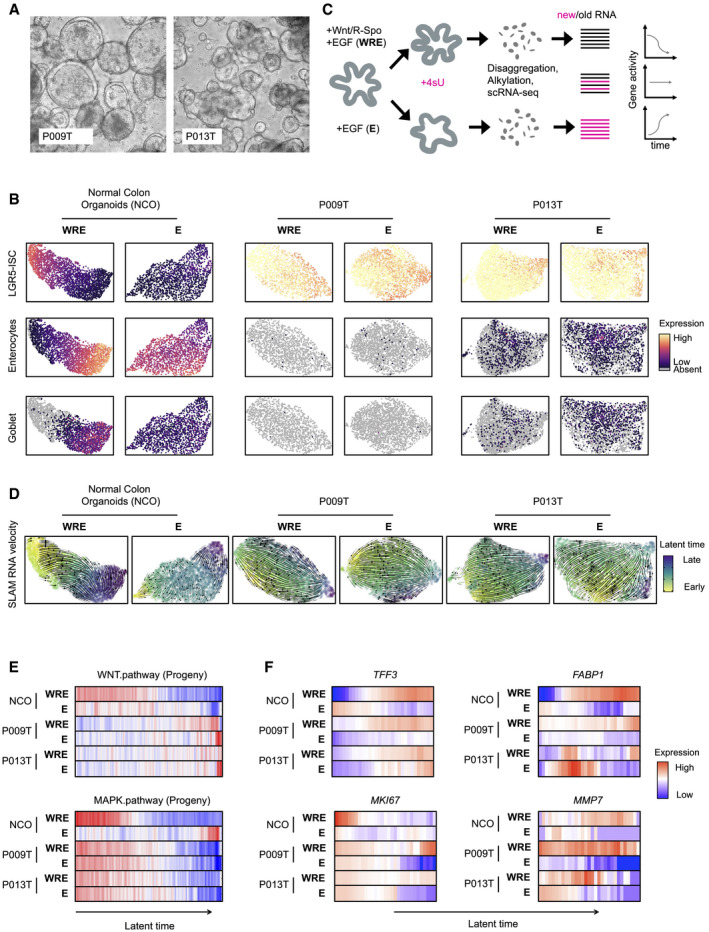
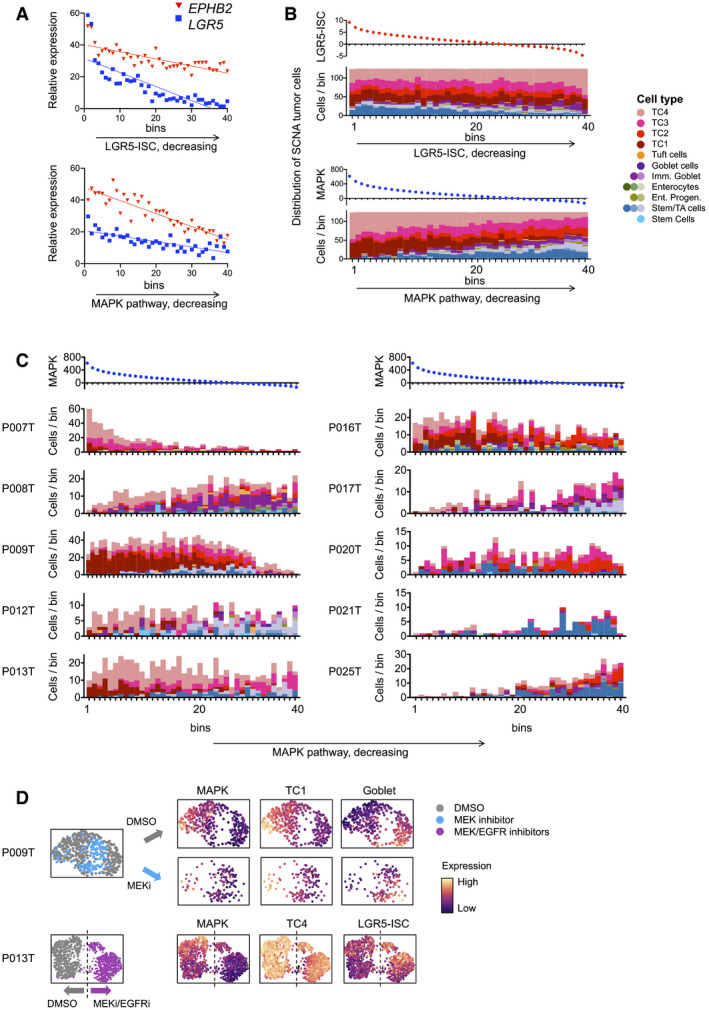
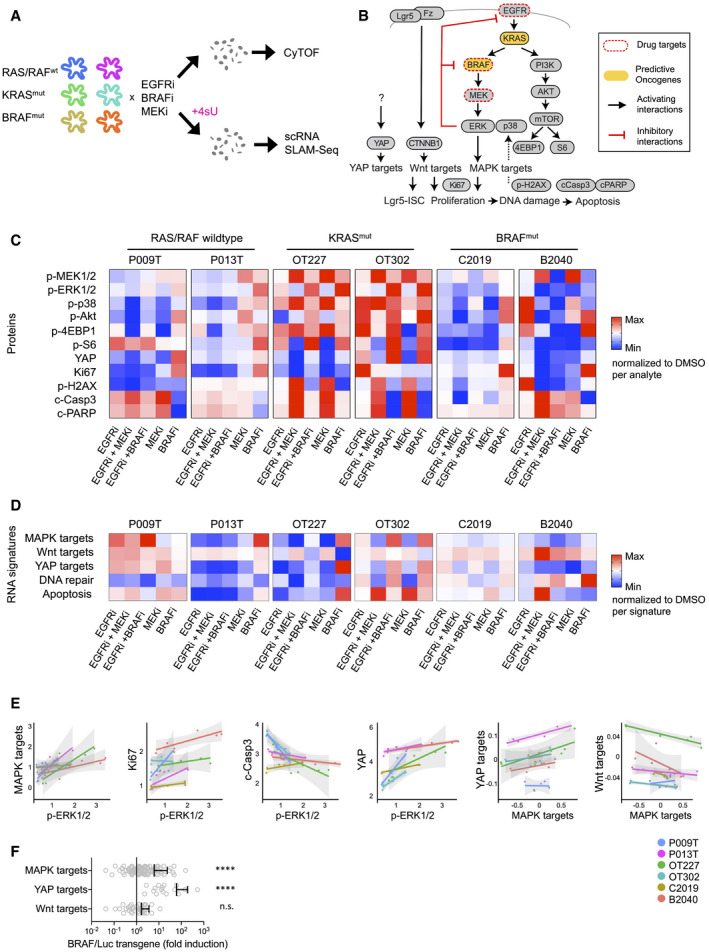
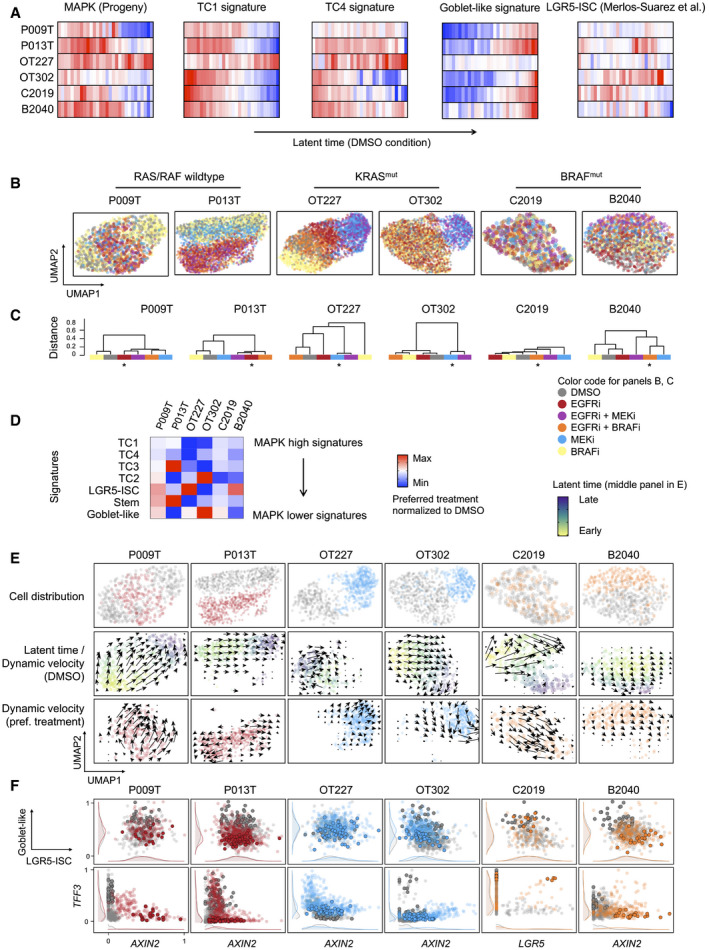
In colorectal cancer, oncogenic mutations transform a hierarchically organized and homeostatic epithelium into invasive cancer tissue lacking visible organization. We sought to define transcriptional states of colorectal cancer cells and signals controlling their development by performing single-cell transcriptome analysis of tumors and matched non-cancerous tissues of twelve colorectal cancer patients. We defined patient-overarching colorectal cancer cell clusters characterized by differential activities of oncogenic signaling pathways such as mitogen-activated protein kinase and oncogenic traits such as replication stress. RNA metabolic labeling and assessment of RNA velocity in patient-derived organoids revealed developmental trajectories of colorectal cancer cells organized along a mitogen-activated protein kinase activity gradient. This was in contrast to normal colon organoid cells developing along graded Wnt activity. Experimental targeting of EGFR-BRAF-MEK in cancer organoids affected signaling and gene expression contingent on predictive KRAS/BRAF mutations and induced cell plasticity overriding default developmental trajectories. Our results highlight directional cancer cell development as a driver of non-genetic cancer cell heterogeneity and re-routing of trajectories as a response to targeted therapy.
在结直肠癌中,致癌突变将层次有序且稳态的上皮组织转变为缺乏可见组织结构的侵袭性癌组织。我们通过对12名结直肠癌患者的肿瘤及配对的非癌组织进行单细胞转录组分析,试图确定结直肠癌细胞的转录状态以及控制其发育的信号。我们定义了以有丝分裂原激活蛋白激酶等致癌信号通路的不同活性以及复制应激等致癌特征为特点的患者总体结直肠癌细胞簇。对患者来源的类器官进行RNA代谢标记和RNA速度评估,揭示了沿有丝分裂原激活蛋白激酶活性梯度组织的结直肠癌细胞的发育轨迹。这与沿分级Wnt活性发育的正常结肠类器官细胞形成对比。在癌类器官中对EGFR - BRAF - MEK进行实验性靶向,会影响取决于预测性KRAS/BRAF突变的信号传导和基因表达,并诱导细胞可塑性,超越默认的发育轨迹。我们的结果强调了定向癌细胞发育是非遗传癌细胞异质性的驱动因素,以及轨迹重新定向是对靶向治疗的反应。