Laboratório de Parasitologia, Instituto Butantan, São Paulo, SP, 05503-900, Brazil.
Departamento de Bioquímica, Instituto de Química, Universidade de São Paulo, São Paulo, SP, 05508-900, Brazil.
Sci Rep. 2021 Aug 19;11(1):16816. doi: 10.1038/s41598-021-96055-7.
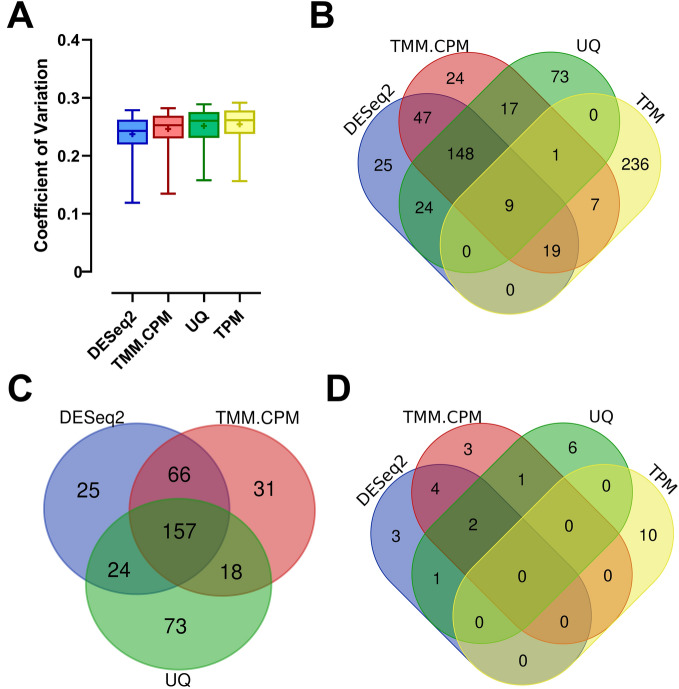
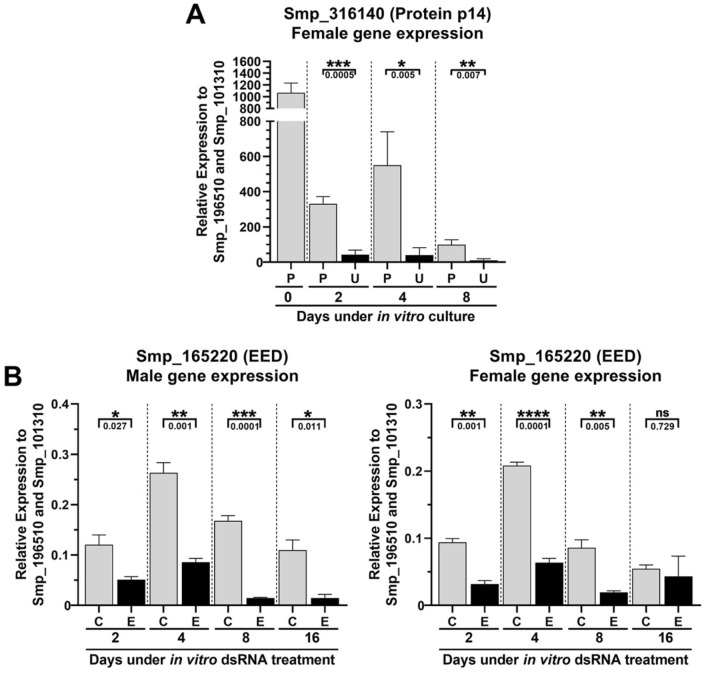
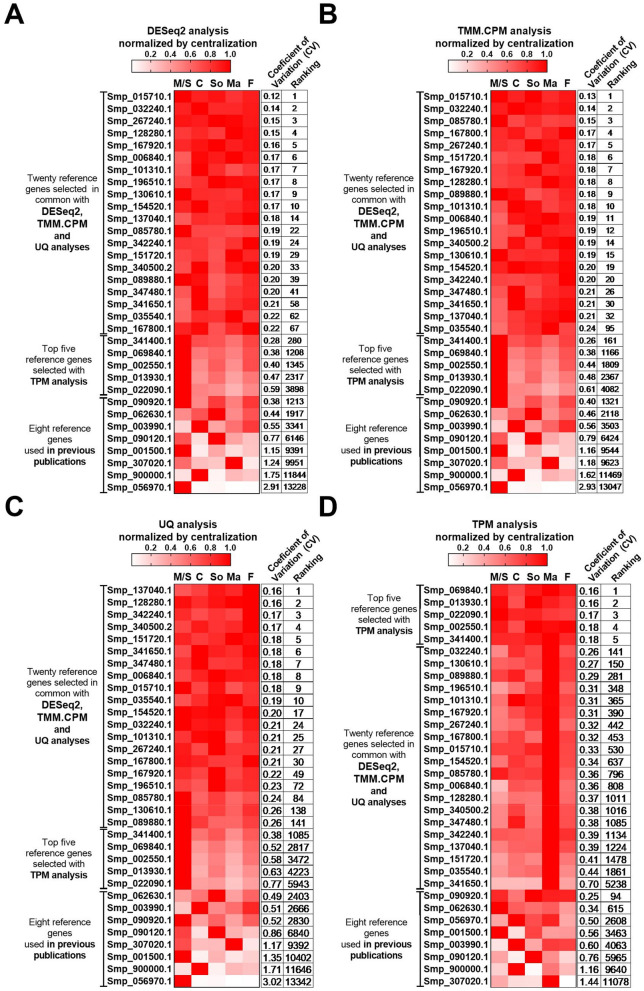
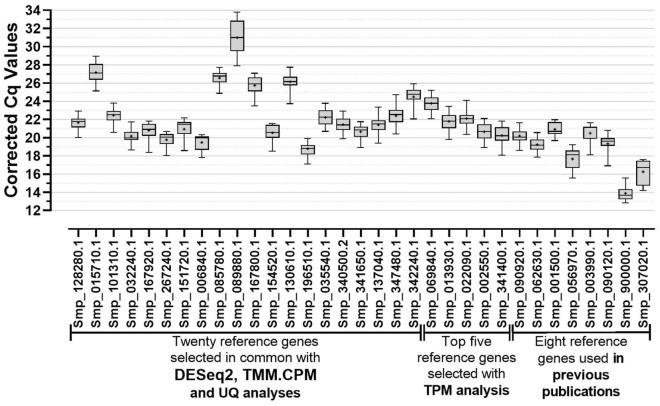
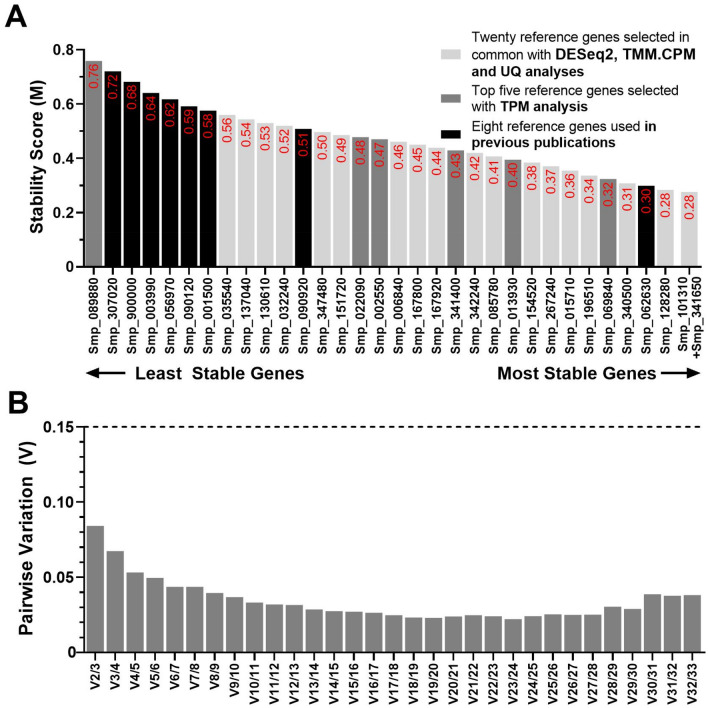
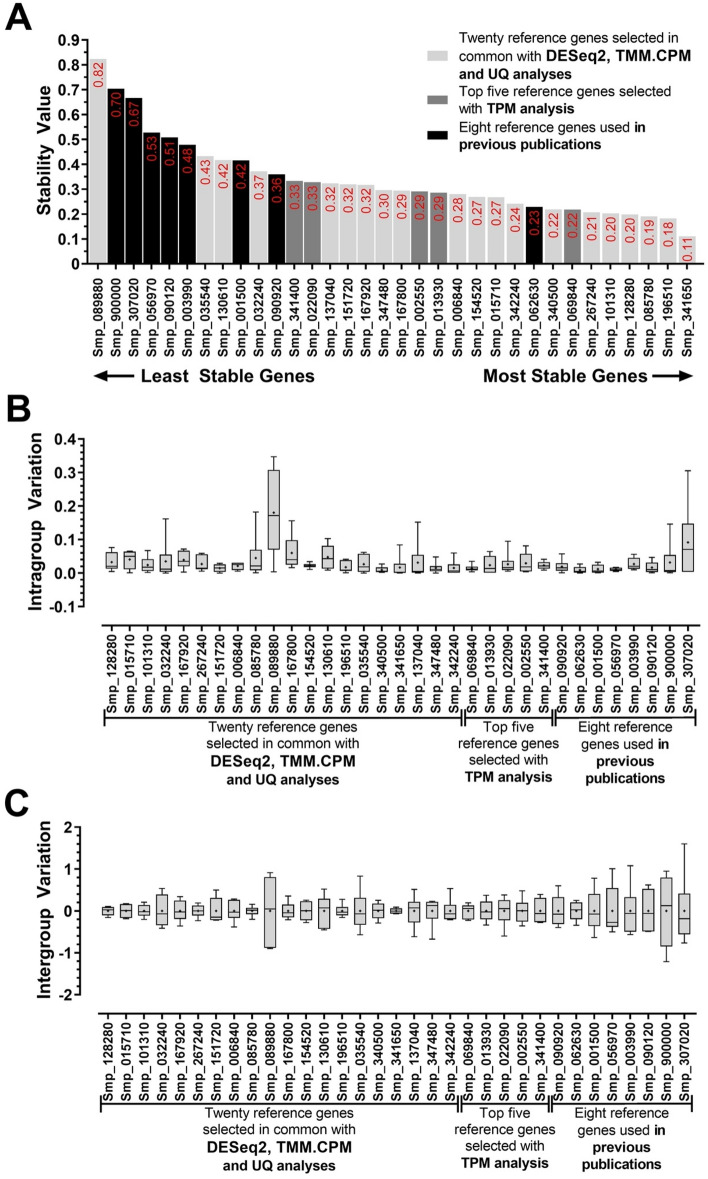
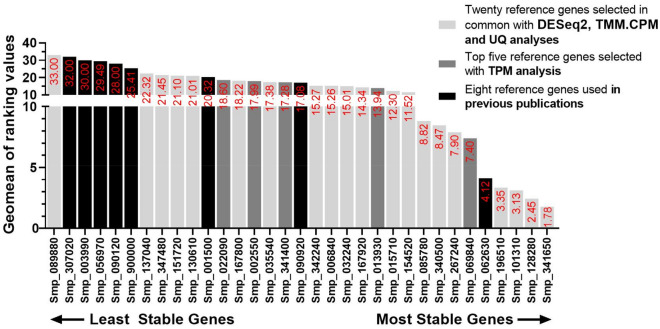
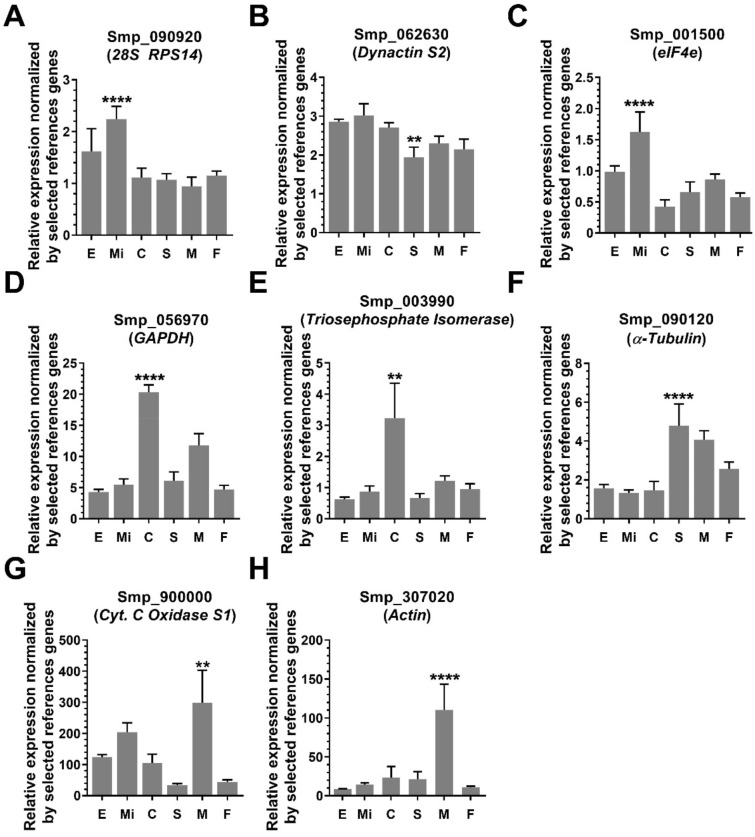
Reverse-transcription quantitative real-time polymerase chain reaction (RT-qPCR) is the most used, fast, and reproducible method to confirm large-scale gene expression data. The use of stable reference genes for the normalization of RT-qPCR assays is recognized worldwide. No systematic study for selecting appropriate reference genes for usage in RT-qPCR experiments comparing gene expression levels at different Schistosoma mansoni life-cycle stages has been performed. Most studies rely on genes commonly used in other organisms, such as actin, tubulin, and GAPDH. Therefore, the present study focused on identifying reference genes suitable for RT-qPCR assays across six S. mansoni developmental stages. The expression levels of 25 novel candidates that we selected based on the analysis of public RNA-Seq datasets, along with eight commonly used reference genes, were systematically tested by RT-qPCR across six developmental stages of S. mansoni (eggs, miracidia, cercariae, schistosomula, adult males and adult females). The stability of genes was evaluated with geNorm, NormFinder and RefFinder algorithms. The least stable candidate reference genes tested were actin, tubulin and GAPDH. The two most stable reference genes suitable for RT-qPCR normalization were Smp_101310 (Histone H4 transcription factor) and Smp_196510 (Ubiquitin recognition factor in ER-associated degradation protein 1). Performance of these two genes as normalizers was successfully evaluated with females maintained unpaired or paired to males in culture for 8 days, or with worm pairs exposed for 16 days to double-stranded RNAs to silence a protein-coding gene. This study provides reliable reference genes for RT-qPCR analysis using samples from six different S. mansoni life-cycle stages.
逆转录定量实时聚合酶链反应(RT-qPCR)是最常用、快速且可重复的方法,可用于确认大规模基因表达数据。在 RT-qPCR 分析中,使用稳定的参考基因进行标准化已得到全球认可。目前还没有针对选择合适的参考基因进行 Schistosoma mansoni 不同生命周期阶段基因表达水平比较的 RT-qPCR 实验进行系统研究。大多数研究依赖于在其他生物体中常用的基因,如肌动蛋白、微管蛋白和 GAPDH。因此,本研究专注于鉴定适用于六个 S. mansoni 发育阶段的 RT-qPCR 分析的参考基因。我们根据公共 RNA-Seq 数据集的分析选择了 25 个新候选基因,并通过 RT-qPCR 对 S. mansoni 的六个发育阶段(卵、毛蚴、尾蚴、童虫、雌雄成虫)进行了系统测试,同时还测试了 8 个常用的参考基因。使用 geNorm、NormFinder 和 RefFinder 算法评估了基因的稳定性。测试的最不稳定候选参考基因是肌动蛋白、微管蛋白和 GAPDH。两个最适合用于 RT-qPCR 标准化的稳定参考基因是 Smp_101310(组蛋白 H4 转录因子)和 Smp_196510(内质网相关降解蛋白 1 中的泛素识别因子)。成功评估了这两个基因作为正常化因子的性能,方法是将未配对或配对的雌性虫体在培养中维持 8 天,或使虫对暴露于双链 RNA 16 天以沉默一个编码蛋白的基因。本研究为使用来自六个不同 S. mansoni 生命周期阶段的样本进行 RT-qPCR 分析提供了可靠的参考基因。