Cancer Research Center of Marseille, Aix Marseille University, CNRS, INSERM, Institut Paoli-Calmettes, CRCM, Marseille, France.
Department of Pathology, Beaujon Hospital, Assistance Publique-Hôpitaux de Paris, Clichy, France.
EBioMedicine. 2021 Sep;71:103541. doi: 10.1016/j.ebiom.2021.103541. Epub 2021 Aug 20.
Pancreatic ductal adenocarcinoma (PDAC) is characterized by an important heterogeneity, reflected by different clinical outcomes and chemoresistance. During carcinogenesis, tumor cells display aberrant glycosylated structures, synthetized by deregulated glycosyltransferases, supporting the tumor progression. In this study, we aimed to determine whether PDAC could be stratified through their glycosyltransferase expression profiles better than the current binary classification (basal-like and classical) in order to improve detection of patients with poor prognosis.
Bioinformatic analysis of 169 glycosyltransferase RNA sequencing data were performed for 74 patient-derived xenografts (PDX) of resected and unresectable tumors. The Australian cohort of International Cancer Genome Consortium and the microarray dataset from Puleo patient's cohort were used as independent validation datasets.
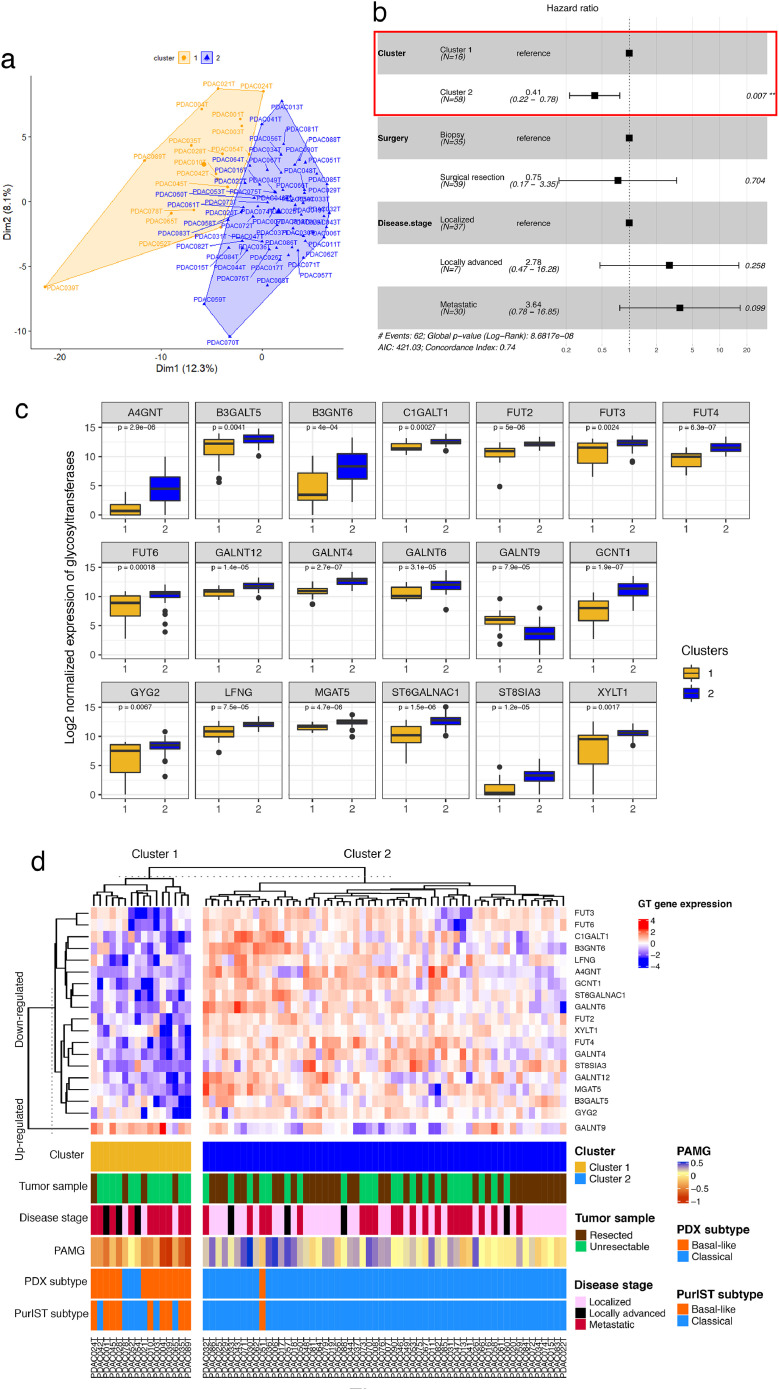
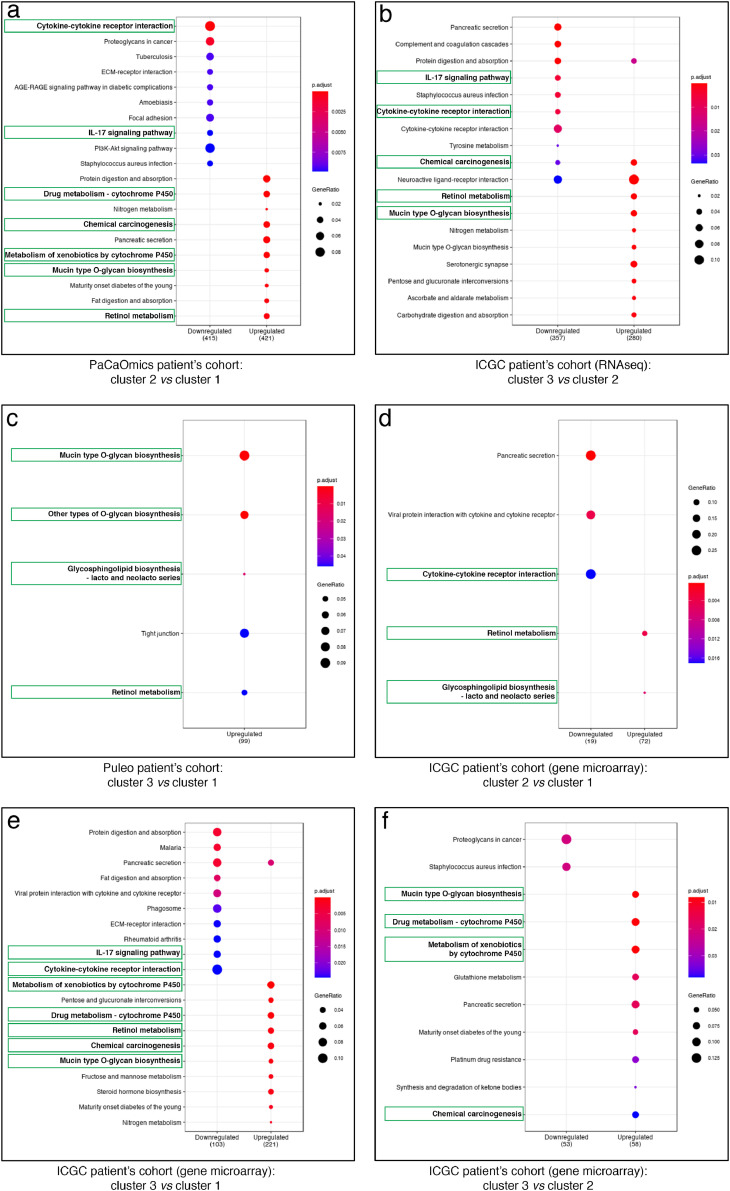
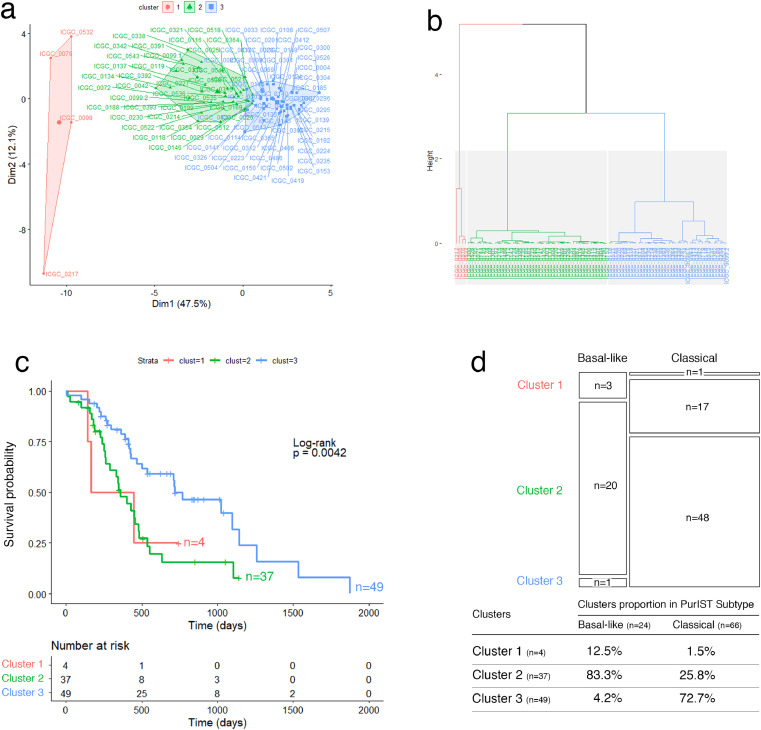
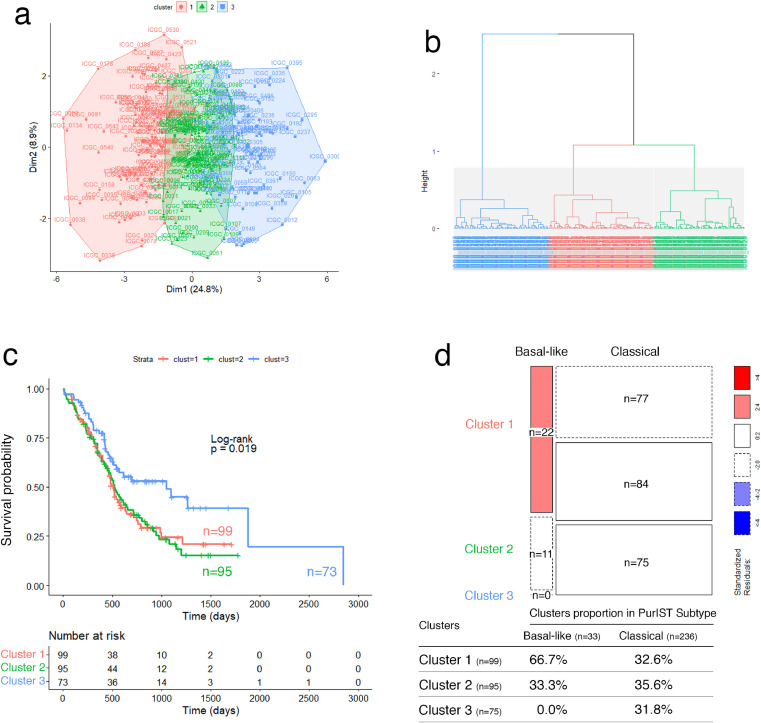
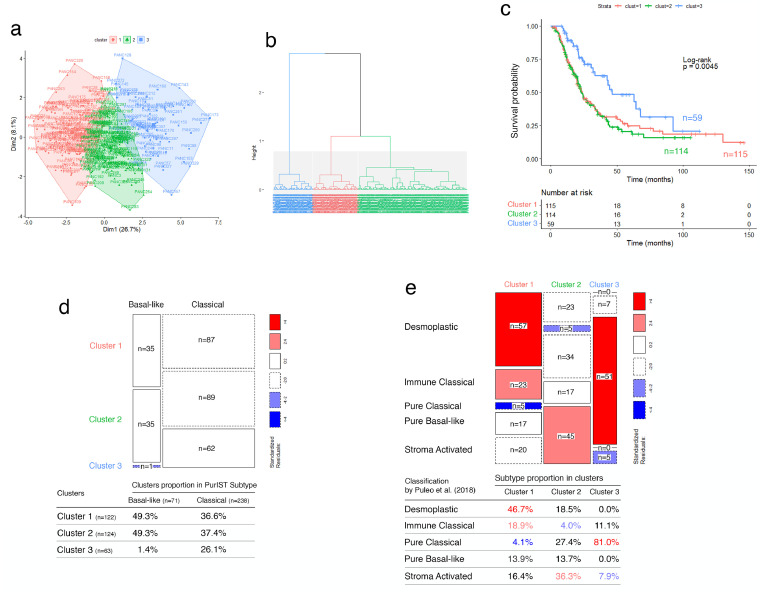
New PDAC stratification based on glycosyltransferase expression profile allowed to distinguish different groups of patients with distinct clinical outcome (p-value = 0.007). A combination of 19 glycosyltransferases differentially expressed in PDX defined a glyco-signature, whose prognostic value was validated on datasets including resected whole tumor tissues. The glyco-signature was able to discriminate three clusters of PDAC patients on the validation cohorts, two clusters displaying a short overall survival compared to one cluster having a better prognosis. Both poor prognostic clusters having different glyco-profiles in Puleo patient's cohort were correlated with stroma activated or desmoplastic subtypes corresponding to distinct microenvironment features (p-value < 0.0001). Besides, differential expression and enrichment analyses revealed deregulated functional pathways specific to different clusters.
This study identifies a glyco-signature relevant for a prognostic use, potentially applicable to resected and unresectable PDAC. Furthermore, it provides new potential therapeutic targets.
This work was supported by INCa (Grants number 2018-078 and 2018-079), Fondation ARC (Grant number ARCPJA32020070002326), Cancéropôle PACA, DGOS (labelization SIRIC, Grant number 6038), Amidex Foundation and Ligue Nationale Contre le Cancer and by institutional fundings from INSERM and the Aix-Marseille Université.
胰腺导管腺癌(PDAC)的特征是存在重要的异质性,这种异质性表现在不同的临床结局和化疗耐药性上。在癌变过程中,肿瘤细胞表现出异常的糖基化结构,这些结构是由糖基转移酶的失调合成的,从而支持肿瘤的进展。在这项研究中,我们旨在确定是否可以通过 PDAC 的糖基转移酶表达谱对其进行分层,而不是当前的二元分类(基底样和经典型),以便更好地检测预后不良的患者。
对 74 例来自可切除和不可切除肿瘤的患者衍生异种移植(PDX)的 169 个糖基转移酶 RNA 测序数据进行了生物信息学分析。澳大利亚国际癌症基因组联盟队列和 Puleo 患者队列的微阵列数据集被用作独立的验证数据集。
基于糖基转移酶表达谱的新 PDAC 分层可以区分具有不同临床结局的不同患者群体(p 值=0.007)。在 PDX 中差异表达的 19 种糖基转移酶的组合定义了一个糖基化特征,其在包括全肿瘤组织的验证数据集中得到了验证。该糖基化特征能够在验证队列中区分 PDAC 患者的三个聚类,其中两个聚类的总生存期较短,而一个聚类的预后较好。在 Puleo 患者队列中,两个预后不良的聚类具有不同的糖基化谱,与基质激活或纤维组织增生型对应的不同微环境特征相关(p 值<0.0001)。此外,差异表达和富集分析揭示了不同聚类中特定的失调功能途径。
这项研究确定了一个与预后相关的糖基化特征,可能适用于可切除和不可切除的 PDAC。此外,它提供了新的潜在治疗靶点。
这项工作得到了 INCa(2018-078 和 2018-079 号拨款)、ARC 基金会(ARCPJA32020070002326 号拨款)、Cancéropôle PACA、DGOS(SIRIC 标签化,6038 号拨款)、Amidex 基金会和法国抗癌联盟的支持,并得到了 INSERM 和艾克斯-马赛大学的机构资金支持。