Division of Pharmaceutical Sciences, James L. Winkle College of Pharmacy, University of Cincinnati, Cincinnati, OH, USA.
Princess Máxima Center for Pediatric Oncology, Utrecht, the Netherlands.
Acta Neuropathol Commun. 2021 Aug 23;9(1):142. doi: 10.1186/s40478-021-01243-1.
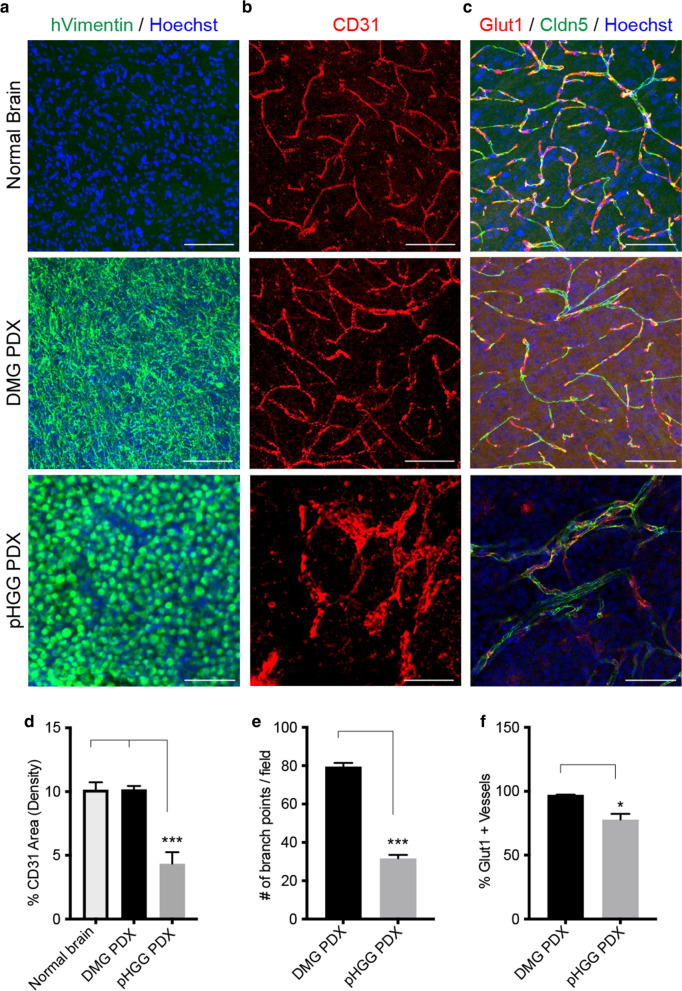
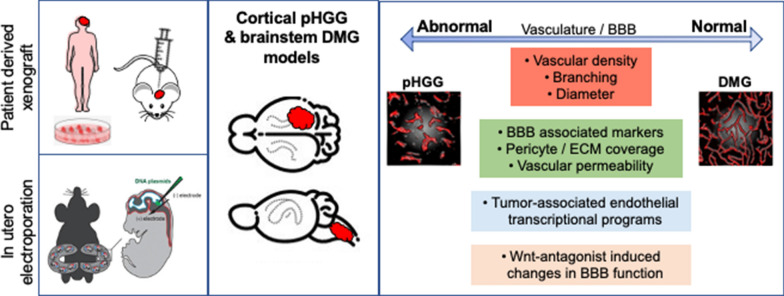
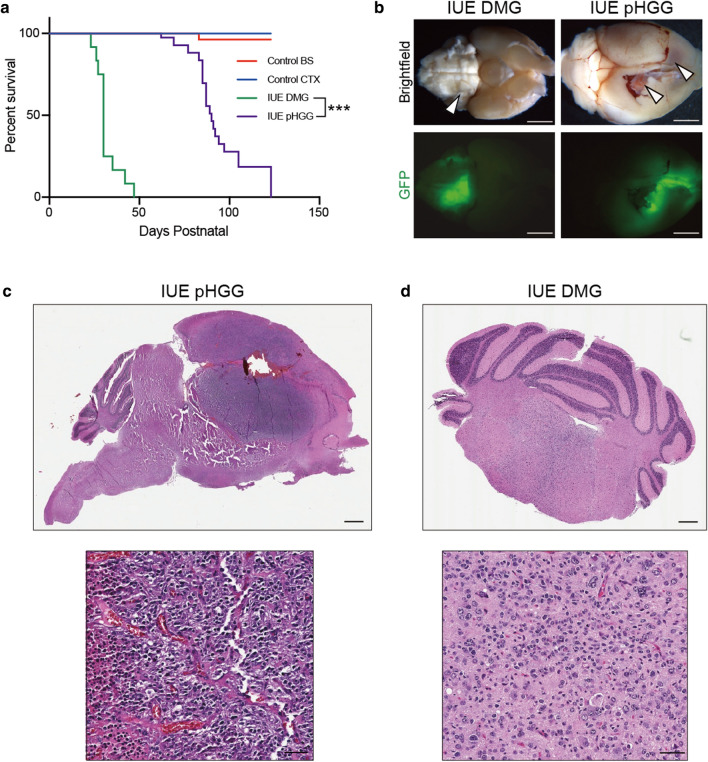
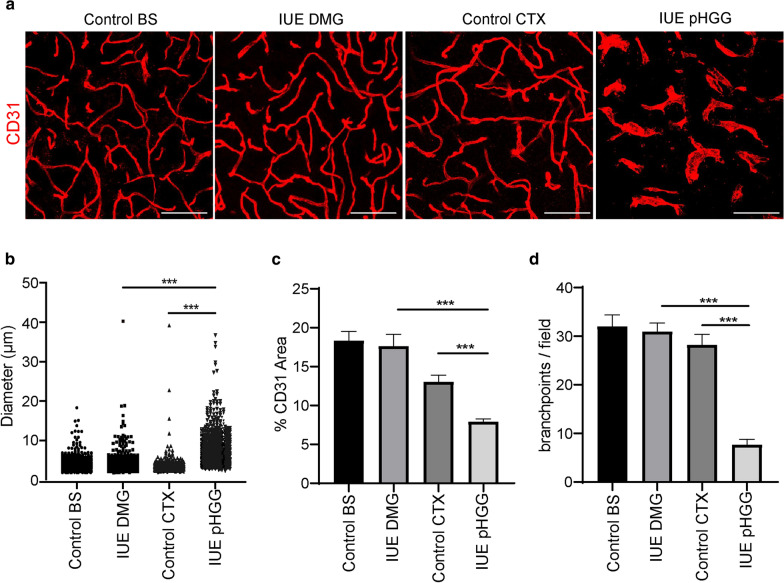
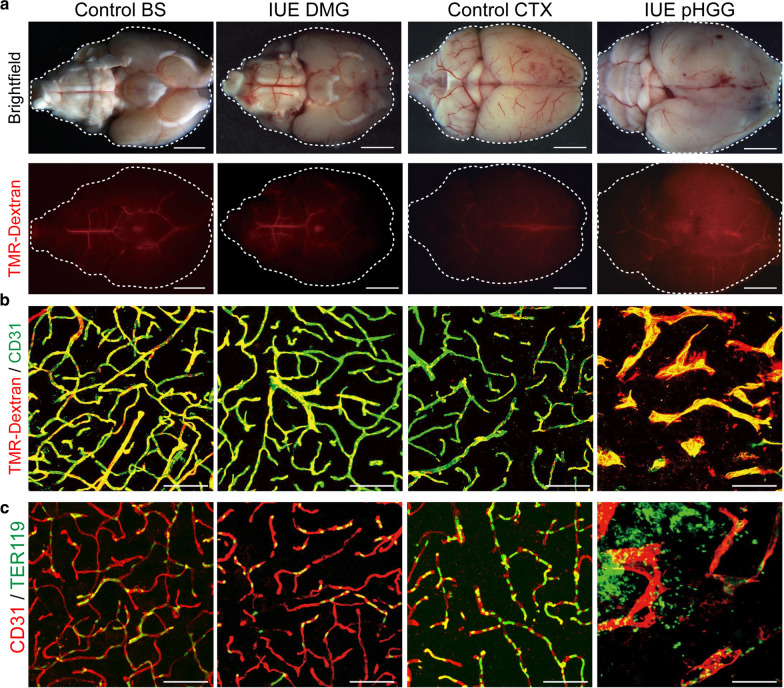
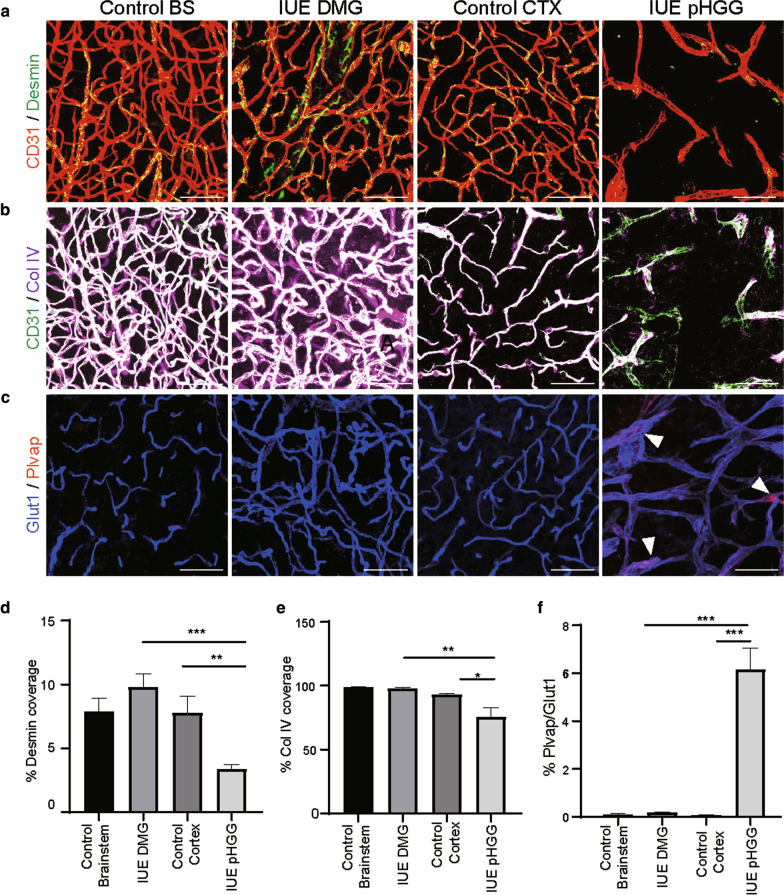
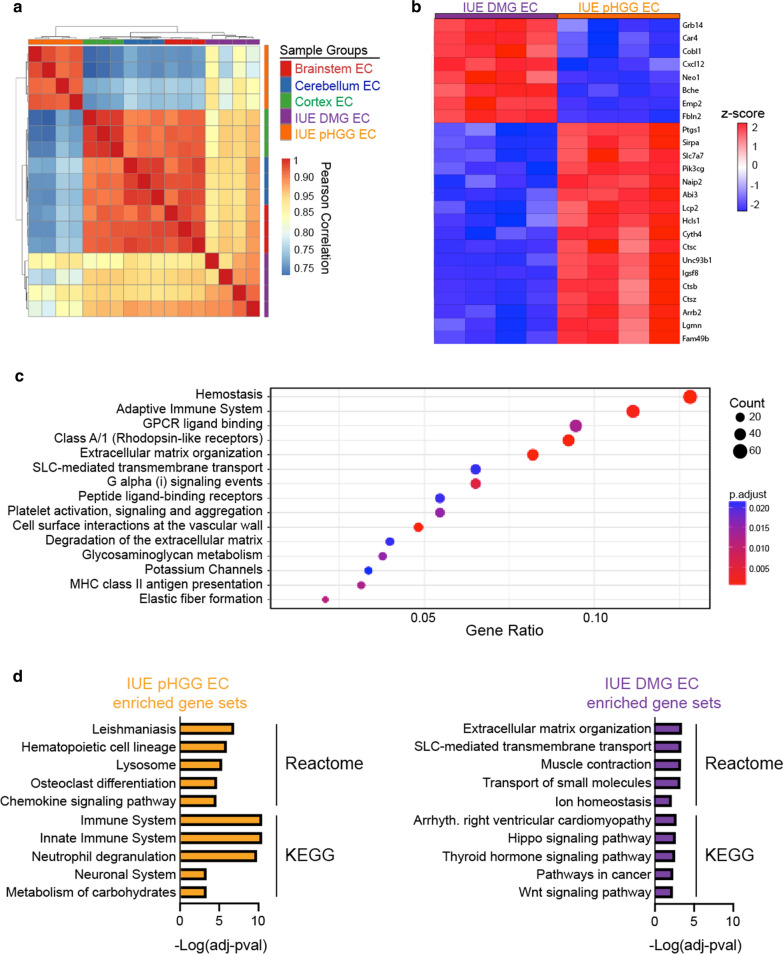
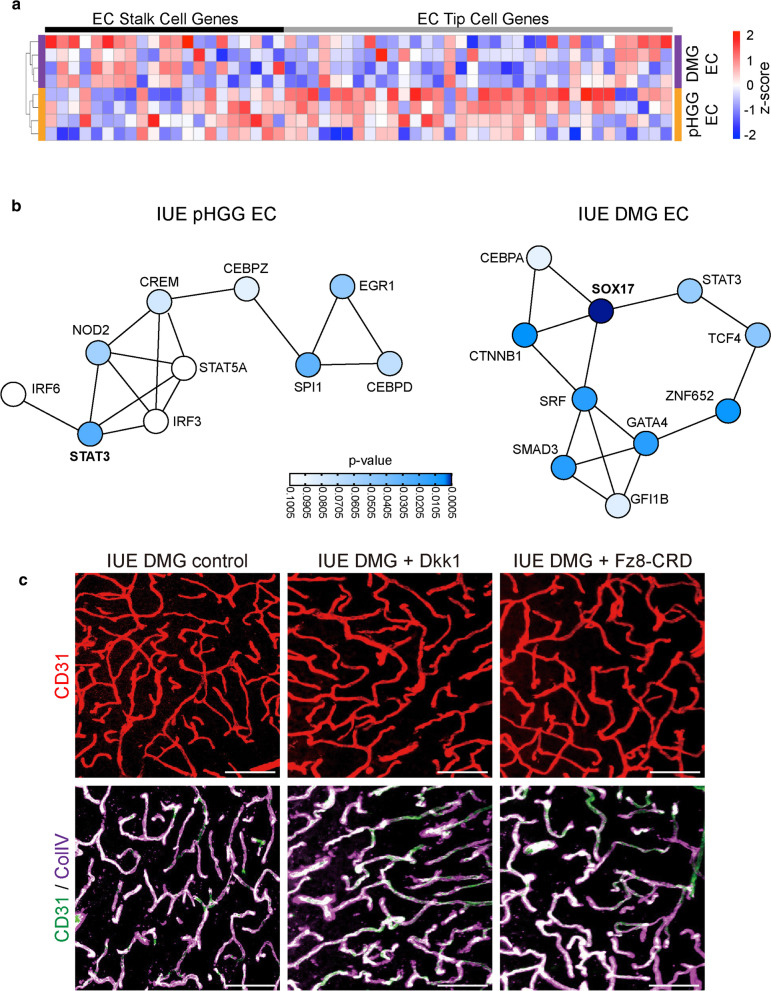
The blood-brain barrier (BBB) plays important roles in brain tumor pathogenesis and treatment response, yet our understanding of its function and heterogeneity within or across brain tumor types remains poorly characterized. Here we analyze the neurovascular unit (NVU) of pediatric high-grade glioma (pHGG) and diffuse midline glioma (DMG) using patient derived xenografts and natively forming glioma mouse models. We show tumor-associated vascular differences between these glioma subtypes, and parallels between PDX and mouse model systems, with DMG models maintaining a more normal vascular architecture, BBB function and endothelial transcriptional program relative to pHGG models. Unlike prior work in angiogenic brain tumors, we find that expression of secreted Wnt antagonists do not alter the tumor-associated vascular phenotype in DMG tumor models. Together, these findings highlight vascular heterogeneity between pHGG and DMG and differences in their response to alterations in developmental BBB signals that may participate in driving these pathological differences.
血脑屏障(BBB)在脑肿瘤发病机制和治疗反应中发挥着重要作用,但我们对其功能和脑肿瘤类型内或跨类型的异质性的理解仍知之甚少。在这里,我们使用患者来源的异种移植物和天然形成的胶质瘤小鼠模型分析了小儿高级别胶质瘤(pHGG)和弥漫性中线胶质瘤(DMG)的神经血管单元(NVU)。我们显示了这些胶质瘤亚型之间与肿瘤相关的血管差异,以及 PDX 和小鼠模型系统之间的平行关系,与 pHGG 模型相比,DMG 模型保持更正常的血管结构、BBB 功能和内皮转录程序。与血管生成性脑肿瘤中的先前工作不同,我们发现分泌的 Wnt 拮抗剂的表达不会改变 DMG 肿瘤模型中的肿瘤相关血管表型。总之,这些发现强调了 pHGG 和 DMG 之间的血管异质性,以及它们对发育性 BBB 信号改变的反应存在差异,这些差异可能参与驱动这些病理差异。