Flowers Elena, Allen Isabel Elaine, Kanaya Alka M, Aouizerat Bradley E
Department of Physiological Nursing, University of California, San Francisco, 2 Koret Way, #605L, CA, 94143-0610, San Francisco, USA.
Institute for Human Genetics, University of California, San Francisco, 2 Koret Way, #605L, CA , 94143-0610, San Francisco, USA.
Biomark Res. 2021 Aug 23;9(1):65. doi: 10.1186/s40364-021-00317-5.
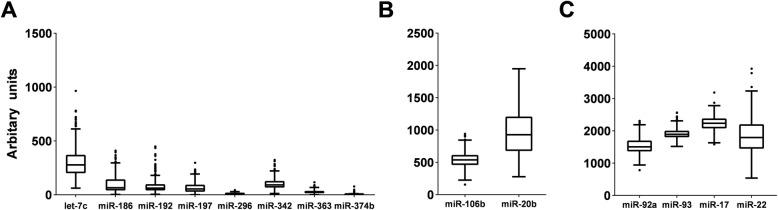
MicroRNAs may be important regulators of risk for type 2 diabetes. The purpose of this longitudinal observational study was to assess whether circulating microRNAs predicted improvements in fasting blood glucose, a major risk factor for type 2 diabetes, over 12 months.
The study included participants (n = 82) from a previously completed trial that tested the effect of restorative yoga on individuals with prediabetes. Circulating microRNAs were measured using a flow cytometry miRNA assay. Linear models were used to determine the optimal sets of microRNA predictors overall and by intervention group.
Subsets of microRNAs were significant predictors of final fasting blood glucose after 12-months (R = 0.754, p < 0.001) and changes in fasting blood glucose over 12-months (R = 0.731, p < 0.001). Three microRNAs (let-7c, miR-363, miR-374b) were significant for the control group only, however there was no significant interaction by intervention group.
Circulating microRNAs are significant predictors of fasting blood glucose in individuals with prediabetes. Among the identified microRNAs, several have previously been associated with risk for type 2 diabetes. This is one of the first studies to use a longitudinal design to assess whether microRNAs predict changes in fasting blood glucose over time. Further exploration of the function of the microRNAs included in these models may provide new insights about the complex etiology of type 2 diabetes and responses to behavioral risk reduction interventions.
This study was a secondary analysis of a previously completed clinical trial that is registered at clinicaltrials.gov (NCT01024816) on December 3, 2009.
微小RNA可能是2型糖尿病风险的重要调节因子。这项纵向观察性研究的目的是评估循环微小RNA是否能预测2型糖尿病的主要危险因素空腹血糖在12个月内的改善情况。
该研究纳入了先前一项已完成试验的参与者(n = 82),该试验测试了恢复性瑜伽对糖尿病前期个体的影响。使用流式细胞术miRNA检测法测量循环微小RNA。采用线性模型来确定总体以及按干预组划分的微小RNA预测指标的最佳组合。
微小RNA子集是12个月后最终空腹血糖(R = 0.754,p < 0.001)和12个月内空腹血糖变化(R = 0.731,p < 0.001)的显著预测指标。三种微小RNA(let-7c、miR-363、miR-374b)仅对对照组有显著意义,然而按干预组划分并无显著交互作用。
循环微小RNA是糖尿病前期个体空腹血糖的显著预测指标。在已确定的微小RNA中,有几种先前已与2型糖尿病风险相关。这是首批使用纵向设计来评估微小RNA是否能预测空腹血糖随时间变化的研究之一。对这些模型中所包含微小RNA功能的进一步探索,可能会为2型糖尿病的复杂病因以及对行为风险降低干预措施的反应提供新的见解。
本研究是对一项先前已完成的临床试验的二次分析,该试验于2009年12月3日在clinicaltrials.gov(NCT01024816)上注册。