School of Nursing, Department of Physiological Nursing, University of California, San Francisco, San Francisco, CA, United States.
College of Biological Sciences, University of California at Davis, Davis, CA, United States.
Front Endocrinol (Lausanne). 2023 Jan 10;13:971354. doi: 10.3389/fendo.2022.971354. eCollection 2022.
Gestational diabetes (GDM) is associated with increased risk for preterm birth and related complications for both the pregnant person and newborn. Changes in gene expression have the potential to characterize complex interactions between genetic and behavioral/environmental risk factors for GDM. Our goal was to summarize the state of the science about changes in gene expression and GDM.
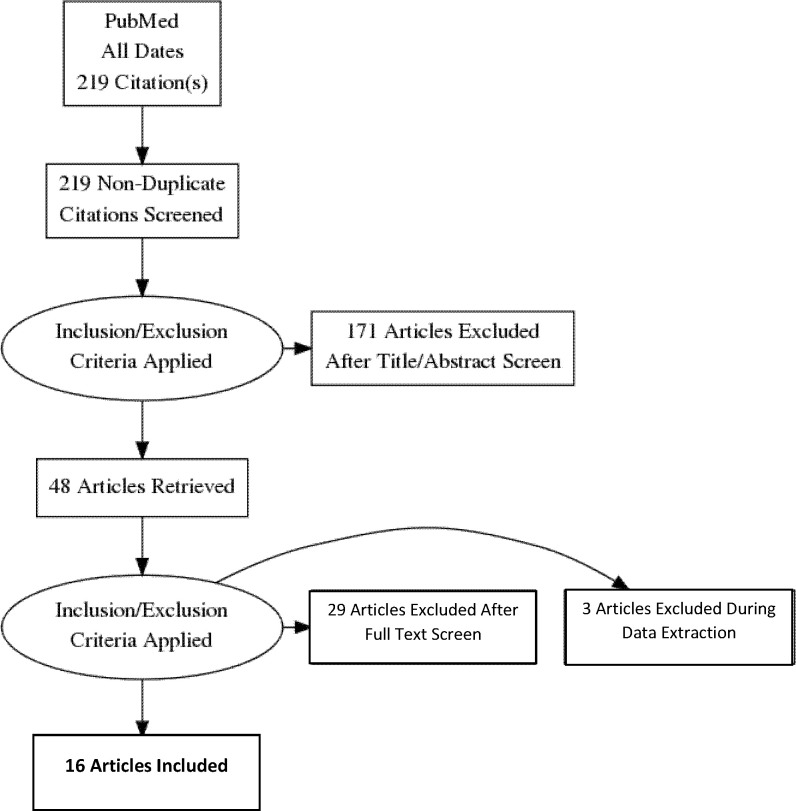
The systematic review was conducted using the Preferred Reporting Items for Systematic Reviews and Meta-Analyses guidelines.
PubMed articles about humans, in English, from any date were included if they described mRNA transcriptome or microRNA findings from blood samples in adults with GDM compared with adults without GDM.
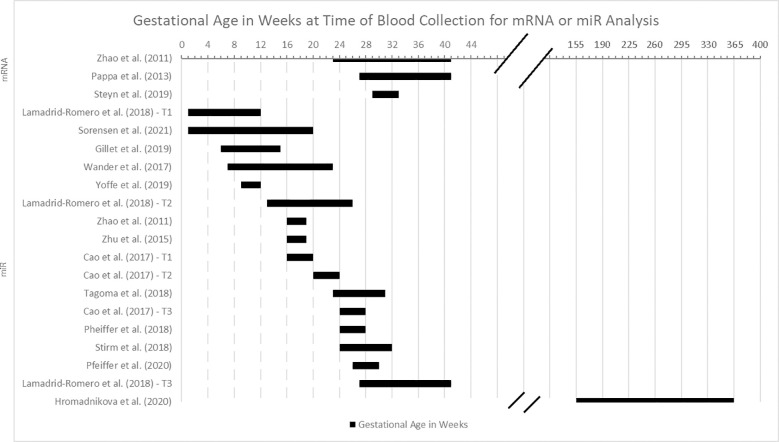
Sixteen articles were found representing 1355 adults (n=674 with GDM, n=681 controls) from 12 countries. Three studies reported transcriptome results and thirteen reported microRNA findings. Identified pathways described various aspects of diabetes pathogenesis, including glucose and insulin signaling, regulation, and transport; natural killer cell mediated cytotoxicity; and fatty acid biosynthesis and metabolism. Studies described 135 unique miRNAs that were associated with GDM, of which eight (miR-16-5p, miR-17-5p, miR-20a-5p, miR-29a-3p, miR-195-5p, miR-222-3p, miR-210-3p, and miR-342-3p) were described in 2 or more studies. Findings suggest that miRNA levels vary based on the time in pregnancy when GDM develops, the time point at which they were measured, sex assigned at birth of the offspring, and both the pre-pregnancy and gestational body mass index of the pregnant person.
The mRNA, miRNA, gene targets, and pathways identified in this review contribute to our understanding of GDM pathogenesis; however, further research is warranted to validate previous findings. In particular, longitudinal repeated-measures designs are needed that control for participant characteristics (e.g., weight), use standardized data collection methods and analysis tools, and are sufficiently powered to detect differences between subgroups. Findings may be used to improve early diagnosis, prevention, medication choice and/or clinical treatment of patients with GDM.
妊娠糖尿病(GDM)与孕妇和新生儿早产及相关并发症的风险增加有关。基因表达的变化有可能描述 GDM 的遗传和行为/环境风险因素之间的复杂相互作用。我们的目标是总结关于基因表达和 GDM 变化的科学现状。
本系统评价按照系统评价和荟萃分析的首选报告项目进行。
纳入了描述成人 GDM 与无 GDM 成人相比,来自血液样本的 mRNA 转录组或 microRNA 结果的人类英文文献,无论日期如何。
从 12 个国家/地区的 16 篇文章中找到了 1355 名成年人(n=674 名 GDM,n=681 名对照)的代表。三项研究报告了转录组结果,十三项研究报告了 microRNA 结果。确定的途径描述了糖尿病发病机制的各个方面,包括葡萄糖和胰岛素信号转导、调节和运输;自然杀伤细胞介导的细胞毒性;以及脂肪酸生物合成和代谢。研究描述了与 GDM 相关的 135 种独特的 miRNAs,其中 8 种(miR-16-5p、miR-17-5p、miR-20a-5p、miR-29a-3p、miR-195-5p、miR-222-3p、miR-210-3p 和 miR-342-3p)在两项或更多研究中被描述。研究结果表明,miRNA 水平根据 GDM 发生的妊娠时间、测量时间点、后代出生时的性别分配以及孕妇的孕前和孕期体重指数而有所不同。
本综述中确定的 mRNA、miRNA、基因靶点和途径有助于我们了解 GDM 的发病机制;然而,需要进一步的研究来验证以前的发现。特别是需要进行纵向重复测量设计,控制参与者特征(例如体重),使用标准化的数据收集方法和分析工具,并具有足够的能力来检测亚组之间的差异。这些发现可用于改善 GDM 患者的早期诊断、预防、药物选择和/或临床治疗。