Conway L, Wickens M
Department of Biochemistry, College of Agriculture and Life Sciences, University of Wisconsin, Madison 53706.
EMBO J. 1987 Dec 20;6(13):4177-84. doi: 10.1002/j.1460-2075.1987.tb02764.x.
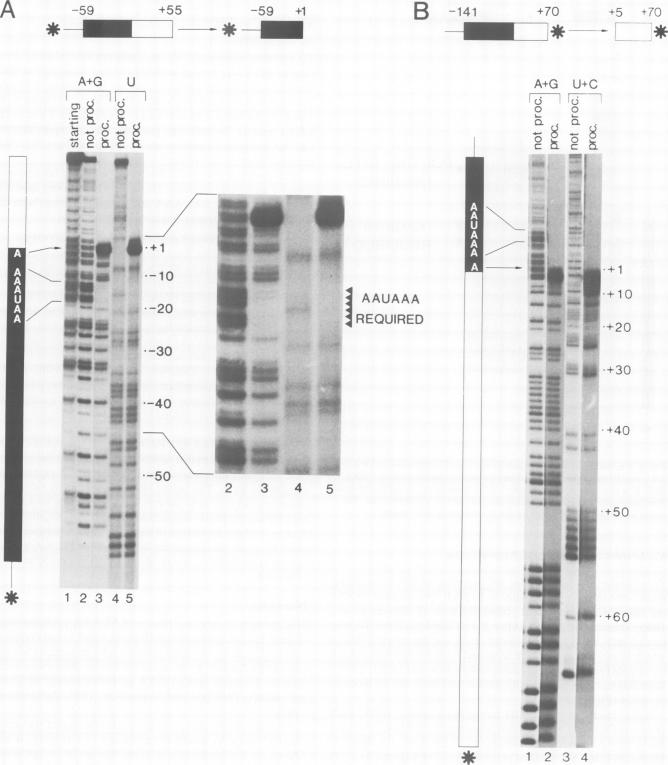
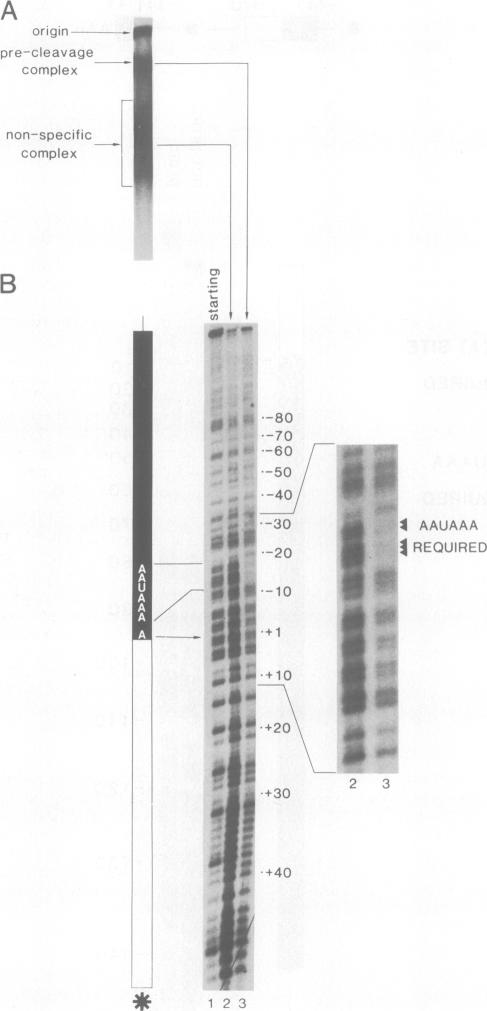
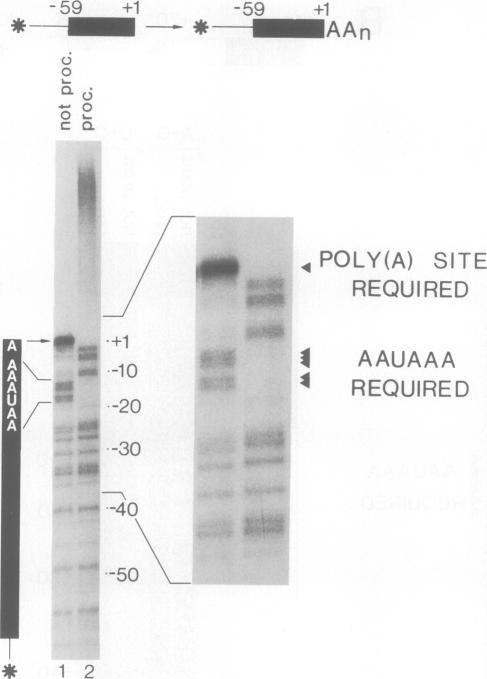
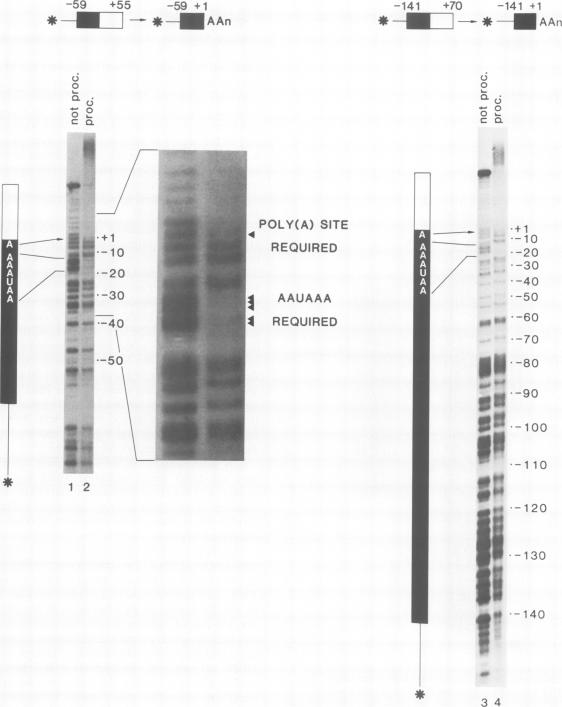
A modification interference method is described in which chemically modified transcripts are used to identify bases required for any reaction for which synthetic RNA is a substrate. This technique provides information analogous to that obtained from the analysis of a complete set of point mutants. Using SV40 late pre-mRNAs, we determine that modification of any base in the AAUAAA sequence prevents cleavage, polyadenylation and formation of pre-cleavage complexes in vitro. Modification of the A to which poly(A) is added prevents polyadenylation, but does not interfere with formation of the pre-cleavage complex. No single modification downstream of the poly(A) site significantly affects cleavage efficiency. Since the region downstream of the poly(A) site is required for cleavage and complex formation (Conway and Wickens, 1985; Zarkower and Wickens, 1987b), we infer that the critical features of this downstream region are either diffuse or redundant.
本文描述了一种修饰干扰方法,该方法使用化学修饰的转录本鉴定以合成RNA为底物的任何反应所需的碱基。此技术提供的信息类似于从一组完整的点突变体分析中获得的信息。使用SV40晚期前体mRNA,我们确定AAUAAA序列中任何碱基的修饰都会阻止体外切割、聚腺苷酸化和切割前复合物的形成。添加poly(A)的A碱基修饰会阻止聚腺苷酸化,但不干扰切割前复合物的形成。聚腺苷酸化位点下游的单个修饰均不会显著影响切割效率。由于切割和复合物形成需要聚腺苷酸化位点下游区域(Conway和Wickens,1985;Zarkower和Wickens,1987b),我们推断该下游区域的关键特征要么是分散的,要么是冗余的。