New York University Rory Meyers College of Nursing New York NY.
Hypertrophic Cardiomyopathy Program Division of Cardiology New York University Grossman School of Medicine New York NY.
J Am Heart Assoc. 2021 Sep 7;10(17):e019978. doi: 10.1161/JAHA.120.019978. Epub 2021 Aug 25.
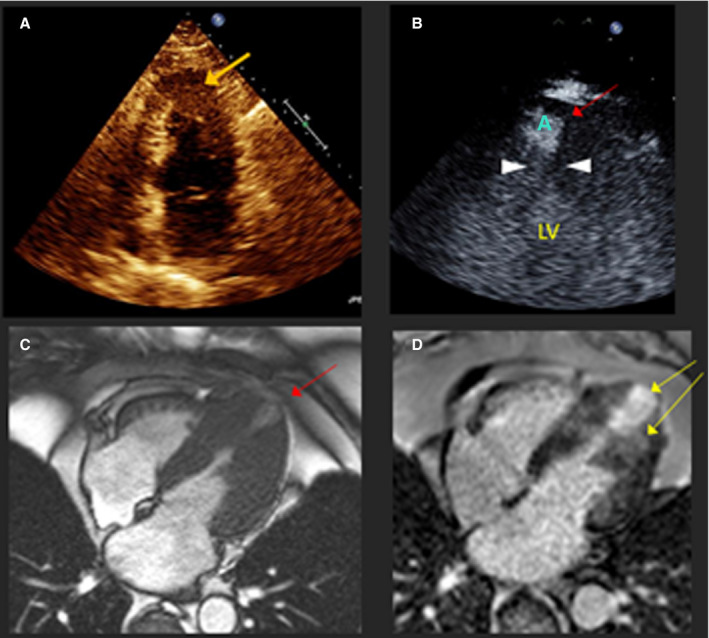
Background There is limited research on hypertrophic cardiomyopathy (HCM), which is the most common inherited cardiac disorder, in diverse populations, including Black individuals. Current literature lacks comprehensive data on HCM disease expression, comorbidities, and outcomes in this historically disadvantaged group. The purpose of this study was to examine structural HCM characteristics, comorbidities, and outcomes in a Black and White cohort with HCM. Methods and Results The study was a subgroup analysis from a longitudinal, prospective study on HCM, with supplemental chart review. The sample included adults (≥18 years) with a clinical diagnosis of HCM, who self-identified as Black/African American or White. The study sample comprised 434 individuals; 57 (13.1%) were Black, and 180 (41.5%) were women. Black patients were younger than White patients, 54.6 (13.4) versus 62.5 (14.8) years, =0.001. Black patients were more likely to have sub-basal and diffuse hypertrophy, 22 (38.6%) versus 56 (14.9%), <0.001, 6 (10.5%) versus 15 (4%), =0.017, mid-LV obstruction, 7 (12.3%) versus 21 (5.5%), =0.025, and cardiac fibrosis ≥15%, 10 (22.2%) versus 19 (8.8%), =0.009, than White patients. Black patients were more likely to experience appropriate implantable cardioverter defibrillator interventions, 5 (38.5) versus 5 (6.8), <0.001 and were more likely to have ≥2 sudden death risk factors. Comorbidities were largely similar between groups, though more Black participants had Class II obesity, 12 (21.8) versus 30 (8.1), <0.001. Both groups had similar rates of genetic testing usage. Conclusions This study underscores the need for continued research of HCM in Black populations, including tailored approaches to diagnosis and precise evaluation of cardiac anatomy.
肥厚型心肌病(HCM)是最常见的遗传性心脏病,在包括黑人在内的不同人群中的研究有限。目前的文献缺乏关于这一历史上处于不利地位群体中 HCM 疾病表现、合并症和结局的综合数据。本研究旨在检查 HCM 黑人和白人队列的结构性 HCM 特征、合并症和结局。
该研究是一项关于 HCM 的纵向、前瞻性研究的亚组分析,并进行了补充图表审查。样本包括有临床诊断为 HCM 的成年人(≥18 岁),他们自我认同为黑人/非裔美国人或白人。研究样本包括 434 人;57 人(13.1%)为黑人,180 人(41.5%)为女性。黑人患者比白人患者年轻,分别为 54.6(13.4)岁和 62.5(14.8)岁,=0.001。黑人患者更有可能出现基底下和弥漫性肥厚,分别为 22 人(38.6%)和 56 人(14.9%),<0.001;6 人(10.5%)和 15 人(4%)存在中 LV 梗阻,=0.017;10 人(22.2%)和 19 人(8.8%)存在≥15%的心脏纤维化,=0.009。黑人患者更有可能接受适当的植入式心脏复律除颤器干预,分别为 5 人(38.5%)和 5 人(6.8%),<0.001,并且更有可能有≥2 个猝死危险因素。两组的合并症基本相似,但更多的黑人参与者有 II 级肥胖,分别为 12 人(21.8%)和 30 人(8.1%),<0.001。两组的基因检测使用率相似。
本研究强调了在黑人人群中继续研究 HCM 的必要性,包括采用量身定制的方法进行诊断和精确评估心脏解剖结构。