Department of Cardiac Surgery, University of Michigan Frankel Cardiovascular Center, Ann Arbor, Michigan, USA.
Department of Pathology, University of Michigan Medical School, Ann Arbor, Michigan, USA.
Physiol Rep. 2021 Sep;9(17):e15004. doi: 10.14814/phy2.15004.
Dysfunction and inflammation of hearts subjected to cold ischemic preservation may differ between left and right ventricles, suggesting distinct strategies for amelioration.
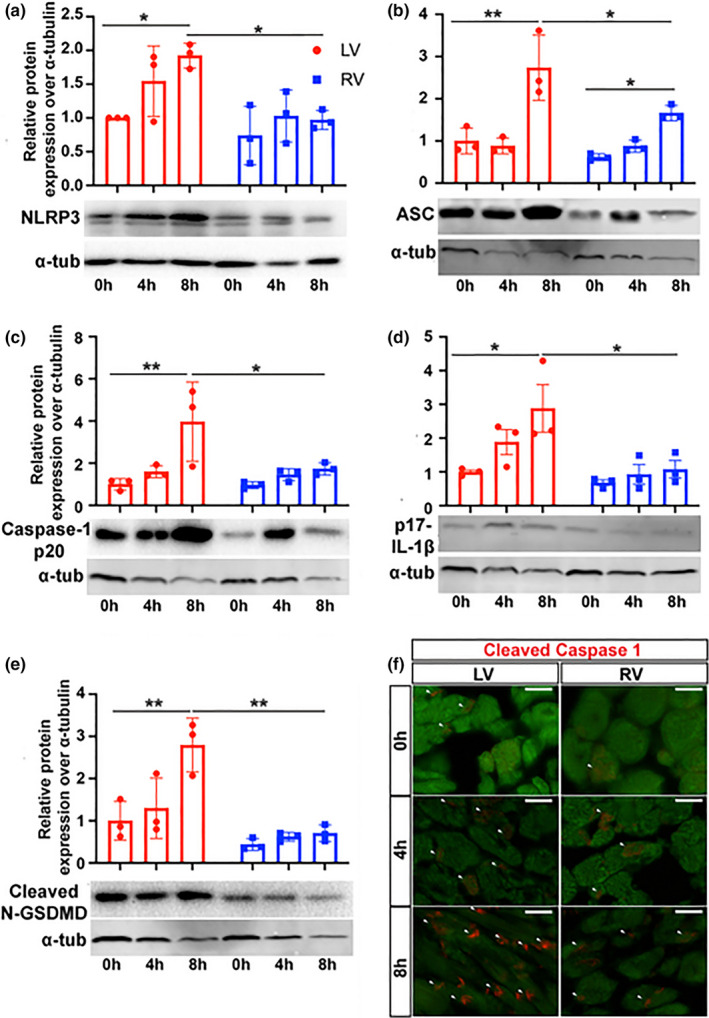
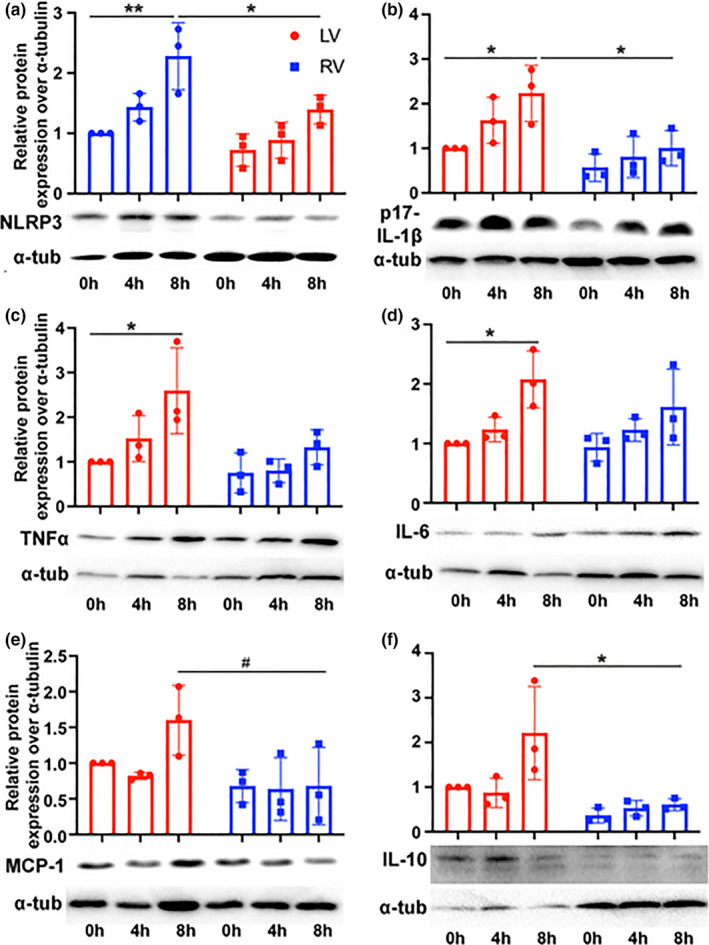
Explanted murine hearts subjected to cold ischemia for 0, 4, or 8 h in preservation solution were assessed for function during 60 min of warm perfusion and then analyzed for cell death and inflammation by immunohistochemistry and western blotting and total RNA sequencing. Increased cold ischemic times led to greater left ventricle (LV) dysfunction compared to right ventricle (RV). The LV experienced greater cell death assessed by TUNEL cells and cleaved caspase-3 expression (n = 4). While IL-6 protein levels were upregulated in both LV and RV, IL-1β, TNFα, IL-10, and MyD88 were disproportionately increased in the LV. Inflammasome components (NOD-, LRR-, and pyrin domain-containing protein 3 (NLRP3), adaptor molecule apoptosis-associated speck-like protein containing a CARD (ASC), cleaved caspase-1) and products (cleaved IL-1β and gasdermin D) were also more upregulated in the LV. Pathway analysis of RNA sequencing showed increased signaling related to tumor necrosis factor, interferon, and innate immunity with ex-vivo ischemia, but no significant differences were found between the LV and RV. Human donor hearts showed comparable inflammatory responses to cold ischemia with greater LV increases of TNFα, IL-10, and inflammasomes (n = 3).
Mouse hearts subjected to cold ischemia showed time-dependent contractile dysfunction and increased cell death, inflammatory cytokine expression and inflammasome expression that are greater in the LV than RV. However, IL-6 protein elevations and altered transcriptional profiles were similar in both ventricles. Similar changes are observed in human hearts.
在冷缺血保存过程中,左心室和右心室的功能障碍和炎症可能不同,这表明需要采用不同的策略来改善。
在保存液中进行 0、4 或 8 小时冷缺血的离体鼠心在 60 分钟的温灌流期间评估功能,然后通过免疫组织化学和 Western blot 以及总 RNA 测序分析细胞死亡和炎症。随着冷缺血时间的延长,左心室(LV)的功能障碍比右心室(RV)更为严重。通过 TUNEL 细胞和 cleaved caspase-3 表达评估,LV 中的细胞死亡更多(n=4)。虽然 IL-6 蛋白水平在 LV 和 RV 中均上调,但 IL-1β、TNFα、IL-10 和 MyD88 在 LV 中不成比例地增加。炎症小体成分(含 NOD、LRR 和 pyrin 结构域的蛋白 3(NLRP3)、衔接子分子凋亡相关斑点样蛋白含 CARD(ASC)、cleaved caspase-1)和产物(cleaved IL-1β 和 gasdermin D)在 LV 中也上调更多。RNA 测序的通路分析显示,与肿瘤坏死因子、干扰素和固有免疫相关的信号通路在体外缺血后增加,但在 LV 和 RV 之间没有发现显著差异。人类供体心脏对冷缺血的炎症反应相似,但 TNFα、IL-10 和炎症小体在 LV 中的增加更为明显(n=3)。
在冷缺血过程中,鼠心表现出时间依赖性收缩功能障碍和增加的细胞死亡、炎症细胞因子表达和炎症小体表达,LV 比 RV 更为明显。然而,IL-6 蛋白升高和转录谱改变在两个心室中相似。在人类心脏中观察到类似的变化。