Drzyzga Alina, Cichoń Tomasz, Czapla Justyna, Jarosz-Biej Magdalena, Pilny Ewelina, Matuszczak Sybilla, Wojcieszek Piotr, Urbaś Zbigniew, Smolarczyk Ryszard
Center for Translational Research and Molecular Biology of Cancer, Maria Skłodowska-Curie National Research Institute of Oncology, Gliwice Branch, Wybrzeże Armii Krajowej Street 15, 44-102 Gliwice, Poland.
Brachytherapy Department, Maria Skłodowska-Curie National Research Institute of Oncology, Gliwice Branch, Wybrzeże Armii Krajowej Street 15, 44-102 Gliwice, Poland.
Cancers (Basel). 2021 Aug 4;13(16):3924. doi: 10.3390/cancers13163924.
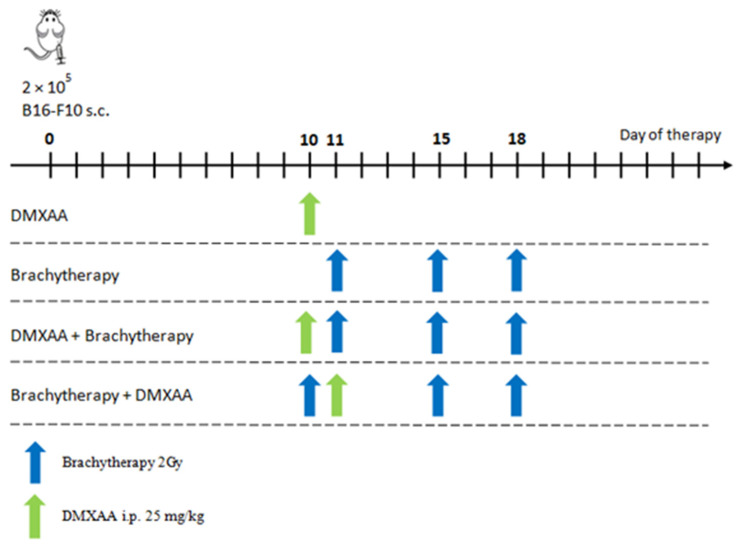
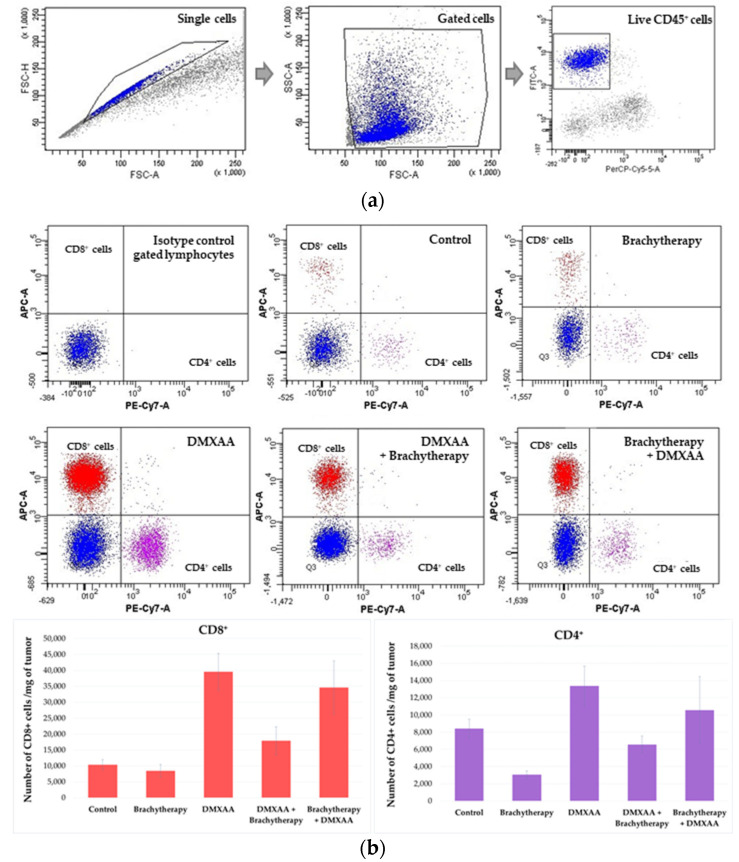
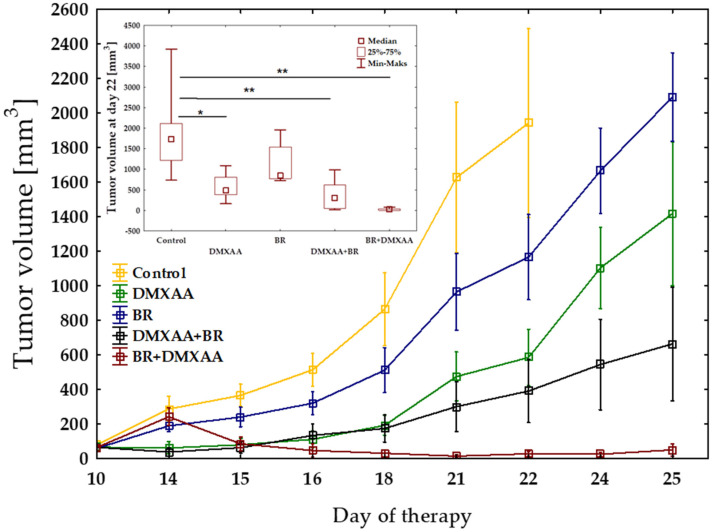
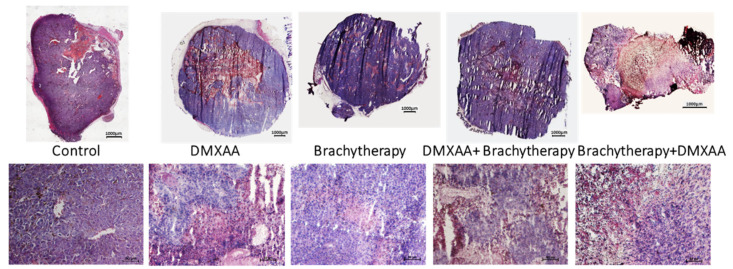
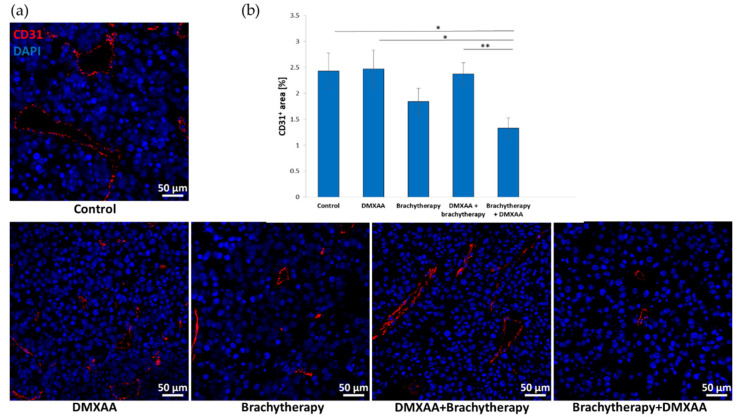
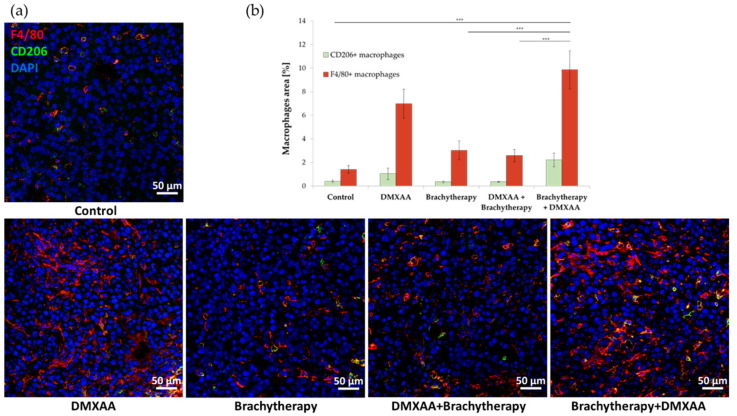
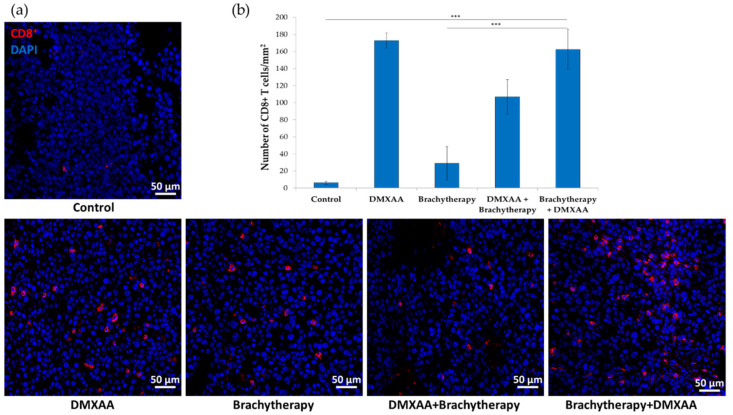
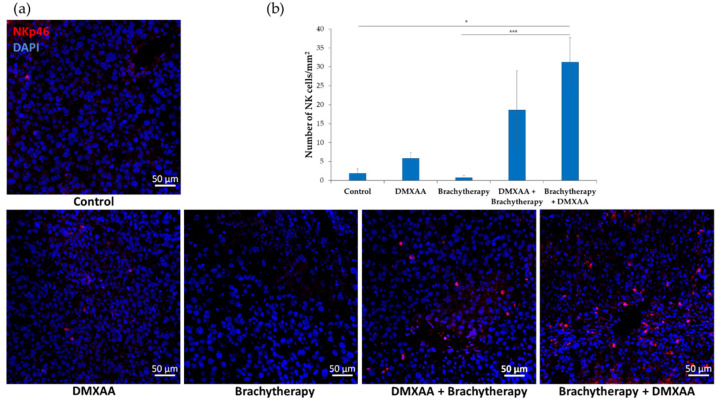
Vascular disrupting agents (VDAs), such as DMXAA, effectively destroy tumor blood vessels and cause the formation of large areas of necrosis in the central parts of the tumors. However, the use of VDAs is associated with hypoxia activation and residues of rim cells on the edge of the tumor that are responsible for tumor regrowth. The aim of the study was to combine DMXAA with radiotherapy (brachytherapy) and find the appropriate administration sequence to obtain the maximum synergistic therapeutic effect. We show that the combination in which tumors were irradiated prior to VDAs administration is more effective in murine melanoma growth inhibition than in either of the agents individually or in reverse combination. For the first time, the significance of immune cells' activation in such a combination is demonstrated. The inhibition of tumor growth is linked to the reduction of tumor blood vessels, the increased infiltration of CD8 cytotoxic T lymphocytes and NK cells and the polarization of macrophages to the cytotoxic M1 phenotype. The reverse combination of therapeutic agents showed no therapeutic effect and even abolished the effect of DMXAA. The combination of brachytherapy and vascular disrupting agent effectively inhibits the growth of melanoma tumors but requires careful planning of the sequence of administration of the agents.
血管破坏剂(VDA),如DMXAA,可有效破坏肿瘤血管,并在肿瘤中心部位导致大面积坏死的形成。然而,VDA的使用与缺氧激活以及肿瘤边缘负责肿瘤再生的边缘细胞残留有关。本研究的目的是将DMXAA与放射治疗(近距离放射治疗)相结合,并找到合适的给药顺序以获得最大的协同治疗效果。我们表明,在给予VDA之前对肿瘤进行照射的联合治疗,在抑制小鼠黑色素瘤生长方面比单独使用任何一种药物或反向联合使用都更有效。首次证明了免疫细胞在这种联合治疗中的激活意义。肿瘤生长的抑制与肿瘤血管的减少、CD8细胞毒性T淋巴细胞和NK细胞浸润的增加以及巨噬细胞向细胞毒性M1表型的极化有关。治疗药物的反向联合没有显示出治疗效果,甚至消除了DMXAA的效果。近距离放射治疗与血管破坏剂的联合可有效抑制黑色素瘤肿瘤的生长,但需要仔细规划药物的给药顺序。