Kim Jangsoon, Park See-Hyoung, Yang Seyoung, Oh Sae Woong, Kwon Kitae, Park Se Jung, Yu Eunbi, Kim Hyeyoun, Park Jung Yoen, Choi Seoyoung, Yang Seoyeon, Song Minkyung, Cho Jae Youl, Lee Jongsung
Molecular Dermatology Laboratory, Department of Integrative Biotechnology, College of Biotechnology and Bioengineering, Sungkyunkwan University, Suwon City 16419, Gyunggi do, Korea.
Department of Bio and Chemical Engineering, Hongik University, Sejong City 30016, Korea.
Antioxidants (Basel). 2021 Jul 26;10(8):1189. doi: 10.3390/antiox10081189.
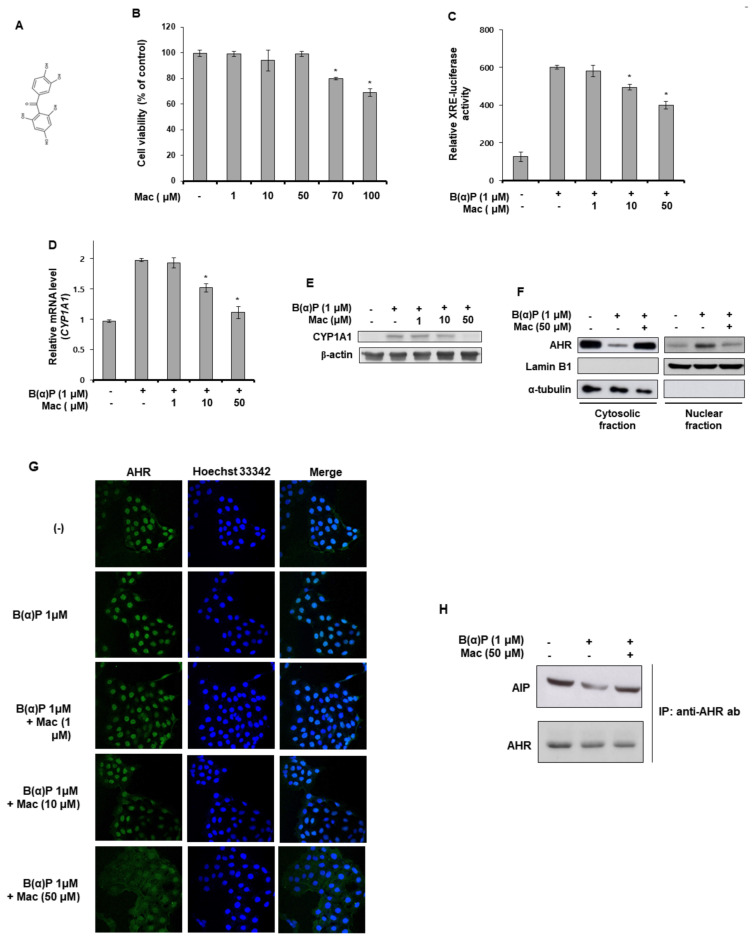
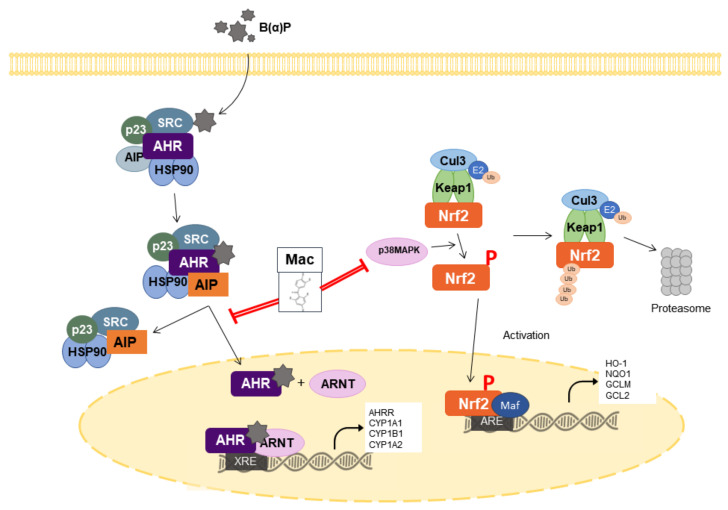
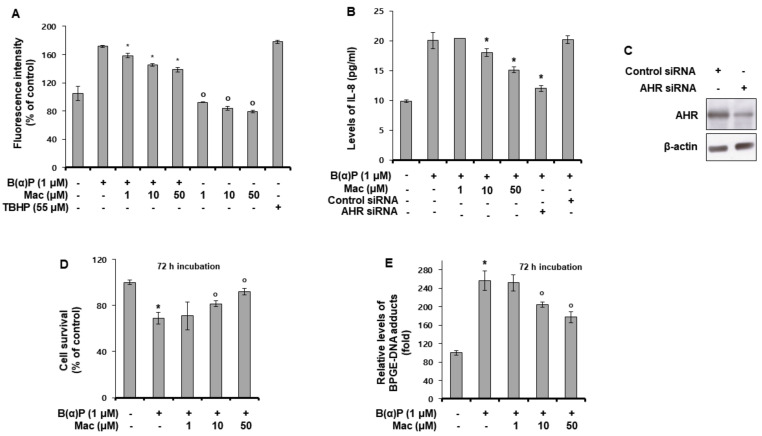
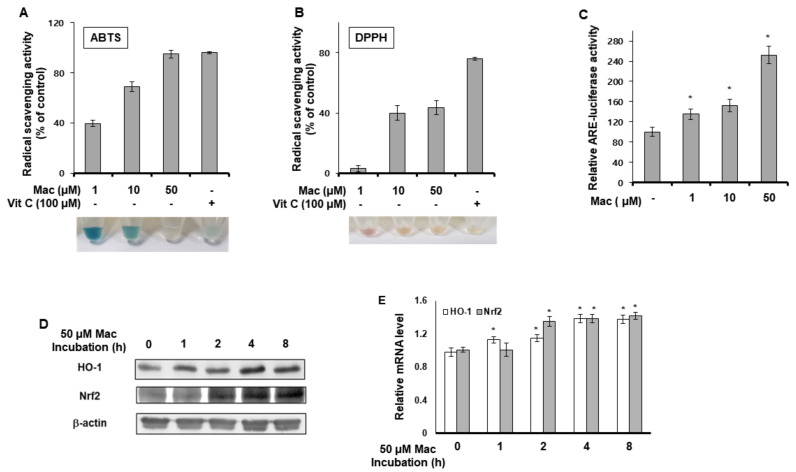
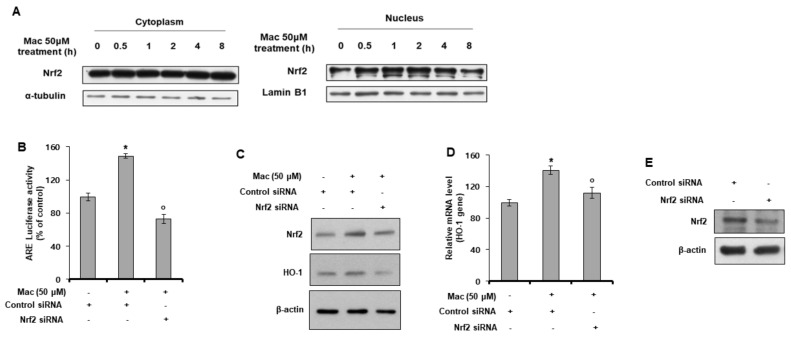
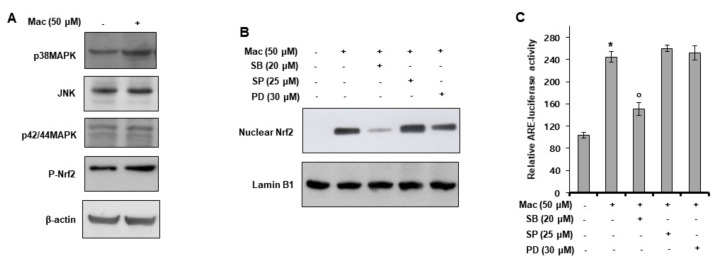
Benzo[a]pyrene (B[a]P), a polycyclic aromatic hydrocarbon formed during the incomplete combustion of organic matter, has harmful effects. Therefore, much research is ongoing to develop agents that can mitigate the effects of B[a]P. The aim of this study was to examine the effect of maclurin, one component of the branches of L., on the B[a]P-induced effects in HaCaT cells, a human keratinocyte cell line. Maclurin treatment inhibited aryl hydrocarbon receptor (AHR) signaling as evidenced by reduced xenobiotic response element (XRE) reporter activity, decreased expression of cytochrome P450 1A1 (CYP1A1), and reduced nuclear translocation of AHR. The B[a]P-induced dissociation of AHR from AHR-interacting protein (AIP) was suppressed by maclurin. Maclurin also inhibited the production of intracellular reactive oxygen species (ROS) induced by B[a]P. In addition, the antioxidant property of maclurin itself was demonstrated by the 2,2-diphenyl-1-picrylhydrazyl (DPPH) radical scavenging assay. Furthermore, maclurin activated antioxidant response element (ARE) signaling through enhancement of ARE luciferase reporter activity and the expression of ARE-dependent genes including nuclear factor (erythroid-derived 2)-like 2 (Nrf2) and heme oxygenase-1 (HO-1). Nrf2 activation and its nuclear translocation were promoted by maclurin through p38 MAPK activation. These data indicate that maclurin had antagonistic activity against B[a]P effects through activation of Nrf2-mediated signaling and inhibition of AHR signaling and, suggesting its potential in protecting from harmful B[a]P-containing pollutants.
苯并[a]芘(B[a]P)是有机物不完全燃烧过程中形成的一种多环芳烃,具有有害作用。因此,目前正在进行大量研究以开发能够减轻B[a]P影响的药物。本研究的目的是检测光叶红豆树枝条中的一种成分光刺桐碱对人角质形成细胞系HaCaT细胞中B[a]P诱导效应的影响。光刺桐碱处理抑制了芳烃受体(AHR)信号传导,这表现为异生素反应元件(XRE)报告基因活性降低、细胞色素P450 1A1(CYP1A1)表达减少以及AHR核转位减少。光刺桐碱抑制了B[a]P诱导的AHR与AHR相互作用蛋白(AIP)的解离。光刺桐碱还抑制了B[a]P诱导的细胞内活性氧(ROS)的产生。此外,通过2,2-二苯基-1-苦基肼基(DPPH)自由基清除试验证明了光刺桐碱本身具有抗氧化特性。此外,光刺桐碱通过增强ARE荧光素酶报告基因活性以及包括核因子(红系衍生2)样2(Nrf2)和血红素加氧酶-1(HO-1)在内的ARE依赖性基因的表达来激活抗氧化反应元件(ARE)信号传导。光刺桐碱通过激活p38丝裂原活化蛋白激酶(MAPK)促进Nrf2活化及其核转位。这些数据表明,光刺桐碱通过激活Nrf2介导的信号传导和抑制AHR信号传导对B[a]P的影响具有拮抗活性,这表明其在保护免受含有害B[a]P污染物侵害方面具有潜力。