Lung Cancer and Muscle Research Group, Pulmonology Department, Hospital del Mar-IMIM, Parc de Salut Mar, 08003 Barcelona, Spain.
Department of Medicine, Universitat Autònoma de Barcelona (UAB), 08193 Barcelona, Spain.
Int J Environ Res Public Health. 2021 Aug 10;18(16):8431. doi: 10.3390/ijerph18168431.
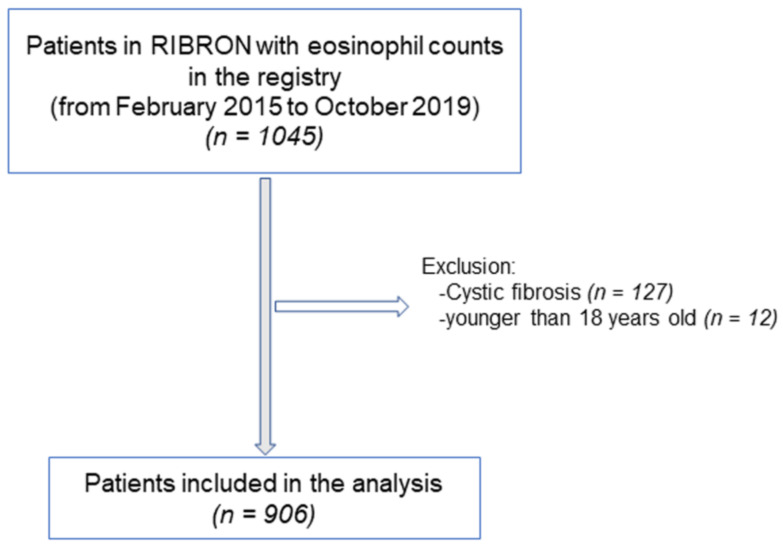
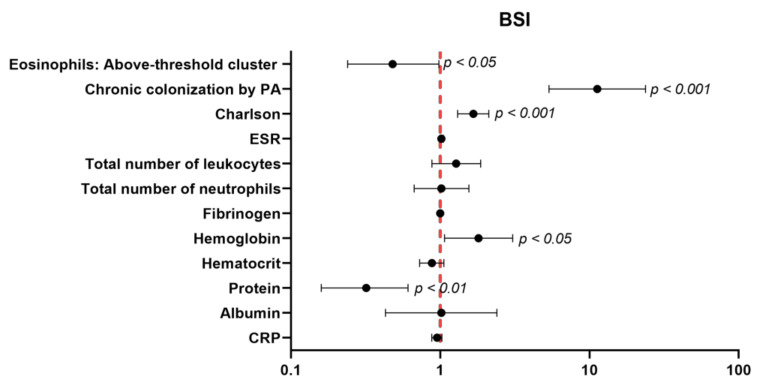
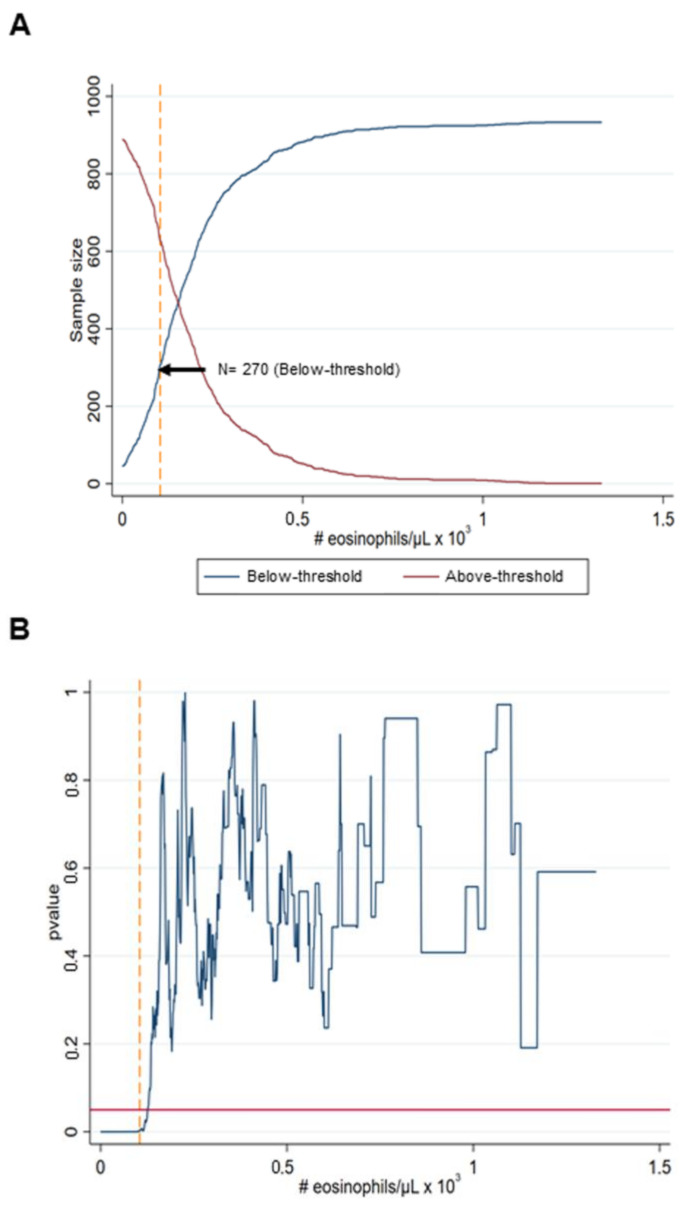
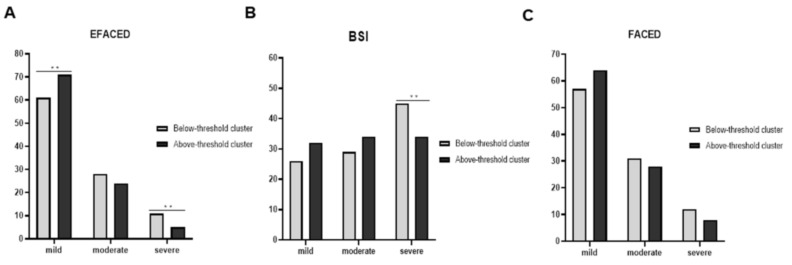
Whether high blood eosinophil counts may define a better phenotype in bronchiectasis patients, as shown in chronic obstructive pulmonary disease (COPD), remains to be investigated. Differential phenotypic characteristics according to eosinophil counts were assessed using a biostatistical approach in a large cohort study from the Spanish Online Bronchiectasis Registry (RIBRON). The 906 patients who met the inclusion criteria were clustered into two groups on the basis of their eosinophil levels. The potential differences according to the bronchiectasis severity index (BSI) score between two groups (Mann-Whitney test and eosinophil count threshold: 100 cells/µL) showed the most balanced cluster sizes: above-threshold and below-threshold groups. Patients above the threshold exhibited significantly better clinical outcomes, lung function, and nutritional status, while showing lower systemic inflammation levels. The proportion of patients with mild disease was higher in the above-threshold group, while the below-threshold patients were more severe. Two distinct clinical phenotypes of stable patients with non-cystic fibrosis (CF) bronchiectasis of a wide range of disease severity were established on the basis of blood eosinophil counts using a biostatistical approach. Patients classified within the above-threshold cluster were those exhibiting a mild disease, significantly better clinical outcomes, lung function, and nutritional status while showing lower systemic inflammatory levels. These results will contribute to better characterizing bronchiectasis patients into phenotypic profiles with their clinical implications.
高血嗜酸性粒细胞计数是否可以在支气管扩张症患者中定义更好的表型,如慢性阻塞性肺疾病(COPD)中所示,仍有待研究。使用来自西班牙在线支气管扩张症登记处(RIBRON)的大型队列研究中的生物统计学方法,根据嗜酸性粒细胞计数评估了根据嗜酸性粒细胞计数的差异表型特征。根据支气管扩张症严重指数(BSI)评分,符合纳入标准的 906 名患者基于其嗜酸性粒细胞水平分为两组。两组之间(Mann-Whitney 检验和嗜酸性粒细胞计数阈值:100 个/µL)根据 BSI 评分的潜在差异显示出最平衡的聚类大小:阈值以上和阈值以下组。阈值以上组的患者表现出明显更好的临床结局、肺功能和营养状况,同时表现出较低的全身炎症水平。在阈值以上组中,轻度疾病的患者比例更高,而阈值以下的患者则更严重。根据血液嗜酸性粒细胞计数,使用生物统计学方法,为广泛疾病严重程度的非囊性纤维化(CF)支气管扩张症稳定患者建立了两种不同的临床表型。分类在阈值以上聚类内的患者表现出轻度疾病,明显更好的临床结局、肺功能和营养状况,同时全身炎症水平较低。这些结果将有助于更好地将支气管扩张症患者分为具有临床意义的表型特征。