Cardiovascular Prevention & Research Unit, Clinic & Laboratory of Pathophysiology, Department of Medicine, National and Kapodistrian University of Athens, 11527 Athens, Greece.
Department of Nutrition and Dietetics, School of Health Science and Education, Harokopio University of Athens, 17671 Kallithea, Greece.
Nutrients. 2021 Jul 30;13(8):2632. doi: 10.3390/nu13082632.
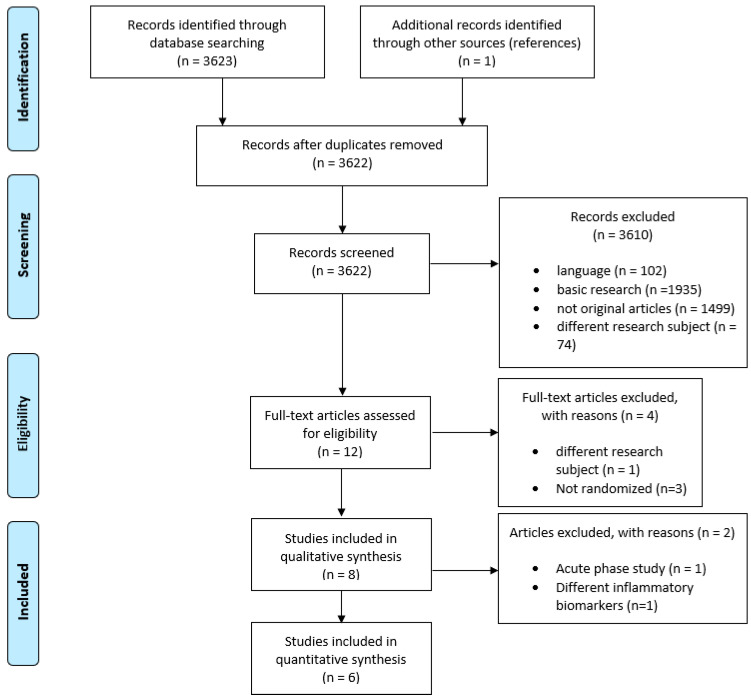
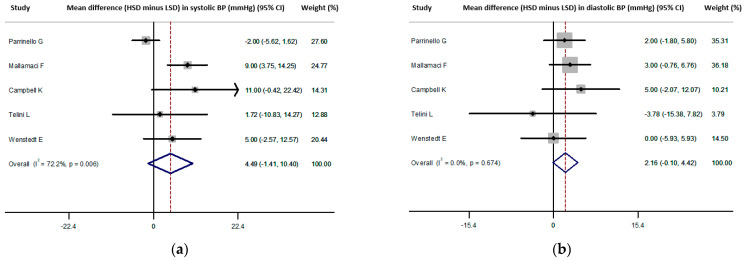
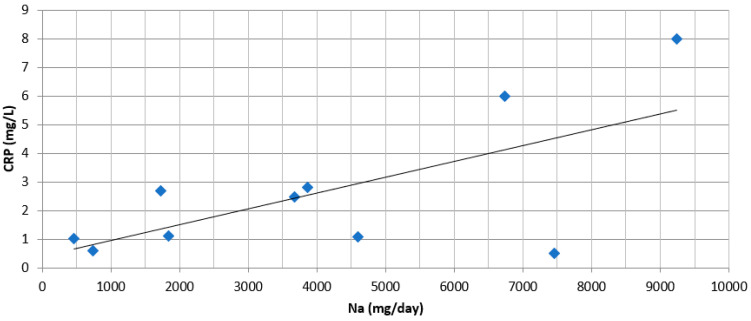
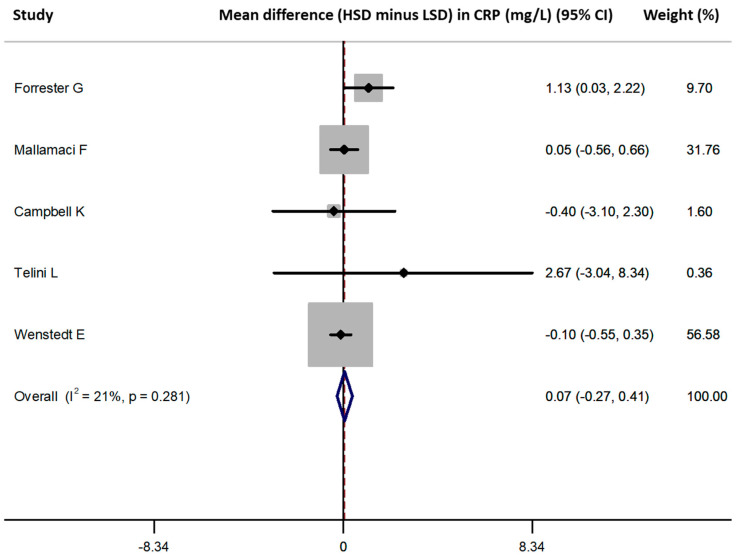
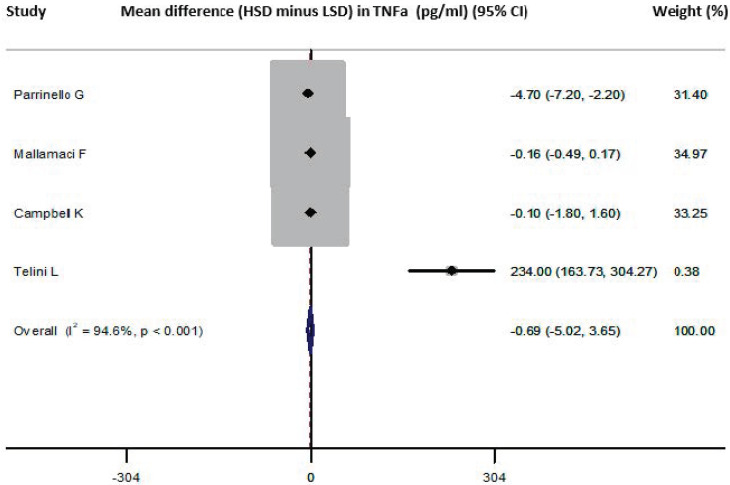
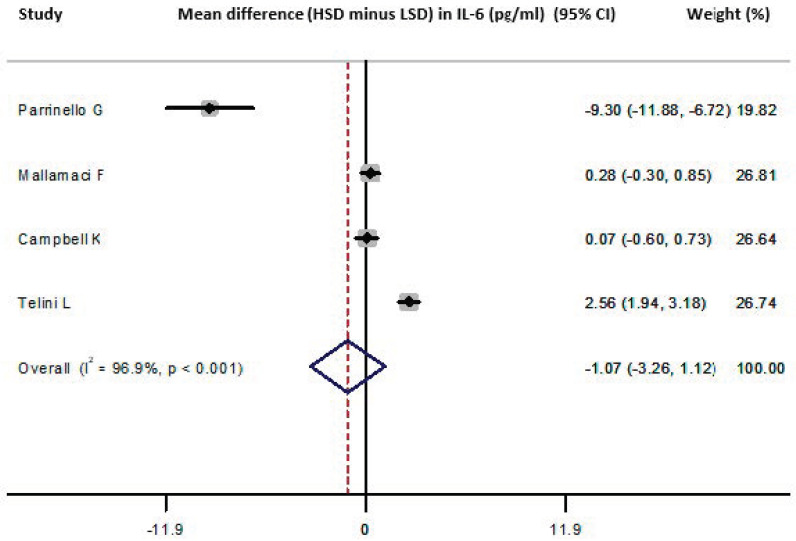
Experimental studies suggest that sodium induced inflammation might be another missing link leading to atherosclerosis. To test the hypothesis that high daily sodium intake induces systemic inflammatory response in humans, we performed a systematic review according to PRISMA guidelines of randomized controlled trials (RCTs) that examined the effect of high versus low sodium dose (HSD vs. LSD), as defined per study, on plasma circulating inflammatory biomarkers. Eight RCTs that examined CRP, TNF-a and IL-6 were found. Meta-analysis testing the change of each biomarker in HSD versus LSD was possible for CRP ( = 5 studies), TNF-a ( = 4 studies) and IL-6 ( = 4 studies). The pooled difference (95% confidence intervals) per biomarker was for: CRP values of 0.1(-0.3, 0.4) mg/L; TNF-a -0.7(-5.0, 3.6) pg/mL; IL-6 -1.1(-3.3 to 1.1) pg/mL. Importantly, there was inconsistency between RCTs regarding major population characteristics and the applied methodology, including a very wide range of LSD (460 to 6740 mg/day) and HSD (2800 to 7452 mg/day). Although our results suggest that the different levels of daily sodium intake are not associated with significant changes in the level of systemic inflammation in humans, this outcome may result from methodological issues. Based on these identified methodological issues we propose that future RCTs should focus on young healthy participants to avoid confounding effects of comorbidities, should have three instead of two arms (very low, "normal" and high) of daily sodium intake with more than 100 participants per arm, whereas an intervention duration of 14 days is adequate.
实验研究表明,钠诱导的炎症可能是导致动脉粥样硬化的另一个缺失环节。为了验证高钠摄入会引起人体系统性炎症反应的假设,我们按照 PRISMA 指南对随机对照试验(RCT)进行了系统评价,这些 RCT 研究了高剂量(HSD)与低剂量(LSD)钠(根据研究定义)对循环血浆炎症生物标志物的影响。共发现 8 项研究 CRP、TNF-a 和 IL-6。对于 CRP(=5 项研究)、TNF-a(=4 项研究)和 IL-6(=4 项研究),可以对 HSD 与 LSD 之间每个生物标志物的变化进行 meta 分析检验。每个生物标志物的汇总差异(95%置信区间)为:CRP 值为 0.1(-0.3,0.4)mg/L;TNF-a 为-0.7(-5.0,3.6)pg/mL;IL-6 为-1.1(-3.3,1.1)pg/mL。重要的是,关于主要人群特征和应用方法学,RCT 之间存在不一致性,包括 LSD(460 至 6740mg/天)和 HSD(2800 至 7452mg/天)的范围非常广。尽管我们的结果表明,不同水平的日常钠摄入量与人体系统性炎症水平的变化没有显著相关性,但这一结果可能是由于方法学问题所致。基于这些已确定的方法学问题,我们建议未来的 RCT 应关注年轻健康的参与者,以避免合并症的混杂影响,应将每天的钠摄入量设为三个而非两个组别(非常低、“正常”和高),每组至少有 100 名参与者,而 14 天的干预时间是足够的。