Department of Food Biotechnology, Faculty of Health Sciences, Medical University of Bialystok, Szpitalna 37, 15-295 Bialystok, Poland.
Department of Epidemiology, Cardiovascular Disease Prevention and Health Promotion, National Institute of Cardiology, Alpejska 42, 04-628 Warsaw, Poland.
Nutrients. 2021 Aug 7;13(8):2722. doi: 10.3390/nu13082722.
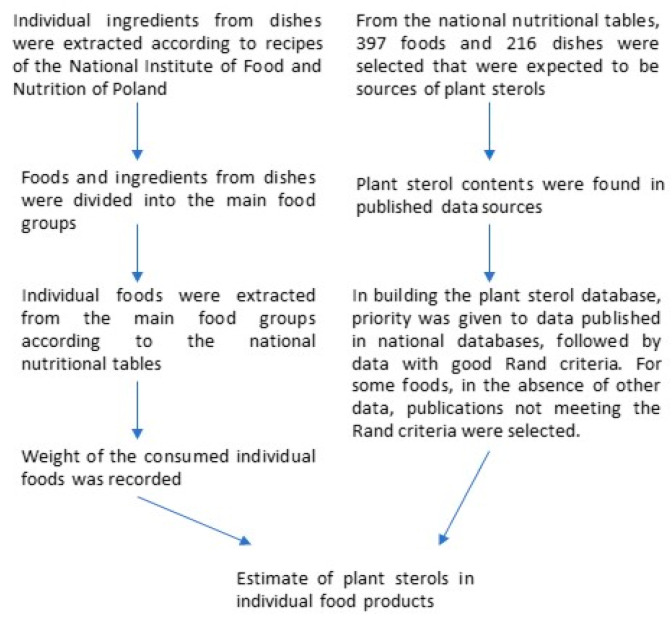
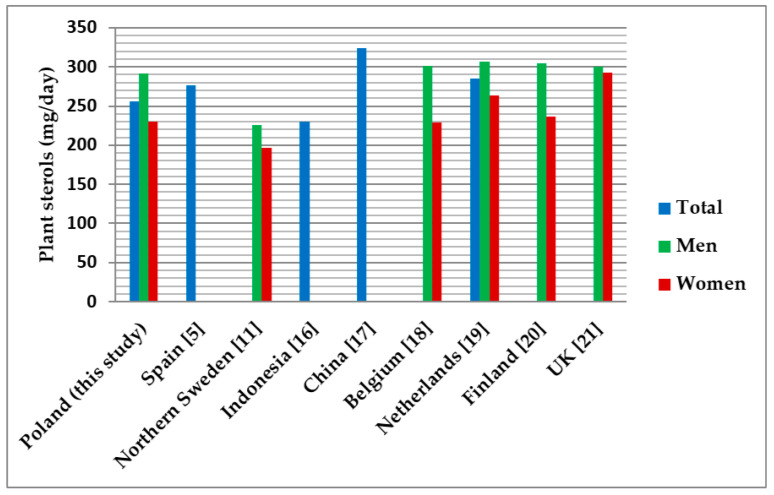
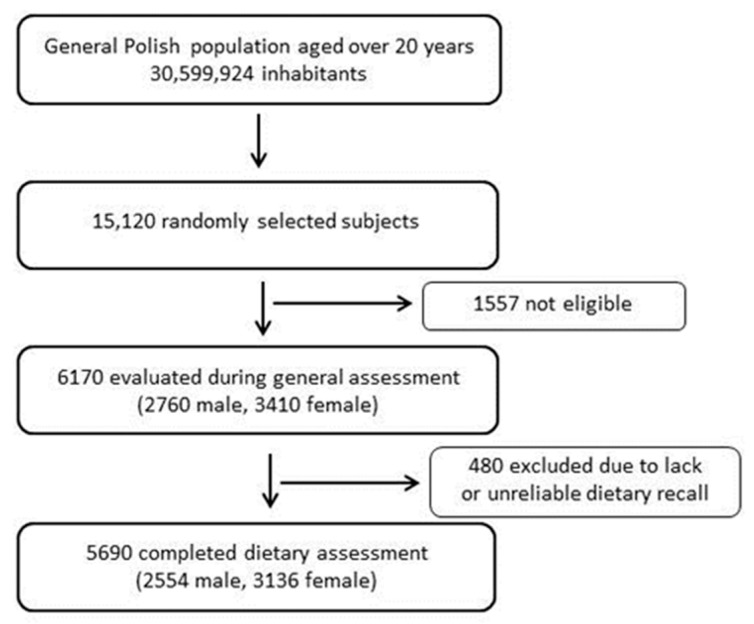
Plant sterols are compounds with multiple biological functions, mainly cholesterol-reducing. There are no comprehensive databases on plant sterols, which makes it difficult to estimate their intake in the Polish population. This work attempted to use international food databases, additionally supplemented by scientific data from the literature, to create a database of plant sterols, which would cover various kinds of foods and dishes consumed in Poland. The aim was to assess the size and sources of dietary plant sterols in the adult population of Poland. The literature search was conducted using PubMed, Web of Science, Scopus, and Google Scholar to identify possible sources of published food composition data for plant sterols. The study group consisted of 5690 participants of the WOBASZ II survey. We identified 361 dietary sources of plant sterols based on the consumption of foods and dishes reported by participants. Cereals and fats provided 61% of the total plant sterols, and together with vegetables and fruits, this totaled 80%. The median intake of plant sterols in the Polish population was 255.96 mg/day, and for men and women 291.76 and 230.61 mg/day, respectively. Canola oil provided the most plant sterols at 16.92%, followed by white bread at 16.65% and soft margarine at 8.33%. The study found that plant sterol intake in Poland is comparable to other populations, and women's diets are more dense in plant sterols. Due to the lack of literature sources on plant sterol content in some foods, future studies should expand and complete the databases on plant sterol content in foods.
植物固醇是具有多种生物学功能的化合物,主要具有降胆固醇作用。目前尚无关于植物固醇的综合数据库,这使得难以估计波兰人群的摄入量。本研究试图利用国际食品数据库,并补充文献中的科学数据,创建一个涵盖波兰人消费的各种食物和菜肴的植物固醇数据库,旨在评估波兰成年人饮食中植物固醇的摄入量和来源。文献检索使用了 PubMed、Web of Science、Scopus 和 Google Scholar,以确定植物固醇发表的食物成分数据的可能来源。研究组由 WOBASZ II 调查的 5690 名参与者组成。我们根据参与者报告的食物和菜肴的消费情况,确定了 361 种植物固醇的饮食来源。谷物和脂肪提供了 61%的总植物固醇,加上蔬菜和水果,这一比例达到 80%。波兰人群的植物固醇中位数摄入量为 255.96 毫克/天,男性和女性分别为 291.76 毫克/天和 230.61 毫克/天。菜籽油提供了最多的植物固醇,为 16.92%,其次是白面包,为 16.65%,软人造黄油为 8.33%。研究发现,波兰的植物固醇摄入量与其他人群相当,女性的饮食中植物固醇更为丰富。由于某些食物中植物固醇含量的文献来源较少,未来的研究应扩大并完善食物中植物固醇含量的数据库。