College of Pharmacy, Xinjiang Medical University, Urumqi 830054, China.
State Key Laboratory of Natural Medicines and School of Life Science and Technology, China Pharmaceutical University, Nanjing 211198, China.
Int J Mol Sci. 2021 Aug 20;22(16):8974. doi: 10.3390/ijms22168974.
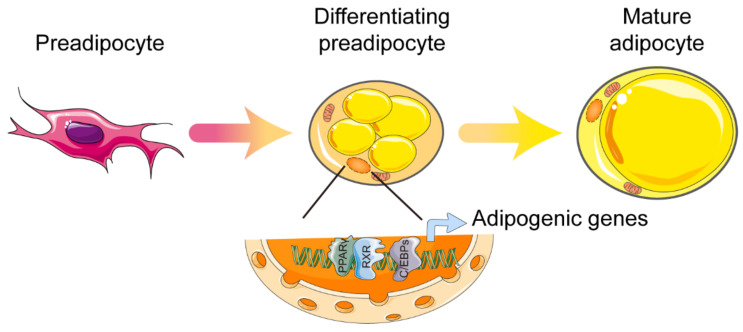
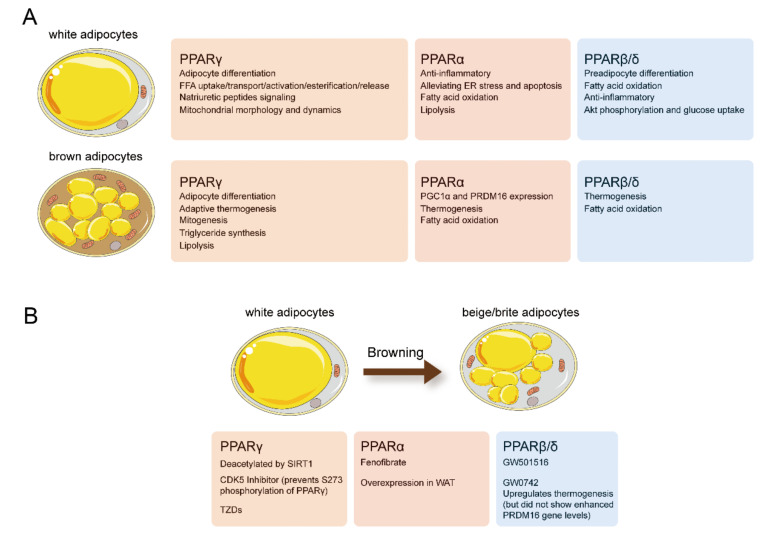
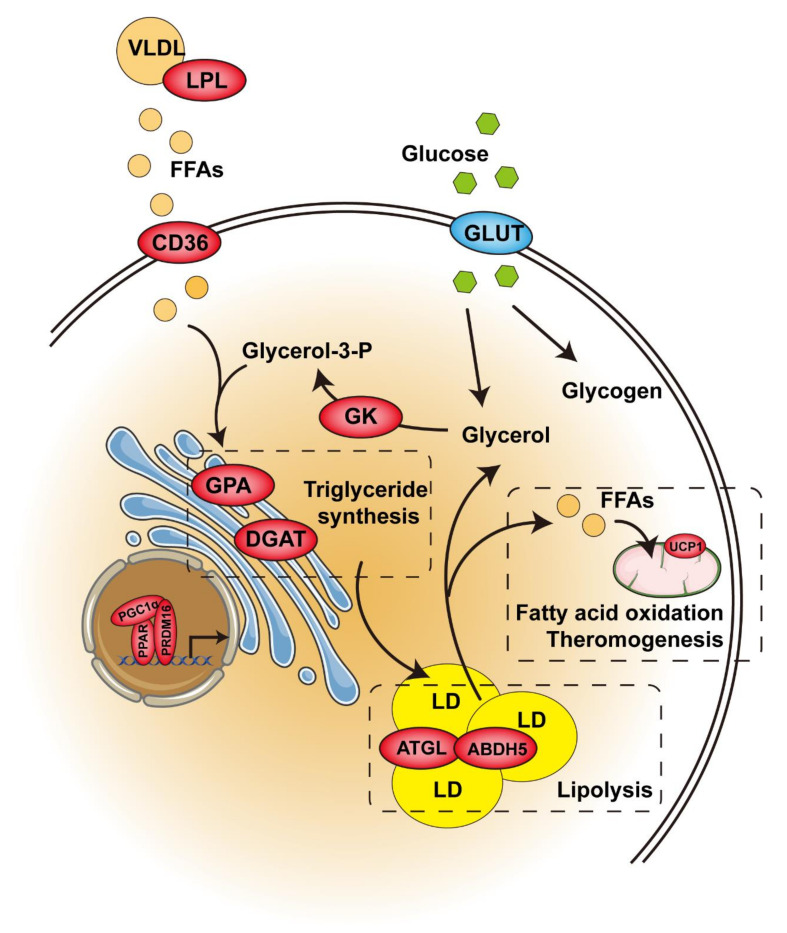
It has been more than three decades since peroxisome proliferator-activated receptors (PPARs) were first discovered. Many investigations have revealed the central regulators of PPARs in lipid and glucose homeostasis in response to different nutrient conditions. PPARs have attracted much attention due to their ability to improve metabolic syndromes, and they have also been proposed as classical drug targets for the treatment of hyperlipidemia and type 2 diabetes (T2D) mellitus. In parallel, adipose tissue is known to play a unique role in the pathogenesis of insulin resistance and metabolic syndromes due to its ability to "safely" store lipids and secrete cytokines that regulate whole-body metabolism. Adipose tissue relies on a complex and subtle network of transcription factors to maintain its normal physiological function, by coordinating various molecular events, among which PPARs play distinctive and indispensable roles in adipocyte differentiation, lipid metabolism, adipokine secretion, and insulin sensitivity. In this review, we discuss the characteristics of PPARs with special emphasis on the roles of the different isotypes in adipocyte biology.
过氧化物酶体增殖物激活受体 (PPARs) 的发现已有三十多年的历史。许多研究揭示了 PPARs 在不同营养条件下对脂质和葡萄糖稳态的中枢调节作用。PPARs 因其改善代谢综合征的能力而备受关注,它们也被提议作为治疗高脂血症和 2 型糖尿病 (T2D) 的经典药物靶点。与此同时,由于脂肪组织能够“安全”储存脂质并分泌调节全身代谢的细胞因子,因此它在胰岛素抵抗和代谢综合征的发病机制中起着独特的作用。脂肪组织依赖于一个复杂而微妙的转录因子网络来维持其正常的生理功能,通过协调各种分子事件,其中 PPARs 在脂肪细胞分化、脂质代谢、脂肪因子分泌和胰岛素敏感性方面发挥着独特且不可或缺的作用。在这篇综述中,我们讨论了 PPARs 的特征,特别强调了不同同型异构体在脂肪细胞生物学中的作用。