Faculty of Medicine, University of Balamand, Koura, Lebanon.
Department of Internal Medicine, American University of Beirut Medical Center, Beirut, Lebanon.
BMC Public Health. 2021 Aug 26;21(1):1590. doi: 10.1186/s12889-021-11580-4.
COVID-19 has hit the world in an unprecedented way causing serious repercussions on several aspects of our life. Multiple determinants have affected various nations' level of success in their responses towards the pandemic. The Arab Levant region in the Middle East, notoriously known for repeated wars and conflicts, has been affected, similarly to other regions, by this pandemic. The combination of war, conflict, and a pandemic brings too much of a burden for any nation to handle.
A descriptive analysis of data obtained from the health departments of various Arab Levant Countries (ALC) was performed. ALC include Lebanon, Syria, Jordan, Iraq and Palestine. The data collected involves incidence, recovery rate, case fatality rate and number of tests performed per million population, Global Health Security index, government stringency index, and political stability index. The information obtained was compared and analyzed among the ALC and compared to global figures. An extensive electronic literature search to review all relevant articles and reports published from the region was conducted. The 2019 Global Health Security (GHS) index was obtained from the "GHS index" website which was made by John Hopkins University's center for health security, the Nuclear threat Initiative (NTI) and the Economist Intelligence Unit (EIU). Government stringency index and political stability index were obtained from the University of Oxford and the website of "The Global Economy", respectively. Other world governance indicators such as government effectiveness were obtained from the World Bank website.
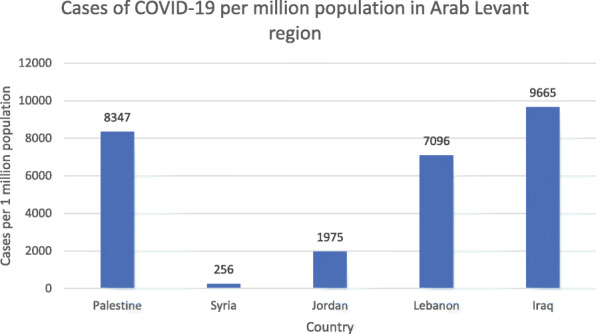
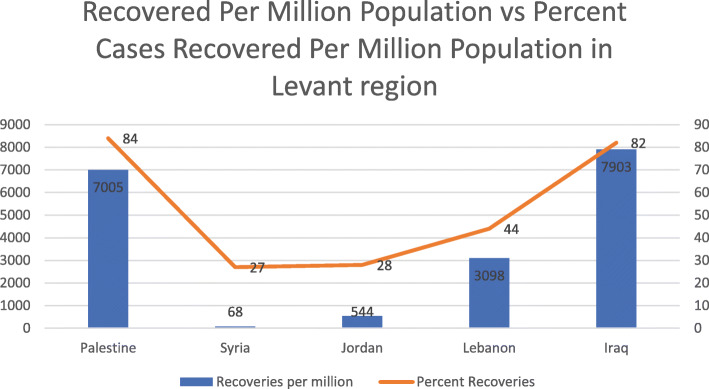
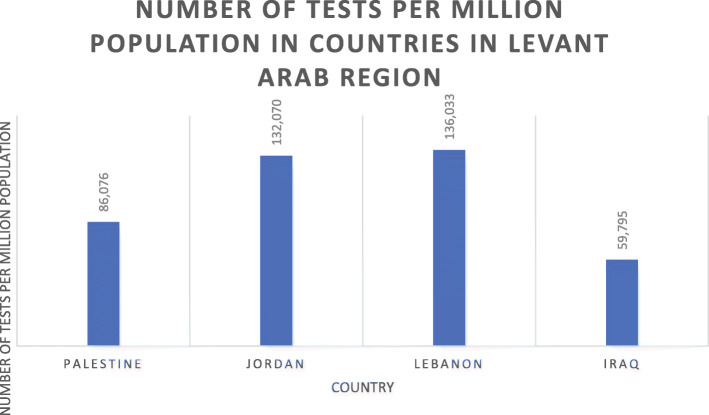
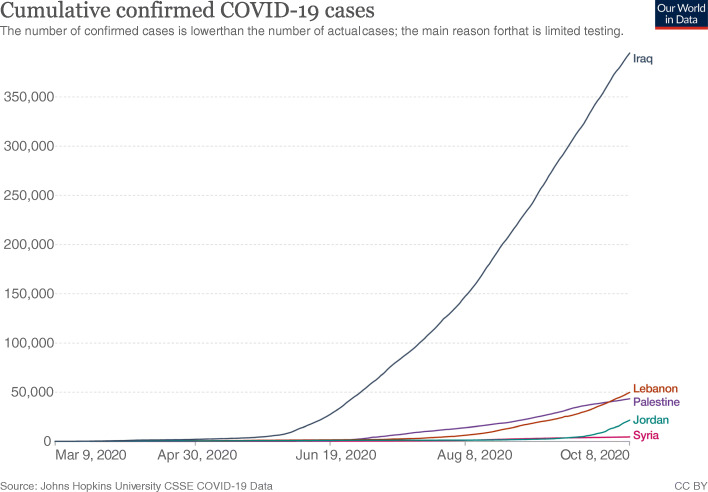
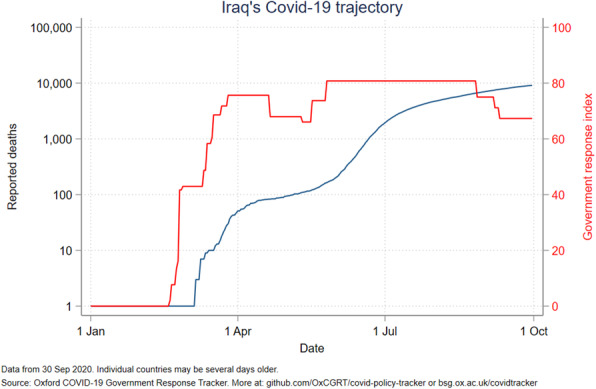
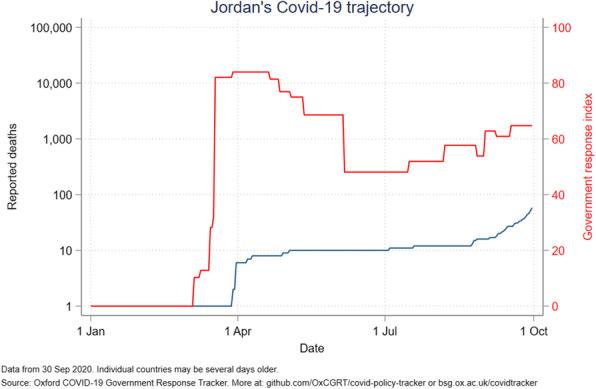
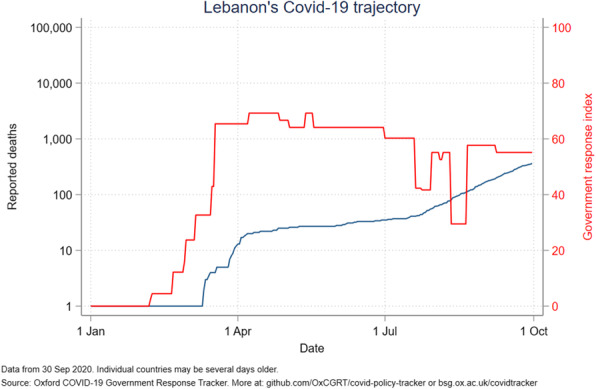
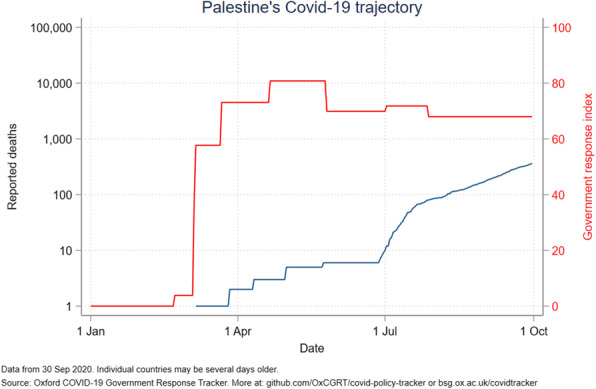
In terms of incidence of COVID-19, Iraq has the highest with 9665 per one million population, Syria the lowest at 256 per million. Deaths per million population was highest in Iraq at 237, and the lowest in Syria at 12. As for number of tests per million population, Lebanon ranked first at 136,033 with Iraq fourth at 59,795. There is no data available for the tests administered in Syria and subsequently no value for tests per million population. In terms of recoveries from COVID-19 per million population, Iraq had the highest number at 7903 per million, and Syria the lowest at 68 per million. When compared as percent recovery per million, Palestine ranked first (84%) and Syria last (27%). The government response stringency index shows that Jordan had the highest index (100) early in the pandemic among the other countries. Palestine's index remained stable between 80 and 96. The other countries' indices ranged from 50 to 85, with Lebanon seeing a drop to 24 in mid-August. Even with improved stringency index, Iraq reported an increased number of deaths.
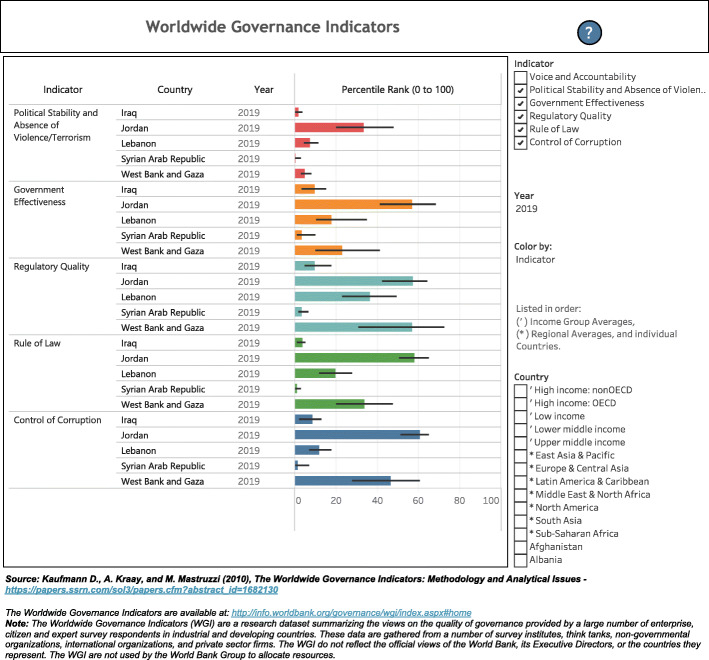
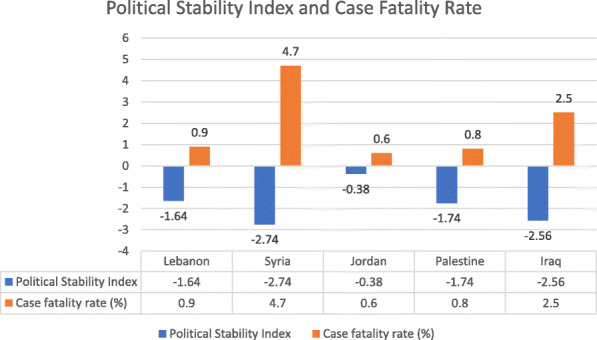
In countries devastated by war and conflict, a pandemic such as COVID-19 can easily spread. The Arab Levant countries represent a breeding ground for pandemics given their unstable political and economic climate that has undoubtedly affected their healthcare systems. In the era of COVID-19, looking at healthcare systems as well as political determinants is needed to assess a country's readiness towards the pandemic. The unrest in Lebanon, the uprising in Iraq, the restrictions placed on Syria, and the economic difficulties in Palestine are all examples of determinants affecting pandemic management. Jordan, on the contrary, is a good example of a stable state, able to implement proper measures. Political stability index should be used as a predictor for pandemic management capacity, and individual measures should be tailored towards countries depending on their index.
COVID-19 以空前的方式席卷全球,对我们生活的多个方面产生了严重影响。多种决定因素影响了各国应对这一大流行病的成功程度。中东的阿拉伯黎凡特地区以反复发生的战争和冲突而闻名,与其他地区一样,也受到了这一大流行病的影响。战争、冲突和大流行病的结合给任何国家都带来了太大的负担。
对来自各个阿拉伯黎凡特国家(ALC)卫生部门的数据进行了描述性分析。ALC 包括黎巴嫩、叙利亚、约旦、伊拉克和巴勒斯坦。收集的数据包括发病率、康复率、病死率和每百万人进行的检测数量、全球卫生安全指数、政府严格指数和政治稳定指数。对 ALC 之间的信息进行了比较和分析,并与全球数据进行了比较。对该地区发表的所有相关文章和报告进行了广泛的电子文献检索。2019 年全球卫生安全(GHS)指数来自约翰霍普金斯大学健康安全中心、核威胁倡议(NTI)和经济学人智库(EIU)的“GHS 指数”网站。政府严格指数和政治稳定指数分别来自牛津大学和“全球经济”网站。其他世界治理指标,如政府效能,来自世界银行网站。
就 COVID-19 的发病率而言,伊拉克最高,每百万人中有 9665 人,叙利亚最低,每百万人中有 256 人。每百万人的死亡人数以伊拉克最高,为 237 人,叙利亚最低,为 12 人。至于每百万人进行的检测数量,黎巴嫩以 136033 次排名第一,伊拉克以 59795 次排名第四。叙利亚没有提供进行的检测数据,因此没有每百万人进行的检测数量值。就 COVID-19 的每百万人康复人数而言,伊拉克以每百万人 7903 人位居榜首,叙利亚以每百万人 68 人位居垫底。按每百万人的康复百分比计算,巴勒斯坦排名第一(84%),叙利亚排名最后(27%)。政府应对严格指数显示,在疫情早期,约旦是其他国家中政府应对严格指数最高的国家(100)。巴勒斯坦的指数在 80 到 96 之间保持稳定。其他国家的指数在 50 到 85 之间,黎巴嫩在 8 月中旬降至 24。即使政府应对指数有所提高,伊拉克的死亡人数也有所增加。
在饱受战争和冲突蹂躏的国家,COVID-19 等大流行病很容易传播。阿拉伯黎凡特国家政局动荡,经济气候不稳定,这无疑影响了他们的医疗体系,是大流行病的滋生地。在 COVID-19 时代,需要审视医疗体系以及政治决定因素,以评估一个国家对大流行病的准备情况。黎巴嫩的动荡、伊拉克的起义、叙利亚的限制以及巴勒斯坦的经济困难都是影响大流行病管理的决定因素的例子。相比之下,约旦是一个稳定的国家,能够实施适当的措施,是一个很好的例子。政治稳定指数应作为大流行病管理能力的预测指标,应根据指数为各国量身定制个别措施。