• 文献检索
  • 文档翻译
  • 深度研究
  • 学术资讯
  • Suppr Zotero 插件Zotero 插件
  • 邀请有礼
  • 套餐&价格
  • 历史记录
应用&插件
Suppr Zotero 插件Zotero 插件浏览器插件Mac 客户端Windows 客户端微信小程序
定价
高级版会员购买积分包购买API积分包
服务
文献检索文档翻译深度研究API 文档MCP 服务
关于我们
关于 Suppr公司介绍联系我们用户协议隐私条款
关注我们

Suppr 超能文献

核心技术专利:CN118964589B侵权必究
粤ICP备2023148730 号-1Suppr @ 2026

文献检索

告别复杂PubMed语法,用中文像聊天一样搜索,搜遍4000万医学文献。AI智能推荐,让科研检索更轻松。

立即免费搜索

文件翻译

保留排版,准确专业,支持PDF/Word/PPT等文件格式,支持 12+语言互译。

免费翻译文档

深度研究

AI帮你快速写综述,25分钟生成高质量综述,智能提取关键信息,辅助科研写作。

立即免费体验

在一只原本没有生物钟的小鼠的视交叉上核内恢复分子生物钟机制,能够实现昼夜节律的相位调整和睡眠-觉醒周期的稳定,并逆转记忆缺陷。

Restoring the Molecular Clockwork within the Suprachiasmatic Hypothalamus of an Otherwise Clockless Mouse Enables Circadian Phasing and Stabilization of Sleep-Wake Cycles and Reverses Memory Deficits.

作者信息

Maywood Elizabeth S, Chesham Johanna E, Winsky-Sommerer Raphaelle, Hastings Michael H

机构信息

Division of Neurobiology, Medical Research Council Laboratory of Molecular Biology, Cambridge CB2 0QH, United Kingdom

Division of Neurobiology, Medical Research Council Laboratory of Molecular Biology, Cambridge CB2 0QH, United Kingdom.

出版信息

J Neurosci. 2021 Oct 13;41(41):8562-8576. doi: 10.1523/JNEUROSCI.3141-20.2021. Epub 2021 Aug 26.

DOI:10.1523/JNEUROSCI.3141-20.2021
PMID:34446572
原文链接:https://pmc.ncbi.nlm.nih.gov/articles/PMC8513698/
Abstract

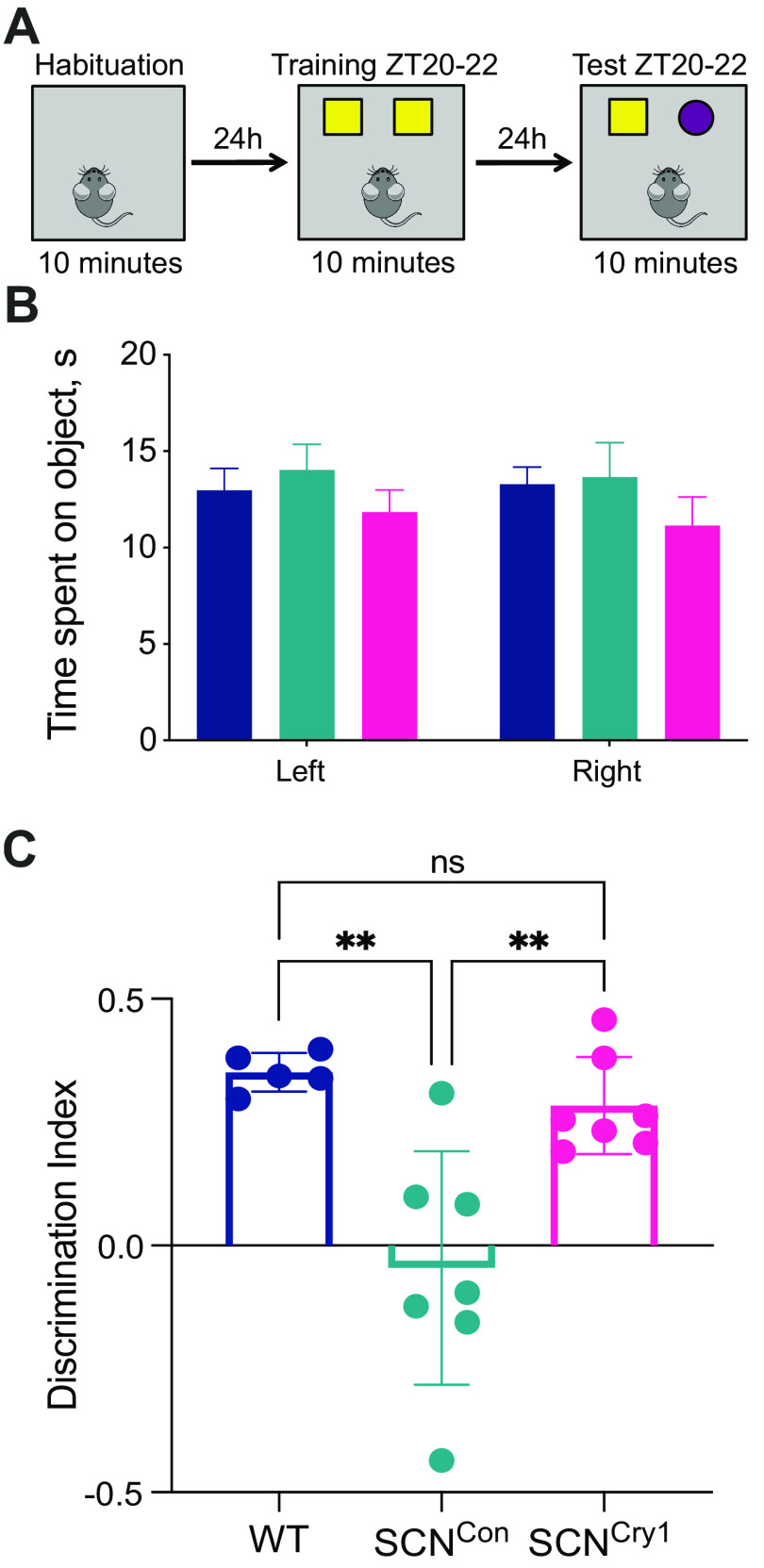
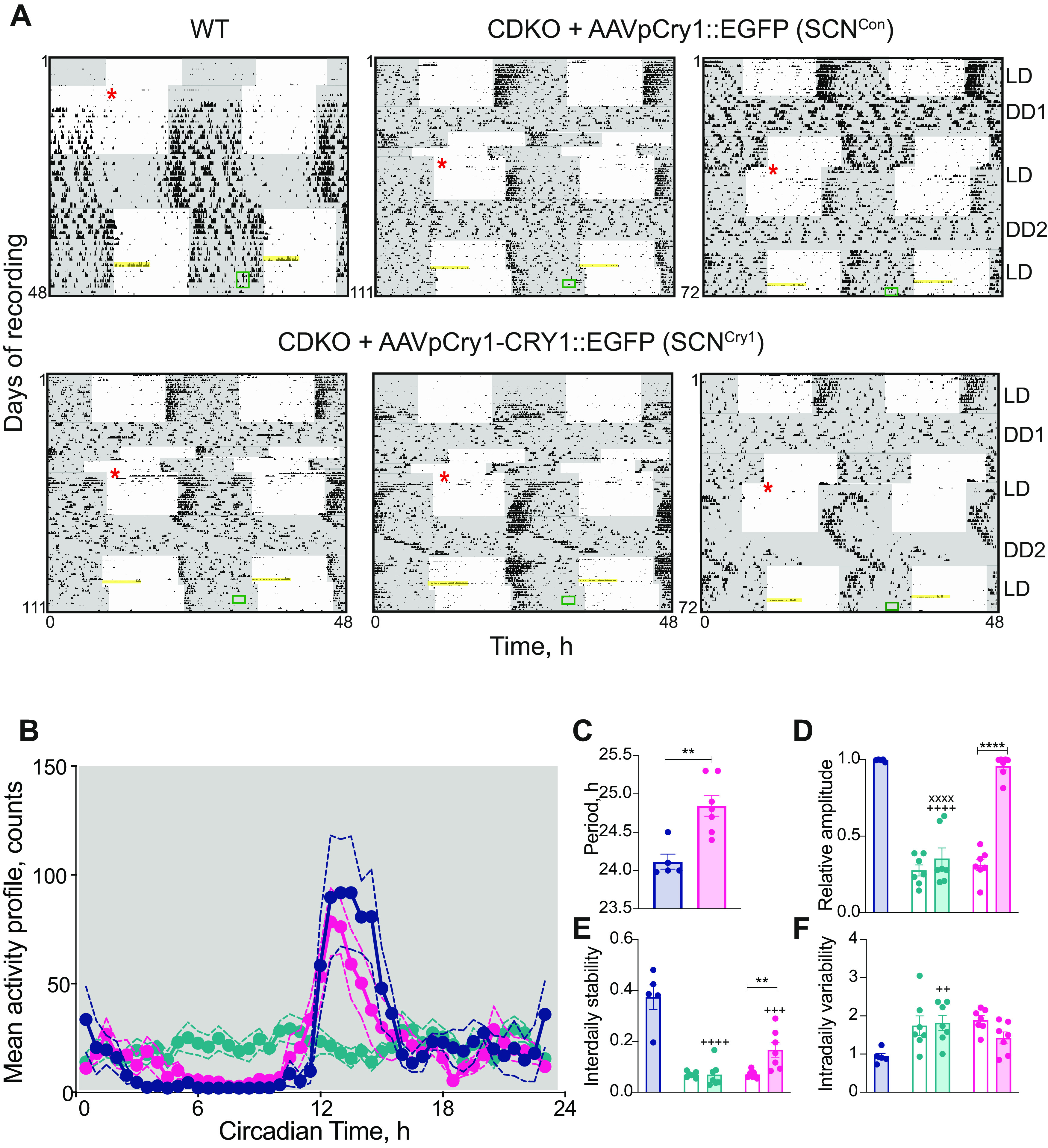
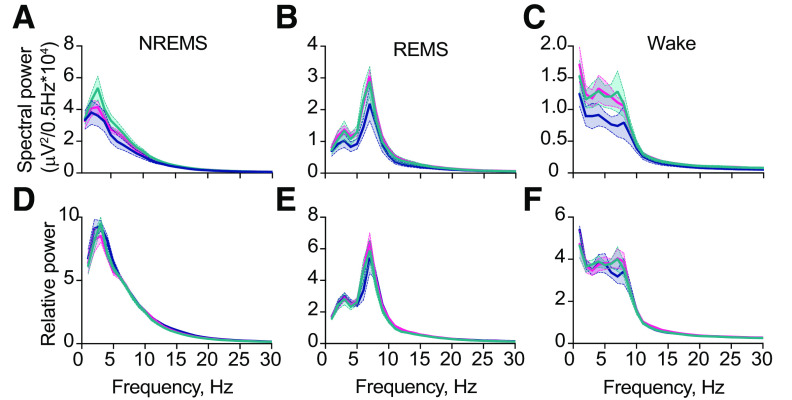
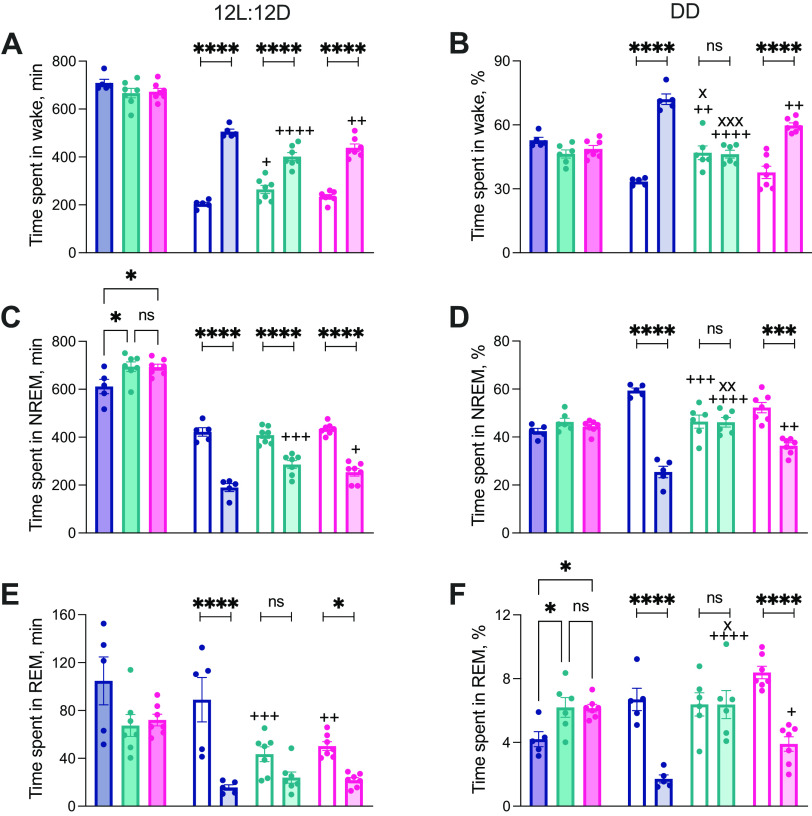
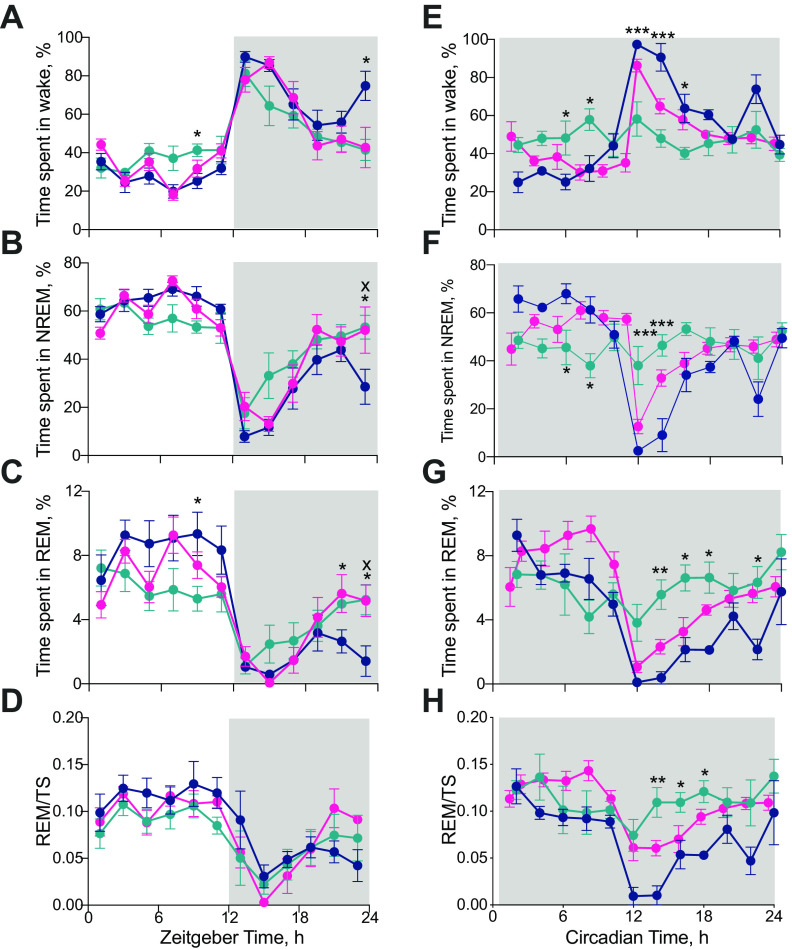
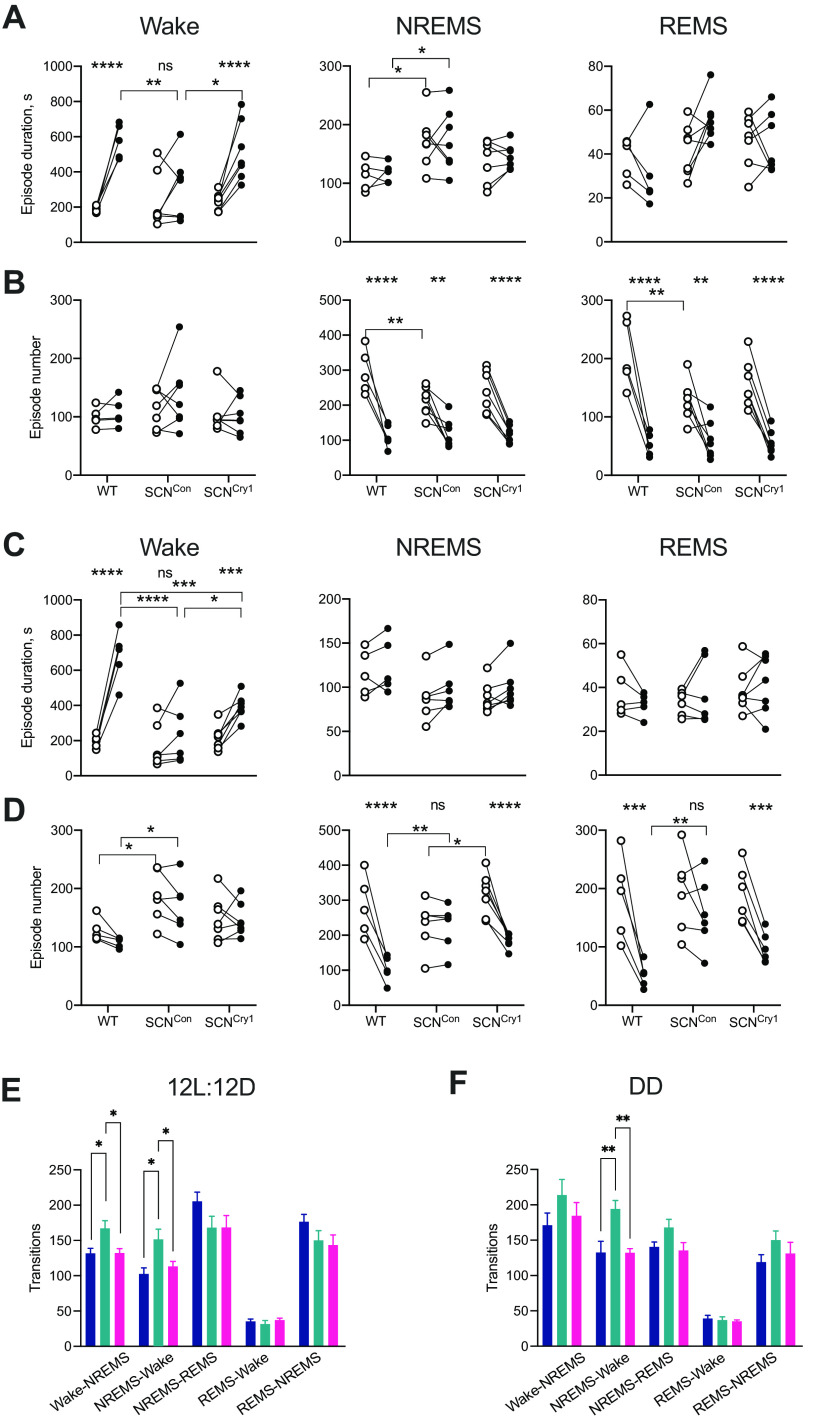
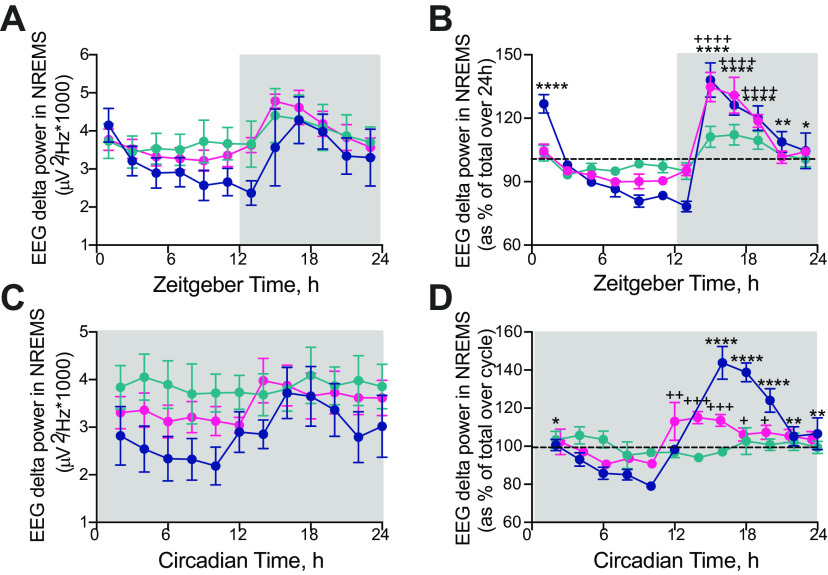
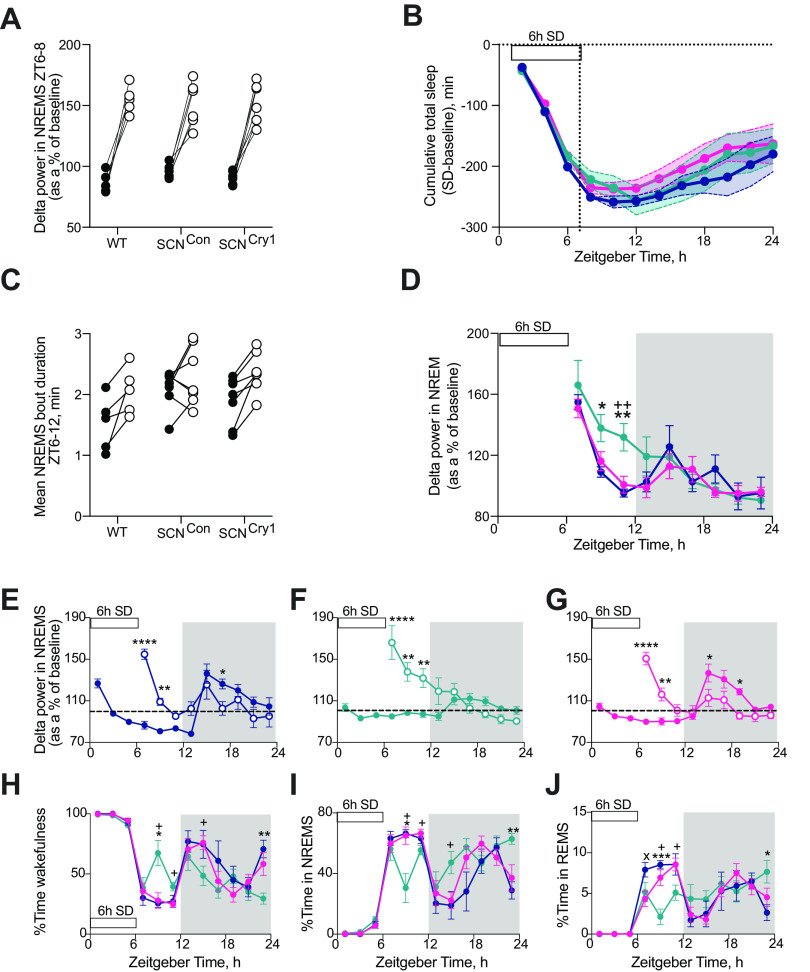
The timing and quality of sleep-wake cycles are regulated by interacting circadian and homeostatic mechanisms. Although the suprachiasmatic nucleus (SCN) is the principal clock, circadian clocks are active across the brain and the respective sleep-regulatory roles of SCN and local clocks are unclear. To determine the specific contribution(s) of the SCN, we used virally mediated genetic complementation, expressing Cryptochrome1 (Cry1) to establish circadian molecular competence in the suprachiasmatic hypothalamus of globally clockless, arrhythmic male -null mice. Under free-running conditions, the rest/activity behavior of -null controls expressing EGFP (SCN) was arrhythmic, whereas Cry1-complemented mice (SCN) had coherent circadian behavior, comparable to that of Cry1,2-competent wild types (WTs). In SCN mice, sleep-wakefulness, assessed by electroencephalography (EEG)/electromyography (EMG), lacked circadian organization. In SCN mice, however, it matched WTs, with consolidated vigilance states [wake, rapid eye movement sleep (REMS) and non-REMS (NREMS)] and rhythms in NREMS δ power and expression of REMS within total sleep (TS). Wakefulness in SCN mice was more fragmented than in WTs, with more wake-NREMS-wake transitions. This disruption was reversed in SCN mice. Following sleep deprivation (SD), all mice showed a homeostatic increase in NREMS δ power, although the SCN mice had reduced NREMS during the inactive (light) phase of recovery. In contrast, the dynamics of homeostatic responses in the SCN mice were comparable to WTs. Finally, SCN mice exhibited poor sleep-dependent memory but this was corrected in SCNmice. In clockless mice, circadian molecular competence focused solely on the SCN rescued the architecture and consolidation of sleep-wake and sleep-dependent memory, highlighting its dominant role in timing sleep. The circadian timing system regulates sleep-wake cycles. The hypothalamic suprachiasmatic nucleus (SCN) is the principal circadian clock, but the presence of multiple local brain and peripheral clocks mean the respective roles of SCN and other clocks in regulating sleep are unclear. We therefore used virally mediated genetic complementation to restore molecular circadian functions in the suprachiasmatic hypothalamus, focusing on the SCN, in otherwise genetically clockless, arrhythmic mice. This initiated circadian activity-rest cycles, and circadian sleep-wake cycles, circadian patterning to the intensity of non-rapid eye movement sleep (NREMS) and circadian control of REMS as a proportion of total sleep (TS). Consolidation of sleep-wake established normal dynamics of sleep homeostasis and enhanced sleep-dependent memory. Thus, the suprachiasmatic hypothalamus, alone, can direct circadian regulation of sleep-wake.

摘要

睡眠-觉醒周期的时间和质量由相互作用的昼夜节律和稳态机制调节。虽然视交叉上核(SCN)是主要时钟,但昼夜节律时钟在整个大脑中都有活性,SCN和局部时钟各自的睡眠调节作用尚不清楚。为了确定SCN的具体贡献,我们使用病毒介导的基因互补,表达隐花色素1(Cry1),以在全球无时钟、无节律的雄性无效小鼠的视交叉上下丘脑建立昼夜节律分子能力。在自由运行条件下,表达EGFP(SCN)的无效对照的休息/活动行为无节律,而Cry1互补小鼠(SCN)具有连贯的昼夜节律行为,与具有Cry1,2能力的野生型(WT)相当。在SCN小鼠中,通过脑电图(EEG)/肌电图(EMG)评估的睡眠-觉醒缺乏昼夜节律组织。然而,在SCN小鼠中,它与WT匹配,具有巩固的警觉状态[清醒、快速眼动睡眠(REMS)和非快速眼动睡眠(NREMS)]以及NREMSδ功率和总睡眠(TS)中REMS表达的节律。SCN小鼠的清醒比WT更碎片化,有更多的清醒-NREMS-清醒转换。这种破坏在SCN小鼠中得到了逆转。睡眠剥夺(SD)后,所有小鼠的NREMSδ功率均出现稳态增加,尽管SCN小鼠在恢复的非活动(光)期NREMS减少。相比之下,SCN小鼠中稳态反应的动力学与WT相当。最后,SCN小鼠表现出较差的睡眠依赖性记忆,但在SCN小鼠中得到了纠正。在无时钟小鼠中,仅聚焦于SCN的昼夜节律分子能力挽救了睡眠-觉醒和睡眠依赖性记忆的结构和巩固,突出了其在睡眠定时中的主导作用。昼夜节律定时系统调节睡眠-觉醒周期。下丘脑视交叉上核(SCN)是主要的昼夜节律时钟,但多个局部脑和外周时钟的存在意味着SCN和其他时钟在调节睡眠中的各自作用尚不清楚。因此,我们使用病毒介导的基因互补来恢复视交叉上下丘脑的分子昼夜节律功能,重点是SCN,在其他方面基因无时钟、无节律的小鼠中。这启动了昼夜活动-休息周期、昼夜睡眠-觉醒周期、非快速眼动睡眠(NREMS)强度的昼夜模式以及作为总睡眠(TS)比例的REMS的昼夜控制。睡眠-觉醒的巩固建立了睡眠稳态的正常动力学并增强了睡眠依赖性记忆。因此,单独的视交叉上下丘脑可以直接指导睡眠-觉醒的昼夜调节。
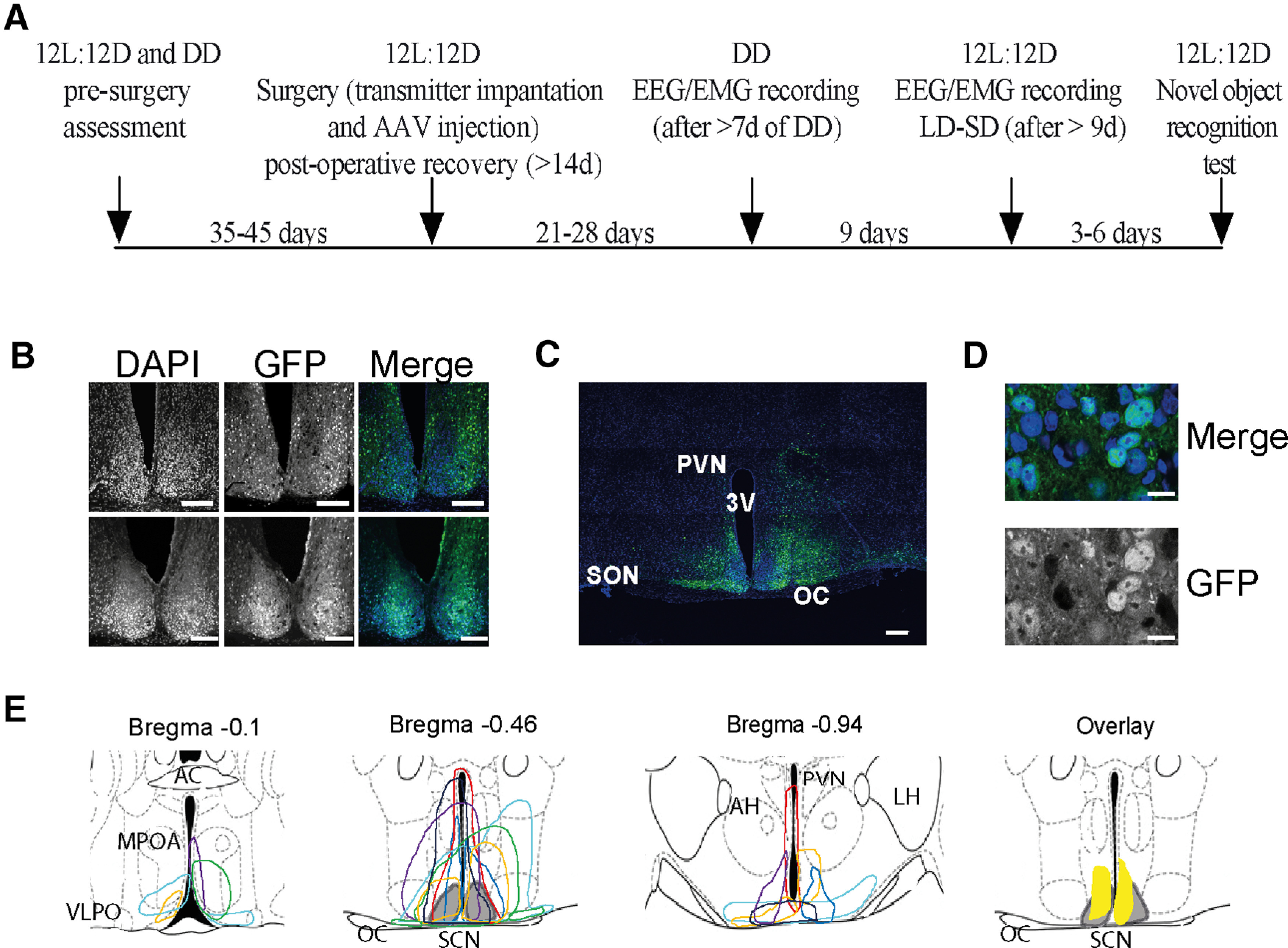
https://cdn.ncbi.nlm.nih.gov/pmc/blobs/5c0d/8513698/e448d3e5032f/SN-JNSJ210633F009.jpg
https://cdn.ncbi.nlm.nih.gov/pmc/blobs/5c0d/8513698/6bb832aa8e31/SN-JNSJ210633F001.jpg
https://cdn.ncbi.nlm.nih.gov/pmc/blobs/5c0d/8513698/3bcf8eec46cc/SN-JNSJ210633F002.jpg
https://cdn.ncbi.nlm.nih.gov/pmc/blobs/5c0d/8513698/d1b266cc045d/SN-JNSJ210633F003.jpg
https://cdn.ncbi.nlm.nih.gov/pmc/blobs/5c0d/8513698/8f92b5884a20/SN-JNSJ210633F004.jpg
https://cdn.ncbi.nlm.nih.gov/pmc/blobs/5c0d/8513698/76d9db2bb8e7/SN-JNSJ210633F005.jpg
https://cdn.ncbi.nlm.nih.gov/pmc/blobs/5c0d/8513698/285cd66f31fd/SN-JNSJ210633F006.jpg
https://cdn.ncbi.nlm.nih.gov/pmc/blobs/5c0d/8513698/67dd37bb3673/SN-JNSJ210633F007.jpg
https://cdn.ncbi.nlm.nih.gov/pmc/blobs/5c0d/8513698/c95413d91983/SN-JNSJ210633F008.jpg
https://cdn.ncbi.nlm.nih.gov/pmc/blobs/5c0d/8513698/e448d3e5032f/SN-JNSJ210633F009.jpg
https://cdn.ncbi.nlm.nih.gov/pmc/blobs/5c0d/8513698/6bb832aa8e31/SN-JNSJ210633F001.jpg
https://cdn.ncbi.nlm.nih.gov/pmc/blobs/5c0d/8513698/3bcf8eec46cc/SN-JNSJ210633F002.jpg
https://cdn.ncbi.nlm.nih.gov/pmc/blobs/5c0d/8513698/d1b266cc045d/SN-JNSJ210633F003.jpg
https://cdn.ncbi.nlm.nih.gov/pmc/blobs/5c0d/8513698/8f92b5884a20/SN-JNSJ210633F004.jpg
https://cdn.ncbi.nlm.nih.gov/pmc/blobs/5c0d/8513698/76d9db2bb8e7/SN-JNSJ210633F005.jpg
https://cdn.ncbi.nlm.nih.gov/pmc/blobs/5c0d/8513698/285cd66f31fd/SN-JNSJ210633F006.jpg
https://cdn.ncbi.nlm.nih.gov/pmc/blobs/5c0d/8513698/67dd37bb3673/SN-JNSJ210633F007.jpg
https://cdn.ncbi.nlm.nih.gov/pmc/blobs/5c0d/8513698/c95413d91983/SN-JNSJ210633F008.jpg
https://cdn.ncbi.nlm.nih.gov/pmc/blobs/5c0d/8513698/e448d3e5032f/SN-JNSJ210633F009.jpg

相似文献

1
Restoring the Molecular Clockwork within the Suprachiasmatic Hypothalamus of an Otherwise Clockless Mouse Enables Circadian Phasing and Stabilization of Sleep-Wake Cycles and Reverses Memory Deficits.在一只原本没有生物钟的小鼠的视交叉上核内恢复分子生物钟机制,能够实现昼夜节律的相位调整和睡眠-觉醒周期的稳定,并逆转记忆缺陷。
J Neurosci. 2021 Oct 13;41(41):8562-8576. doi: 10.1523/JNEUROSCI.3141-20.2021. Epub 2021 Aug 26.
2
Rhythmic expression of cryptochrome induces the circadian clock of arrhythmic suprachiasmatic nuclei through arginine vasopressin signaling.隐花色素的节律性表达通过精氨酸加压素信号传导诱导无节律性视交叉上核的昼夜节律时钟。
Proc Natl Acad Sci U S A. 2016 Mar 8;113(10):2732-7. doi: 10.1073/pnas.1519044113. Epub 2016 Feb 22.
3
Distinct and separable roles for endogenous CRY1 and CRY2 within the circadian molecular clockwork of the suprachiasmatic nucleus, as revealed by the Fbxl3(Afh) mutation.由 Fbxl3(Afh) 突变揭示,内源性 CRY1 和 CRY2 在视交叉上核的生物钟分子机制中具有独特且可分离的作用。
J Neurosci. 2013 Apr 24;33(17):7145-53. doi: 10.1523/JNEUROSCI.4950-12.2013.
4
Translational switching of Cry1 protein expression confers reversible control of circadian behavior in arrhythmic Cry-deficient mice.Cry1 蛋白表达的转译开关赋予节律紊乱的 Cry 缺陷型小鼠中生物钟行为的可逆控制。
Proc Natl Acad Sci U S A. 2018 Dec 26;115(52):E12388-E12397. doi: 10.1073/pnas.1811438115. Epub 2018 Nov 28.
5
Circadian Chimeric Mice Reveal an Interplay Between the Suprachiasmatic Nucleus and Local Brain Clocks in the Control of Sleep and Memory.昼夜节律嵌合小鼠揭示了视交叉上核与局部脑时钟在睡眠和记忆控制中的相互作用。
Front Neurosci. 2021 Feb 19;15:639281. doi: 10.3389/fnins.2021.639281. eCollection 2021.
6
The suprachiasmatic nucleus regulates sleep timing and amount in mice.视交叉上核调节小鼠的睡眠时间和睡眠量。
Sleep. 2004 Nov 1;27(7):1307-18. doi: 10.1093/sleep/27.7.1307.
7
The sleep-wake distribution contributes to the peripheral rhythms in PERIOD-2.睡眠-觉醒分布导致 PERIOD-2 的外周节律。
Elife. 2021 Dec 13;10:e69773. doi: 10.7554/eLife.69773.
8
Misalignment of Circadian Rhythms in Diet-Induced Obesity.饮食诱导肥胖中昼夜节律的失调。
Adv Exp Med Biol. 2024;1460:27-71. doi: 10.1007/978-3-031-63657-8_2.
9
Delayed Cryptochrome Degradation Asymmetrically Alters the Daily Rhythm in Suprachiasmatic Clock Neuron Excitability.隐花色素延迟降解不对称地改变视交叉上核生物钟神经元兴奋性的日节律。
J Neurosci. 2017 Aug 16;37(33):7824-7836. doi: 10.1523/JNEUROSCI.0691-17.2017. Epub 2017 Jul 11.
10
A role for cryptochromes in sleep regulation.隐花色素在睡眠调节中的作用。
BMC Neurosci. 2002 Dec 20;3:20. doi: 10.1186/1471-2202-3-20.

引用本文的文献

1
Zinc finger homeobox-3 (ZFHX3) orchestrates genome-wide daily gene expression in the suprachiasmatic nucleus.锌指同源盒蛋白3(ZFHX3)调控视交叉上核全基因组范围的日常基因表达。
Elife. 2025 Mar 21;14:RP102019. doi: 10.7554/eLife.102019.
2
PERfect Day: reversible and dose-dependent control of circadian time-keeping in the mouse suprachiasmatic nucleus by translational switching of PERIOD2 protein expression.PERfect 日:通过 PERIOD2 蛋白表达的翻译转换可逆且剂量依赖地控制小鼠视交叉上核的生物钟节律。
Eur J Neurosci. 2024 Oct;60(7):5537-5552. doi: 10.1111/ejn.16537. Epub 2024 Sep 19.
3
Behavior and physiology in female are associated with the expression of circadian genes.

本文引用的文献

1
Circadian Chimeric Mice Reveal an Interplay Between the Suprachiasmatic Nucleus and Local Brain Clocks in the Control of Sleep and Memory.昼夜节律嵌合小鼠揭示了视交叉上核与局部脑时钟在睡眠和记忆控制中的相互作用。
Front Neurosci. 2021 Feb 19;15:639281. doi: 10.3389/fnins.2021.639281. eCollection 2021.
2
The Cell-Autonomous Clock of VIP Receptor VPAC2 Cells Regulates Period and Coherence of Circadian Behavior.VIP 受体 VPAC2 细胞的自主时钟调节昼夜节律行为的周期和同步性。
J Neurosci. 2021 Jan 20;41(3):502-512. doi: 10.1523/JNEUROSCI.2015-20.2020. Epub 2020 Nov 24.
3
The mammalian circadian pacemaker regulates wakefulness via CRF neurons in the paraventricular nucleus of the hypothalamus.
雌性动物的行为和生理与昼夜节律基因的表达有关。
Front Endocrinol (Lausanne). 2024 Jan 4;14:1281617. doi: 10.3389/fendo.2023.1281617. eCollection 2023.
4
Neuronal and glial vulnerability of the suprachiasmatic nucleus in tauopathies: evidence from human studies and animal models.tau 病中超交叉核神经元和神经胶质的脆弱性:来自人体研究和动物模型的证据。
Mol Neurodegener. 2024 Jan 10;19(1):4. doi: 10.1186/s13024-023-00695-4.
5
Circadian neurogenetics and its implications in neurophysiology, behavior, and chronomedicine.昼夜节律神经遗传学及其在神经生理学、行为和时间医学中的意义。
Neurosci Biobehav Rev. 2024 Feb;157:105523. doi: 10.1016/j.neubiorev.2023.105523. Epub 2023 Dec 22.
6
Modeling Drosophila sleep: fly in the sky?模拟果蝇睡眠:空中之蝇?
Sleep. 2024 Feb 8;47(2). doi: 10.1093/sleep/zsad309.
7
Sleep and circadian rhythmicity as entangled processes serving homeostasis.睡眠和昼夜节律作为维持内稳态的纠缠过程。
Nat Rev Neurosci. 2024 Jan;25(1):43-59. doi: 10.1038/s41583-023-00764-z. Epub 2023 Dec 1.
8
Exercise-with-melatonin therapy improves sleep disorder and motor dysfunction in a rat model of ischemic stroke.褪黑素联合运动疗法可改善缺血性脑卒中大鼠模型的睡眠障碍和运动功能障碍。
Neural Regen Res. 2024 Jun 1;19(6):1336-1343. doi: 10.4103/1673-5374.385844. Epub 2023 Sep 22.
9
Rescue of Comorbid Behavioral and Metabolic Phenotypes of Arrhythmic Mice by Restoring Circadian Expression in the Suprachiasmatic Nucleus.通过恢复视交叉上核中的昼夜节律表达来挽救心律失常小鼠的共病行为和代谢表型。
Biol Psychiatry Glob Open Sci. 2023 Jul 1;3(4):632-641. doi: 10.1016/j.bpsgos.2023.06.002. eCollection 2023 Oct.
10
Dynamic modulation of genomic enhancer elements in the suprachiasmatic nucleus, the site of the mammalian circadian clock.在哺乳动物生物钟的所在地——视交叉上核中,基因组增强子元件的动态调节。
Genome Res. 2023 May;33(5):673-688. doi: 10.1101/gr.277581.122. Epub 2023 May 8.
哺乳动物的昼夜节律起搏器通过下丘脑室旁核中的促肾上腺皮质激素释放因子(CRF)神经元调节清醒状态。
Sci Adv. 2020 Nov 6;6(45). doi: 10.1126/sciadv.abd0384. Print 2020 Nov.
4
The VIP-VPAC2 neuropeptidergic axis is a cellular pacemaking hub of the suprachiasmatic nucleus circadian circuit.VIP-VPAC2 神经肽轴是视交叉上核昼夜节律回路的细胞起搏中枢。
Nat Commun. 2020 Jul 7;11(1):3394. doi: 10.1038/s41467-020-17110-x.
5
Eat, sleep, repeat: the role of the circadian system in balancing sleep-wake control with metabolic need.吃、睡、循环往复:昼夜节律系统在平衡睡眠-觉醒控制与代谢需求中的作用。
Curr Opin Physiol. 2020 Jun;15:183-191. doi: 10.1016/j.cophys.2020.02.003.
6
Suprachiasmatic lesions restore object recognition in down syndrome model mice.视交叉上核病变可恢复唐氏综合征模型小鼠的物体识别能力。
Neurobiol Sleep Circadian Rhythms. 2020 Feb 16;8:100049. doi: 10.1016/j.nbscr.2020.100049. eCollection 2020 May.
7
An Inhibitory Lateral Hypothalamic-Preoptic Circuit Mediates Rapid Arousals from Sleep.抑制性下丘脑-视前区环路介导睡眠中的快速觉醒。
Curr Biol. 2019 Dec 16;29(24):4155-4168.e5. doi: 10.1016/j.cub.2019.10.026. Epub 2019 Nov 21.
8
Association between circadian rhythms and neurodegenerative diseases.昼夜节律与神经退行性疾病的关系。
Lancet Neurol. 2019 Mar;18(3):307-318. doi: 10.1016/S1474-4422(18)30461-7. Epub 2019 Feb 12.
9
Cell-autonomous clock of astrocytes drives circadian behavior in mammals.星形胶质细胞的自主时钟驱动哺乳动物的昼夜节律行为。
Science. 2019 Jan 11;363(6423):187-192. doi: 10.1126/science.aat4104.
10
Translational switching of Cry1 protein expression confers reversible control of circadian behavior in arrhythmic Cry-deficient mice.Cry1 蛋白表达的转译开关赋予节律紊乱的 Cry 缺陷型小鼠中生物钟行为的可逆控制。
Proc Natl Acad Sci U S A. 2018 Dec 26;115(52):E12388-E12397. doi: 10.1073/pnas.1811438115. Epub 2018 Nov 28.