• 文献检索
  • 文档翻译
  • 深度研究
  • 学术资讯
  • Suppr Zotero 插件Zotero 插件
  • 邀请有礼
  • 套餐&价格
  • 历史记录
应用&插件
Suppr Zotero 插件Zotero 插件浏览器插件Mac 客户端Windows 客户端微信小程序
定价
高级版会员购买积分包购买API积分包
服务
文献检索文档翻译深度研究API 文档MCP 服务
关于我们
关于 Suppr公司介绍联系我们用户协议隐私条款
关注我们

Suppr 超能文献

核心技术专利:CN118964589B侵权必究
粤ICP备2023148730 号-1Suppr @ 2026

文献检索

告别复杂PubMed语法,用中文像聊天一样搜索,搜遍4000万医学文献。AI智能推荐,让科研检索更轻松。

立即免费搜索

文件翻译

保留排版,准确专业,支持PDF/Word/PPT等文件格式,支持 12+语言互译。

免费翻译文档

深度研究

AI帮你快速写综述,25分钟生成高质量综述,智能提取关键信息,辅助科研写作。

立即免费体验

星形胶质细胞的自主时钟驱动哺乳动物的昼夜节律行为。

Cell-autonomous clock of astrocytes drives circadian behavior in mammals.

机构信息

Division of Neurobiology, MRC Laboratory of Molecular Biology, Cambridge CB2 0QH, UK.

出版信息

Science. 2019 Jan 11;363(6423):187-192. doi: 10.1126/science.aat4104.

DOI:10.1126/science.aat4104
PMID:30630934
原文链接:https://pmc.ncbi.nlm.nih.gov/articles/PMC6440650/
Abstract

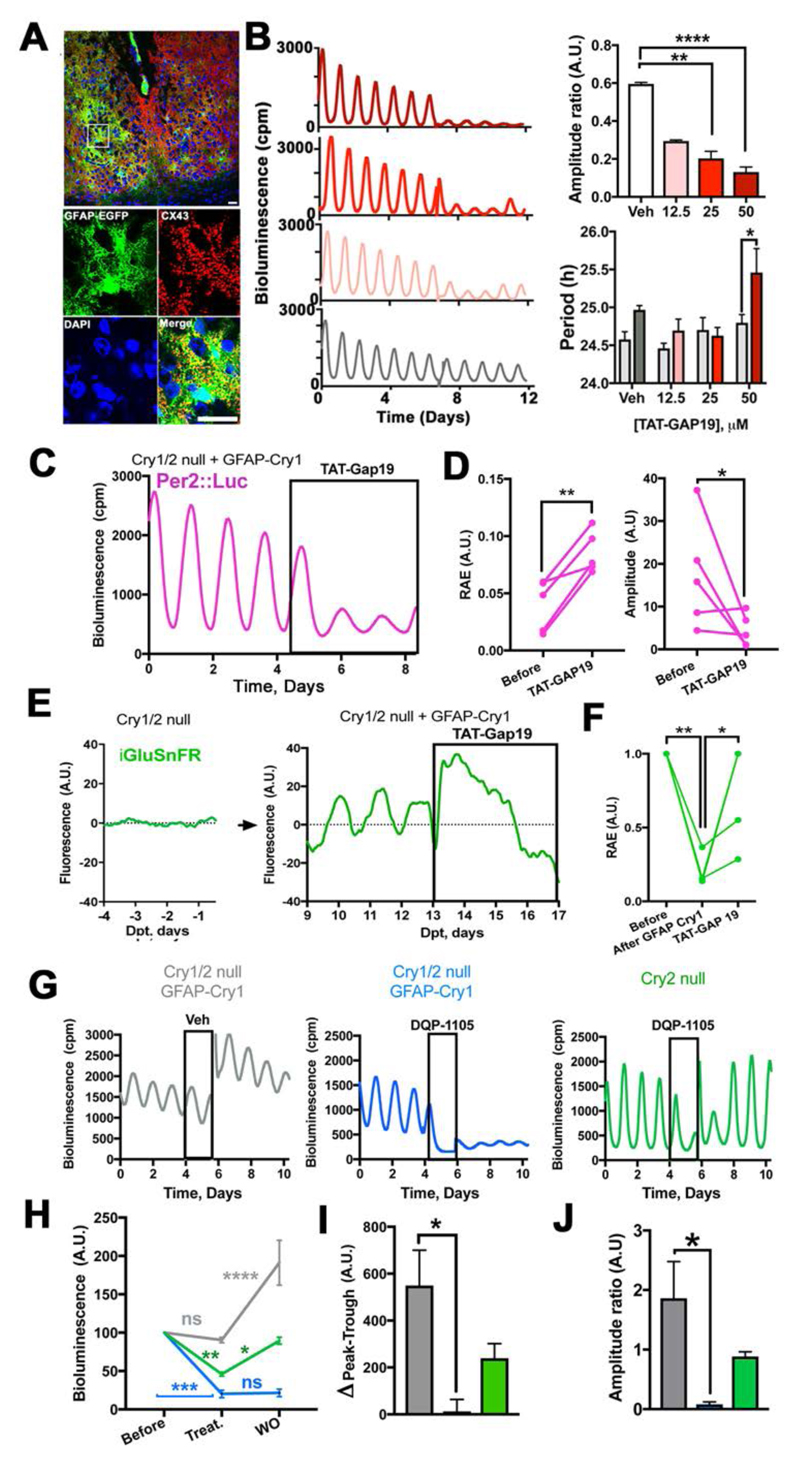
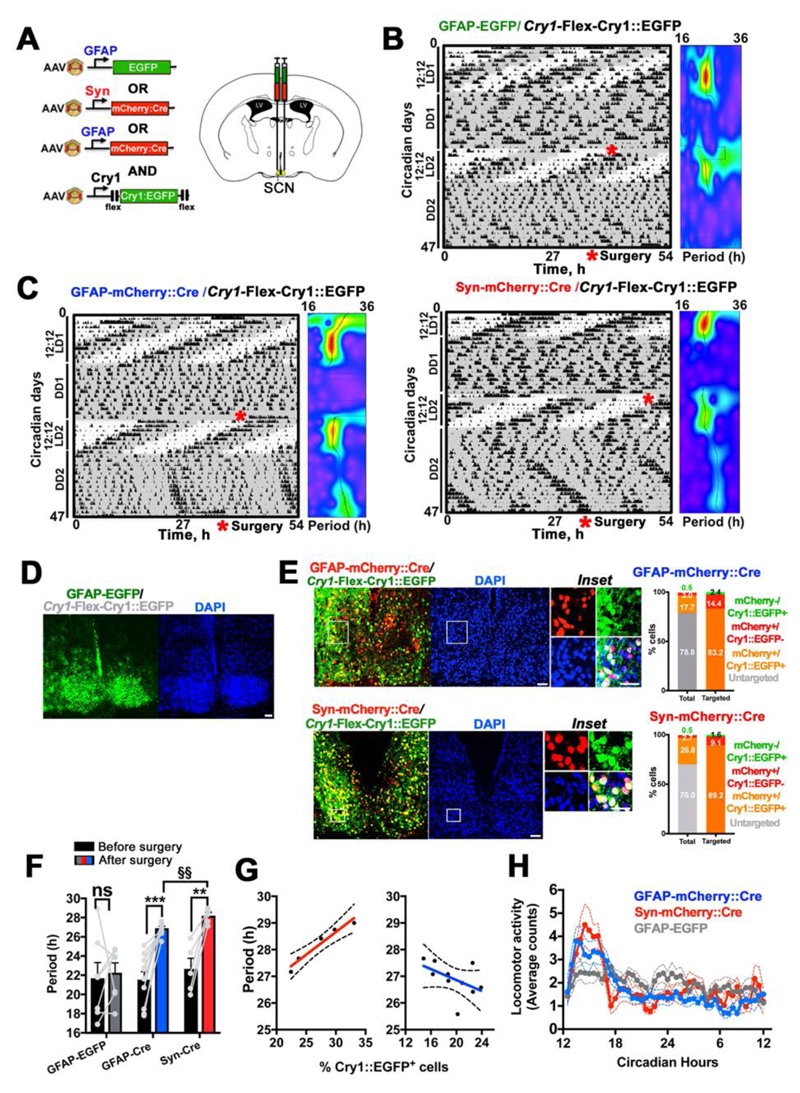
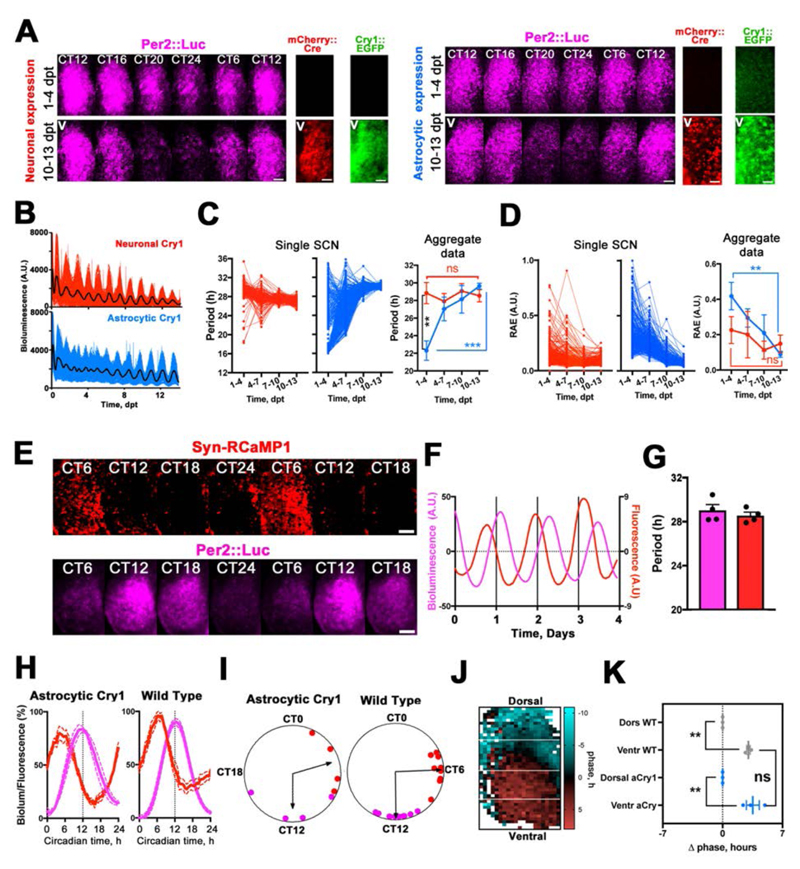
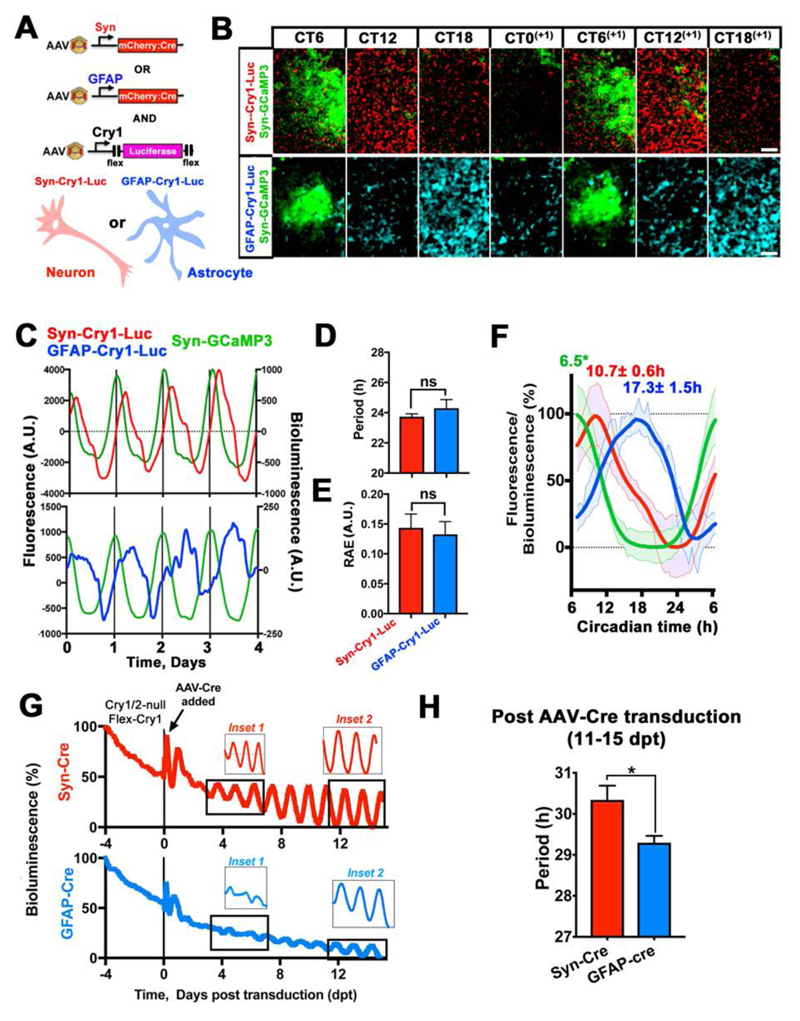
Circadian (~24-hour) rhythms depend on intracellular transcription-translation negative feedback loops (TTFLs). How these self-sustained cellular clocks achieve multicellular integration and thereby direct daily rhythms of behavior in animals is largely obscure. The suprachiasmatic nucleus (SCN) is the fulcrum of this pathway from gene to cell to circuit to behavior in mammals. We describe cell type-specific, functionally distinct TTFLs in neurons and astrocytes of the SCN and show that, in the absence of other cellular clocks, the cell-autonomous astrocytic TTFL alone can drive molecular oscillations in the SCN and circadian behavior in mice. Astrocytic clocks achieve this by reinstating clock gene expression and circadian function of SCN neurons via glutamatergic signals. Our results demonstrate that astrocytes can autonomously initiate and sustain complex mammalian behavior.

摘要

昼夜节律(约 24 小时)依赖于细胞内转录-翻译负反馈环(TTFL)。这些自我维持的细胞时钟如何实现细胞间的整合,从而指导动物的日常行为节律,在很大程度上还不清楚。视交叉上核(SCN)是哺乳动物从基因到细胞到回路再到行为的这个途径的枢轴。我们描述了 SCN 神经元和星形胶质细胞中特定于细胞类型的、功能不同的 TTFL,并表明,在没有其他细胞时钟的情况下,细胞自主的星形胶质细胞 TTFL 本身就可以驱动 SCN 中的分子振荡和小鼠的昼夜节律行为。星形胶质细胞通过谷氨酸能信号来恢复 SCN 神经元的时钟基因表达和昼夜节律功能来实现这一点。我们的结果表明,星形胶质细胞可以自主启动和维持复杂的哺乳动物行为。
https://cdn.ncbi.nlm.nih.gov/pmc/blobs/98da/6440650/a63b1814f3f9/emss-82260-f004.jpg
https://cdn.ncbi.nlm.nih.gov/pmc/blobs/98da/6440650/31b5aa7136cd/emss-82260-f001.jpg
https://cdn.ncbi.nlm.nih.gov/pmc/blobs/98da/6440650/cf29218da57b/emss-82260-f002.jpg
https://cdn.ncbi.nlm.nih.gov/pmc/blobs/98da/6440650/7dc21d1a023b/emss-82260-f003.jpg
https://cdn.ncbi.nlm.nih.gov/pmc/blobs/98da/6440650/a63b1814f3f9/emss-82260-f004.jpg
https://cdn.ncbi.nlm.nih.gov/pmc/blobs/98da/6440650/31b5aa7136cd/emss-82260-f001.jpg
https://cdn.ncbi.nlm.nih.gov/pmc/blobs/98da/6440650/cf29218da57b/emss-82260-f002.jpg
https://cdn.ncbi.nlm.nih.gov/pmc/blobs/98da/6440650/7dc21d1a023b/emss-82260-f003.jpg
https://cdn.ncbi.nlm.nih.gov/pmc/blobs/98da/6440650/a63b1814f3f9/emss-82260-f004.jpg

相似文献

1
Cell-autonomous clock of astrocytes drives circadian behavior in mammals.星形胶质细胞的自主时钟驱动哺乳动物的昼夜节律行为。
Science. 2019 Jan 11;363(6423):187-192. doi: 10.1126/science.aat4104.
2
Translational switching of Cry1 protein expression confers reversible control of circadian behavior in arrhythmic Cry-deficient mice.Cry1 蛋白表达的转译开关赋予节律紊乱的 Cry 缺陷型小鼠中生物钟行为的可逆控制。
Proc Natl Acad Sci U S A. 2018 Dec 26;115(52):E12388-E12397. doi: 10.1073/pnas.1811438115. Epub 2018 Nov 28.
3
Astrocytes Control Circadian Timekeeping in the Suprachiasmatic Nucleus via Glutamatergic Signaling.星形胶质细胞通过谷氨酸能信号传导控制视交叉上核中的昼夜节律计时。
Neuron. 2017 Mar 22;93(6):1420-1435.e5. doi: 10.1016/j.neuron.2017.02.030. Epub 2017 Mar 9.
4
Rhythmic expression of cryptochrome induces the circadian clock of arrhythmic suprachiasmatic nuclei through arginine vasopressin signaling.隐花色素的节律性表达通过精氨酸加压素信号传导诱导无节律性视交叉上核的昼夜节律时钟。
Proc Natl Acad Sci U S A. 2016 Mar 8;113(10):2732-7. doi: 10.1073/pnas.1519044113. Epub 2016 Feb 22.
5
Astrocytic Modulation of Neuronal Activity in the Suprachiasmatic Nucleus: Insights from Mathematical Modeling.星形胶质细胞对视交叉上核神经元活动的调节:数学建模的见解。
J Biol Rhythms. 2020 Jun;35(3):287-301. doi: 10.1177/0748730420913672. Epub 2020 Apr 14.
6
The Cell-Autonomous Clock of VIP Receptor VPAC2 Cells Regulates Period and Coherence of Circadian Behavior.VIP 受体 VPAC2 细胞的自主时钟调节昼夜节律行为的周期和同步性。
J Neurosci. 2021 Jan 20;41(3):502-512. doi: 10.1523/JNEUROSCI.2015-20.2020. Epub 2020 Nov 24.
7
Differential contributions of intra-cellular and inter-cellular mechanisms to the spatial and temporal architecture of the suprachiasmatic nucleus circadian circuitry in wild-type, cryptochrome-null and vasoactive intestinal peptide receptor 2-null mutant mice.细胞内和细胞间机制对野生型、隐花色素缺失型和血管活性肠肽受体2缺失型突变小鼠视交叉上核昼夜节律回路的空间和时间结构的不同贡献。
Eur J Neurosci. 2014 Aug;40(3):2528-40. doi: 10.1111/ejn.12631. Epub 2014 Jun 2.
8
Astrocytic control of extracellular GABA drives circadian timekeeping in the suprachiasmatic nucleus.星形胶质细胞控制细胞外 GABA 驱动视交叉上核的生物钟。
Proc Natl Acad Sci U S A. 2023 May 23;120(21):e2301330120. doi: 10.1073/pnas.2301330120. Epub 2023 May 15.
9
Distinct and separable roles for endogenous CRY1 and CRY2 within the circadian molecular clockwork of the suprachiasmatic nucleus, as revealed by the Fbxl3(Afh) mutation.由 Fbxl3(Afh) 突变揭示,内源性 CRY1 和 CRY2 在视交叉上核的生物钟分子机制中具有独特且可分离的作用。
J Neurosci. 2013 Apr 24;33(17):7145-53. doi: 10.1523/JNEUROSCI.4950-12.2013.
10
Generation of circadian rhythms in the suprachiasmatic nucleus.视交叉上核中昼夜节律的产生。
Nat Rev Neurosci. 2018 Aug;19(8):453-469. doi: 10.1038/s41583-018-0026-z.

引用本文的文献

1
Dysregulation of the BRD2-FGF17 Signal Pathway Induces Abnormal Forebrain Development Associated with Schizophrenia.BRD2-FGF17信号通路失调诱导与精神分裂症相关的前脑发育异常。
Neurosci Bull. 2025 Sep 14. doi: 10.1007/s12264-025-01500-6.
2
Deletion of Clock Gene () in Astrocytes Shortens Clock Period but Does Not Affect Light-Mediated Phase Shifts in Mice.星形胶质细胞中Clock基因()的缺失缩短了生物钟周期,但不影响小鼠的光介导相移。
Clocks Sleep. 2025 Jul 17;7(3):37. doi: 10.3390/clockssleep7030037.
3
Microglial clock dysfunction during neuroinflammation impairs oligodendrocyte progenitor cell recruitment and disrupts neuroimmune homeostasis.

本文引用的文献

1
Generation of circadian rhythms in the suprachiasmatic nucleus.视交叉上核中昼夜节律的产生。
Nat Rev Neurosci. 2018 Aug;19(8):453-469. doi: 10.1038/s41583-018-0026-z.
2
Connexin-Mediated Functional and Metabolic Coupling Between Astrocytes and Neurons.星形胶质细胞与神经元之间的连接蛋白介导的功能和代谢偶联
Front Mol Neurosci. 2018 Apr 11;11:118. doi: 10.3389/fnmol.2018.00118. eCollection 2018.
3
Inhibition of astroglial connexin43 hemichannels with TAT-Gap19 exerts anticonvulsant effects in rodents.TAT-Gap19 抑制星形胶质细胞缝隙连接蛋白 43 半通道在啮齿动物中发挥抗惊厥作用。
神经炎症期间小胶质细胞时钟功能障碍会损害少突胶质前体细胞的募集并破坏神经免疫稳态。
Front Immunol. 2025 Jul 7;16:1620343. doi: 10.3389/fimmu.2025.1620343. eCollection 2025.
4
Peroxisomal import is circadian in glia and regulates sleep and lipid metabolism.过氧化物酶体的导入在神经胶质细胞中具有昼夜节律性,并调节睡眠和脂质代谢。
bioRxiv. 2025 Jun 25:2025.06.23.661129. doi: 10.1101/2025.06.23.661129.
5
Astrocytes Regulate Brain State Transitions.星形胶质细胞调节脑状态转换。
Neurochem Res. 2025 Jun 27;50(4):218. doi: 10.1007/s11064-025-04468-x.
6
Astrogliosis Occurs Selectively in Amygdala of Adolescent Primate and Rodent Following Daily Δ-Tetrahydrocannabinol, Prevented by Cannabidiol Co-Treatment.在青少年灵长类动物和啮齿动物的杏仁核中,每日给予Δ-四氢大麻酚后会选择性地发生星形胶质细胞增生,而大麻二酚联合治疗可预防这种情况。
Biol Psychiatry Glob Open Sci. 2025 Mar 29;5(4):100496. doi: 10.1016/j.bpsgos.2025.100496. eCollection 2025 Jul.
7
Multi-Omic Analysis Reveals Astrocytic Annexin-A2 as Critical for Network-Level Circadian Timekeeping in the Suprachiasmatic Nucleus.多组学分析揭示星形胶质细胞膜联蛋白A2对视交叉上核网络水平昼夜节律计时至关重要。
Glia. 2025 Apr 2. doi: 10.1002/glia.70018.
8
Loss of Bmal1 impairs the glutamatergic light input to the SCN in mice.Bmal1的缺失会损害小鼠视交叉上核中谷氨酸能光输入。
Front Cell Neurosci. 2025 Feb 27;19:1538985. doi: 10.3389/fncel.2025.1538985. eCollection 2025.
9
Selective changes in vasopressin neurons and astrocytes in the suprachiasmatic nucleus of Prader-Willi syndrome subjects.普拉德-威利综合征患者视交叉上核中加压素神经元和星形胶质细胞的选择性变化。
J Neuroendocrinol. 2025 May;37(5):e70015. doi: 10.1111/jne.70015. Epub 2025 Mar 8.
10
Mutual coupling of neurons in the circadian master clock: What we can learn from fruit flies.昼夜节律主时钟中神经元的相互耦合:我们能从果蝇身上学到什么。
Neurobiol Sleep Circadian Rhythms. 2025 Jan 17;18:100112. doi: 10.1016/j.nbscr.2025.100112. eCollection 2025 May.
Glia. 2018 Aug;66(8):1788-1804. doi: 10.1002/glia.23341. Epub 2018 Apr 23.
4
A Nobel Pursuit May Not Run like Clockwork.诺贝尔追求的事业未必能按部就班。
Cell. 2017 Nov 30;171(6):1246-1251. doi: 10.1016/j.cell.2017.11.030.
5
Synapse-specific astrocyte gating of amygdala-related behavior.杏仁核相关行为的突触特异性星形胶质细胞门控
Nat Neurosci. 2017 Nov;20(11):1540-1548. doi: 10.1038/nn.4649. Epub 2017 Sep 25.
6
Connexin 43-Mediated Astroglial Metabolic Networks Contribute to the Regulation of the Sleep-Wake Cycle.连接蛋白43介导的星形胶质细胞代谢网络有助于调节睡眠-觉醒周期。
Neuron. 2017 Sep 13;95(6):1365-1380.e5. doi: 10.1016/j.neuron.2017.08.022. Epub 2017 Aug 31.
7
Septal Cholinergic Neuromodulation Tunes the Astrocyte-Dependent Gating of Hippocampal NMDA Receptors to Wakefulness.中隔胆碱能神经调节调节海马NMDA受体依赖星形胶质细胞的门控以维持清醒状态。
Neuron. 2017 May 17;94(4):840-854.e7. doi: 10.1016/j.neuron.2017.04.021. Epub 2017 May 4.
8
Astrocytes Regulate Daily Rhythms in the Suprachiasmatic Nucleus and Behavior.星形胶质细胞调节视交叉上核的昼夜节律和行为。
Curr Biol. 2017 Apr 3;27(7):1055-1061. doi: 10.1016/j.cub.2017.02.037. Epub 2017 Mar 23.
9
Astrocytes Control Circadian Timekeeping in the Suprachiasmatic Nucleus via Glutamatergic Signaling.星形胶质细胞通过谷氨酸能信号传导控制视交叉上核中的昼夜节律计时。
Neuron. 2017 Mar 22;93(6):1420-1435.e5. doi: 10.1016/j.neuron.2017.02.030. Epub 2017 Mar 9.
10
Synchronous circadian voltage rhythms with asynchronous calcium rhythms in the suprachiasmatic nucleus.视交叉上核中同步的时钟电压节律与异步的钙节律。
Proc Natl Acad Sci U S A. 2017 Mar 21;114(12):E2476-E2485. doi: 10.1073/pnas.1616815114. Epub 2017 Mar 7.