Institute of Gastroenterology, Kosin University College of Medicine, Busan 49267, Spain.
Department of Internal Medicine, Kosin University College of Medicine, Busan 49267, South Korea.
World J Gastroenterol. 2021 Aug 7;27(29):4879-4889. doi: 10.3748/wjg.v27.i29.4879.
Gut microbial dysbiosis contributes to the development and progression of colorectal cancer (CRC). Natural killer (NK) cells are involved in early defense mechanisms to kill infective pathogens and tumor cells by releasing chemokines and cytokines. To better understand the relationship between the gut microbiome and CRC, it was hypothesized here that a high abundance of () in the gastrointestinal tract could cause reduced NK cell activity.
To identify associations between gastrointestinal tract levels and NK cell activity.
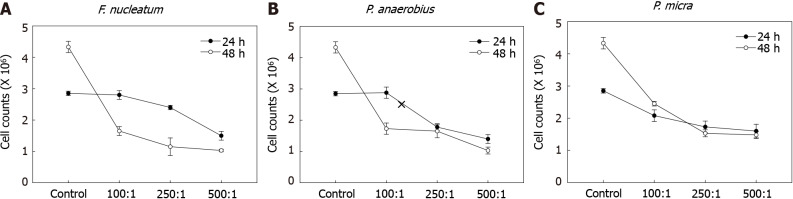
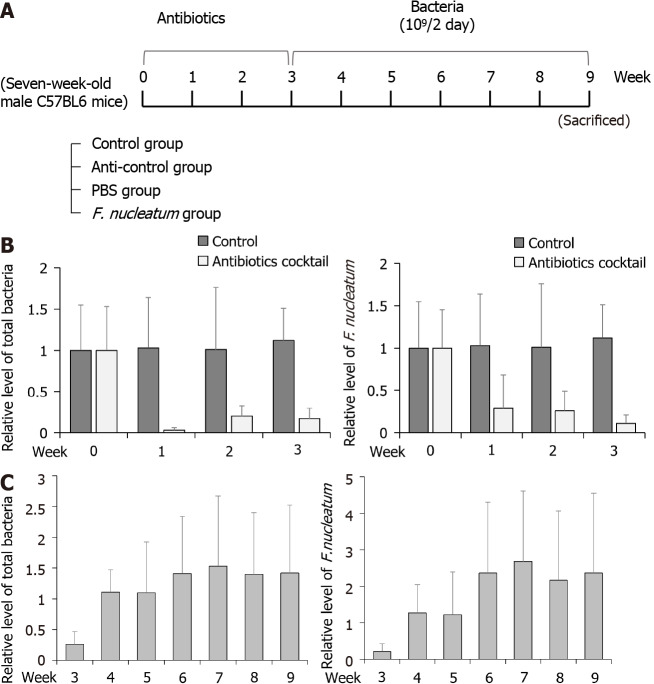
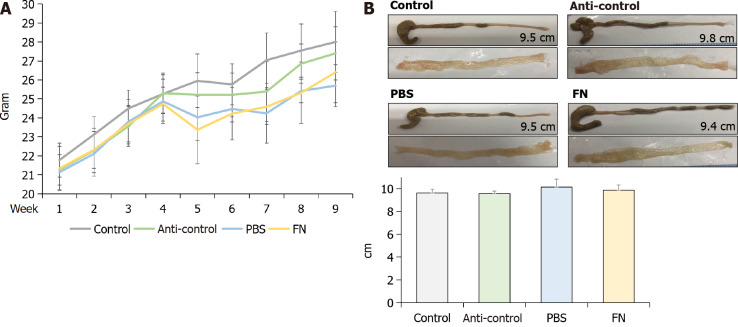
experiments were performed on NK cells treated with and to identify the effects of gut microbiome species on NK cells. Following 24 and 48 h of treatment, NK cell counts were measured. In parallel studies, C57BL/6 mice were given broad-spectrum antibiotics in their drinking water to reduce resident gut flora. After 3 wk, the mice received the various bacterial species or phosphate-buffered saline (PBS) oral gavage every 2 d for 6 wk. At the study end, blood samples were acquired to perform NK cell activity assessment and cytokine analysis. Intestinal tissues were collected and analyzed immunohistochemistry (IHC).
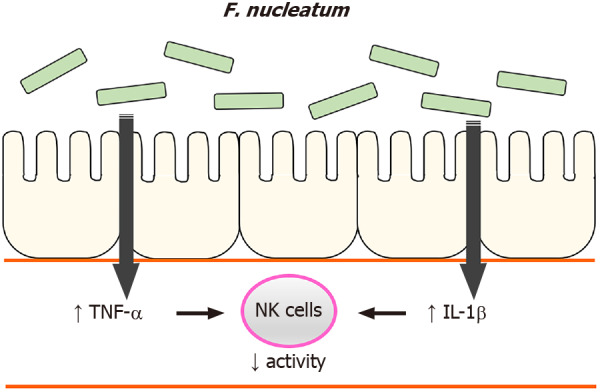
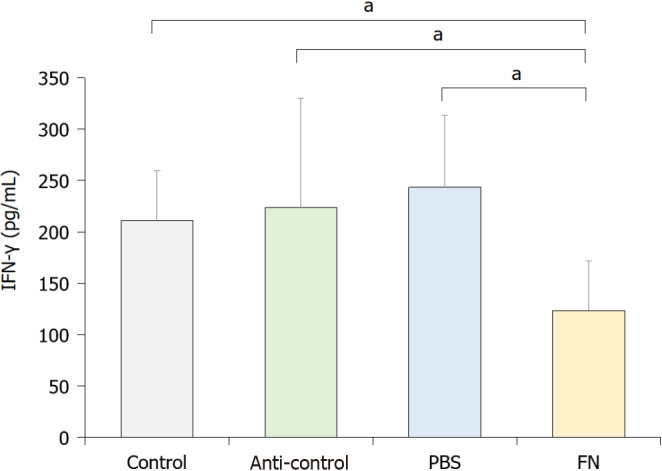
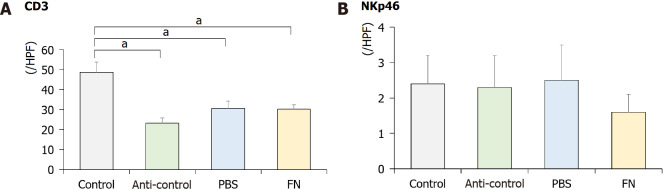
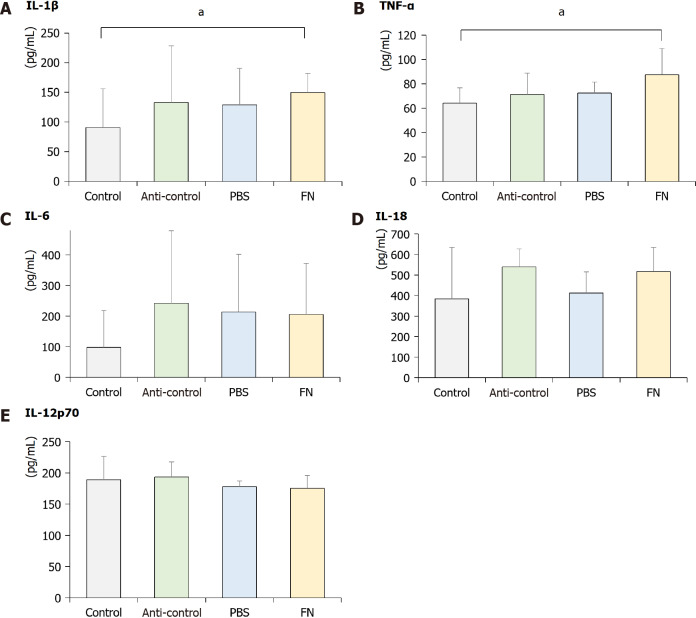
The data show that after 3 wk of broad-spectrum antibiotic treatment, levels of total bacteria and were markedly decreased in mice. Gavage of significantly decreased NK cell activity relative to the activities of cells from mice treated with antibiotics only and PBS. The administration of decreased the proportion of NK46 cells based on IHC staining and increased the production of interleukin-1β and tumor necrosis factor-α.
High levels of in the gastrointestinal tract reduced NK cell activity in mice, and the decrease in NK cell activity might be affected by increased pro-inflammatory cytokines after treatment
肠道微生物失调有助于结直肠癌(CRC)的发展和进展。自然杀伤(NK)细胞通过释放趋化因子和细胞因子参与早期防御机制,以杀死感染性病原体和肿瘤细胞。为了更好地了解肠道微生物组与 CRC 之间的关系,这里假设胃肠道中()的丰度高可能导致 NK 细胞活性降低。
确定胃肠道()水平与 NK 细胞活性之间的关联。
用()和()处理 NK 细胞,以识别肠道微生物物种对 NK 细胞的影响,进行实验。处理 24 和 48 小时后,测量 NK 细胞计数。在平行研究中,C57BL/6 小鼠饮用广谱抗生素以减少常驻肠道菌群。3 周后,小鼠接受各种细菌或磷酸盐缓冲盐水(PBS)口服灌胃,每 2 天一次,共 6 周。研究结束时,采集血液样本进行 NK 细胞活性评估和细胞因子分析。收集和分析肠道组织进行免疫组织化学(IHC)分析。
数据显示,广谱抗生素治疗 3 周后,小鼠体内总细菌和()水平明显降低。与仅用抗生素和 PBS 处理的小鼠相比,()的灌胃显著降低了 NK 细胞的活性。()给药后,基于 IHC 染色,NK46 细胞的比例降低,白细胞介素-1β和肿瘤坏死因子-α的产生增加。
胃肠道中()水平升高降低了小鼠的 NK 细胞活性,()处理后 NK 细胞活性的降低可能受促炎细胞因子增加的影响。