Homaeigohar Shahin, Liu Qiqi, Kordbacheh Danial
School of Science and Engineering, University of Dundee, Dundee DD1 4HN, UK.
School of Biomedical Engineering, Southern Medical University, Guangzhou 510515, China.
Polymers (Basel). 2021 Aug 23;13(16):2833. doi: 10.3390/polym13162833.
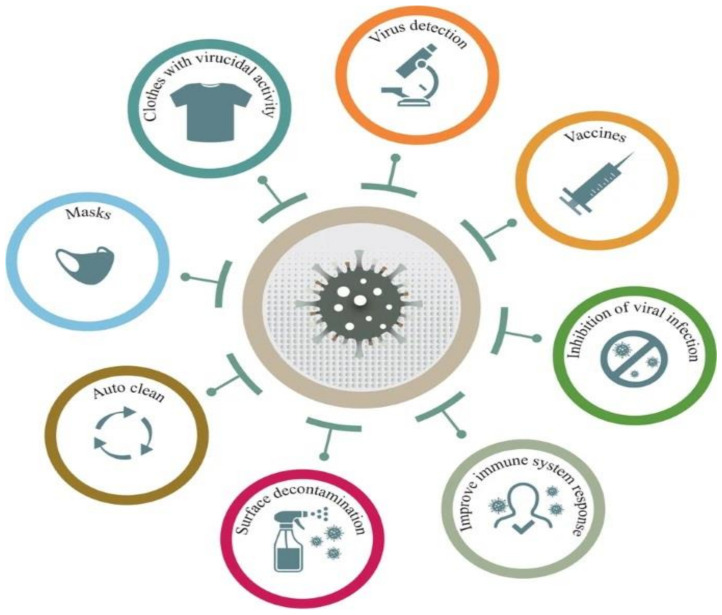
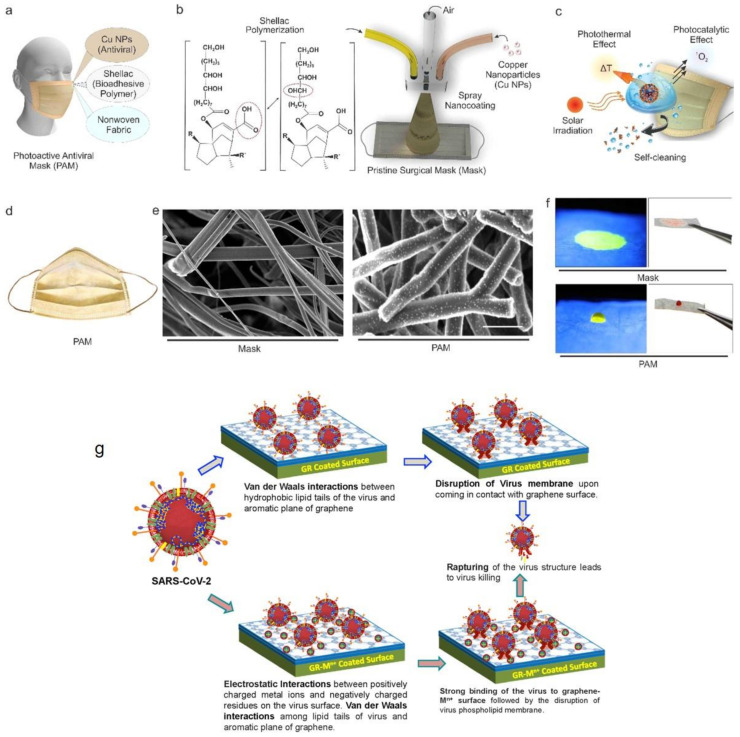
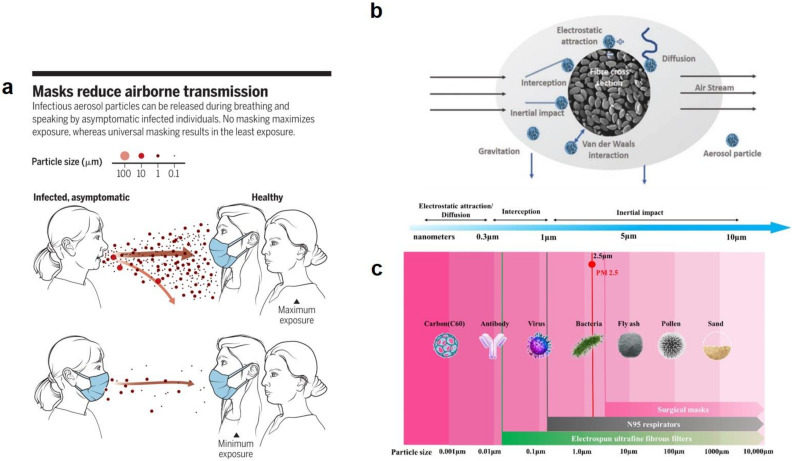
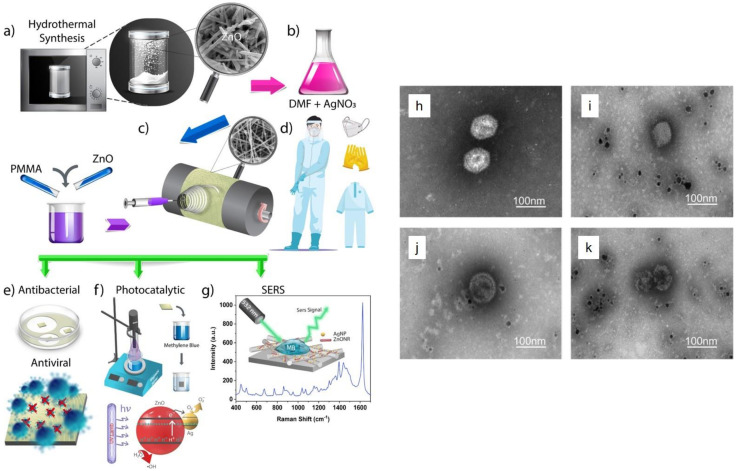
The COVID-19 pandemic has driven a global research to uncover novel, effective therapeutical and diagnosis approaches. In addition, control of spread of infection has been targeted through development of preventive tools and measures. In this regard, nanomaterials, particularly, those combining two or even several constituting materials possessing dissimilar physicochemical (or even biological) properties, i.e., nanohybrid materials play a significant role. Nanoparticulate nanohybrids have gained a widespread reputation for prevention of viral crises, thanks to their promising antimicrobial properties as well as their potential to act as a carrier for vaccines. On the other hand, they can perform well as a photo-driven killer for viruses when they release reactive oxygen species (ROS) or photothermally damage the virus membrane. The nanofibers can also play a crucial protective role when integrated into face masks and personal protective equipment, particularly as hybridized with antiviral nanoparticles. In this draft, we review the antiviral nanohybrids that could potentially be applied to control, diagnose, and treat the consequences of COVID-19 pandemic. Considering the short age of this health problem, trivially the relevant technologies are not that many and are handful. Therefore, still progressing, older technologies with antiviral potential are also included and discussed. To conclude, nanohybrid nanomaterials with their high engineering potential and ability to inactivate pathogens including viruses will contribute decisively to the future of nanomedicine tackling the current and future pandemics.
新冠疫情推动了全球范围内对新型有效治疗和诊断方法的研究。此外,通过开发预防工具和措施来控制感染传播也成为了目标。在这方面,纳米材料,特别是那些结合了两种甚至几种具有不同物理化学(甚至生物学)特性的构成材料的纳米材料,即纳米杂化材料,发挥了重要作用。纳米颗粒纳米杂化物因其具有前景的抗菌特性以及作为疫苗载体的潜力,在预防病毒危机方面赢得了广泛声誉。另一方面,当它们释放活性氧(ROS)或通过光热作用破坏病毒膜时,可作为病毒的光驱动杀手发挥良好作用。当纳米纤维集成到口罩和个人防护装备中时,特别是与抗病毒纳米颗粒杂交时,也能发挥关键的保护作用。在本草案中,我们回顾了可能应用于控制、诊断和治疗新冠疫情后果的抗病毒纳米杂化物。鉴于这个健康问题出现的时间较短,相关技术显然并不多,屈指可数。因此,仍在发展的具有抗病毒潜力的旧技术也被纳入并进行了讨论。总之,具有高工程潜力和使包括病毒在内的病原体失活能力的纳米杂化纳米材料将对纳米医学应对当前和未来大流行的未来发展起到决定性作用。