Kang Sang Gu, Lee Kyung Eun, Singh Mahendra, Kumar Pradeep, Matin Mohammad Nurul
Department of Biotechnology, Institute of Biotechnology, Yeungnam University, Gyeongsan 38541, Gyeongbuk, Korea.
Department of Forestry, North Eastern Regional Institute of Science and Technology, Nirjuli 791109, Arunachal Pradesh, India.
Plants (Basel). 2021 Aug 4;10(8):1598. doi: 10.3390/plants10081598.
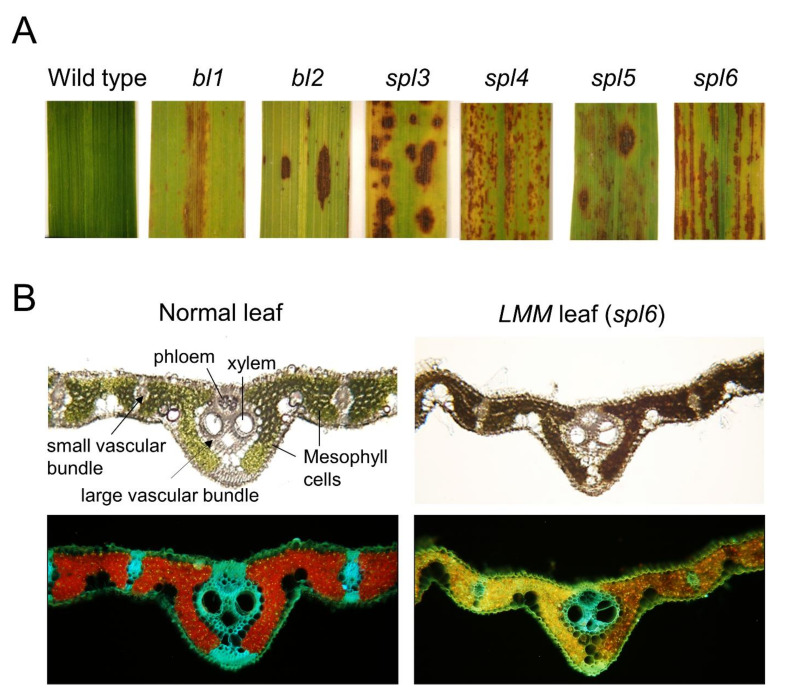
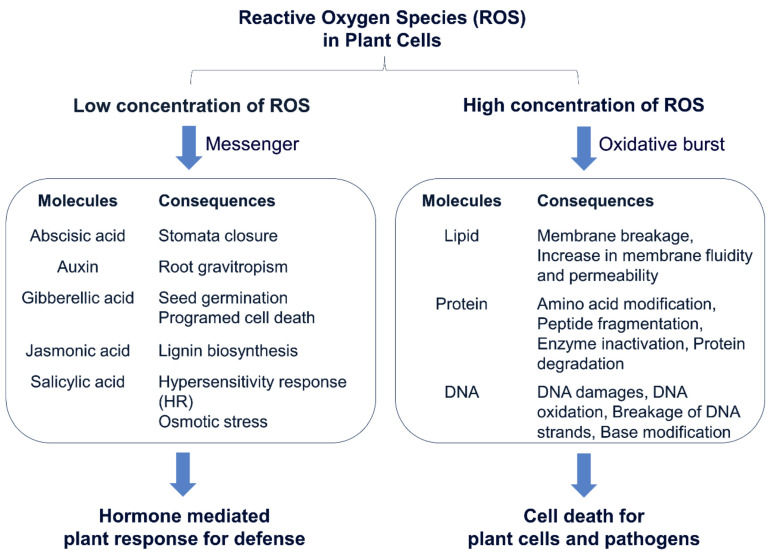
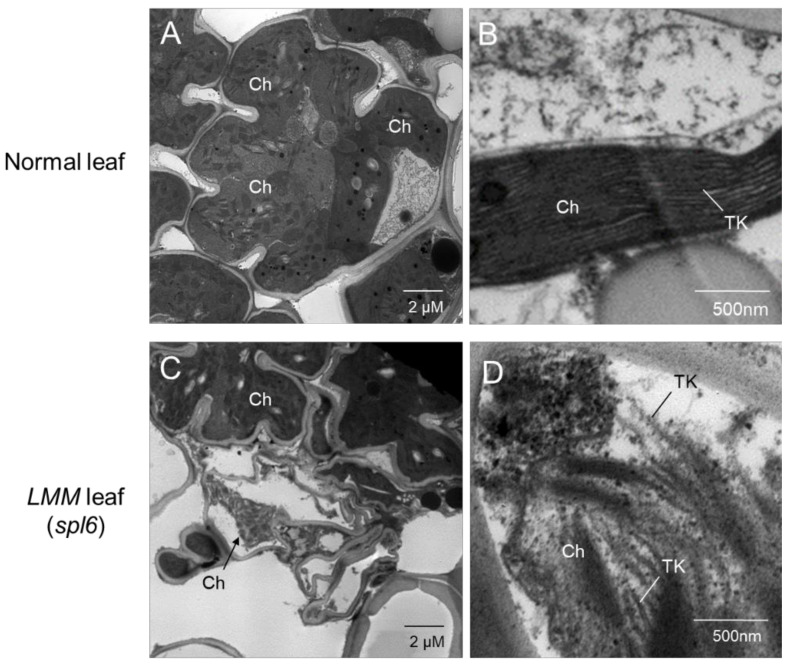
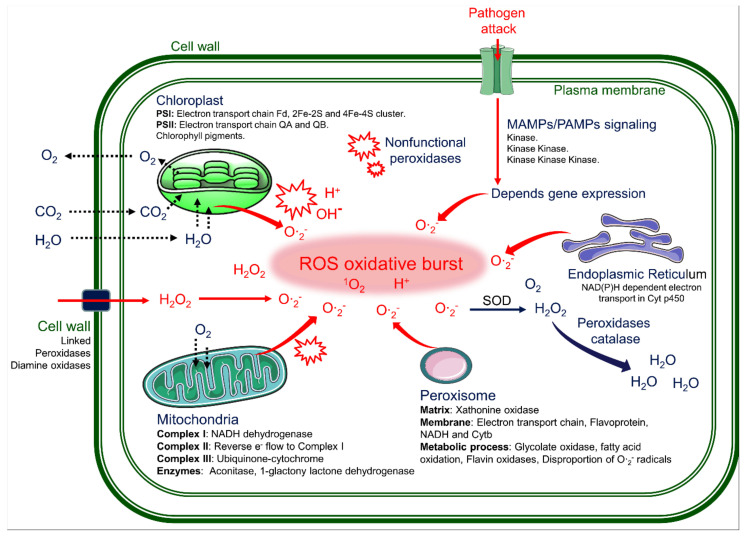
Rice lesion mimic mutants (LMMs) form spontaneous lesions on the leaves during vegetative growth without pathogenic infections. The rice LMM group includes various mutants, including mutants, mutants, mutants, and other lesion-phenotypic mutants. These LMM mutants exhibit a common phenotype of lesions on the leaves linked to chloroplast destruction caused by the eruption of reactive oxygen species (ROS) in the photosynthesis process. This process instigates the hypersensitive response (HR) and programmed cell death (PCD), resulting in lesion formation. The reasons for lesion formation have been studied extensively in terms of genetics and molecular biology to understand the pathogen and stress responses. In rice, the lesion phenotypes of most rice LMMs are inherited according to the Mendelian principles of inheritance, which remain in the subsequent generations. These rice LMM genetic traits have highly developed innate self-defense mechanisms. Thus, although rice LMM plants have undesirable agronomic traits, the genetic principles of LMM phenotypes can be used to obtain high grain yields by deciphering the efficiency of photosynthesis, disease resistance, and environmental stress responses. From these ailing rice LMM plants, rice geneticists have discovered novel proteins and physiological causes of ROS in photosynthesis and defense mechanisms. This review discusses recent studies on rice LMMs for the Mendelian inheritances, molecular genetic mapping, and the genetic definition of each mutant gene.
水稻类病斑突变体(LMMs)在营养生长阶段,叶片上会自发形成病斑,且无病原菌感染。水稻LMM群体包括各种突变体,如 突变体、 突变体、 突变体以及其他具有病斑表型的突变体。这些LMM突变体表现出叶片病斑的共同表型,这与光合作用过程中活性氧(ROS)爆发导致的叶绿体破坏有关。这个过程引发过敏反应(HR)和程序性细胞死亡(PCD),从而导致病斑形成。为了理解病原菌和胁迫反应,已经从遗传学和分子生物学角度对病斑形成的原因进行了广泛研究。在水稻中,大多数水稻LMM的病斑表型按照孟德尔遗传规律遗传,并在后代中保持。这些水稻LMM遗传性状具有高度发达的先天自我防御机制。因此,尽管水稻LMM植株具有不良农艺性状,但通过解读光合作用效率、抗病性和环境胁迫反应,LMM表型的遗传原理可用于获得高产。从这些患病的水稻LMM植株中,水稻遗传学家发现了光合作用和防御机制中ROS的新蛋白质和生理原因。本综述讨论了关于水稻LMM的孟德尔遗传、分子遗传图谱以及每个突变基因的遗传定义的最新研究。