Peng Weiye, Wang Yunsheng, Zeng Xuanning, Li Wei, Song Na, Liu Jing, Wang Bing, Dai Liangying
College of Plant Protection, Hunan Agricultural University, Changsha, Hunan, China.
Hunan Provincial Key Laboratory for Biology and Control of Plant Diseases and Insect Pests, Hunan Agricultural University, Changsha, Hunan, China.
Front Plant Sci. 2023 Jul 13;14:1212510. doi: 10.3389/fpls.2023.1212510. eCollection 2023.
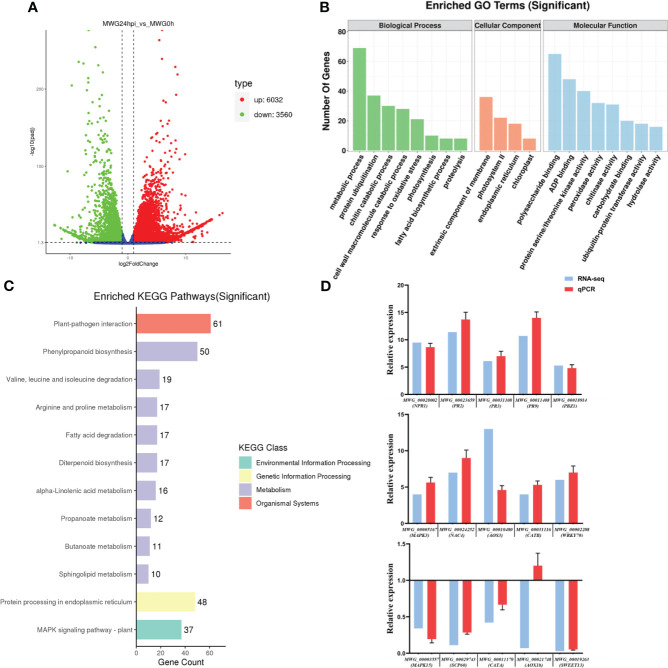
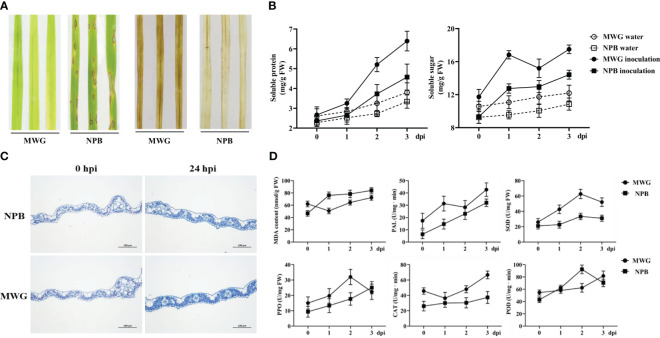
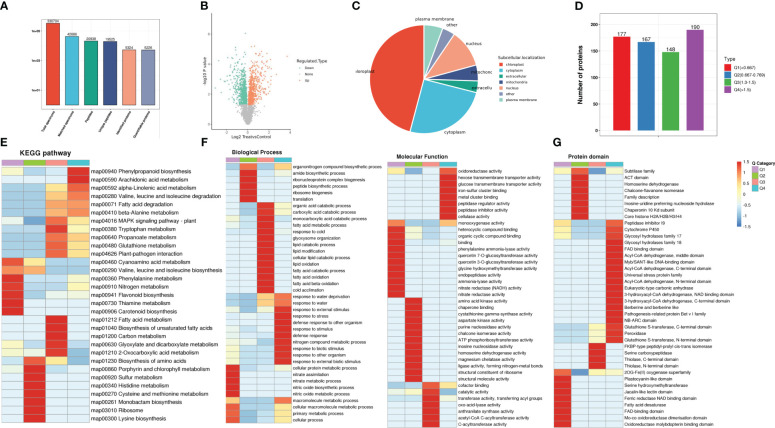
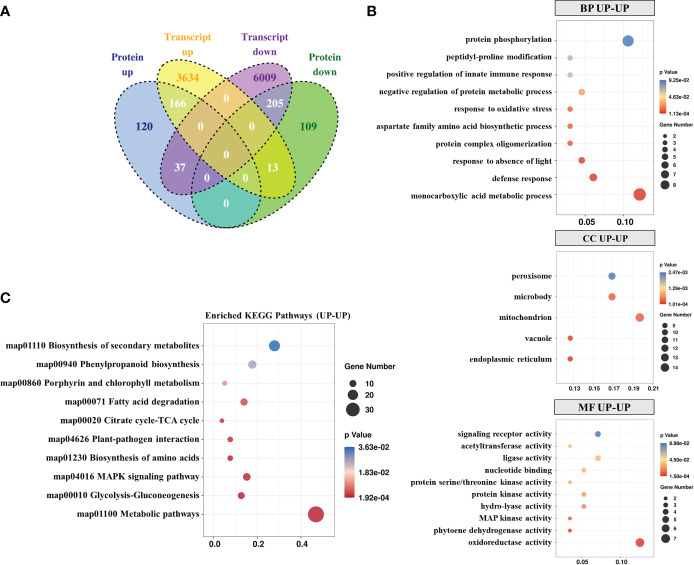
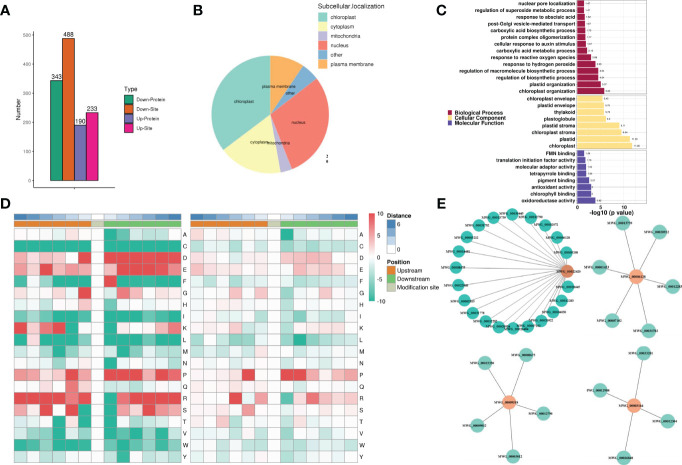
Rice blast, caused by is one of the most destructive diseases of rice ( L.) in most rice-cultivated areas worldwide. Mowanggu (MWG) is a traditional landrace rice variety in Yunnan with broad-spectrum and durable blast resistance against rice blast fungus. However, the underlying disease-resistance mechanisms remain unknown. An integrative transcriptomic, proteomic, and phosphoproteomic analysis of MWG was performed after inoculation with in this study. The transcriptomic and proteomic results revealed that MWG was moderately correlated at the transcriptional and protein levels. Differentially expressed genes and proteins were up-regulated and significantly enriched in protein phosphorylation, peroxisome, plant-pathogen interactions, phenylpropanoid metabolism and phenylalanine biosynthesis pathways. The phosphoproteomic profile and phosphorylated-protein-interaction network revealed that the altered phosphoproteins were primarily associated with reactive oxygen species (ROS), glycolysis, MAPK signaling pathways, and amino acid biosynthesis. In addition, a series of physiological and biochemical parameters, including ROS, soluble sugars, soluble protein and callus accumulation and defense-related enzyme activities, were used to validate the possible blast resistance mechanisms of MWG. The integrative transcriptomic, proteomic, and phosphoproteomic analysis revealed the different expression patterns at the molecular level of the durably resistant rice cultivar MWG after inoculation with , which provides insight into the molecular mechanisms of rice blast resistance.
稻瘟病是由[病原菌名称缺失]引起的,是全球大多数水稻种植区中对水稻(Oryza sativa L.)最具毁灭性的病害之一。墨万谷(MWG)是云南的一个传统地方水稻品种,对稻瘟病菌具有广谱且持久的抗性。然而,其潜在的抗病机制仍不清楚。本研究在接种[病原菌名称缺失]后对MWG进行了转录组、蛋白质组和磷酸化蛋白质组的综合分析。转录组和蛋白质组结果表明,MWG在转录水平和蛋白质水平上呈中度相关。差异表达的基因和蛋白质上调,并在蛋白质磷酸化、过氧化物酶体、植物-病原体相互作用、苯丙烷类代谢和苯丙氨酸生物合成途径中显著富集。磷酸化蛋白质组图谱和磷酸化蛋白质相互作用网络表明,变化的磷酸化蛋白质主要与活性氧(ROS)、糖酵解、丝裂原活化蛋白激酶(MAPK)信号通路和氨基酸生物合成有关。此外,还利用一系列生理生化参数,包括ROS、可溶性糖、可溶性蛋白和愈伤组织积累以及防御相关酶活性,来验证MWG可能的抗稻瘟病机制。转录组、蛋白质组和磷酸化蛋白质组的综合分析揭示了持久抗病水稻品种MWG接种[病原菌名称缺失]后在分子水平上的不同表达模式,这为深入了解水稻抗稻瘟病的分子机制提供了依据。