Rijkers Ger T, Weterings Nynke, Obregon-Henao Andres, Lepolder Michaëla, Dutt Taru S, van Overveld Frans J, Henao-Tamayo Marcela
Science Department, University College Roosevelt, 4331 CB Middelburg, The Netherlands.
Microvida Laboratory for Medical Microbiology and Immunology, St. Elizabeth Hospital, 5022 GC Tilburg, The Netherlands.
Vaccines (Basel). 2021 Aug 3;9(8):848. doi: 10.3390/vaccines9080848.
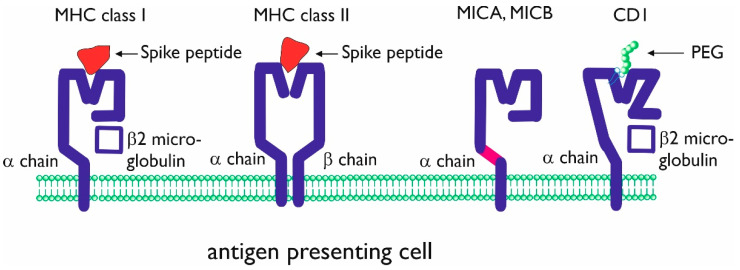
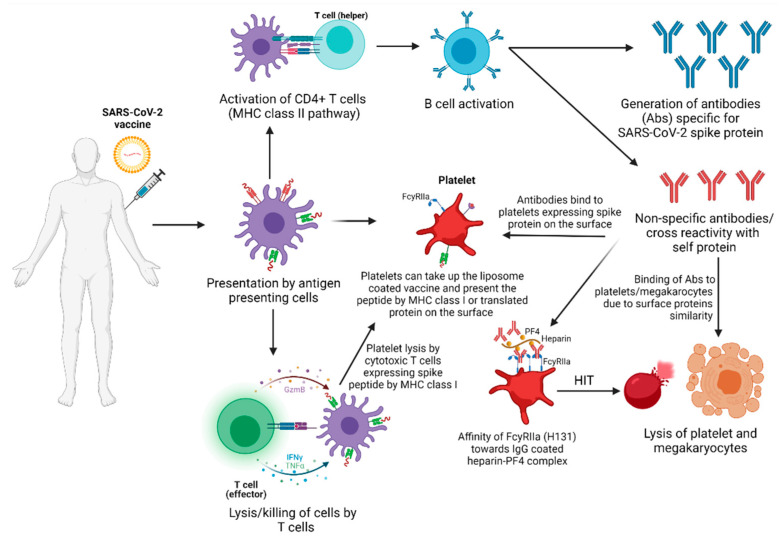
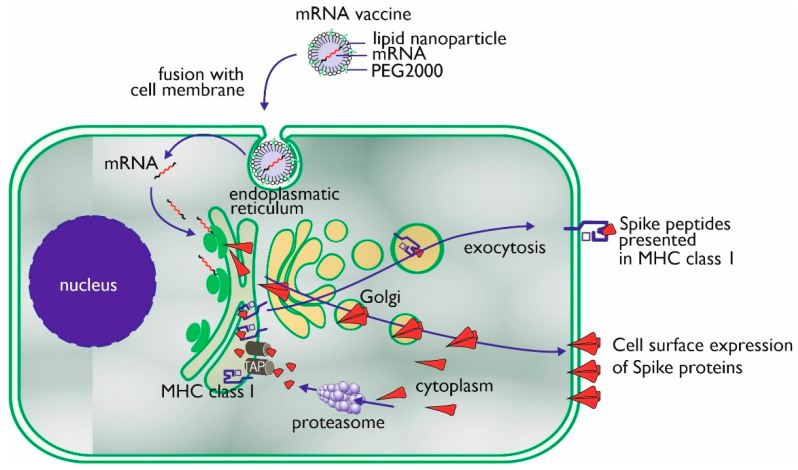
Infection with Severe Acute Respiratory Syndrome Coronavirus 2 (SARS-CoV-2) causes Coronavirus Disease 2019 (COVID-19), which has reached pandemic proportions. A number of effective vaccines have been produced, including mRNA vaccines and viral vector vaccines, which are now being implemented on a large scale in order to control the pandemic. The mRNA vaccines are composed of viral Spike S1 protein encoding mRNA incorporated in a lipid nanoparticle and stabilized by polyethylene glycol (PEG). The mRNA vaccines are novel in many respects, including cellular uptake and the intracellular routing, processing, and secretion of the viral protein. Viral vector vaccines have incorporated DNA sequences, encoding the SARS-CoV-2 Spike protein into (attenuated) adenoviruses. The antigen presentation routes in MHC class I and class II, in relation to the induction of virus-neutralizing antibodies and cytotoxic T-lymphocytes, will be reviewed. In rare cases, mRNA vaccines induce unwanted immune mediated side effects. The mRNA-based vaccines may lead to an anaphylactic reaction. This reaction may be triggered by PEG. The intracellular routing of PEG and potential presentation in the context of CD1 will be discussed. Adenovirus vector-based vaccines have been associated with thrombocytopenic thrombosis events. The anti-platelet factor 4 antibodies found in these patients could be generated due to conformational changes of relevant epitopes presented to the immune system.
感染严重急性呼吸综合征冠状病毒2(SARS-CoV-2)会导致2019冠状病毒病(COVID-19),该病已蔓延至全球范围。目前已生产出多种有效的疫苗,包括mRNA疫苗和病毒载体疫苗,这些疫苗正在大规模推广使用,以控制疫情。mRNA疫苗由包裹在脂质纳米颗粒中并经聚乙二醇(PEG)稳定化的编码病毒刺突S1蛋白的mRNA组成。mRNA疫苗在许多方面都具有创新性,包括细胞摄取以及病毒蛋白的细胞内运输、加工和分泌。病毒载体疫苗已将编码SARS-CoV-2刺突蛋白的DNA序列整合到(减毒)腺病毒中。本文将综述与诱导病毒中和抗体和细胞毒性T淋巴细胞相关的MHC I类和II类抗原呈递途径。在极少数情况下,mRNA疫苗会引发不良的免疫介导副作用。基于mRNA的疫苗可能会导致过敏反应。这种反应可能由PEG触发。本文将讨论PEG的细胞内运输以及在CD1背景下的潜在呈递情况。基于腺病毒载体的疫苗与血小板减少性血栓形成事件有关。这些患者体内发现的抗血小板因子4抗体可能是由于呈递给免疫系统的相关表位发生构象变化而产生的。