Department of Clinical and Molecular Medicine (IKOM), Norwegian University of Science and Technology, 7028 Trondheim, Norway.
Institute of Technology, University of Tartu, 50411 Tartu, Estonia.
Viruses. 2021 Aug 3;13(8):1537. doi: 10.3390/v13081537.
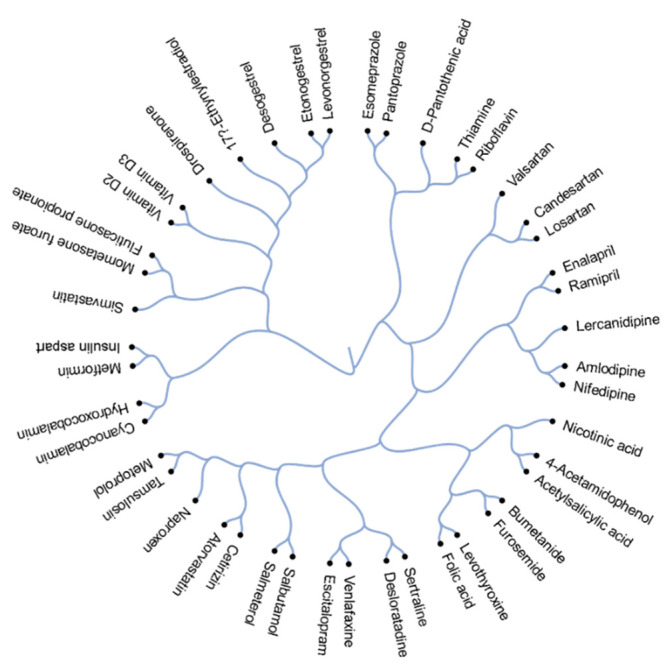
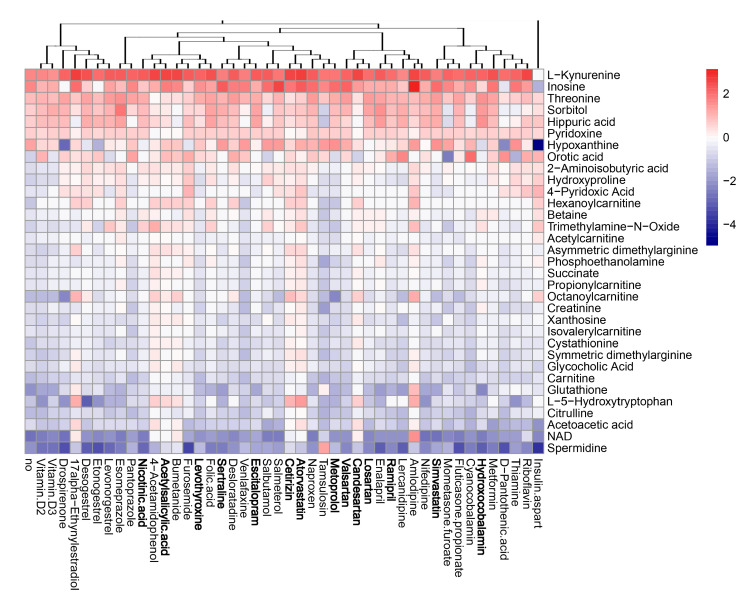
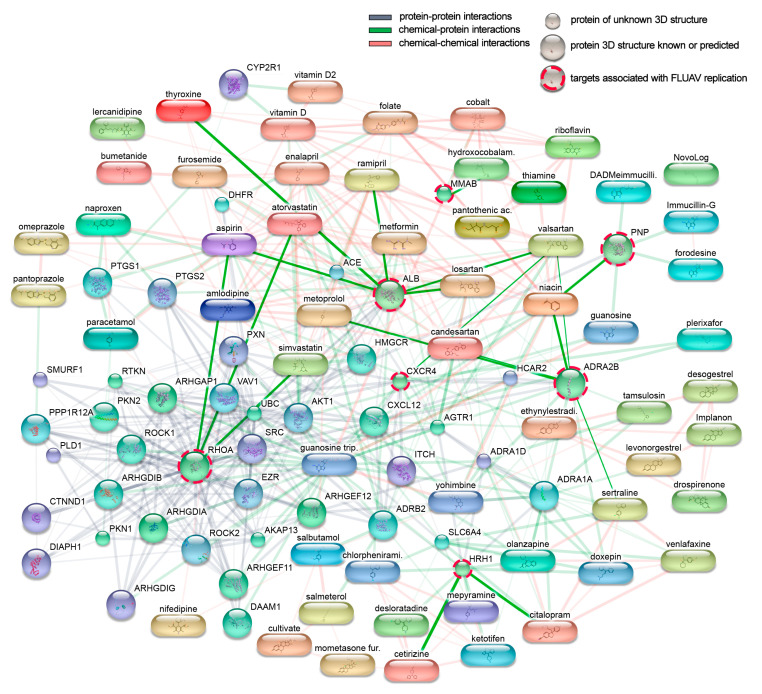
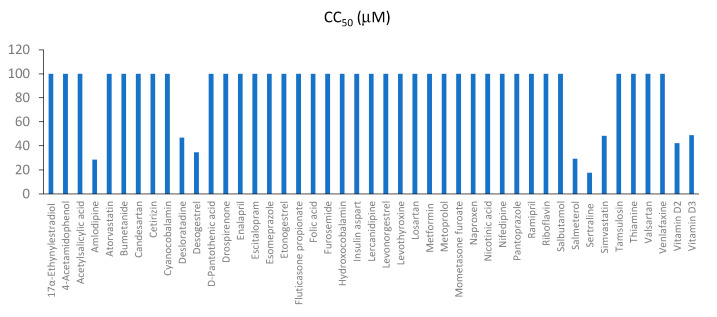
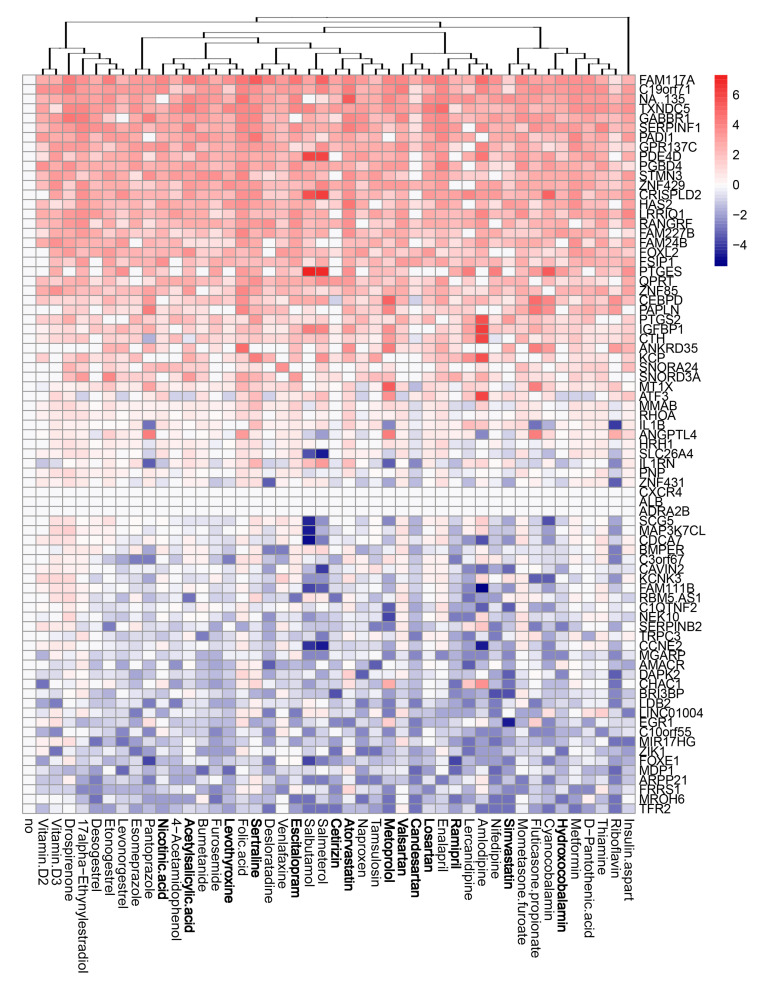
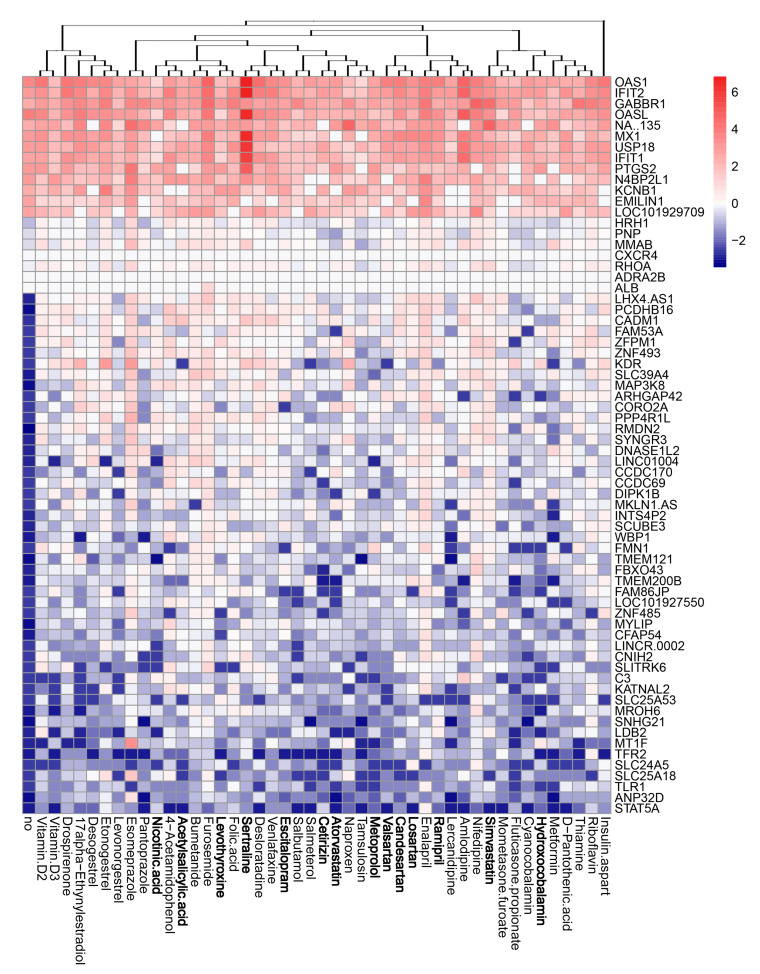
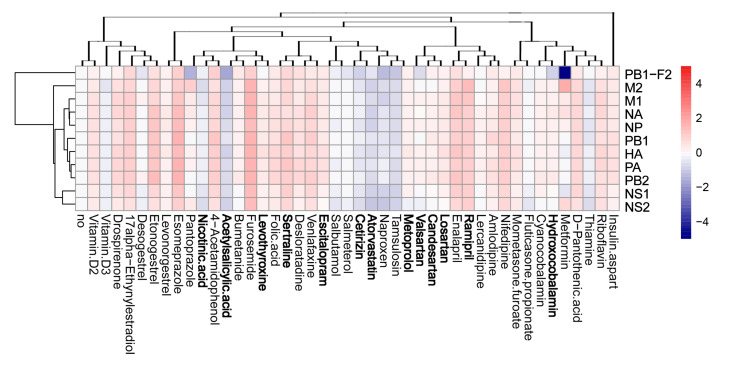
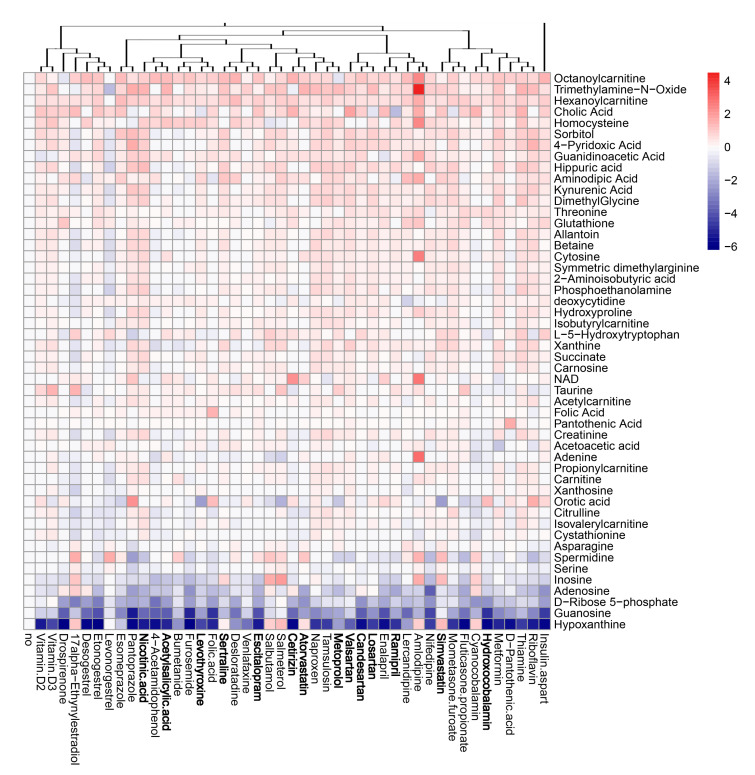
Every year, millions of people are hospitalized and thousands die from influenza A virus (FLUAV) infection. Most cases of hospitalizations and death occur among the elderly. Many of these elderly patients are reliant on medical treatment of underlying chronic diseases, such as arthritis, diabetes, and hypertension. We hypothesized that the commonly prescribed medicines for treatment of underlying chronic diseases can affect host responses to FLUAV infection and thus contribute to the morbidity and mortality associated with influenza. Therefore, the aim of this study was to examine whether commonly prescribed medicines could affect host responses to virus infection in vitro. We first identified 45 active compounds from a list of commonly prescribed medicines. Then, we constructed a drug-target interaction network and identified the potential implication of these interactions for FLUAV-host cell interplay. Finally, we tested the effect of 45 drugs on the viability, transcription, and metabolism of mock- and FLUAV-infected human retinal pigment epithelial (RPE) cells. In silico drug-target interaction analysis revealed that drugs such as atorvastatin, candesartan, and hydroxocobalamin could target and modulate FLUAV-host cell interaction. In vitro experiments showed that at non-cytotoxic concentrations, these compounds affected the transcription and metabolism of FLUAV- and mock-infected cells. Many commonly prescribed drugs were found to modulate FLUAV-host cell interactions in silico and in vitro and could therefore affect their interplay in vivo, thus contributing to the morbidity and mortality of patients with influenza virus infections.
每年,都有数百万人因甲型流感病毒(FLUAV)感染而住院治疗,数千人因此死亡。大多数住院和死亡病例发生在老年人中。这些老年患者中的许多人依赖于治疗关节炎、糖尿病和高血压等潜在慢性疾病的药物。我们假设,用于治疗潜在慢性疾病的常用药物可能会影响宿主对 FLUAV 感染的反应,从而导致与流感相关的发病率和死亡率增加。因此,本研究旨在探讨常用药物是否会影响宿主对病毒感染的反应。
我们首先从常用药物清单中确定了 45 种活性化合物。然后,我们构建了一个药物-靶标相互作用网络,并确定了这些相互作用对 FLUAV-宿主细胞相互作用的潜在影响。最后,我们测试了 45 种药物对模拟和 FLUAV 感染的人视网膜色素上皮(RPE)细胞活力、转录和代谢的影响。
计算机药物-靶标相互作用分析表明,阿托伐他汀、坎地沙坦和羟钴胺素等药物可以靶向并调节 FLUAV-宿主细胞相互作用。体外实验表明,在非细胞毒性浓度下,这些化合物影响 FLUAV 和模拟感染细胞的转录和代谢。
许多常用药物在计算机和体外均被发现可调节 FLUAV-宿主细胞相互作用,因此可能会影响其在体内的相互作用,从而导致流感病毒感染患者的发病率和死亡率增加。