Saresella Marina, Trabattoni Daria, Marventano Ivana, Piancone Federica, La Rosa Francesca, Caronni Antonio, Lax Agata, Bianchi Luca, Banfi Paolo, Navarro Jorge, Bolognesi Elisabetta, Zanzottera Milena, Guerini Franca Rosa, Clerici Mario
IRCCS Fondazione Don Carlo Gnocchi ONLUS, Via Capecelatro, 66, 20148, Milan, Italy.
Department of Biomedical and Clinical Sciences "L. Sacco,", University of Milan, Milan, Italy.
Mol Neurobiol. 2021 Dec;58(12):6111-6120. doi: 10.1007/s12035-021-02517-4. Epub 2021 Aug 28.
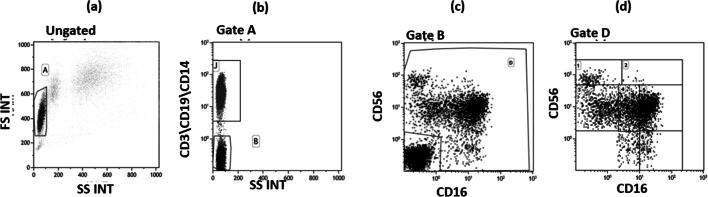
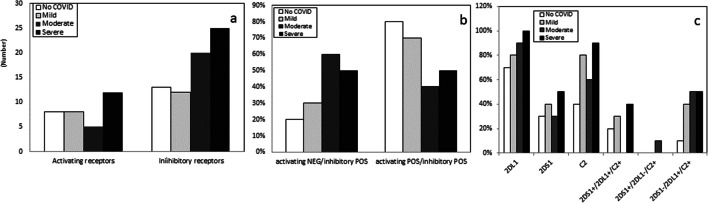
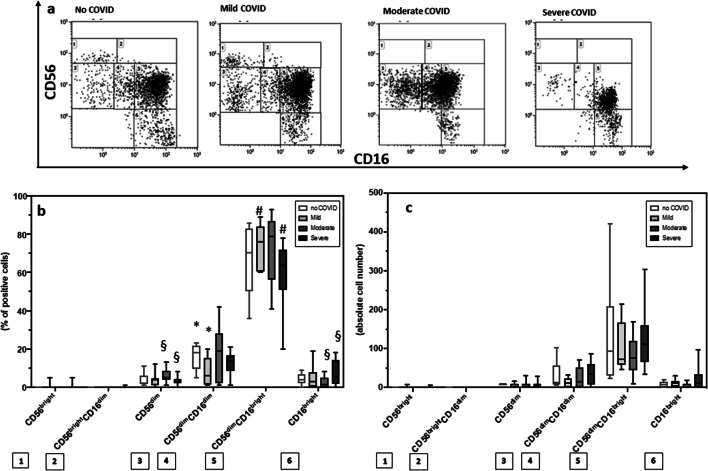
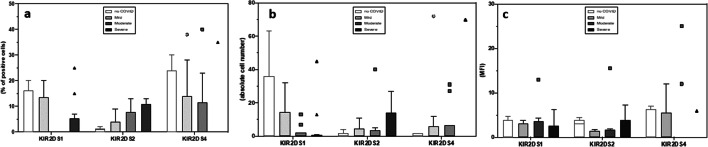
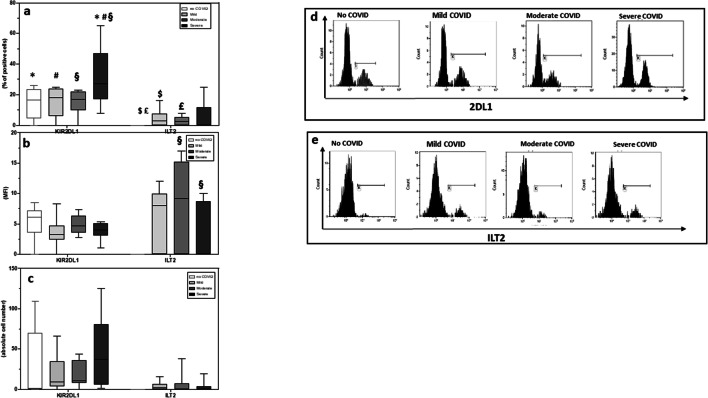
The severe acute respiratory syndrome coronavirus 2 (SARS-CoV-2) is responsible for the pandemic of coronavirus disease (COVID-19). Whereas in most cases COVID-19 is asymptomatic or pauci-symptomatic, extremely severe clinical forms are observed. In this case, complex immune dysregulations and an excessive inflammatory response are reported and are the main cause of morbidity and mortality. Natural killer cells are key players in the control of viral infection, and their activity is regulated by a tight balance between activating and inhibitory receptors; an alteration of NK activity was suggested to be associated with the development of severe forms of COVID-19. In this study, we analyzed peripheral NK cell subpopulations and the expression of activating and inhibitory receptors in 30 patients suffering from neurological conditions who recovered from mild, moderate, or severe SARS-CoV-2 infection, comparing the results to those of 10 SARS-CoV-2-uninfected patients. Results showed that an expansion of NK subset with lower cytolytic activity and an augmented expression of the 2DL1 inhibitory receptor, particularly when in association with the C2 ligand (KIR2DL1-C2), characterized the immunological scenario of severe COVID-19 infection. An increase of NK expressing the ILT2 inhibitory receptor was instead seen in patients recovering from mild or moderate infection compared to controls. Results herein suggest that the KIR2DL1-C2 NK inhibitory complex is a risk factor toward the development of severe form of COVID-19. Our results confirm that a complex alteration of NK activity is present in COVID-19 infection and offer a molecular explanation for this observation.
严重急性呼吸综合征冠状病毒2(SARS-CoV-2)引发了冠状病毒病(COVID-19)大流行。虽然在大多数情况下,COVID-19无症状或症状轻微,但也观察到了极其严重的临床形式。在这种情况下,会出现复杂的免疫失调和过度的炎症反应,这是发病和死亡的主要原因。自然杀伤细胞是控制病毒感染的关键因素,其活性由激活受体和抑制受体之间的紧密平衡调节;NK活性的改变被认为与严重形式的COVID-19的发展有关。在本研究中,我们分析了30例从轻度、中度或重度SARS-CoV-2感染中康复的神经系统疾病患者的外周血NK细胞亚群以及激活受体和抑制受体的表达,并将结果与10例未感染SARS-CoV-2的患者进行比较。结果显示,具有较低细胞溶解活性的NK亚群扩增以及2DL1抑制受体表达增加,特别是当与C2配体(KIR2DL1-C2)结合时,是严重COVID-19感染免疫情况的特征。与对照组相比,从轻度或中度感染中康复的患者中表达ILT2抑制受体的NK细胞增加。本文结果表明,KIR2DL1-C2 NK抑制复合物是导致严重形式COVID-19发展的危险因素。我们的结果证实,COVID-19感染中存在NK活性的复杂改变,并为这一观察结果提供了分子解释。